Buildings that speak to us: Homily for the dedication of the Lateran Basilica

Homily for the Feast of the Dedication of the Lateran Basilica (2023).

From the cloister of St. John Lateran, Rome

The feast we celebrate today is particularly special for us in Rome. We celebrate the dedication of our cathedral. It is a magnificent building, and probably all of us have been there to appreciate the beauty of this splendid and ancient church.

The anniversaries of church dedications are important in the Church calendar because churches are the places where we gather to celebrate the Christian liturgy, the holy mysteries of salvation. Here in Rome, however, we live in an unusual situation because there are many beautiful and ancient churches–but when we enter them, often we find few of the faithful.

We should not be discouraged; instead we should remember the faithful who still speak to us through these monuments of their faith. The churches they built and left us are not mere buildings; they are their testimony. There is a message in these buildings that the saints of past times wanted to convey to us.

But more than a message, there is still a presence. When we celebrate the liturgy, we are not alone; we enter into the presence of the saints. They are with us. On November 1, we entered the season in which we remember the saints. Churches–from St. John Lateran to this little chapel–are more than museums where we learn from the past; they are places where we encounter the saints, where eternity becomes the present.

(Original: Italian)

Readings: Ez 47:1-2, 8-9, 12; 1 Cor 3:9c-11, 16-17; John 2:13-22

Gregorian University Chapel

November 9, 2023

From the cloister of St. John Lateran, Rome

Guercino, Rome, and the Jesuit baroque

Guercino, Moses

One is always discovering new artists in Rome, and earlier this year, thanks to a special exhibit at the Scuderie del Quirinale and the recommendation of a friend, I discovered Guercino (1591-1666). Born Giovanni Francesco Barbieri in Cento (Emilia-Romagna), he worked in Rome when baroque art was at its zenith.

Guercino, Gregory XV, ca. 1621

The exhibit was of particular interest to me because Guercino’s time in Rome corresponded to the period when the Jesuits were also at their zenith. The pope who proved to be Guercino’s great patron, Gregory XV (Alessandro Ludovisi), also favored the Society of Jesus, especially in its mission of spreading Catholicism around the globe.

The Jesuits have often been associated with the baroque because it was the artistic style in vogue around the time of our founding, so our great Roman churches, the Gesù and Sant’Ignazio — and all the other Jesuit churches around the world built to imitate them — are classic examples of baroque architecture.

Guercino, St. Peter Raising Tabitha, 1618
Continue reading “Guercino, Rome, and the Jesuit baroque”

“Icons of Hope” in Rome

Last week I mentioned the Church of Sant’ Agnese in Agone, one of Rome’s architectural gems and a monument to the city’s martyrs.

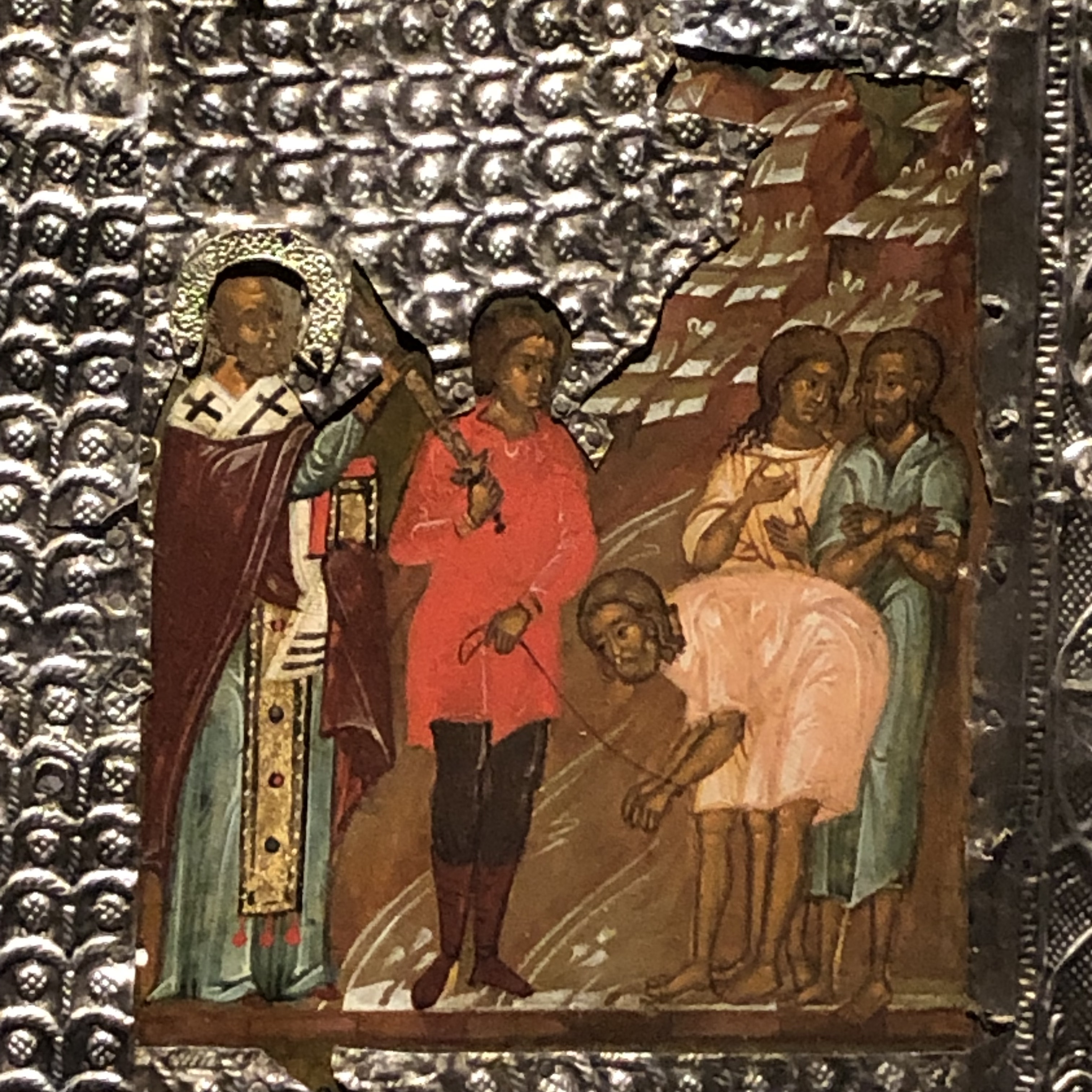
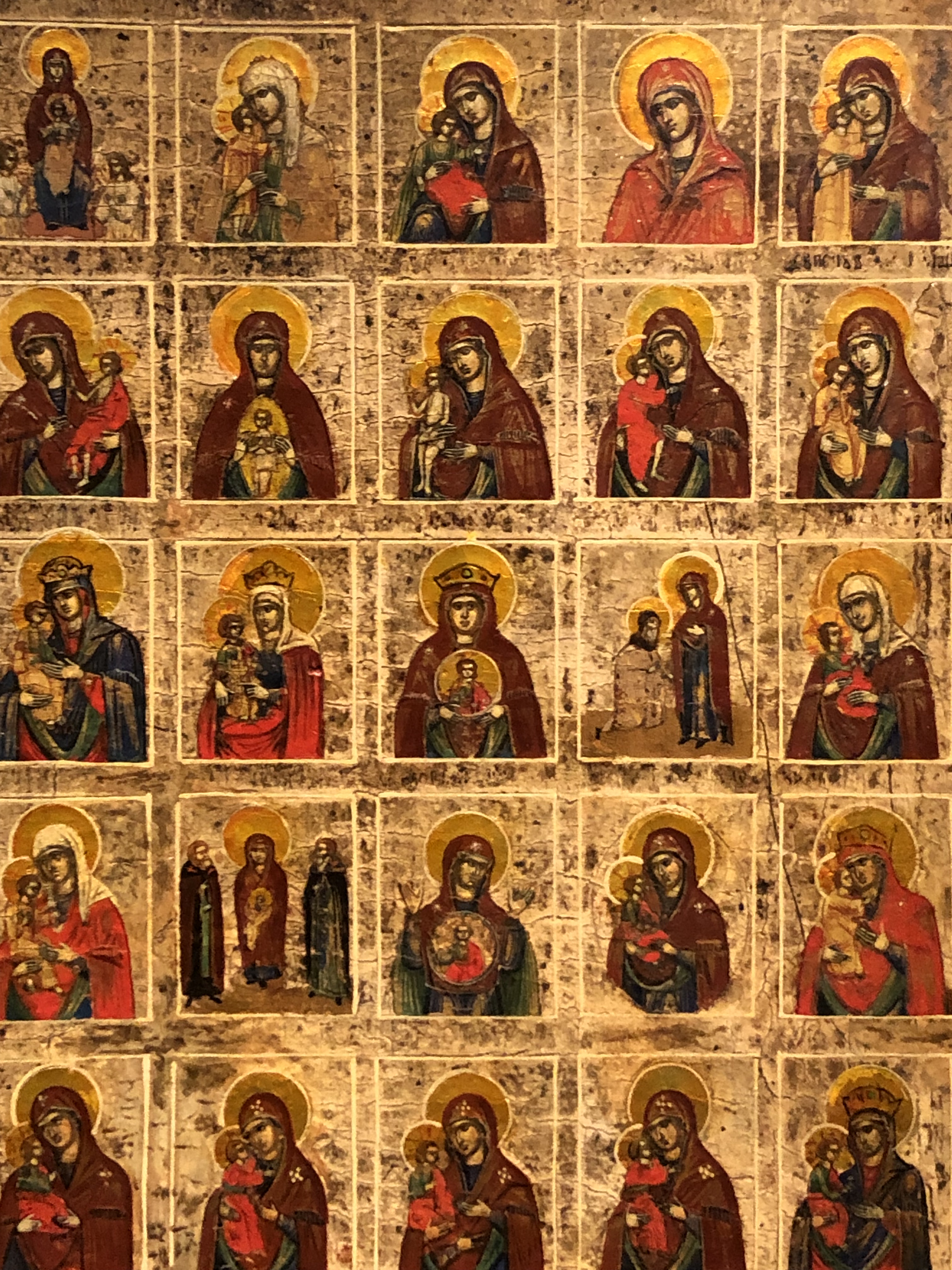
The last time I visited Sant’Agnese, I found that the Church was hosting a special display for the Jubilee (until February 16) dedicated to the theme “Icons of Hope.” The display brings together a number of icons from the Vatican Museum.

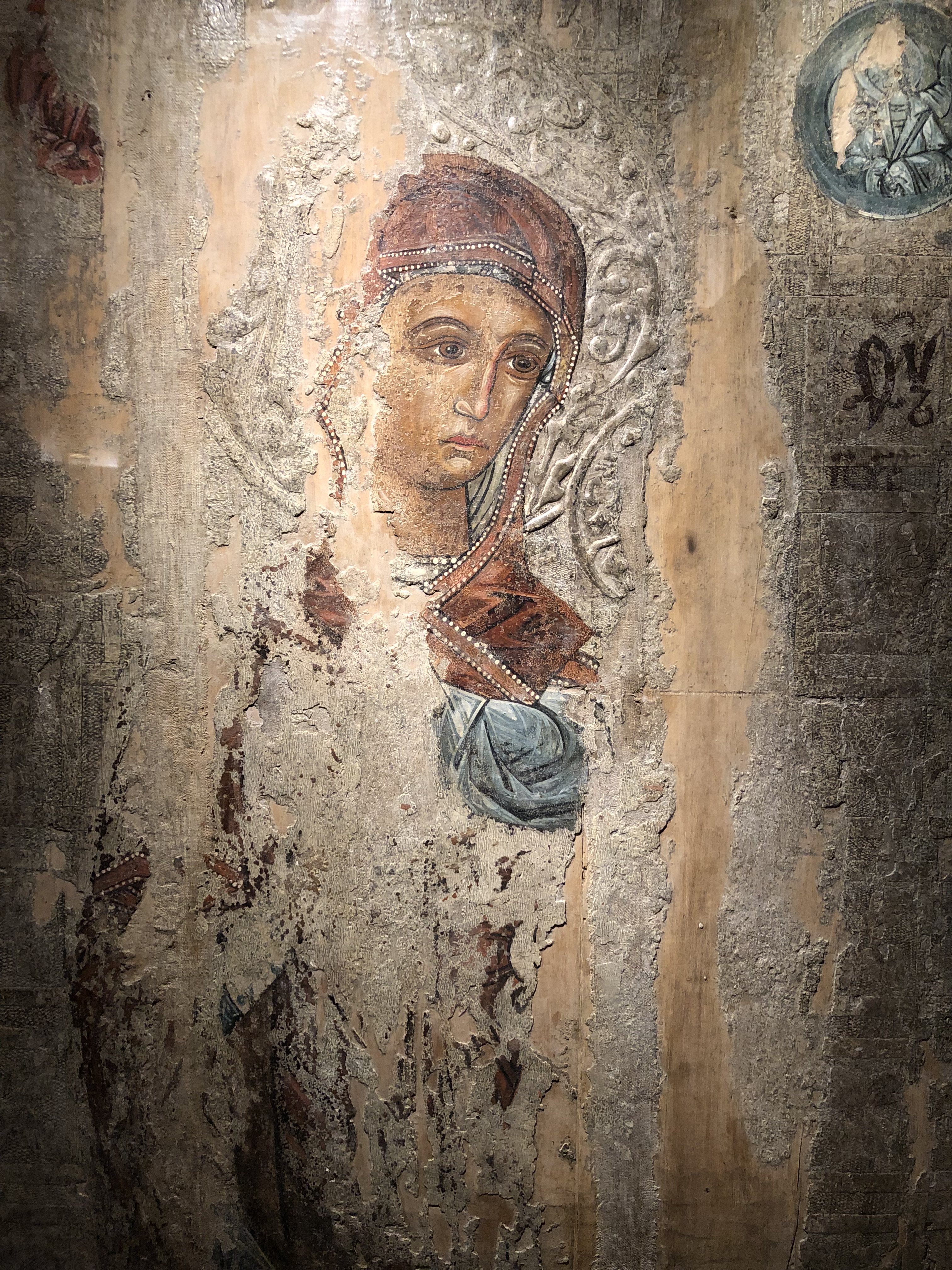
Virgin Hodegetria, Ukrainian, 17th-18th century

The most moving piece in the exhibition had to be the Ukrainian Virgin Hodegetria (17th/18th century). The engraved silver on a wood panel has been damaged over time, but the icon is all the more hauntingly beautiful. The Virgin’s face is still clearly visible, her eyes clear and sad, the expression that of someone who has known suffering but lost none of her dignity.

It is, of course, impossible to view the icon and not see in it the image of the suffering of the Ukrainian people as the Russian assault on their country every day grows more cruel and barbaric. Last week I wrote about the courage of the martyrs. Ukraine’s defense of its freedom and right to exist as a country has perhaps stung the conscience of the world because, in a self-indulgent age, the country’s display of genuine courage is bracing. And as George Weigel has pointed out, “Ukraine is fighting for all of us.”

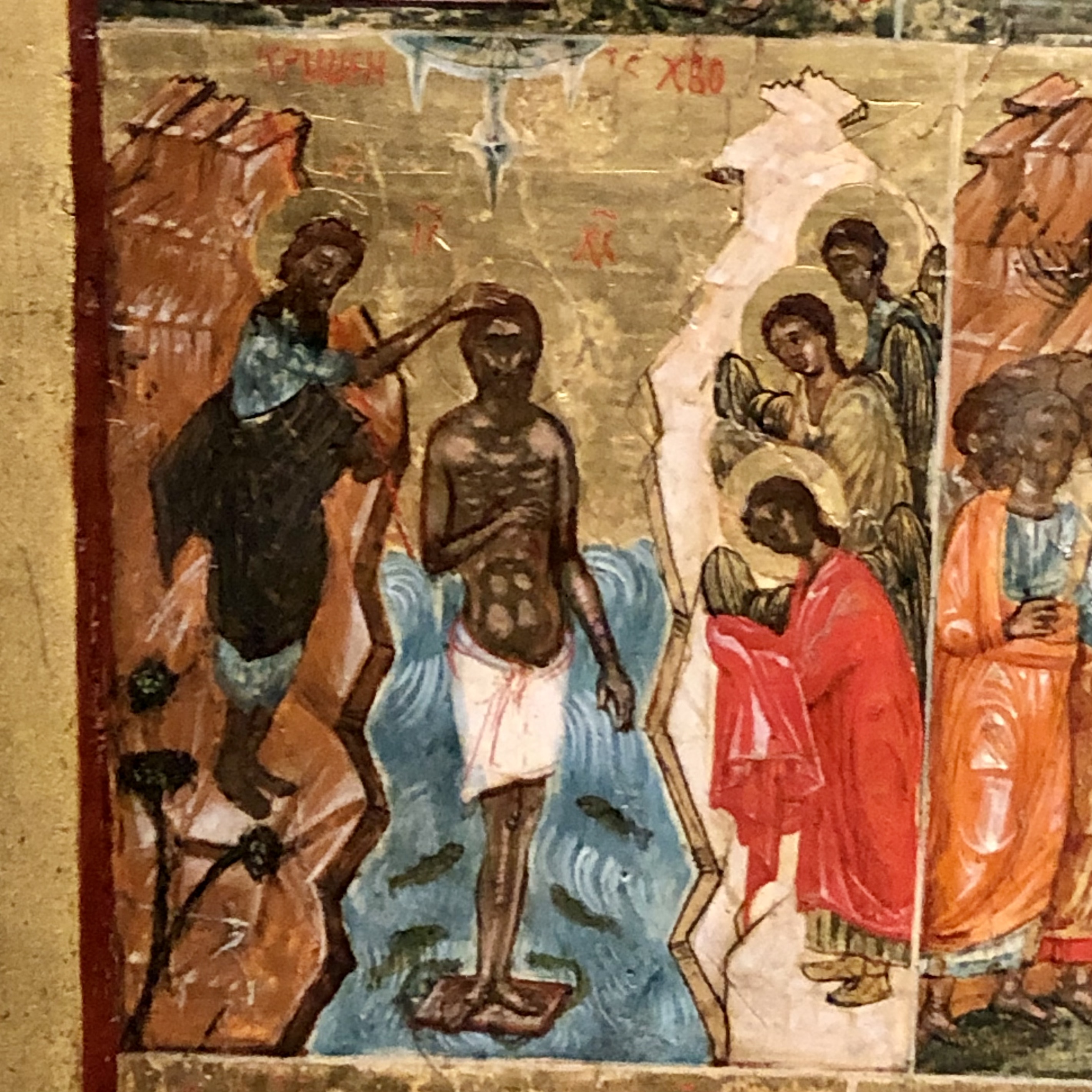
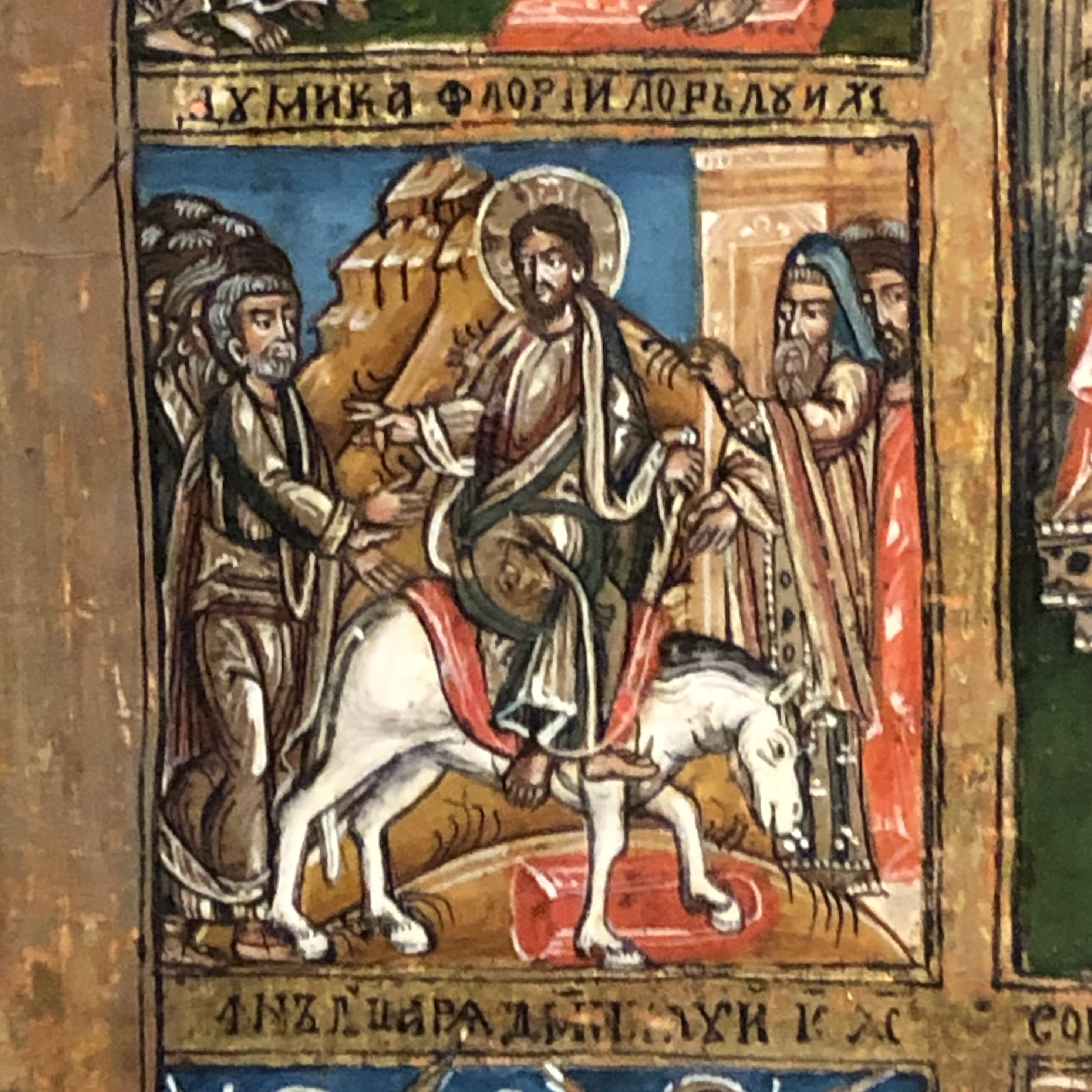
The display also contains icons from other eastern European countries–a sampling below.

The Church of Sant’Agnese in Agone

Sant’Agnese in Agone, Rome

This week’s liturgical calendar includes two prominent–and very different– Roman martyrs. The first, St. Sebastian, a third century soldier originally from Milan, was sentenced to death after converting to Christianity. Tied to a column, he was shot through with arrows but miraculously survived and was nursed back to health by a Roman matron named Irene. He went right back to preaching and, after warning the Emperor Diocletian to repent–a gutsy move if there ever was one–was beaten to death and thrown into Rome’s sewers.

No less courageous, St. Agnes sought to dedicate her life entirely to God while very young. This meant refusing the advances of several powerful suitors, who were enraged by the rejection. Agnes’s pagan father sided with the suitors. She was humiliated, even dragged naked through the streets of Rome, burnt at the stake and when that failed–as with the first attempt to kill St. Sebastian–eventually beheaded.

The courage of such martyrs–one a solider, the other a mere girl, barely a teenager–is fundamental, I think, to appreciating the full significance of Christian faith in eternal life. At least some of the ennui that one can perceive in the Church over the past several decades perhaps comes from deemphasizing the witness of the martyrs just when we need it most.

Continue reading “The Church of Sant’Agnese in Agone”

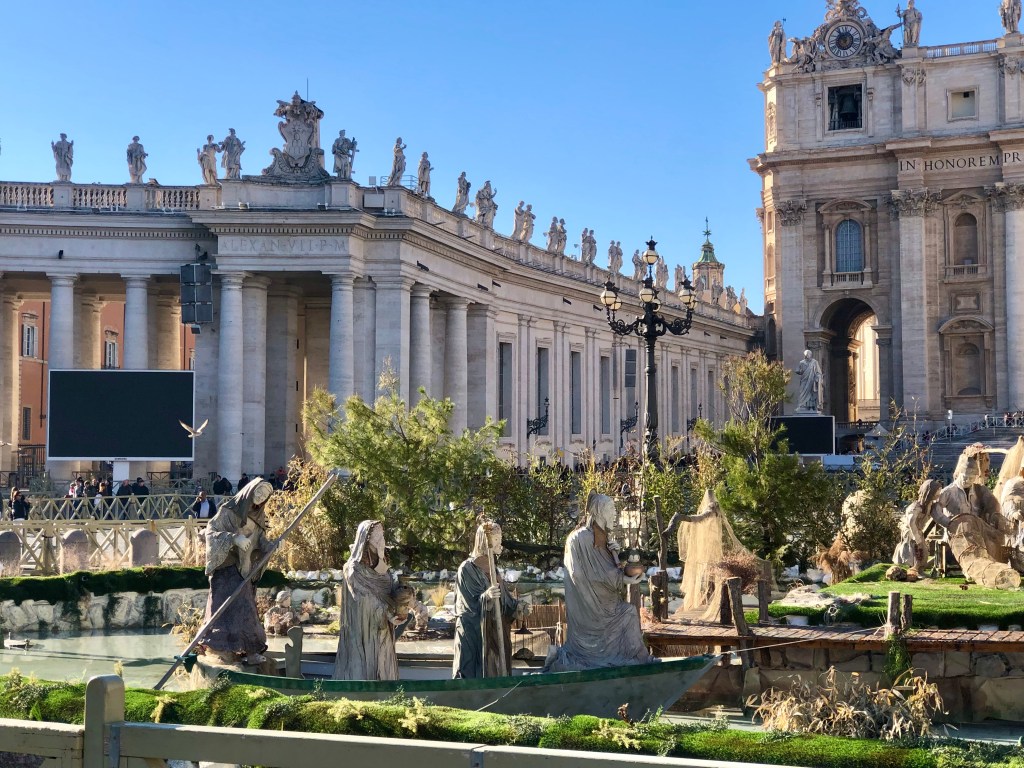
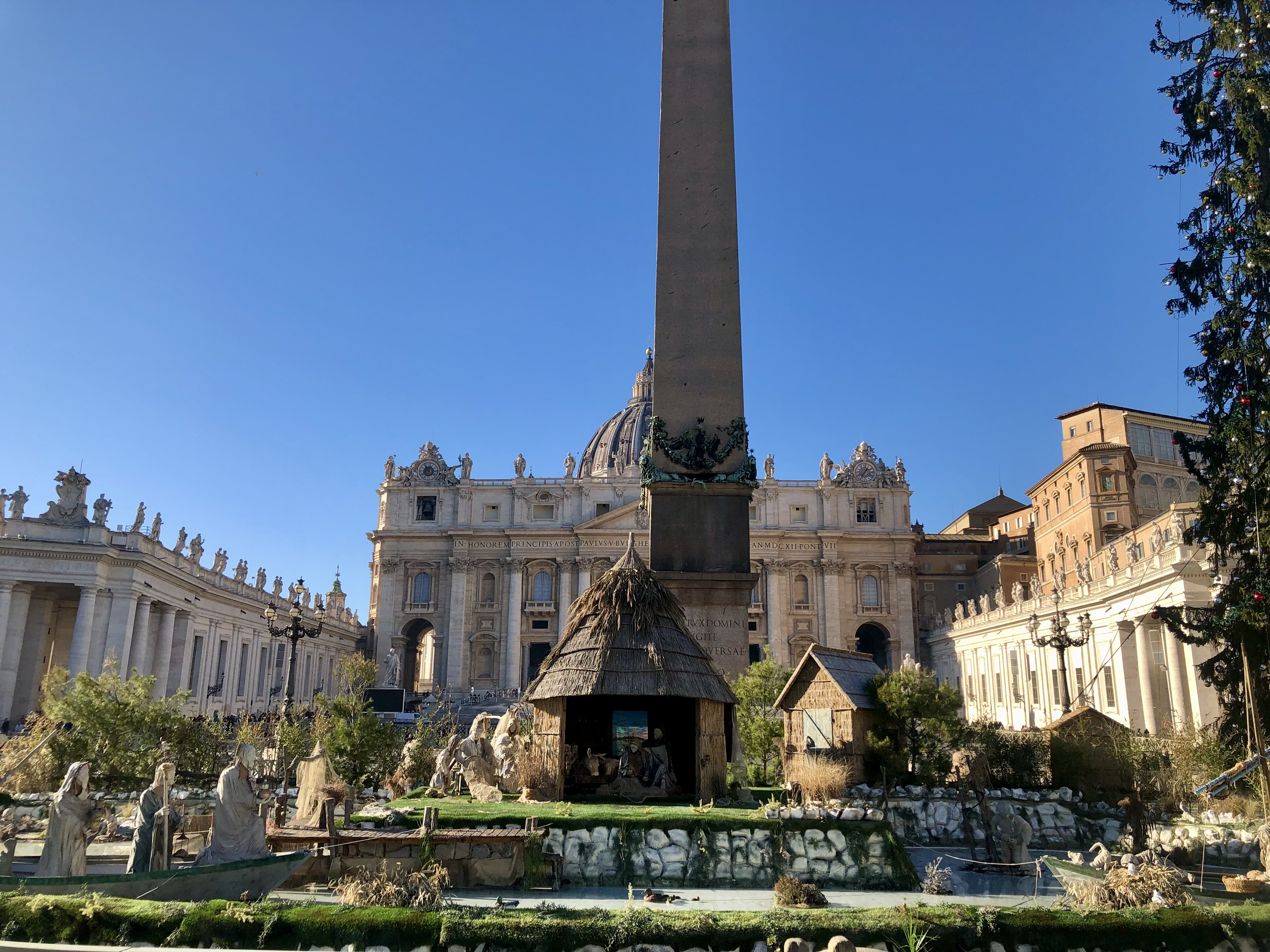
The Vatican Nativity Scene, 2024

Merry Christmas to all! I am spending Christmas at the church of the Santa Vergine degli Angeli in Maracalagonis, Sardinia, where I was fortunate to spend Holy Week earlier this year.

Before I left Rome, I was able to check out this year’s Nativity scene in St. Peter’s Square, always a source of discussion (and sometimes critique) among Romans. (For comparison, here are pictures of the Vatican Nativity scenes from the past two years: 2022 and 2023.) Last year was the 800th anniversary of this tradition, attributed to St. Francis–more about its origins in the town of Greccio here and here.

This year’s Vatican scene has a river theme, with the three kings making an aquatic landing in Bethlehem. As I noted last year, the point of such popular devotions, like Ignatian contemplation, is not to recreate history–or geography–but to help us find ourselves in the story. To that end, I found this year’s Nativity attractive and I especially liked the ducks in the foreground!

Wishing everyone many blessings and much happiness this Christmas!

M.C. Escher in Rome

We’re now smack in the middle of another busy semester at the Gregorian University, which doesn’t leave much time for getting out in Rome. (Seeing the hordes of tourists you might not believe it, but not everyone in Rome is on vacation!)

M.C. Escher, Street in Scanno, Abruzzi

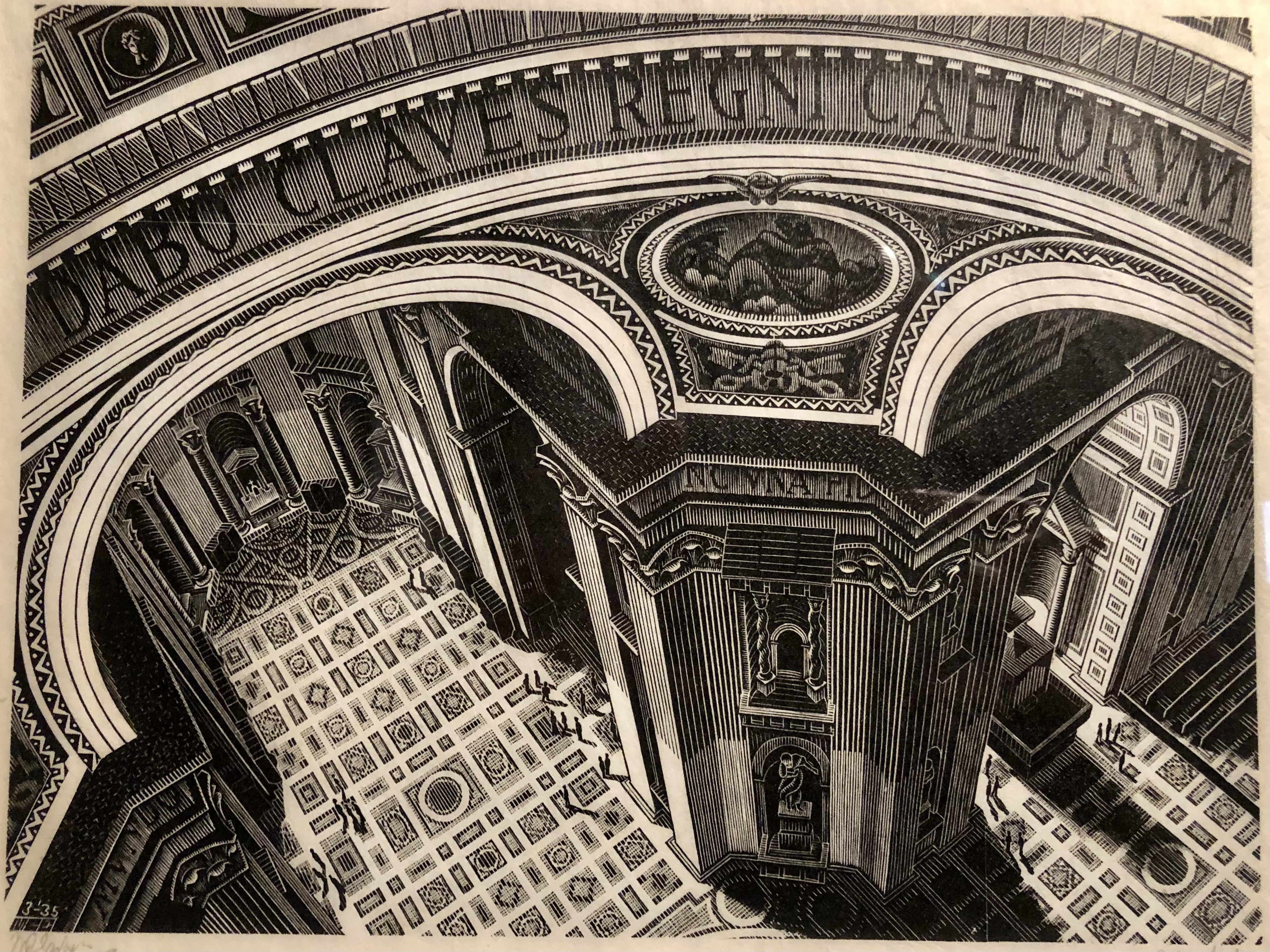
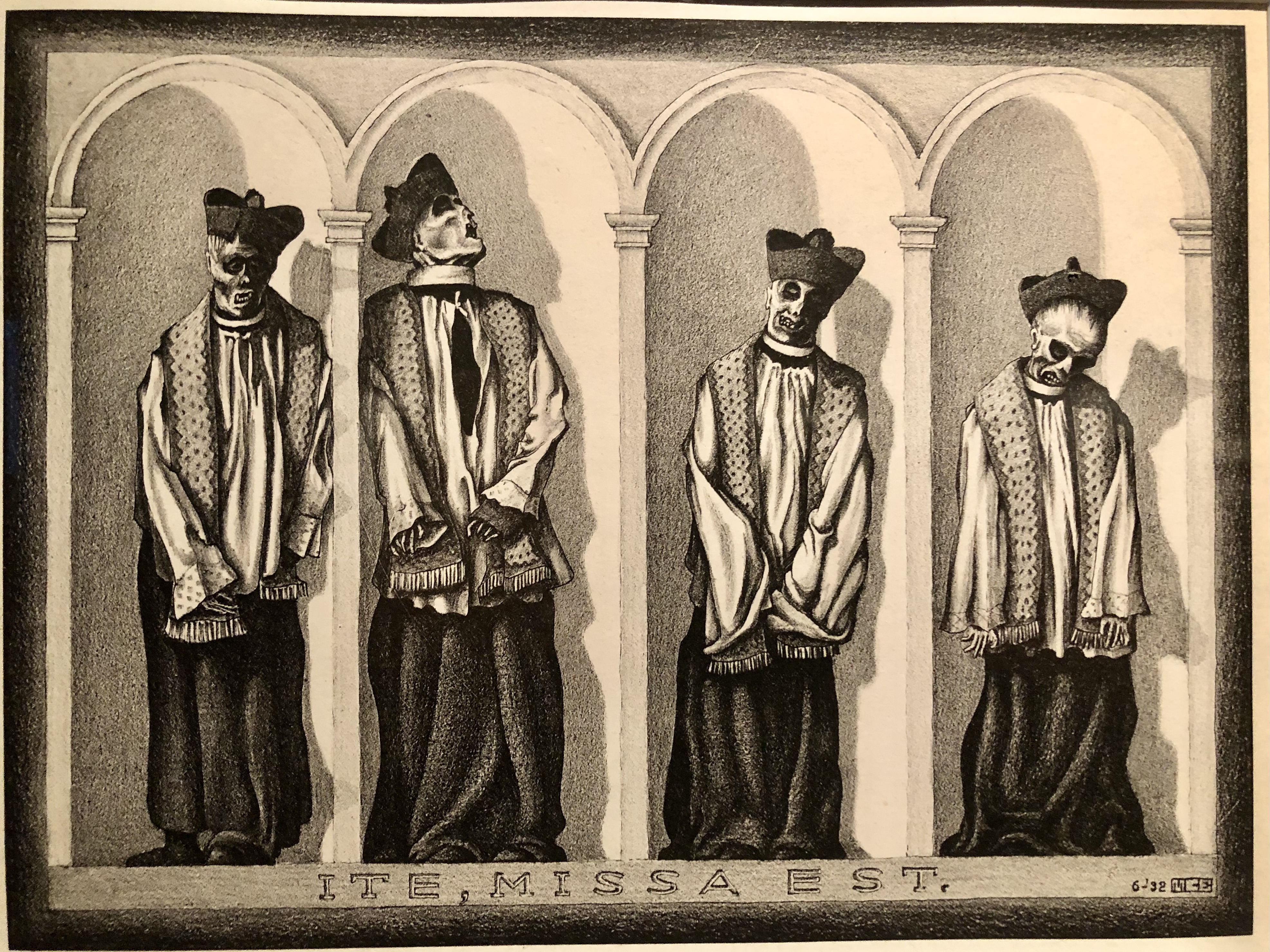
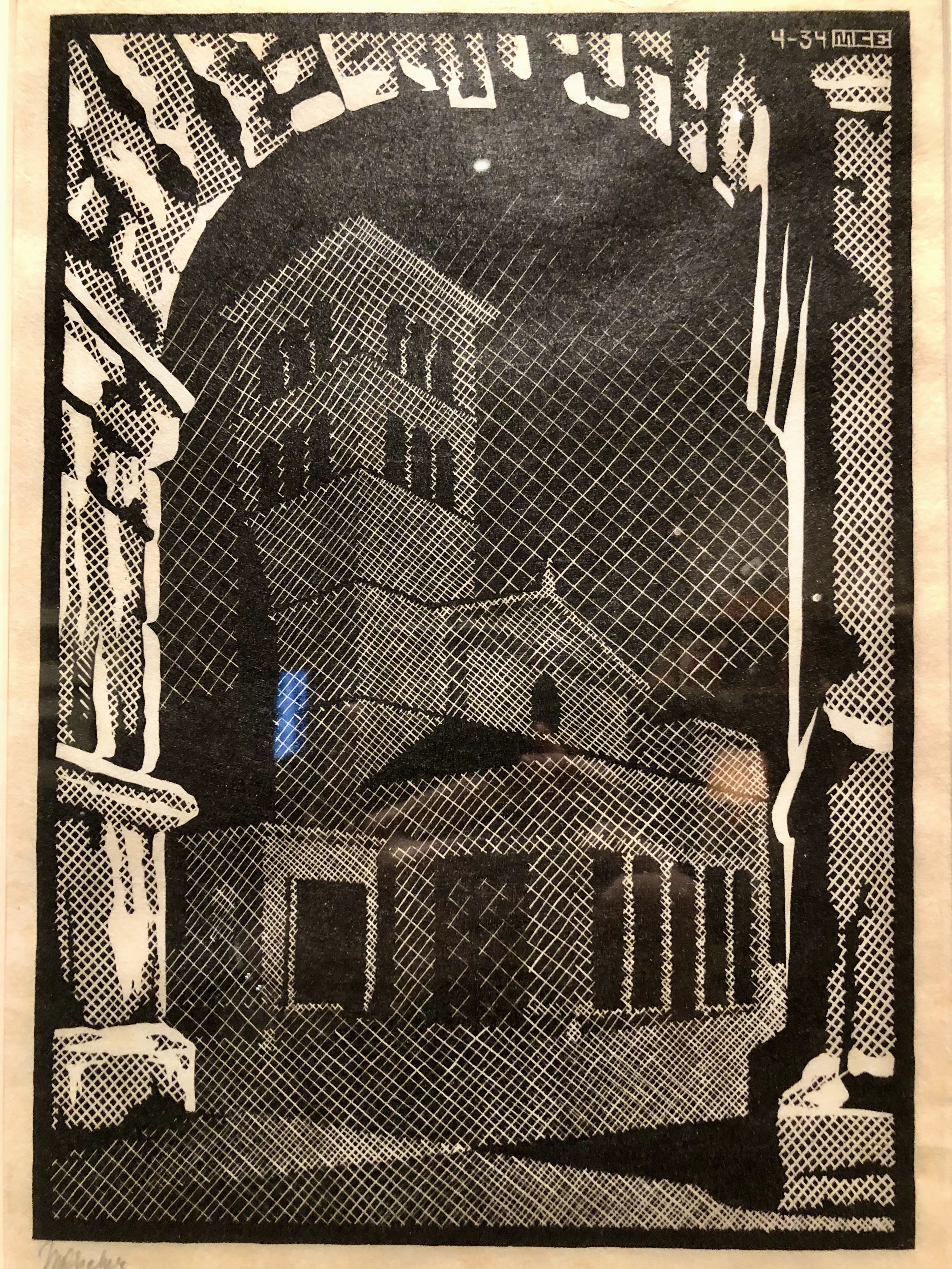
The Eternal City remains eternally fascinating, however, and every once in a while will throw something at you that you weren’t expecting. I thought I’d share a few pictures from a visiting exhibition at Palazzo Bonaparte from last year on M.C. Escher (1898-1972). The Dutchman is perhaps not who you think of when picturing an Italian artist, yet his travels in Italy between 1925-1935, especially in Calabria, were particularly formative for him. When you realize this, you begin to notice that the impossibly fantastical geometric architecture in so many of his works bears a striking resemblance to the look and feel of an Italian hilltop village.

(Below: Inside St. Peter’s [1935]; Mummified Priests in Gangi, Sicily [1932]; San Giorgio in Velabro [1934]; Still Life with Mirror [1934]. Note the holy card of St. Anthony in the corner of the mirror.)

Continue reading “M.C. Escher in Rome”

St. Matthew according to Caravaggio: a spiritual masterpiece

The Inspiration of St. Matthew, Caravaggio

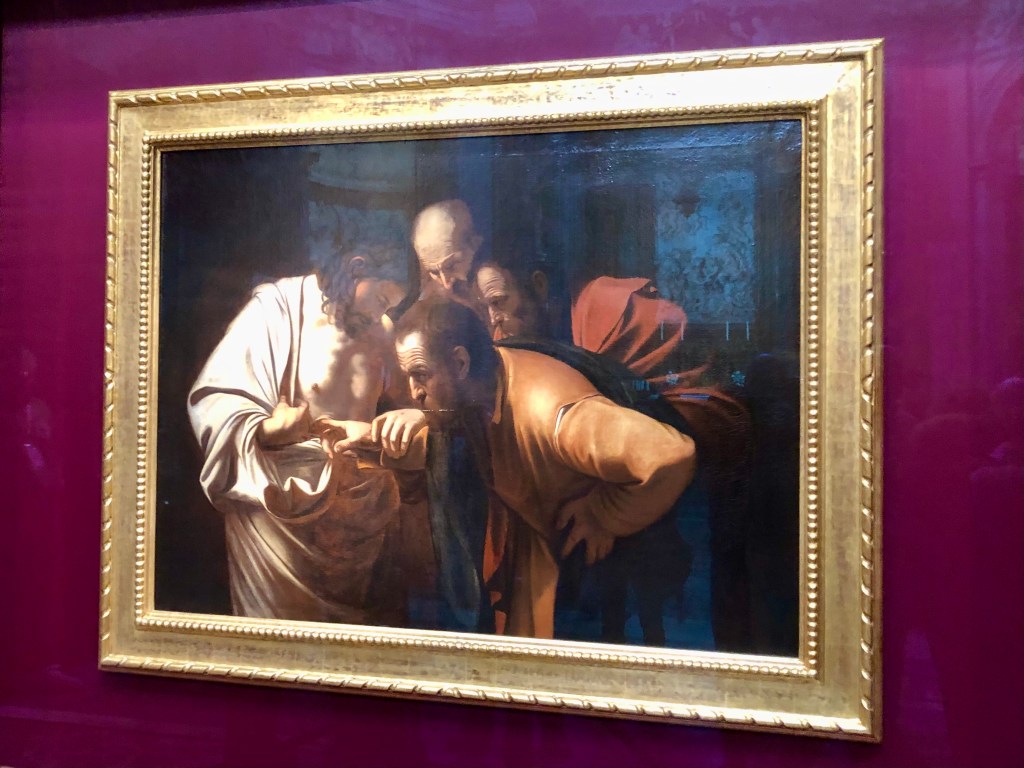
One of the most remarkable places in this remarkable city of art is the Contarelli Chapel in the Church of San Luigi dei Francesi, home to the St. Matthew trilogy of Michelangelo Merisi da Caravaggio. Three paintings–The Conversion, The Inspiration, and The Martyrdom of St. Matthew–tell the story of the life of the saint, from his improbable calling to his death. The paintings are full of artistic drama, reflecting the artist’s own spiritual struggles and his attempt to find his place among Italy’s artistic greats.

Contarelli Chapel, San Luigi dei Francesi, Rome

The paintings date from early in Caravaggio’s career (1599-1600), when he was at the apex of his success in Rome. Only a few years after painting the St. Matthew trilogy, however, Caravaggio’s artistic career was sabotaged by his own unruly passions–he was forced to flee Rome after murdering a man in a brawl. As I’ve argued before, the fact that Caravaggio sinned so spectacularly does not negate a deep thirst for God or his spiritual and sacramental sense. In fact, as so often happens, awareness of his sin may have heightened the need the artist felt for redemption. In one of his later works, which he painted while in exile for his crime, David holds the head of Goliath–who bears Caravaggio’s own anguished face.

David with the Head of Goliath, Caravaggio, Borghese Gallery, Rome

Conversion also drives the “plot” of Caravaggio’s St. Matthew cycle. The first of the paintings, The Call of Matthew, depicts the moment when Jesus walks into Matthew’s customs post where the tax collector sits among cronies, coins spread over the table in front of him. Light shines in from a window just over the Lord’s head and hits Matthew straight on as Jesus raises his hand and points an unrelenting finger, as if to say, “You.” The tax collector’s own finger rises to his chest and his eyes widen, as if to respond, “Who? Me?” Or perhaps he is trying to distract the Lord’s gaze by pointing to the ne’er-do-well next to him, whose eyes are still fixed on the coins. In either case, the painting captures all the passion and confusion of the call to conversion–the unrelenting gaze of God, the instinctual avoidance and doubt of the sinner who is called. Does Matthew think himself unworthy? Shy away from relinquishing the wealth he knows? Hesitate when truth itself dissolves the shadows of ambiguity he has woven around himself? Probably, all of the above.

Continue reading “St. Matthew according to Caravaggio: a spiritual masterpiece”

Andrea Grillo and Rachel Lu on Baptism of Desire and Christian Salvation

Sant’Anselmo, Rome

Earlier this month, after delivering ten copies of Baptism of Desire and Christian Salvation to Sant’Anselmo at Easter time, I walked up the Aventine Hill to pick up my diploma–the last formality involved in earning my doctorate. The last act, I suppose, of my formal education! It’s a walk I made many times before while a student. I haven’t been back to Sant’Anselmo for a while now, but am grateful for the studies in sacramental theology I did there.

When I received my copies of Baptism of Desire and Christian Salvation, I had one more reason to be grateful — the insightful words of endorsement on the back cover from my dissertation director Prof. Andrea Grillo, who read many draft versions of the tome and managed to remain in good humor throughout! Here’s his review:

Lusvardi offers a historical reconstruction of the ‘baptism of desire’ that traverses the entire arc of the Christian tradition, starting from the origins. A straightforward work, expressed in a language endowed with finesse, irony and acumen. Baptism of Desire and Christian Salvation is singularly effective in pointing out the fact that in the modern reception, a series of priorities is imposed on the issue that empty its meaning.

Andrea Grillo, Pontifical Atheneum of Saint Anselm, Rome

Also last week, I was delighted to see Rachel Lu’s review of the book at Word On Fire. Rachel’s review had a particular significance for me since, as she points out, I was there when she was baptized as an adult 19 years ago.

Filippo and Filippino Lippi at Rome’s Capitoline Museum

Filippo Lippi, Madonna of Humility, 1420

Though I still have a few weeks of grading exams to go, summer is definitely here in Rome. To celebrate the end of classes, I took a morning off last week to visit a special exhibit at Rome’s Capitoline Museum. The Capitoline is one of several museums in the Eternal City that would be the top attraction anywhere else but gets overshadowed by the Vatican Museums and the Borghese Gallery. It contains a number of impressive ancient Roman sculptures and a couple of Caravaggios — antiquity and baroque being the two periods Rome is known best for. When it comes to Renaissance art, Rome takes second place to Florence (though, given the work of Michelangelo and Raphael in the Vatican, the competition is still stiff).

In any case, the Capitoline is hosting an exhibit this summer dedicated to the work of Filippo Lippi (1406-1469) and his son Filippino (1457-1504). I mentioned Filippo before for his wonderful frescoes in Spoleto’s cathedral depicting the life of the Virgin. Filippo grew up an orphan and very poor. He was raised in a Carmelite monastery in Florence and became a monk. His superiors noticed his talent and encouraged his artistic career. He proved, in fact, to be a better artist than a monk. While executing a commission in a monastery in Prato, he ran off with a 17-year old novice, Lucrezia Buti, who became the model for some of his most beautiful female figures. Filippino, you might have guessed, was the fruit of their union.

Continue reading “Filippo and Filippino Lippi at Rome’s Capitoline Museum”

Santa Maria in Cosmedin – home to St. Valentine

Santa Maria in Cosmedin, Piazza della Bocca della Verità, Rome

It’s not one of Rome’s station churches, but Santa Maria in Cosmedin was one of my stops as Lent began this year because of the coincidence of Valentine’s Day falling on Ash Wednesday. A college English professor once advised me that in literature love and death are always intertwined, and this year’s liturgical calendar seems to add an exclamation point to the theory. What does all of this have to do with Santa Maria in Cosmedin, a twelfth century Roman church a stone’s throw from the Circus Maximus?

Well, Santa Maria in Cosmedin is home to the relics of St. Valentine. And, given his current appearance, I’d say Valentine drives home Ash Wednesday’s message pretty well. Not much is known about his life; Valentine was third century Roman priest martyred for continuing to minister to his flock in the midst of persecution. A note near his altar says the saint has been turned to not only for love, but as an intercessor in times of plague.

The relics of St. Valentine — romance abounds!

The church itself is rather fascinating. The current building, with its stubby façade and soaring bell tower, dates from the 12th century but was built on the site of an eighth century diaconia. Diaconia were the Catholic Social Services hubs of their day, centers where various forms of charity were distributed to the needy. Today the church is home to Rome’s Melkite community.

Continue reading “Santa Maria in Cosmedin – home to St. Valentine”