Homily for the Feast of St. Ignatius

The feast of St. Ignatius was back in July, of course, but I thought the reflections on discernment in my homily might be helpful in any season. Last year, I was asked for some thoughts on the process of communal discernment used by the Synod on Synodality. These reflections build on those observations.

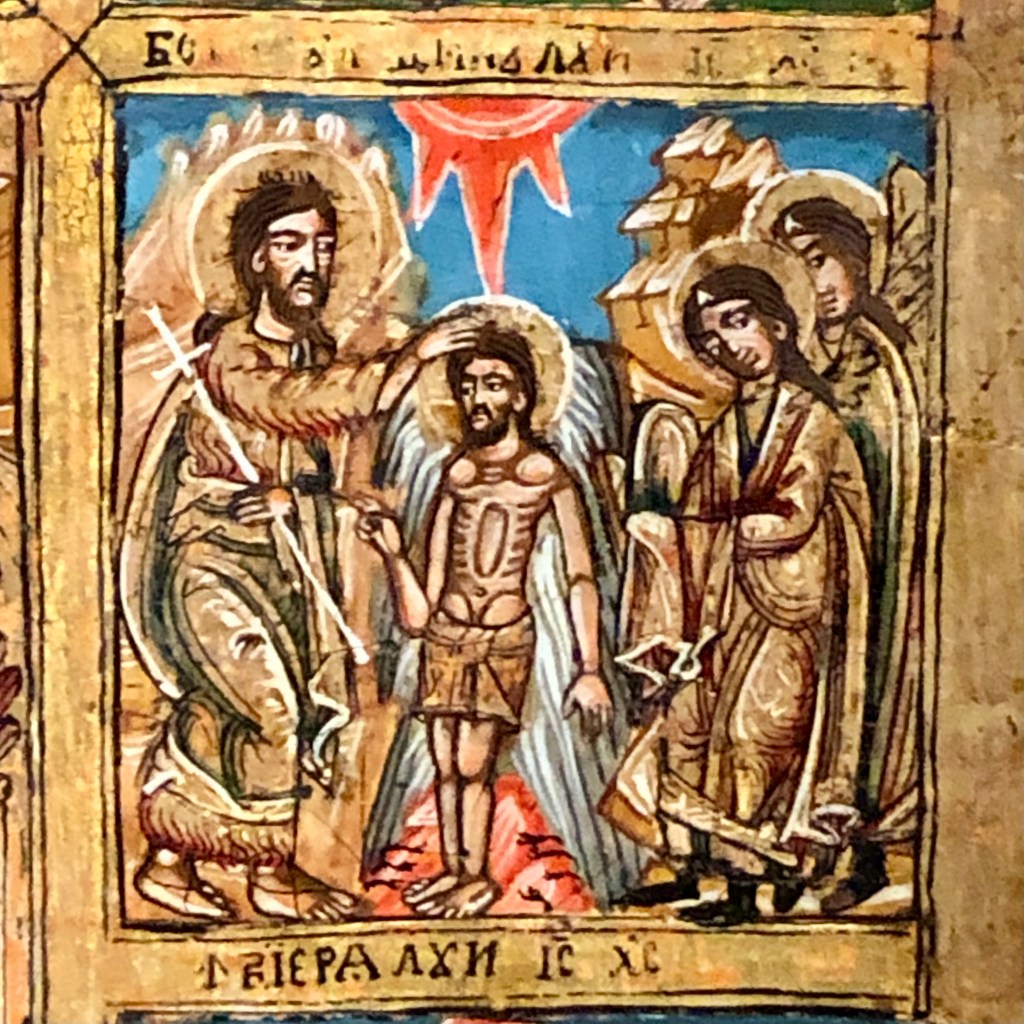
Inigo the Pilgrim (2017), Church of St. Ignatius, Norwood, South Australia

You might have had the experience of the warning light on your dashboard coming on while you’re driving, signaling that you are low on gas, near the minimum.  Here in South Dakota especially–where outside of the city gas stations can be few and far between–you don’t want to fall below that minimum.  You might end up out in the cold or in this merciless heat—both dangerous circumstances—and in need of a good Samaritan to rescue you.

If you keep your tank filled, however, and don’t fall below the minimum, you can drive wherever you like.  You just plug the destination into the GPS and go.

The warning light and the GPS are both helpful, but they serve different functions—the warning light tells us not to drop below the minimum and the GPS gives us directions.  The readings for today’s feast of St. Ignatius, I think, point to a way of living the Christian faith that goes beyond the minimum.

If we think about the commandments, they are very useful for giving us the minimal rules of the road necessary to avoid an accident or a breakdown by the roadside. Because of this function, most of the commandments are written in a negative form—“Thou shall not…”  Even those that aren’t prohibitions—“Keep holy the Sabbath” and “Honor thy father and mother”—set a minimum of necessary behaviors.  Sunday Mass is the minimum necessary worship if we are to do justice to God, and fulfilling our family duties is the minimum necessary social obligation if we’re to maintain a functional social harmony.

But just doing the minimum isn’t enough to live a fulfilling life or to live a life of discipleship.  If I put on my to-do list for tomorrow, “Don’t kill anyone, don’t commit adultery, don’t steal,” I’ll end up rather bored.  The minimum tells us what to avoid, but not much of what to do.

Continue reading “Homily for the Feast of St. Ignatius”

Faithfully unfashionable: homily for the twenty-third Sunday in Ordinary Time

Homily for the 23rd Sunday of Ordinary Time (B)

Prophet Isaiah, Raphael (1511-2), Church of Sant’Agostino Rome

A mile or so from where I live in Rome is a street called Via dei Condotti; there you can find the stores of Armani, Tiffany’s, Gucci—the highest high-end designers.  Sometimes I like to amuse myself by looking in the windows at the prices—a thousand dollars for a sweater, twelve hundred dollars for a necktie, twenty thousand dollars for a watch.  Of course, many of the stores don’t list prices because if you have to ask, you can’t afford it.  I’ve never gone inside any of these stores because they are usually guarded by a man with a shaved head, six inches taller than I am, with a black suit and a mouth that never smiles.  In fact, I think they’ve had the facial muscles that allow you to smile surgically removed.  

The owners of these stores would not be happy to read today’s Letter of St. James.  James says: don’t favor a person with gold rings over a person in shabby clothes.  Of course, sometimes shabby clothes are fashionable and expensive; having torn jeans means that you’re one of the cool kids.  What’s in fashion always changes because it’s not based on anything real.  A thousand dollar sweater won’t keep you any warmer than a thirty dollar sweater; a twenty thousand dollar Rollex tells the same time as my twenty dollar Timex.  Fashions based on wealth, prestige, and the most up-to-date style are like the leaves that you see on the trees this September day; next month they’ll be a different color; a month after that, they’ll be gone.

Even though fashion and prestige aren’t based on anything true and lasting, they can be used to hurt people in some very real ways.  I think of how hard it is for someone not to be one of the “cool kids” in middle school or high school.  Adults are sometimes just as bad; I can remember from my time here on the reservation that sometimes people are looked down on for being “too Native”; other times they may be looked down on for “not being Native enough.”  In either case, sometimes people can be treated quite unfairly.  

Continue reading “Faithfully unfashionable: homily for the twenty-third Sunday in Ordinary Time”

Law and communion: homily for the twenty-second Sunday in Ordinary Time

Homily for the 22nd Sunday in Ordinary Time (B)

If you could pick eight of the Ten Commandments to follow and drop two, which would they be?  What if you could keep six as commandments and downgrade four to recommendations?  Perhaps you’re thinking, “I probably only need about five or so, but I know a lot of people who could use a few more, maybe 12 or 15 for them.”  The Pharisees in the Gospel seem to have adopted this last strategy, and perhaps because of their bad example sometimes the very idea of law gets a bad rap.  Didn’t Jesus teach grace rather than law, mercy instead of rules?  Didn’t Jesus say, “All you need is love, love is all you need”?  

Actually, that was the Beatles.  Jesus said in the Sermon on the Mount:  “Do not think that I have come to abolish the law or the prophets.  I have come not to abolish but to fulfill.  Amen, I say to you, until heaven and earth pass away, not the smallest letter or the smallest part of a letter will pass from the law.”

Basilica de Santo Nino, Cebu City, Philippines

Now it is true that, as in today’s Gospel reading, Jesus harshly criticizes a certain way of using the law as self-serving and hypocritical.  So to be disciples of Jesus we need to think carefully about the role the law plays in salvation history and in our own lives of faith.  

Today’s first reading from Deuteronomy makes clear that the law of Israel is God’s gift.  It makes equally clear that no one but God may add to or subtract from what he commands.  No matter how much we find the commandments hard to follow, no matter how old they are, no matter if we think we could attract crowds of new people to our Church by loosening the loopholes, only God can modify the law of God.  

Continue reading “Law and communion: homily for the twenty-second Sunday in Ordinary Time”

Sacraments of loyalty, marriage and Eucharist: homily for the twenty-first Sunday in Ordinary Time

Homily for the 21st Sunday in Ordinary Time (B)

Are there any Bears fans here?  I have a question for you: if I reached into my wallet, how much money would I have to offer to get you to root for the Vikings?  I know what you’re thinking: “You keep your wallet where it is, Father, because there ain’t enough money in the world to make me a Vikings fan.” Fair enough.  I am a Notre Dame fan, and you could fill up the collection plate with hundred dollar bills, but you’d never get me to root for USC or Michigan. 

Triumph of Faith over Idolatry, Jean-Baptistre Théodon, Church of the Gesù, Rome

In both cases, the reason why is loyalty.  Each of today’s readings is about loyalty, though much more important types of loyalty than what we show our sports teams.  When the first reading takes place, Joshua and the Israelites have spent their lifetime conquering the Promised Land after the death of Moses; here Joshua is an old man and he is putting a choice to the people.  They’ve arrived, the land is theirs, and he tells them: Now you have to decide whom to serve.  The God of our fathers Abraham and Moses got us here, and he has given us his law.  Other nations have other gods, maybe with laws that aren’t so demanding.  You are free to make a choice.  You can serve whichever god you wish, Joshua says, but “as for me and my house, we will serve the Lord.”  

And the people agree to serve the Lord.  But if you continuing reading in the book of Joshua, you’ll see that Joshua asks the people a second time.  Are you sure?  Because if you agree to serve the Lord, then God will hold you to his law.  You are free, but your choice is binding.  

Continue reading “Sacraments of loyalty, marriage and Eucharist: homily for the twenty-first Sunday in Ordinary Time”

Choose life, South Dakota: homily for the twentieth Sunday in Ordinary Time

Homily for the 20th Sunday in Ordinary Time (B)

If there is one theme consistently present throughout the whole Bible, from the first chapter of Genesis to today’s Gospel, it is that God desires to give us life.  When he reveals the commandments to Moses on Mount Sinai, he tells the people of Israel, “I have set before you life and death, the blessing and the curse.  Choose life, then, that you and your descendants may live” (Dt 30:19).  Today the Eucharist too is presented as life-giving: “The bread that I will give is my flesh for the life of the world” (Jn 6:51). 

It is fitting that today’s readings would highlight God’s desire to give us life, because, as I mentioned last week, the bishops of South Dakota have asked us to speak these two Sundays about a particularly urgent social issue: a measure, Amendment G, has been placed on the ballot this November, which would add the right to abortion without significant limits to the South Dakota constitution.  As I pointed out last week, Christianity is not a political program, and Catholics can disagree about most political issues while still remaining faithful to the principles of our faith.  Amendment G, however, is impossible to reconcile with the fundamental principle that it is always wrong to deliberately kill an innocent human being.

This principle is something that both conservatives and liberals should be able to embrace.  Conservatives emphasize the government’s duty to protect and not usurp individual rights, and without the right to life no other rights are possible.  Even a libertarian “live and let live” philosophy only works if you let the other live.  Take away the right to life and you have neither conservative government nor a free people, but the oppression of the weak.  

Continue reading “Choose life, South Dakota: homily for the twentieth Sunday in Ordinary Time”

Taking the gold for Team Humanity: homily for the Assumption of the Blessed Virgin Mary

Homily for the Assumption

Raphael, Coronation of the Virgin, Vatican Museums

My brothers and sisters, I’m no angel.  Before you respond with too much glee, “Oh, Father, we know,” let me point out—you’re no angels, either.

Now, when people say, “He’s no angel,” usually what they’re saying doesn’t mean what they think it does.  Usually, if someone says, “He’s no angel,” they mean, “He’s not so nice.”  Maybe there are a few skeletons in his closet.

But not all the angels were good.  Lucifer and the demons are angels, and they have so many skeletons there’s no room for clothes in their closets.  Today’s great feast is dedicated to a woman who never sinned.  But today, the feast of the Assumption, we celebrate the fact that Mary is no angel.  She is a human being.  A woman.  One of us.

You see, because the real reason demons don’t have clothes in their closets is because they don’t have anything to wear them on.  Angels don’t have bodies.  But we do.  That’s the difference between angels and human beings.  Otherwise, we’re quite a bit alike.  We both have intelligence and free will—which is how the fallen angels sinned.  The big difference is the body.

Today we celebrate the fact that at the end of her life on earth, Mary’s body entered immediately into heavenly glory.

And, my friends, this is not some bit of religious trivia, but something very, very important for each one of us.  Because it means that to be saved, to enter into heavenly glory, we don’t have to give up being human.  We don’t have to become angels.  God wants to save us as human beings, which is why his plan for our salvation involved taking the flesh of Mary, a woman, to become a man, so that we, women and men, might be saved in our human bodies.

Continue reading “Taking the gold for Team Humanity: homily for the Assumption of the Blessed Virgin Mary”

Bread of life or never-ending breadsticks? Homily for the eighteenth Sunday in Ordinary Time

Homily for the 18th Sunday in Ordinary Time (B)

If there were an Olympic event for complaining, the ancient Israelites just might take the gold medal. Today, after being liberated from slavery, they ask to go back, forgetting the oppression they suffered in Egypt and remembering the country as an ancient Olive Garden with fleshpots and never-ending bread sticks.  Hearing their complaint, God sends them manna and quail to eat, but we know that soon enough they’ll start complaining again—“Manna again?  We want leaks and onions, not these leftovers!”  And they’ll attack Moses: “Why’d you have to lead us out here?  Weren’t there enough graves in Egypt?”

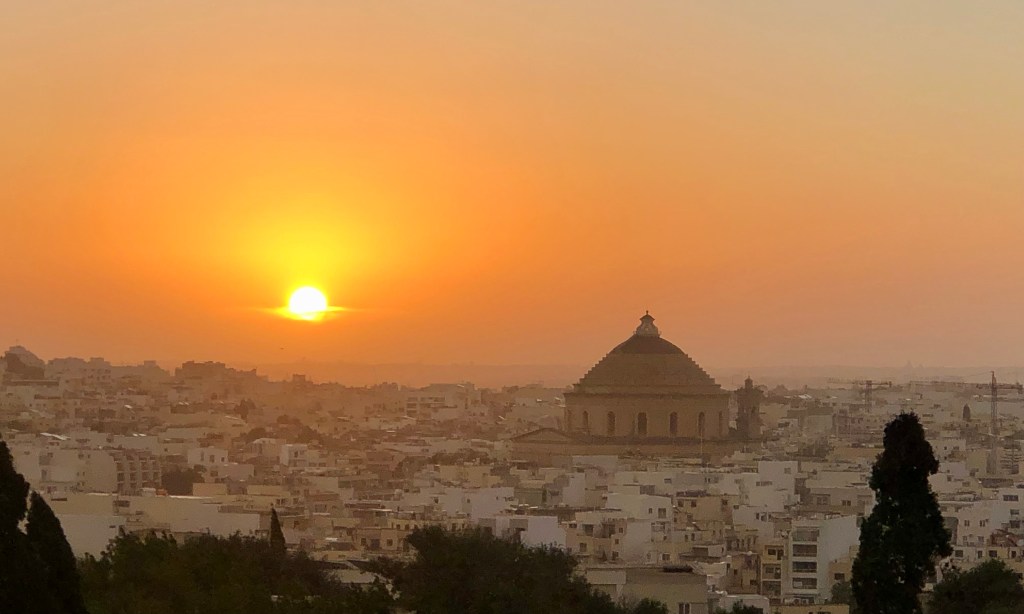
The preaching of St. Paul, Rabat, Malta

But, if complaining were an Olympic event, the competition would be fierce.  I suspect there’s something deep in our human nature—some survival mechanism from caveman days that made our ancestors less likely to be eaten by sabretooth tigers or stomped on by wooly mammoths if they were quicker to see the negative than the positive, more inclined to fear than to gratitude.  The problem is if you’re not being stalked by a sabretooth tiger, this instinct for the negative sometimes results in clubbing our friends or retreating into the darkness of our own self-constructed caves.  

Continue reading “Bread of life or never-ending breadsticks? Homily for the eighteenth Sunday in Ordinary Time”

Leftovers transformed: homily for the seventeenth Sunday in Ordinary Time

Homily for the 17th Sunday in Ordinary Time (B)

Miracle of the Loaves from the Triptych of the Miracles of Christ, Master of the Legend of St. Catherine, Flanders 1491-5, National Gallery of Victoria, Melbourne

Today’s readings give a prominent place to leftovers.  In the hands of the prophet Elisha, twenty barley loaves manage to fill a hundred people, with some left over.  When Jesus feeds the five thousand, the leftovers—twelve baskets—exceed the amount of bread there was to begin with—just five loaves.

It’s worth noting that the disciples go to the trouble of collecting the leftovers after the impromptu meal.  Living in an age of abundance, perhaps we are used to throwing leftovers out or letting them molder in the back of the fridge, but letting leftovers go to waste is a luxury most people in history didn’t have.  Certain recipes popular today were originally invented to use stale bread—bread pudding, for example, or the Tuscan bread soup known as ribollita.  The funny thing about ribollita is that what started out as a peasant dish today is served in pricey and fashionable restaurants.  What was once leftovers has become high cuisine.

There’s something deeply Christian in this transformation.  Ours is a faith, after all, in which the stone rejected by the builders becomes the cornerstone, the last become first, the meek inherit the earth, the poor are filled with good things while the rich go away empty, the blood of martyrs becomes the seed of faith, and in dying we are born to eternal life.  We believe not just that leftover bread can be transformed into a savory dish, but that utterly ordinary bread and wine are, in the sacrament of the Eucharist, transformed into the body and blood of Jesus. Moreover, if we approach the sacrament in faith, we too are transformed into the body of Christ; our weak and too often sinful flesh becomes the dwelling place of the Holy Spirit.

I have a friend, a Filipino Jesuit who comes from a family of restauranteurs and is an amazing chef.  He has a particular genius for being able to walk into any kitchen, open the refrigerator, glance over whatever leftovers are inside, spend half an hour spicing and mixing and reheating, and produce a feast that was better than the original meal.  Our Christian faith is something like this.  At its heart is belief in the possibility of transformation.

Continue reading “Leftovers transformed: homily for the seventeenth Sunday in Ordinary Time”

A bloody Sunday: Corpus Christi homily

Homily for the Solemnity of Corpus Christi (B)

Today’s readings are bloody.  Some years the readings for Corpus Christi emphasize the bread that becomes the body of Christ, and they remind us that the Eucharist is our nourishment and also the source of our unity.  A single loaf of bread is formed from many individual grains of wheat.  

Moses, Michelangelo

But today’s readings are full of blood.  This is not a Sunday for the squeamish.  Blood sprinkled, blood shed, blood poured out, drinking blood.  If we are tempted to imagine that worship is something abstract or comfortable or safe, the blood-spattered images in today’s readings should give us second thoughts.  In the ancient world and in the time of Jesus, worship was a matter of flesh and blood, of life and death.  Entering the Temple of Jerusalem would have been a shock to the senses—crowds of visitors both from Judea and from the Jewish diaspora; animals—birds, sheep, goats, bulls—and all their animal noises and smells; the sounds of these animals being slaughtered; the smell of blood; and the songs of prayer, of the psalms rising to heaven, with the smoke of burning incense and roasting meat.  Worshipping God was not for the squeamish.

I think the fact that today’s readings speak rather vividly of the blood of goats, heifers, and bulls—bowls of blood—is perhaps a way of reminding us that Christianity—following Jesus—requires a certain courage.  In one way or another we all have to overcome our squeamishness, whatever form it might take.  The perfect act of worship, after all, the sacrifice which is the model for all other acts of worship, the death of Jesus on the cross, was not only bloody, but brutal.  There was nothing abstract or comfortable in the scrouging and beating, in the nails, the crown of thorns, or the agonizing hours on the cross.  And yet this was not, in the final analysis, merely an act of violence or a miscarriage of justice but an act of self-giving love.  The blood of the new covenant was shed for those Jesus calls to be his friends and disciples.

But why blood?  What is the meaning, for example, of what probably seems to us the very strange gesture of Moses who, to seal the covenant between God and his people, splashes blood upon the altar and then sprinkles it on the people.  When I read this passage one of my first very modern, very practical thoughts is, “How are the Israelites going to get all that blood out of their clothes?  What a mess!”  But we are told, in the letter to the Hebrews, that it is blood—the blood of Christ—that cleanses.

Continue reading “A bloody Sunday: Corpus Christi homily”