A Church of all nations: homily for the twenty-first Sunday of Ordinary Time

Homily for the 21st Sunday in Ordinary Time (C)

Not long ago, at dinner in my community in Rome, which houses Jesuits from maybe 30 different countries, one of my brothers from Columbia was talking with one of my brothers from Poland about the different things people eat around the world, and he mentioned hearing that in parts of Asia people eat dog meat.  And another of my brothers from the Philippines, who is normally very quiet, looked up from his plate and said, “Oh, yes, very good,” and then he went on with his meal.  

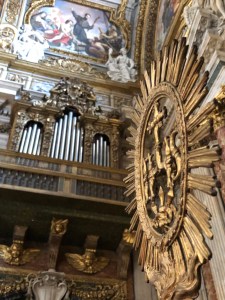
Altar of St. Francis Xavier, Gesù Church, Rome

There is no more diverse an organization in the world than the Catholic Church.  Not only do Catholics come from different countries and races and language groups, but the Church includes saints of different historical periods, the great cloud of witnesses mentioned by the letter to the Hebrews last week.  The martyrs of first century Rome, of seventeenth century Japan, of 20th century Spain and Mexico, and, in our still-young century, of Turkey, Pakistan, Kenya, Nigeria, France and elsewhere could not have been more different culturally or socially, yet they all shared a belief in Catholicism so strong they were willing to die for it.  People have indeed come, as the Lord says, from the east and from the west, from the north and from the south to the table in the kingdom of God, around which we gather this morning.

Continue reading “A Church of all nations: homily for the twenty-first Sunday of Ordinary Time”

Weight-lifting for the Assumption: homily for Mary’s Assumption

Homily for the Solemnity of the Assumption of the Blessed Virgin Mary

Santa Maria in Trastevere, Rome

If you are looking for an appropriate way to observe today’s Solemnity of the Assumption of the Blessed Virgin Mary, may I suggest weight-lifting.

Today’s feast is a celebration of strength.  The strength we celebrate today is more than that shown by Olympic weightlifters—though it includes a little of that—more than the moral strength of a figure like Rosa Parks—though it includes that too—more than the geo-political strength projected by a squadron of B-21 bombers—though that’s not absent either.  Add to all of these the strength of a cosmic force—like the gravity of the sun or the moon tugging at the tides—and you get an idea of the strength we’re dealing with. 

Continue reading “Weight-lifting for the Assumption: homily for Mary’s Assumption”

Not peace, but division: homily for the twentieth Sunday of Ordinary Time

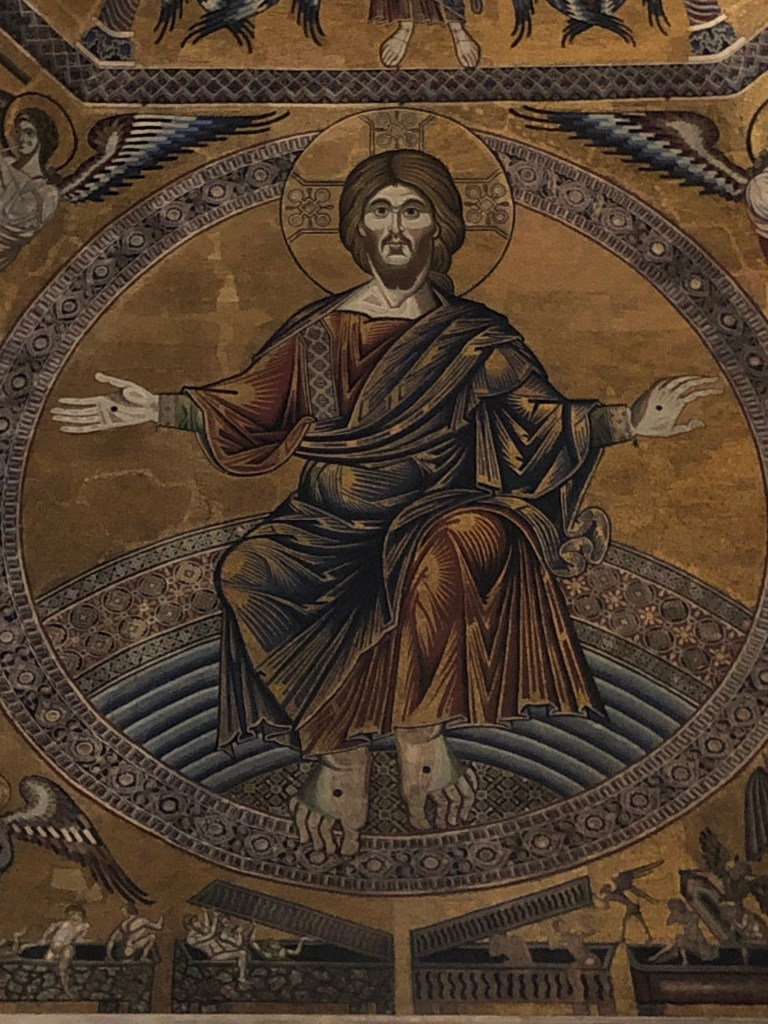
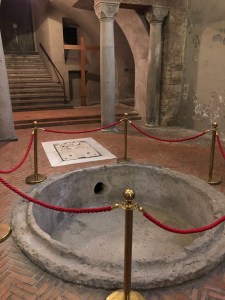
Baptistry, Florence

Homily for the 20th Sunday in Ordinary Time (C)

Politicians frequently claim to be uniters, not dividers.  If you wanted proof, therefore, that Jesus was not a politician, look no further than today’s Gospel: “Do you think that I have come to establish peace on the earth?  No, I tell you, but rather division.”

Political promises of unity, of course, come cheaply; sometimes they simply mean, “If you disagree with me, I’ll accuse you of being a divider.”  In today’s Gospel reading, however, Jesus makes a move never recommended by any political consultant: he preemptively accuses himself of bringing division.  Other than the desire to put centuries of future homilists in a very awkward position, why would Jesus do this?

Continue reading “Not peace, but division: homily for the twentieth Sunday of Ordinary Time”

Catholic self-help

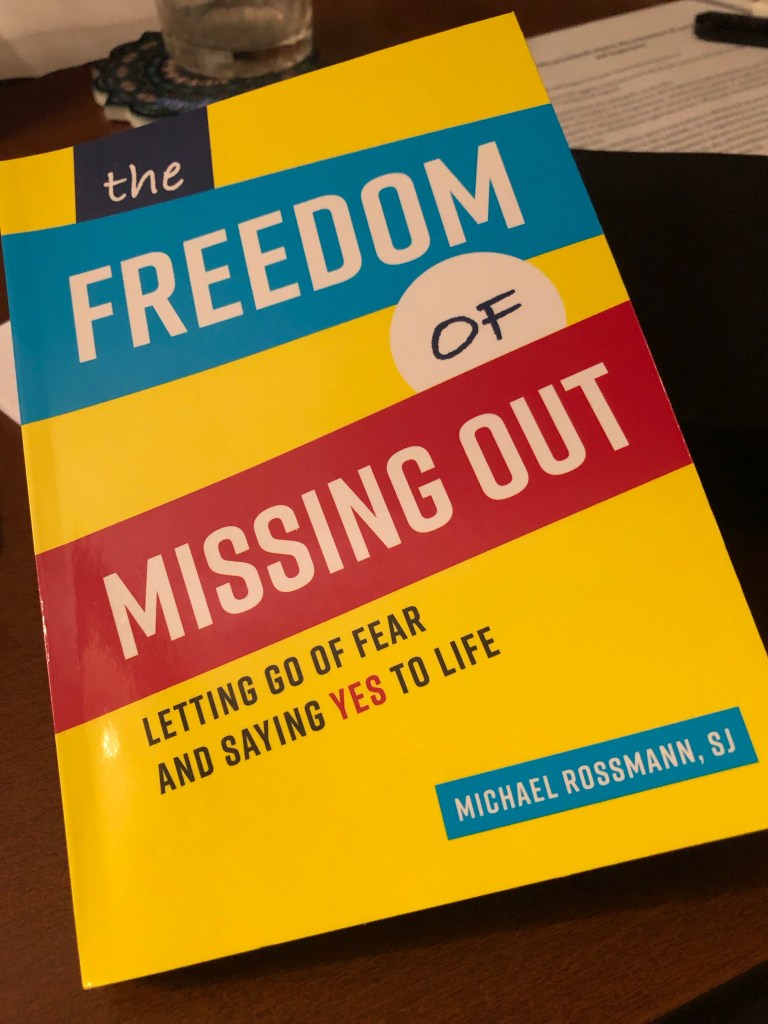
My friend and Jesuit classmate Fr. Michael Rossmann has just published a book, which upon its release held the status of Amazon’s #1 book in “self-help for Catholics”. Actually, I didn’t know there was such a category (and neither did Fr. Rossmann).

Inside the snappy cover, Fr. Rossmann makes a point I think is very important today — really saying yes to something or someone means saying no to other things. Never committing in order to keep one’s options open means refusing to choose the things that matter most.

The book is called The Freedom of Missing Out and continues the long Jesuit tradition of practical help for good decision-making that goes back to St. Ignatius’s rules for discernment. In fact, the influence of Ignatius is not far below the surface, though the book is illustrated with examples from all walks of life and lots of contemporary research. While Rossmann draws on the best of the Catholic tradition, his words about commitment and freedom will ring true to people of any religion.

Interview on Sacramental Theology

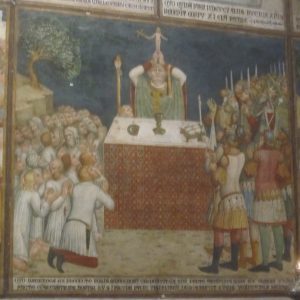
Chapel of the Corporal, Orvieto

Last month I had an interesting discussion with Jesuit scholastic David Inczauskis about the sacraments–what they are, why we have them, how they and the theology surrounding them developed through time, what are the challenges for sacramental theology today. David produces an in-depth podcast on liberation theology, so my general introduction to sacramental theology was the lead-in to some of his reflections on liberation theology and the sacraments, which are also included in the podcast. Here’s the Apple version of the episode:

Episode 22: Liturgy and Sacraments, the Liberation Theology Podcast. I’m told it can be found on other podcast venues as well.

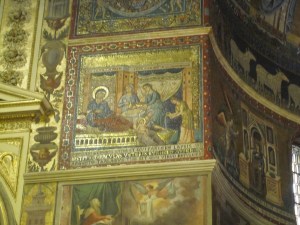
Saints Joachim and Anne, grandparents of Jesus

Santa Maria in Trastevere

It’s been one of the great blessings of my life to have gotten to know all four of my grandparents and to have them with me well into adulthood. Particularly in times that change so quickly and so dramatically, grandparents give us access not just to another generation but, really, to other worlds.

On this memorial of St. Joachim and St. Anne, I came across this quotation from one of the 20th century’s literary giants:

I feel that all my writing has been about the experiences of the time I spent with my grandparents.

Gabriel García Márquez

Baptism, before and after: homily for the 17th Sunday of Ordinary Time

Homily for the seventeenth Sunday of Ordinary Time (C)

Today’s three readings can be read as something like before and after photos.  Not, however, photos advertising a particular diet, plastic surgery, or hair cream.  The middle reading, St. Paul’s letter to the Colossians, mentions one of my favorite subjects, baptism.  The first reading and the Gospel give us the before and after of baptism.  

But before we get into the evidence of baptism’s effects in these before and after readings, take a look again at how St. Paul describes the first sacrament in Colossians: “You were buried with him in baptism, in which you were also raised with him through faith in the power of God, who raised him from the dead.”  Baptism means both death and life.  It means participating in the Paschal Mystery of Jesus, dying with him in order to rise with him.  You may already have heard me say that I think we lose something if we only think about baptism in terms of babies and don’t remember the way that the sacrament was celebrated in the early Church.  Then baptismal fonts were below floor-level and deep enough for adults being baptized to step down into and be fully immersed.  

Ancient Christian baptistry, Naples

Baptisms, in other words, were really dramatic events.  In Colossians, Paul uses dramatic language—the bond of our guilt, he says, is obliterated and nailed to the cross.  In Rapid City, we know the dramatic effects of water.  After a dry and scorching week, we remember that water brings life.  But we also know that in 1972 this city was destroyed by flood—in fact, this church was built here after the original St. Isaac Jogues was washed away.  The Bible uses two very different sets of images to talk about baptism: the water represent both the tomb, because it means being buried with Jesus, and the womb, because baptism is a second birth.  

Continue reading “Baptism, before and after: homily for the 17th Sunday of Ordinary Time”

Abraham’s promises: homily for the sixteenth Sunday in Ordinary Time

Homily for the sixteenth Sunday in Ordinary Time (C)

This morning, I want to talk about Abraham.  For many of us, perhaps, Abraham is like one of those distant relatives your grandmother mentions occasionally but you’re never quite sure how you’re related.  Fortunately, it’s easy to see how Abraham fits into the family tree.  He’s at the top—Abraham is the patriarch, the father of the Jewish people and also, according to the New Testament, the father of us all in faith.

Caravaggio, Sacrifice of Isaac, Uffizi Gallery, Florence

We find Abraham’s story in the book of Genesis.  He lives in that period in history after the fall, when the sin of Adam has left humanity existentially disoriented.  It’s the era of Cain and Abel, the Tower of Babel, Noah and the Flood—man is lost, and every turn he makes only worsens his desolation.  When I was in the Peace Corps, I was once heating a bucket of water with an electric coil, which was, shall we say, not up to OSHA standards.  And without noticing that the plastic safety handle around the coil had melted, I picked it up and gave myself a shock.  And in the moments after the shock, everything was fuzzy, and I couldn’t quite tell what had happened or what I was doing—so I picked it up and shocked myself again.  And that’s kind of what original sin did to mankind.

Continue reading “Abraham’s promises: homily for the sixteenth Sunday in Ordinary Time”

Augustine’s baptism

The baptism of St. Augustine, San Pietro in Ciel d’Oro, Pavia, Italy

Anyone reading St. Augustine’s Confessions, of course, knows exactly where the book is leading, even if the story itself recounts a tortuous journey from doubt and confusion to faith. Augustine dedicates relatively few words to his baptism–at the time, Christians avoided describing what happened during the celebration of the sacraments to those not yet initiated–but what he does say reveals much about the power of the rite. Augustine was baptized by St. Ambrose in the baptistry of Milan’s cathedral on April 24, 387, along with his fifteen-year-old son Adeodatus. Adeodatus died only two years later. Looking up the passage anew, I was struck by the feeling in what Augustine wrote about his son:

“You had made him a fine person. He was about fifteen years old, and his intelligence surpassed that of many serious and well-educated men. I praise you for your gifts, my Lord God, Creator of all and with great power giving form to our deformities. For I contributed nothing to that boy other than sin… I learned many other remarkable things about him. His intelligence left me awestruck. Who but you could be the Maker of such wonders? Early on you took him away from life on earth. I recall him with no anxiety; there was nothing to fear in his boyhood or adolescence or indeed his manhood.”

Augustine goes on to describe his baptism, side by side with Adeodatus, both now reborn “the same age in grace”.

“We were baptized, and disquiet about our past life vanished from us. During those days I found an insatiable and amazing delight in considering the profundity of your purpose for the salvation of the human race. How I wept during your hymns and songs! I was deeply moved by the music of the sweet chants of your Church. The sounds flowed into my ears and the truth was distilled into my heart. This caused the feelings of devotion to overflow. Tears ran, and it was good for me to have that experience.”

St. Augustine, Confessions, Book IX, vi (14)

More on Augustine (and Ambrose)

Last week, I mentioned visiting the church of San Pietro in Ciel d’Oro in Pavia, resting place of the relics of St. Augustine. This week, I thought I’d share a few more pictures of the church and the tomb, as well as a favorite panel from the monument, a scene of young Augustine listening to St. Ambrose preaching.

San Pietro in Ciel d’Oro, Pavia, Italy

Ambrose, then bishop of Milan, is another of my favorite theologians. He was the first Christian thinker to formulate the doctrine of baptism of desire, which–1530 years later–became the subject of my doctoral dissertation and book Baptism of Desire and Christian Salvation. (Augustine was the second… I’m not quite sure where I fall on the list, but it’s significantly farther down.)

In any case, below is Augustine’s description of his encounter with Ambrose to accompany the photos.

Continue reading “More on Augustine (and Ambrose)”