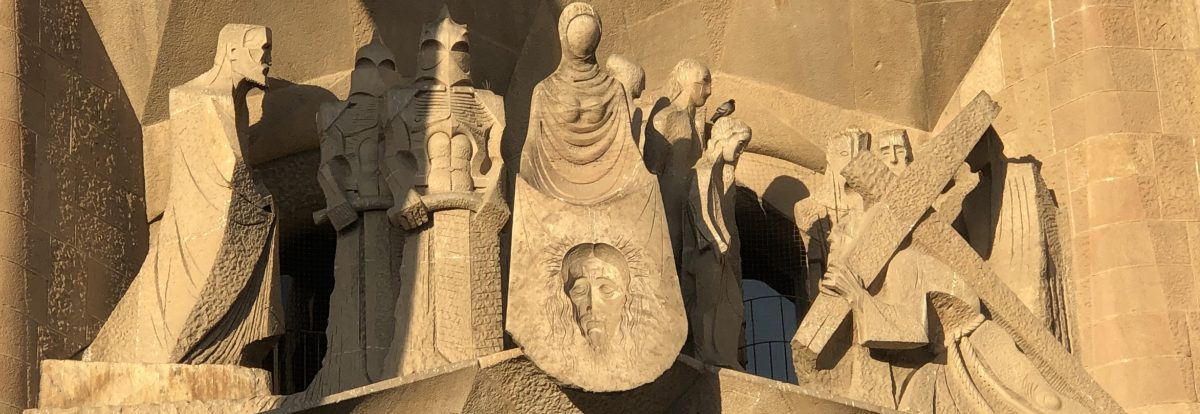
Last week I was pleased to take part in a conference organized by at the Gregorian University’s Faculty of History and Culture and the Institute of Liturgy at the University of Santa Croce entitled L’edificio di culto e gli artisti: A 25 anni dal primo Giubileo degli Artisti (2000-2025). The theme was church architecture and art over the past 25 years. The conference brought together an impressive group of international architects, artists, and theologians.
My own rather modest contribution was to extend the reflection I began in November’s issue of First Things on “Screens and Sacraments.” The talk seemed to produce a good deal of agreement that we need to be more discerning in how we allow technology to intrude on our sacred spaces.

On a related note, I was also happy to read a quite generous response to my article from Kevin Martin of Raleigh, North Carolina in the January 2025 issue of First Things. He reports being “strong-armed against [his] better judgement into Zooming the liturgy during the first year of the pandemic,” but eventually abandoning the practice because it felt wrong for many of the reasons I discussed in my article. He wonders, however, if I do not concede too much by suggesting that it might be OK to continue to broadcast the Liturgy of the Word, while stopping at the Liturgy of the Eucharist.
It’s a thoughtful question. I’d begin by saying that I am by no means arguing that one must broadcast any form of worship, and I have no quarrel with the decision of Rev. Martin’s church to give up streaming altogether. At the same time, I’m not an absolutist when it comes to technology, and some of the goods that people claim from broadcast Masses are real. Sick parishioners in particular can be helped to pray by seeing images of the liturgy online and comforted by the sight of their home church and familiar faces. These might supplement pastoral outreach to the homebound, without replacing it. I’m a little more skeptical about the evangelical or formative value of e-liturgy, since I think its appeal is mainly to those who have already been sufficiently formed by real liturgy.
Continue reading “Screens & Sacraments: a response”
 Tony Lusvardi, S.J.