Buildings that speak to us: Homily for the dedication of the Lateran Basilica

Homily for the Feast of the Dedication of the Lateran Basilica (2023).

From the cloister of St. John Lateran, Rome

The feast we celebrate today is particularly special for us in Rome. We celebrate the dedication of our cathedral. It is a magnificent building, and probably all of us have been there to appreciate the beauty of this splendid and ancient church.

The anniversaries of church dedications are important in the Church calendar because churches are the places where we gather to celebrate the Christian liturgy, the holy mysteries of salvation. Here in Rome, however, we live in an unusual situation because there are many beautiful and ancient churches–but when we enter them, often we find few of the faithful.

We should not be discouraged; instead we should remember the faithful who still speak to us through these monuments of their faith. The churches they built and left us are not mere buildings; they are their testimony. There is a message in these buildings that the saints of past times wanted to convey to us.

But more than a message, there is still a presence. When we celebrate the liturgy, we are not alone; we enter into the presence of the saints. They are with us. On November 1, we entered the season in which we remember the saints. Churches–from St. John Lateran to this little chapel–are more than museums where we learn from the past; they are places where we encounter the saints, where eternity becomes the present.

(Original: Italian)

Readings: Ez 47:1-2, 8-9, 12; 1 Cor 3:9c-11, 16-17; John 2:13-22

Gregorian University Chapel

November 9, 2023

From the cloister of St. John Lateran, Rome

Celebrating St. Kateri in South Dakota

July 14 is an important day for Native American Catholics: the feast day of St. Kateri Tekakwitha (1656-1680). St. Kateri’s life was characterized by courage and fidelity in the face of great suffering. She lost her parents to a smallpox epidemic as a girl, and the disease left her scarred for life and with damaged eyesight. At twenty, she converted to Catholicism and, as happens to many converts, suffered hostility for doing so. But she lived an exemplary life as a Christian, dedicating herself to caring for the sick and elderly, prayer, and devotion to the Eucharist.

In 2012, Kateri Tekakwitha, the “Lily of the Mohawks,” became the first canonized saint to hail from one of the Native tribes of North America. Her canonization by Pope Benedict XVI coincided with my time working on the Rosebud Indian Reservation in South Dakota, a deeply formative experience in my own life as a Jesuit. I knew many Lakota Catholics who had spent years praying for Kateri’s canonization, and it was a joy to be with them when the day finally came. I remember very well the beautiful Mass we celebrated in St. Charles Borromeo Church on St. Francis Mission — and the feast that followed.

St. Charles Church was recently the subject of a news segment produced by South Dakota Public Broadcasting. It is a remarkably beautiful church–recognizable on the plains for its distinctive purple color. First-time visitors stepping inside often remark on how they never expected to find such a treasure on the prairie. Its combination of Lakota art with traditional church architecture is, in my opinion, a terrific example of successful inculturation.

I was delighted when I watched the SDPB segment to see it narrated by Deacon Ben Black Bear, an expert in Lakota language and culture and a man of deep faith and spiritual insight with whom I had the honor of working on Rosebud.

If you’re looking for a way to celebrate the memorial of this great and humble saint, spend a couple of minutes watching Deacon Ben describe St. Charles Borromeo Church here:

And if you’re anywhere between Murdo, South Dakota and Valentine, Nebraska, take a detour to check out this gem of a church in person!


If you haven’t already done so, consider subscribing to this blog:

Homily for the Solemnity of Saints Peter and Paul

Throughout this month, I’ve been reposting the homilies I wrote for the Homiletic and Pastoral Review. You can check them all out on their site, as well as Friday’s Homily for the Sacred Heart. This feast seems especially joyful this year, coming so soon after the election of Pope Leo XIV.


Homily for the Solemnity of Saints Peter and Paul

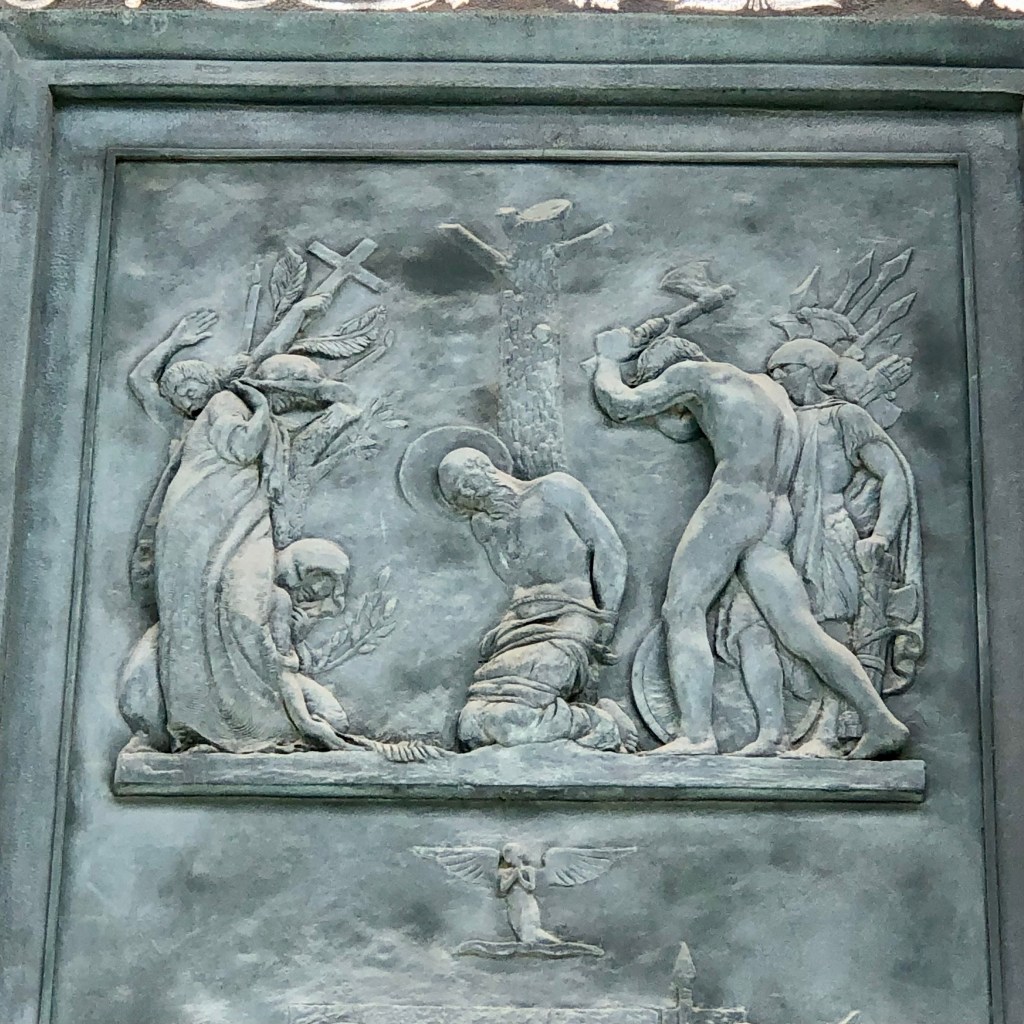
Martyrdom of St. Peter (Doors of the Basilica of St. Paul Outside the Walls, Rome)
Martyrdom of St. Paul (Doors of the Basilica of St. Paul Outside the Walls, Rome)

Peter and Paul were great men.  It is common in preaching to hear about Peter’s failures—his weaknesses and false steps, which the Gospels make no attempt to hide.  And we first meet Paul, of course, when he is persecuting the Church.  Peter and Paul were both flawed men, but nonetheless they are great men.

In fact, one of the things that makes them both great is that they acknowledge their flaws. Practically the first words out of Simon Peter’s mouth in the Gospel of Luke are, “Depart from me, Lord, for I am a sinful man” (Lk 5:8).  In one of his letters, Paul claims to boast in his weakness (2 Cor 12:9).

Yet, in the Acts of the Apostles, Peter raises the dead to life.  Paul becomes the most remarkable missionary in history.  The faithful of Jerusalem bring their sick into the streets just so that Peter’s shadow will fall upon them.  And in today’s Gospel we hear those remarkable words from the mouth of the Lord himself, “You are Peter, and upon this rock I will build my Church, and gates of the netherworld shall not prevail against it.”  The greatness of both Peter and Paul comes from Jesus.

Continue reading “Homily for the Solemnity of Saints Peter and Paul”

The urnas of Bohol

Among 2024’s highlights was my first trip to the Philippines, where I attended a meeting of Jesuit liturgists, caught up with some Jesuit friends, did my annual 8-day retreat, and had a chance to explore a bit of that wonderful country, without doubt one of the most devout in the world.

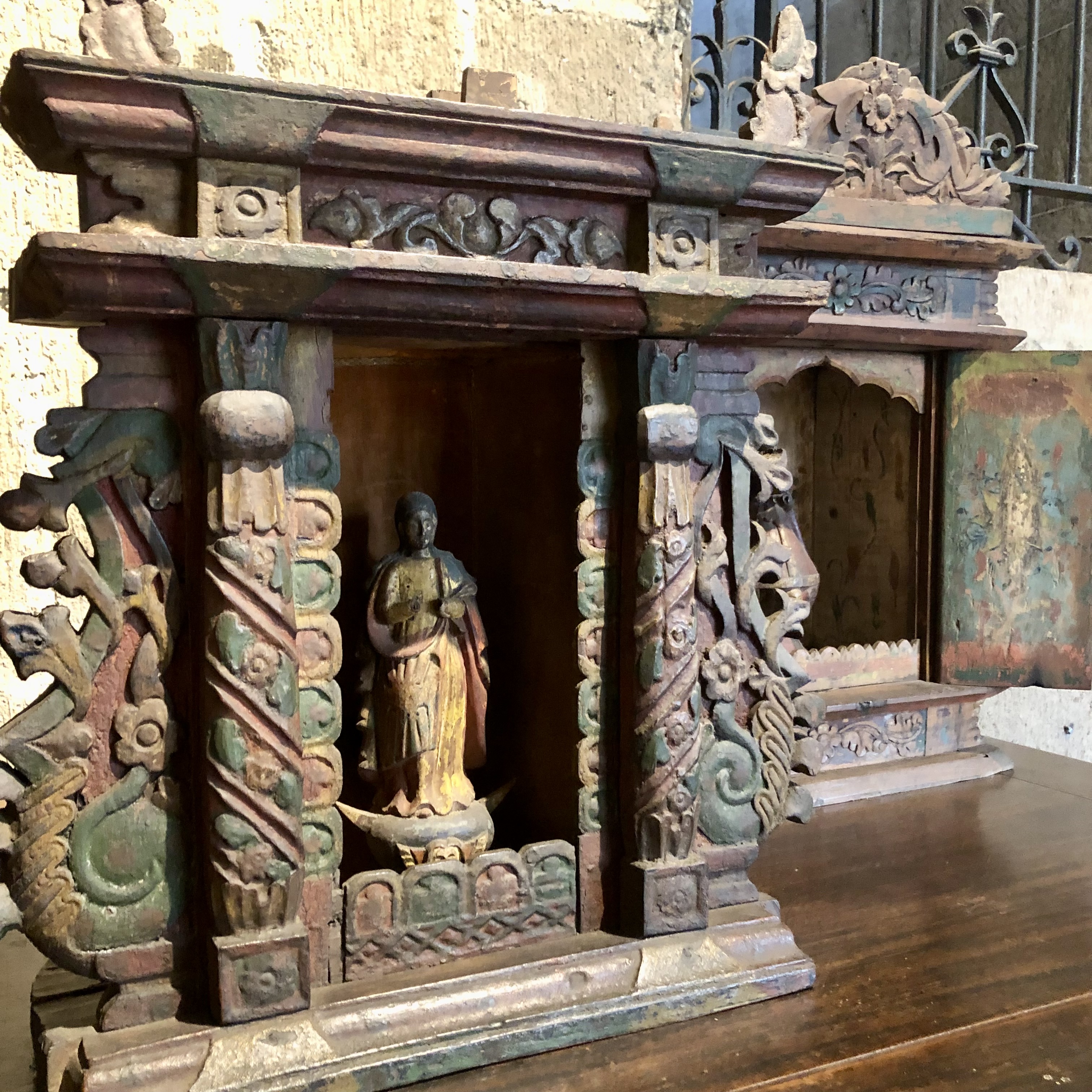
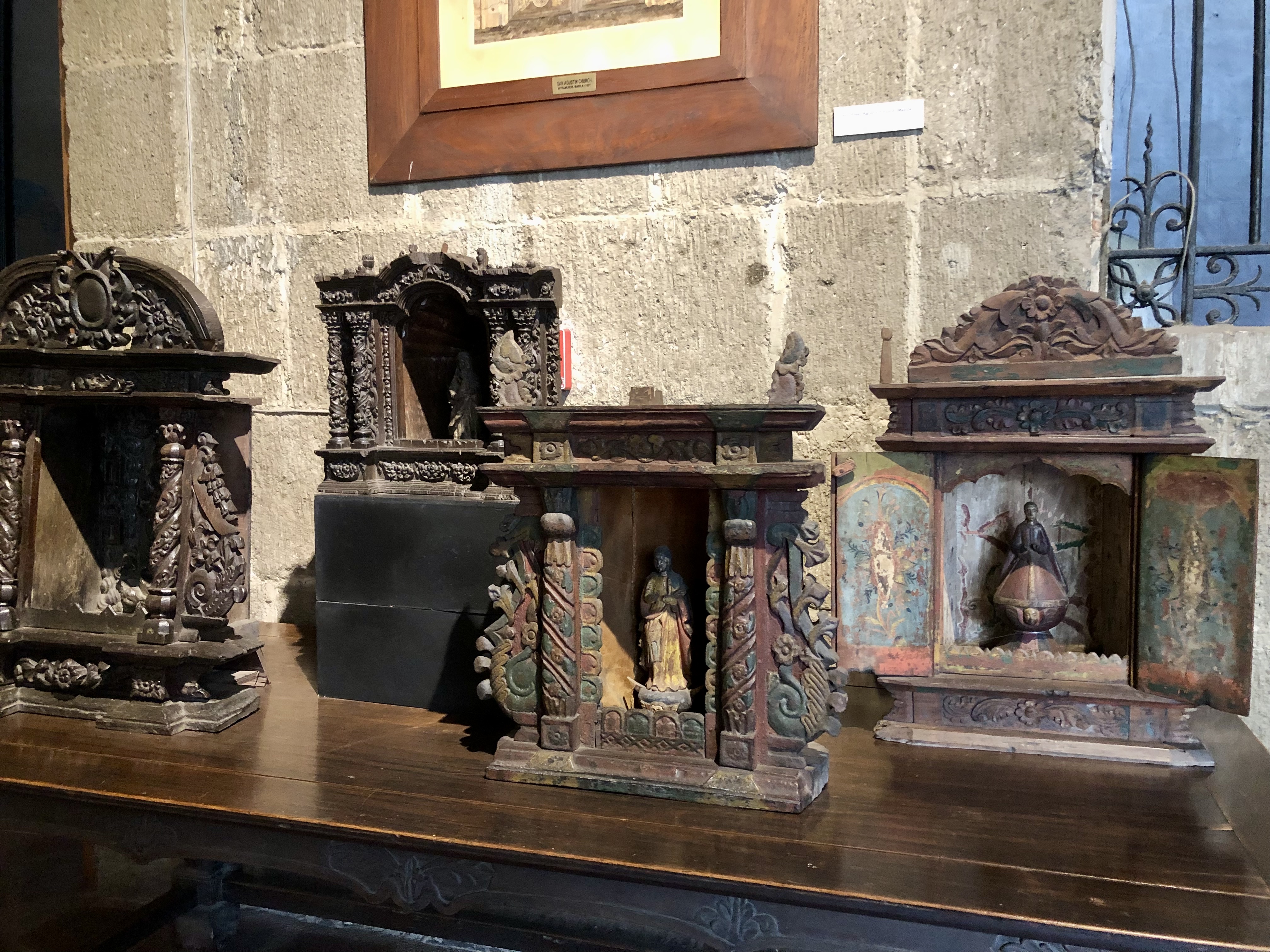
One of my discoveries when visiting the island of Bohol, home to the iconic Chocolate Hills, was a particular local devotional tradition, the “urnas,” which are small shrines made for homes during the colonial period. The urnas first caught my attention in the museum of the Church of St. Augustine in Manila (below), but it was only when I arrived in Bohol that someone explained the tradition. The urnas typically contain a saint and are beautifully carved and painted.

Some of the saints depicted reflect the missionary orders that evangelized the areas, and others give a window into the local piety of the time. Note for example, the statue of St. Roch (with his dog), a saint often invoked against plague. St. Vincent Ferrer also seems to have been particularly popular. This depiction of the Holy Family seems appropriate as Christmas approaches:

Continue reading “The urnas of Bohol”

Saint Emilianus of Trevi

St. Emilianus of Trevi is perhaps destined to be overshadowed by St. Thomas Aquinas with whom he shares a feast day, January 28. He was one of the many bishops martyred during Roman persecution who provided inspiration and strength to their local communities but today are little know, the details of their biographies mingled with legend.

From the Martyrdom of St. Emilianus of Trevi, 12th century, Spoleto

I came across a striking set of 12th century carvings depicting the martyrdom of the saint in Spoleto last year and was taken by their vividness. St. Emilianus hailed originally from Armenia and came to Italy in the third century, where he was made the first bishop of Trevi. He was martyred during the persecution under Emperor Diocletian in 304, and his relics are preserved in Spoleto Cathedral.

He was condemned to die by a Roman proconsul for his refusal to sacrifice to the gods, but–as the panels from Spoleto recount–the first attempts to put him to death failed. The wild beasts sent to kill him instead bowed before him, and when he was tied up to be burnt the torches of his would be executioners fizzled out as they approached him. Finally, he was beheaded. The last panel of the work depicts Christ enthroned in heaven welcoming the martyr.

St. Josaphat Kuntsevych

Sunday November 12 will mark the 400th anniversary of the martyrdom of the Ukrainian Catholic bishop St. Josaphat Kuntsevych. During his lifetime St. Josaphat worked for the reunion of eastern rite Christians with the Catholic Church. He was murdered by an Orthodox mob in 1623.

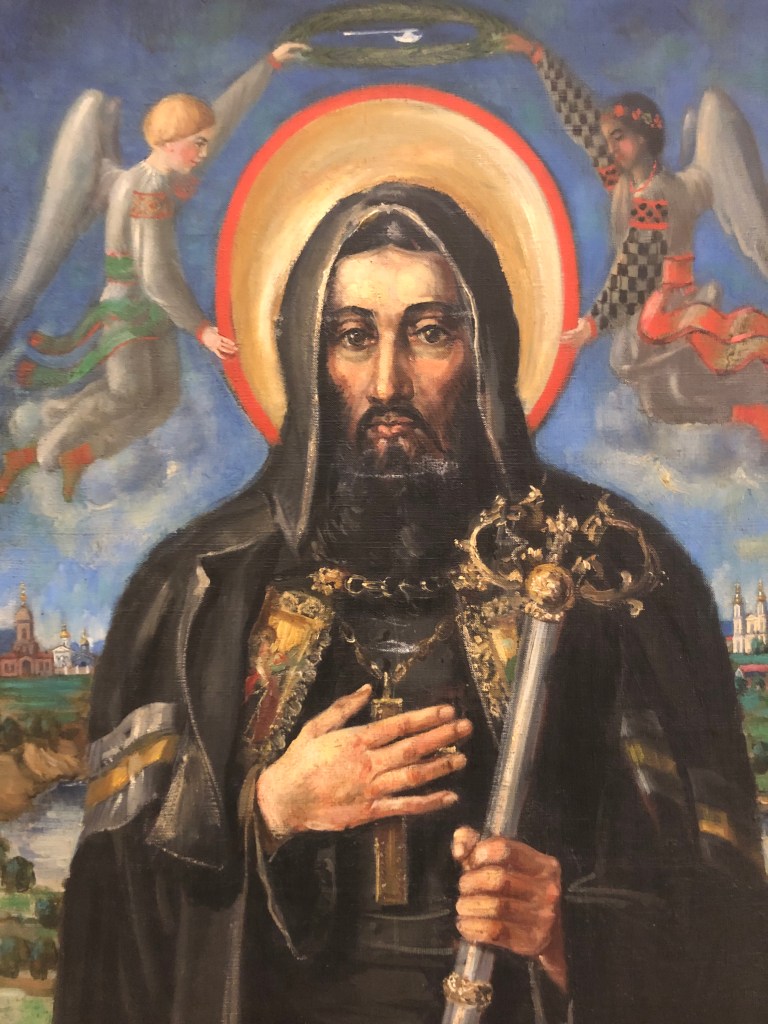
St. Josaphat, Mykola Azovskyj, 1946

St. Josaphat lived and worked, first as a Basilian monk and then as an archbishop in the part of the world that today includes Poland, Lithuania, and Ukraine. The anniversary is an opportunity to seek St. Josaphat’s intercession for the suffering people of Ukraine as they continue to fight for their nation’s freedom.

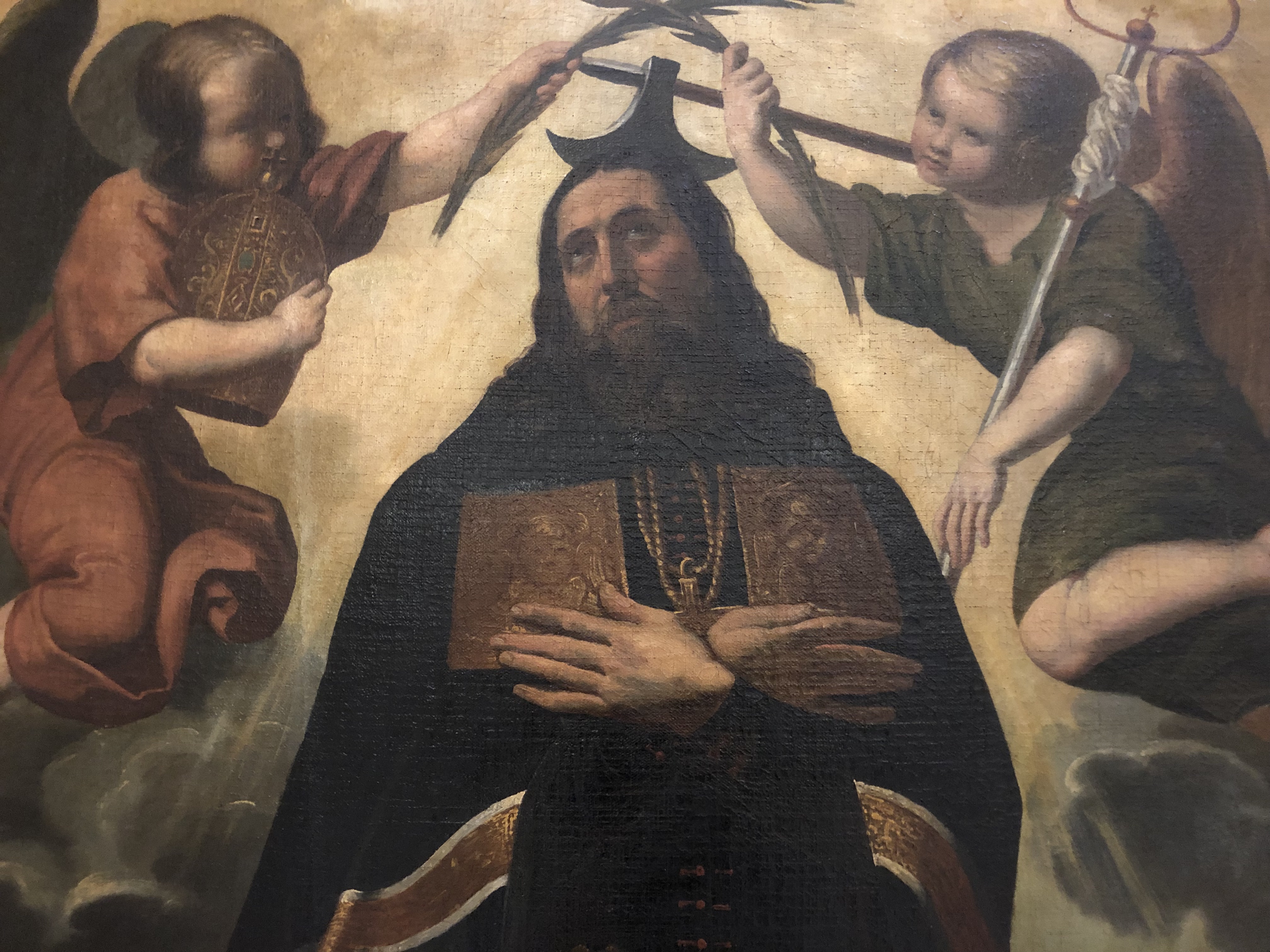
To celebrate the 400th anniversary of St. Josaphat’s martyrdom, the Gregorian University is sponsoring a conference on his life and legacy as well as an art show. I have to admit, I knew rather little about St. Josaphat before strolling through the display–though he is the patron of Milwaukee’s most beautiful church–and I have never seen so many paintings of the saint before. Here’s a sampling, showing all aspects of his life, from his calling to his monastic vocation, his ministry as bishop and his eventual martyrdom.

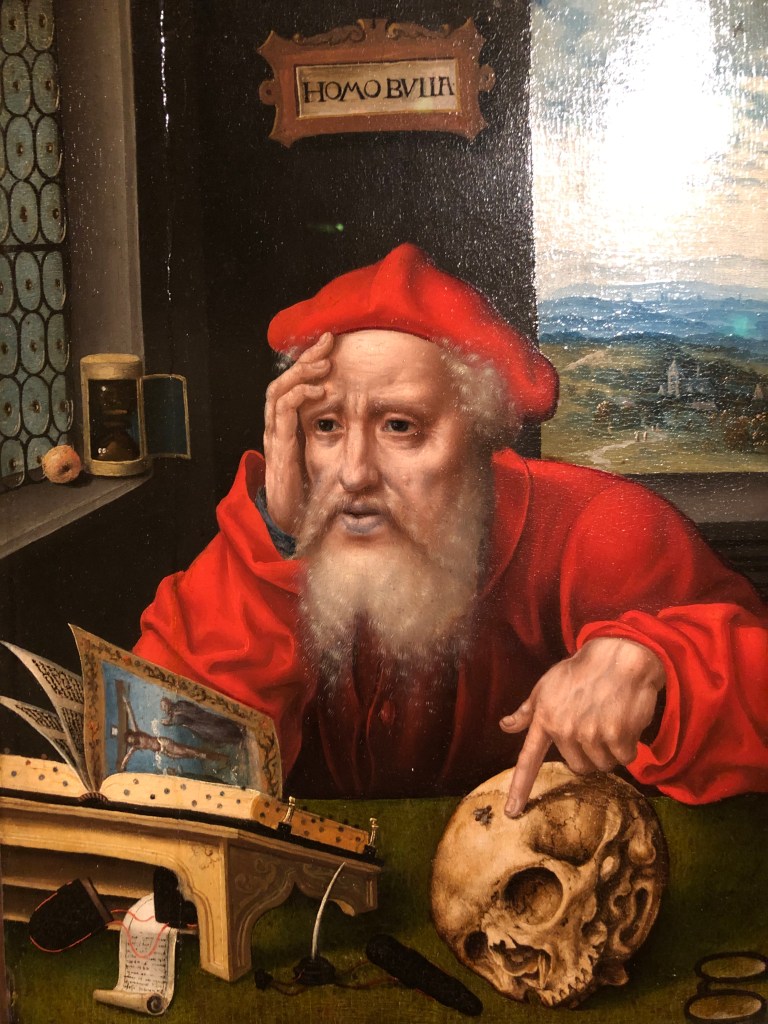
Fools for love: homily for the seventeenth Sunday of Ordinary Time

National Gallery of Victoria, Melbourne, Australia

Homily for the 17th Sunday of Ordinary Time (A)

When he was a young priest St. Philip Neri shaved off half his beard in order to counteract vanity.  St. Simeon the Stylite lived on a small platform on top of a 50-foot tall pillar in Syria for over 30 years. Another St. Simeon (of Emesa), known as the Holy Fool, walked through town with a dead dog tied around his waist.  St. Catherine of Siena lived for weeks on nothing more than the hosts she received at communion.  Shortly after his conversion, St. Francis stripped naked in front of the bishop of Assisi.  St. Francis Xavier, a Jesuit, tending plague victims in a hospital found himself holding back out of fear of contracting the disease.  (This one’s a little gross.)  So he scraped the back of one of the sick men he was tending, gathered up a handful of puss, and put it in his mouth.  And St. Maximiliam Kolbe, a Polish Franciscan priest imprisoned in Auschwitz, asked his Nazi guards if he could take the place of a man condemned to die in order to save that man’s life and give up his own instead.

I am not recommending that you try any of these things at home.  Instead I want to ask you a question:  are these saints foolish or wise?  And if they are wise, then what does wisdom really mean? 

In our first reading, the young King Solomon is praised by God for asking for the gift of wisdom.  But what makes someone wise?  Wisdom is not the same as memorizing lots of facts or accumulating knowledge.  You could go home and memorize the phonebook, but I’d consider someone who just looked up phone numbers as needed actually to be wiser.  We probably know people—perhaps grandparents—who received relatively little formal education but we’d consider wise.  And I’ve known a plenty of people with PhDs who were not nearly as smart as they told you they were.

Continue reading “Fools for love: homily for the seventeenth Sunday of Ordinary Time”

Not peace, but division: homily for the twentieth Sunday of Ordinary Time

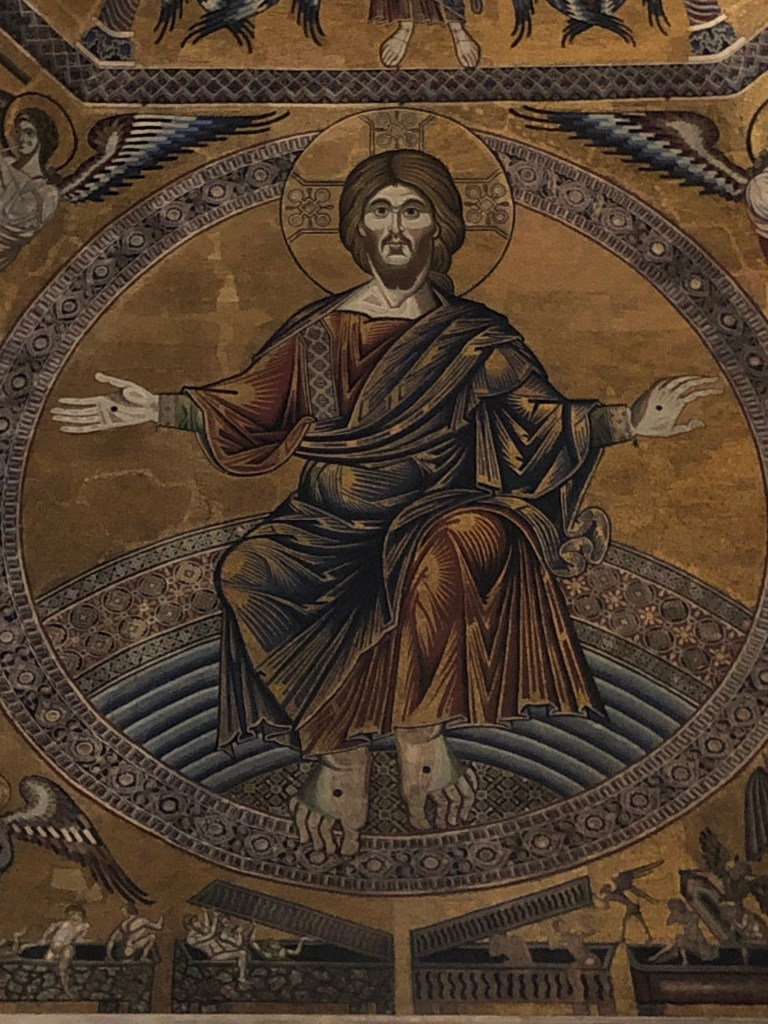
Baptistry, Florence

Homily for the 20th Sunday in Ordinary Time (C)

Politicians frequently claim to be uniters, not dividers.  If you wanted proof, therefore, that Jesus was not a politician, look no further than today’s Gospel: “Do you think that I have come to establish peace on the earth?  No, I tell you, but rather division.”

Political promises of unity, of course, come cheaply; sometimes they simply mean, “If you disagree with me, I’ll accuse you of being a divider.”  In today’s Gospel reading, however, Jesus makes a move never recommended by any political consultant: he preemptively accuses himself of bringing division.  Other than the desire to put centuries of future homilists in a very awkward position, why would Jesus do this?

Continue reading “Not peace, but division: homily for the twentieth Sunday of Ordinary Time”