Look East! Homily for the Second Sunday of Advent

Homily for the Second Sunday of Advent (C)
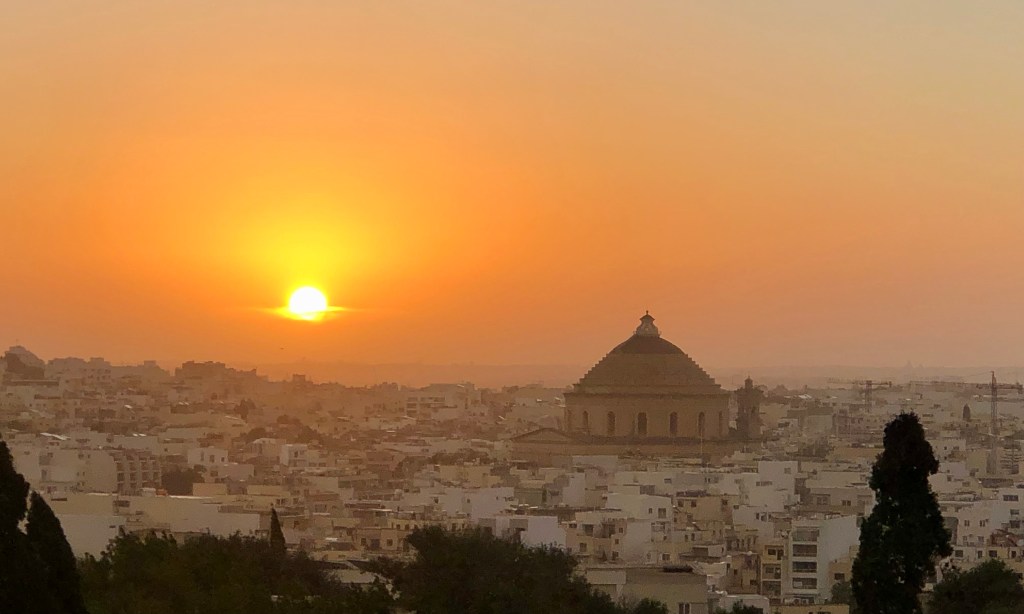
Dawn, Mosta, Malta

“Look to my coming,” Gandolf tells Aragorn in the second installment of the Lord of the Ringstrilogy, The Two Towers.  “At dawn on the fifth day, look east.”  Those familiar with the story, know that Gandolf’s words come at a particularly dramatic moment in the epic, when the last holdouts of Rohan—one of the two remaining kingdoms of men not to succumb to the forces of evil—have retreated to their mountain stronghold, Helms Deep, and the walls of the fortress have begun to crumble, its gates to give way, and its doors to crack under the onslaught of a massive army sent by the turncoat wizard Saruman, who, seduced by power, has joined the forces of darkness.  And as Aragorn, the king in exile, prepares for one final charge with what knights remain, he remembers the words of the faithful wizard Gandolf, who had left five days before to seek aid.  “At dawn on the fifth day, look east.”

We read a similar instruction in the Book of Baruch, directed to the holy city, “Up, Jerusalem! Stand upon the heights; look to the east.”  These words are echoed in the Advent hymn familiar to many of us, “People, Look East.”  There is something primordial in this call, in the instinct to look in hope to the east.  When I worked among the Lakota Sioux in South Dakota, I learned that in their traditional religion, east was the direction of prayer.  I found some Lakota Christians very insistent on a Christian tradition—which I did not know about—of burying the dead facing east.  The Christian tradition of prayer facing east goes back to the first centuries.  St. Ambrose talks about catechumens, after their baptism, turning from the west to the east as a sign of the new orientation of their lives.

Continue reading “Look East! Homily for the Second Sunday of Advent”
Jonah, the most bumbling prophet

Jonah sarcophagus (ca. AD 300), Vatican Museums

Those at daily Mass this week get to enjoy the special treat of hearing the book of Jonah. The book is such a good tale–who doesn’t love a giant sea monster? or a cantankerous prophet?–that I imagine the story originally told dramatically aloud. I think we’re meant to laugh at Jonah, the Mr. Bean of prophets.

Of course, there is a serious message to the book that goes beyond whale innards and the prophet’s pouty attachment to his gourd plant. Jonah reveals the sweeping reach of God’s mercy, extending even to the most wicked of cities–Nineveh, grrr—when those within it seek conversion. Students in my classes are probably sick of hearing it, but one way to get under my skin is to claim that the grumpy “God of the Old Testament” has been replaced by the groovy “God of the New Testament.” There’s only one God. He’s infinitely merciful and revealed in both the Old and New Testaments. And the book of Jonah proves it.

Continue reading “Jonah, the most bumbling prophet”

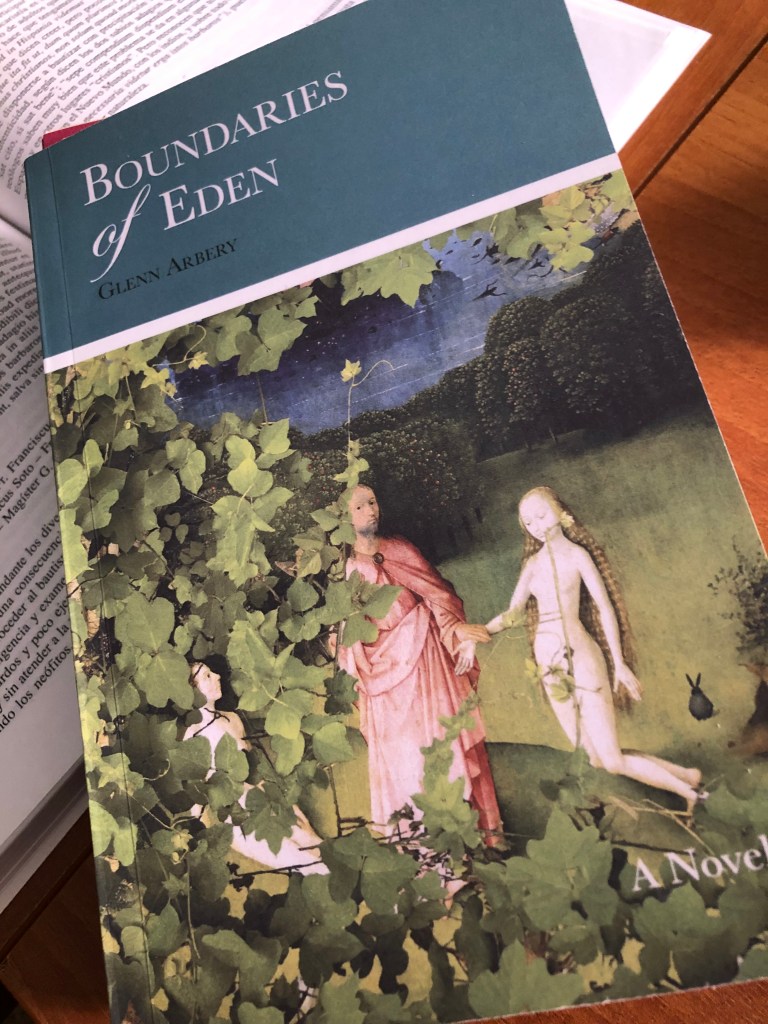
Boundaries of Eden

My recent pleasure reading has included Glenn Arbery’s Boundaries of Eden from Wiseblood Books. Always nice to discover another Catholic writer. Here’s a part I liked…

Why should there be providence with respect to Braxton Forrest, anyway? Hardest of all to imagine was that God Almighty, with the whole universe to look after, cared anything about the peccadilloes of a middle-aged literature professor. The apparent absurdity of it had to be balanced against the overwhelmingly convincing sense of an inner witness, an exacting (if often ignored) conscience, a kind of co-knowing whose ground lay deeper than his own conscious mind. So yes. Acceptance of providence brought him to see himself differently. It even brought him, if only occasionally, to the Gospels, where he did not encounter the sweet, naïve, androgynous new version of the fierce Old Testament God that he expected, but the Old Testament God incarnate, the fierce, severe, enigmatic otherness of a man whose absolute authority overflowed any apparent warrant for it….

Glenn Arbery, Boundaries of Eden