As is traditional for the First Week of Lent, the Pope and the Roman Curia will spend several days making their annual spiritual exercises. This year’s retreat is being preached by Bishop Erik Varden of Trondeim, Norway. Some readers might know Bishop Varden already from his wonderful blog Coram Fratribus. A convert and then a Trappist monk, Bishop Varden has a gift for communication comparable to our own great Robert Barron, though with his own unique style.
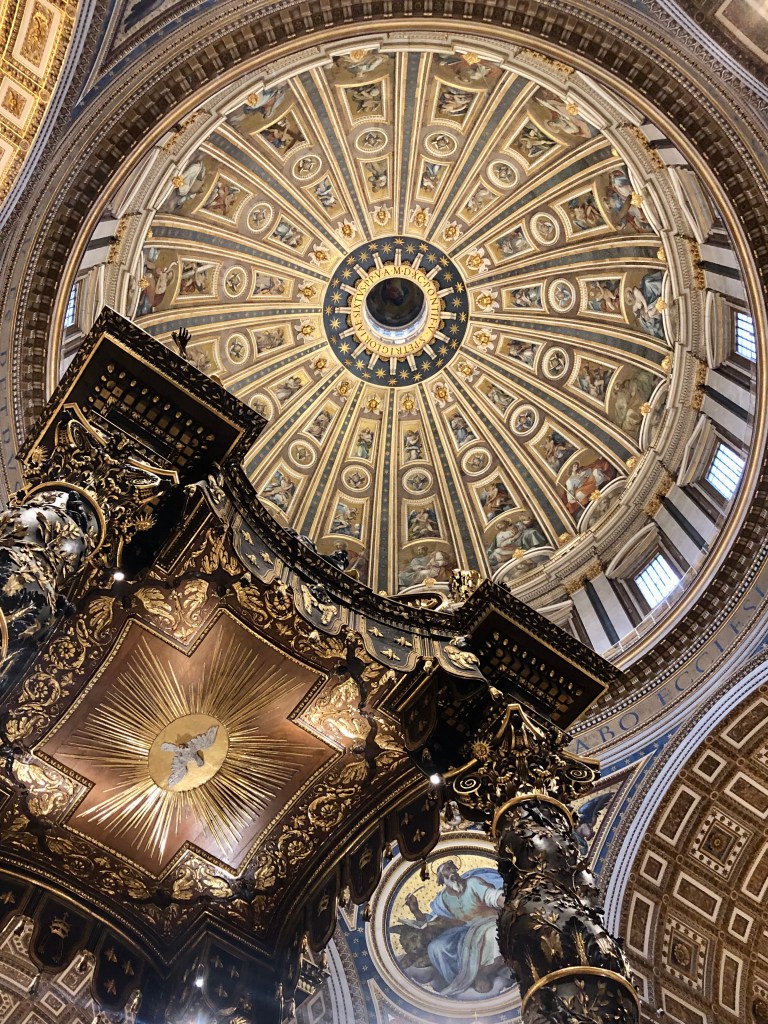
St. Peter’s Basilica, Rome
At a mere 51 years old, Bishop Varden also represents something of a turning of the page in the life of the Church. I’ve written before (here and here) that the zealous and youthful Church I encountered in Scandinavia hints at what fidelity and evangelization must look like in an increasingly secularized world. Bishop Varden–articulate, orthodox, cultured, and creative–seems to understand how to respond to our twenty-first century reality.
Last year I read Bishop Varden’s profound book Chastity: Reconciliation of the Senses, and I thought this week would be a good opportunity to share a few of its many insights…
I have to admit that the opening of today’s first reading, “When a sieve is shaken, the husks appear; so do one’s faults when one speaks,” is not the most encouraging thing to read when one has to give a homily. Both the words of Sirach and Jesus’ sayings in the Gospel of Luke deal with what is inside a person and what becomes visible to others, what we see and what we don’t. The first reading is a warning about putting too much faith in outward appearances. Someone might have all the right credentials, but little wisdom; someone might repeat all the fashionable phrases, but say nothing of substance.
The test that Sirach proposes to separate the trustworthy from the slick shyster is tribulation. “As the test of what the potter molds is in the furnace, so in tribulation is the test of the just.” It is easy to follow Jesus when he tells us what we want to hear, less so when we might lose friends because of what he says. Fidelity doesn’t mean much when it comes without a cost. Imagine marriage vows modified to promise faithfulness “in good times but not bad, in health but not sickness, wherever I find my bliss.” It’s only when the going gets tough that faith, hope, and love show their worth.
Jesus adds another criterion for distinguishing the enduring truth from the well-dressed lie: you shall know the tree by its fruit. You may have heard people say, “It’s really what’s inside that counts.” Jesus pours a bit of cold water on such sentimentalism. If what’s inside produces thorns, then it can’t really be all that good. Again and again in different ways Jesus calls for the unity of what is inside with what is outside, opposing any division between interior and exterior religion—challenging us to confess his name with both our words and our deeds.
Jesus again and again challenges us to purity of heart, which means purity all the way through—in our thoughts and in our words, in what we do, and what we chose not to do. In the Beatitudes, Jesus promises that the pure in heart will see God. Sight, interestingly, is also at the center of today’s Gospel reading. The blind lead the blind into a pit, and we notice the splinter in our brother’s eye but not the beam in our own. But that image showing the absurdity of hypocrisy also comes with an instruction and a promise: “Remove the wooden beam… then you will see clearly.”

 Tony Lusvardi, S.J.