Bishop Erik Varden on beauty, chastity, and the contemporary world

As is traditional for the First Week of Lent, the Pope and the Roman Curia will spend several days making their annual spiritual exercises. This year’s retreat is being preached by Bishop Erik Varden of Trondeim, Norway. Some readers might know Bishop Varden already from his wonderful blog Coram Fratribus. A convert and then a Trappist monk, Bishop Varden has a gift for communication comparable to our own great Robert Barron, though with his own unique style.
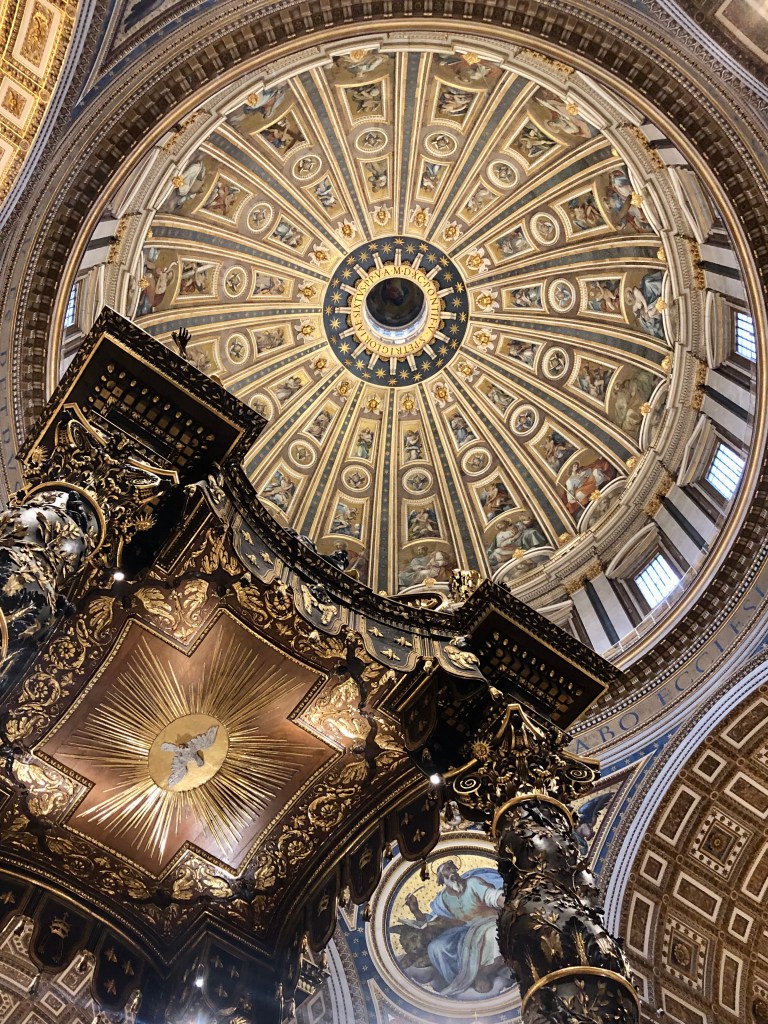
St. Peter’s Basilica, Rome

At a mere 51 years old, Bishop Varden also represents something of a turning of the page in the life of the Church. I’ve written before (here and here) that the zealous and youthful Church I encountered in Scandinavia hints at what fidelity and evangelization must look like in an increasingly secularized world. Bishop Varden–articulate, orthodox, cultured, and creative–seems to understand how to respond to our twenty-first century reality.

Last year I read Bishop Varden’s profound book Chastity: Reconciliation of the Senses, and I thought this week would be a good opportunity to share a few of its many insights…

Continue reading “Bishop Erik Varden on beauty, chastity, and the contemporary world”
The Spiritual Exercises in South Australia

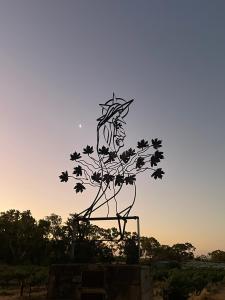
Our Lady of the Vines, Sevenhill, Australia

It is hard to know what to say to those who ask about one’s experience of the 30-day Spiritual Exercises of St. Ignatius Loyola. The experience is profound, intense, and deeply personal. It is also experience, not knowledge or information that can be transferred to another. To be sure, the retreat does have objective content–the life of Christ, God’s creation of the world, the moral law. It is not just a process for personal growth; it is an encounter with the Son of God who revealed himself in first century Palestine, who we know through the accounts that his followers handed on to the Church. Fundamentally, the content of the retreat is simply Christianity, nothing more and nothing less.

That said, the experience of encountering that content varies from person to person. We can either look at Jesus from a distance or approach him, talk to him, get to know him. The Spiritual Exercises are a way of getting to know him–spending time with God with other distractions removed, recognizing God’s work in our lives up to this point, discovering his hopes for us. Like meeting your future spouse or holding a newborn child for the first time, you can describe what happened, but the experience itself can never be fully captured in words. Spending thirty days getting to know Jesus more deeply in prayer is a similarly ineffable experience.

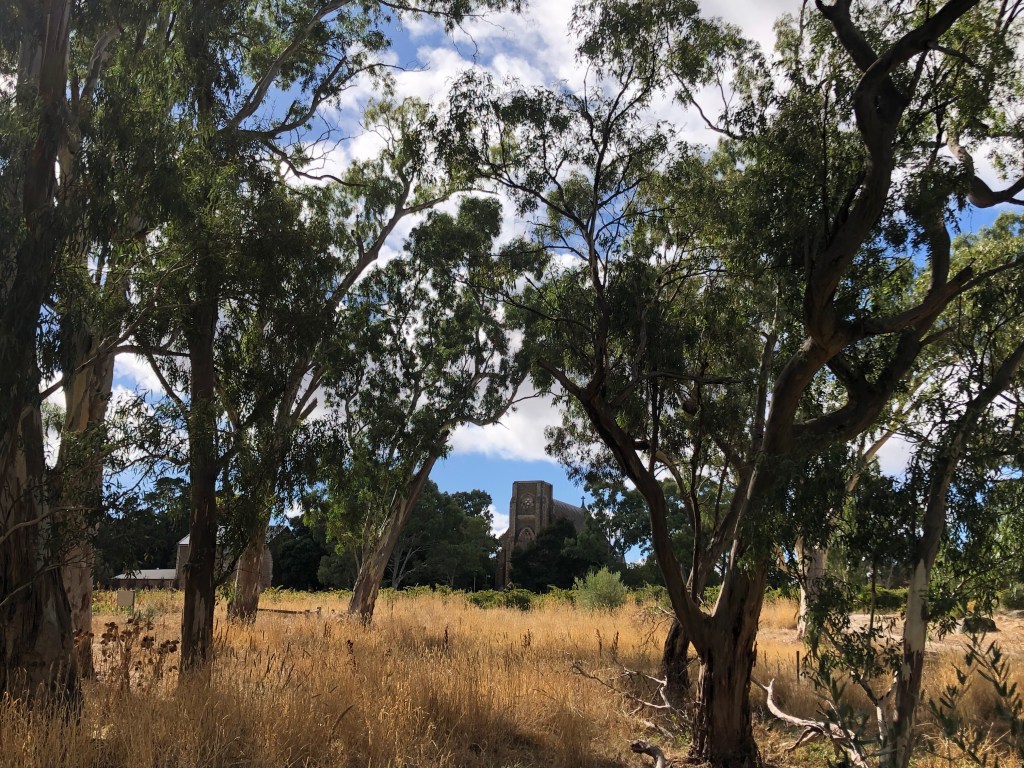
St. Aloysius Church, Sevenhill

Of course, some aspects of the retreat can be more easily shared, and I thought I’d start with one that might seem secondary but isn’t–the location. Christianity is an embodied, incarnational religion that acknowledges the influence of where we are on who we are. During the Spiritual Exercises St. Ignatius frequently invites us to begin by imagining the places where Jesus lived, “the synagogues, villages, and towns” where he preached or the hills and valleys between Nazareth and Bethlehem. Even on an interior journey, location matters.

Continue reading “The Spiritual Exercises in South Australia”