The Immaculate Conception: God’s own Advent preparation

Homily for the Immaculate Conception (2019. Note, that year, the Solemnity fell on a Sunday.)

On the first Sunday of Advent, I cleaned my room. I must admit, it needed it—there were coffee stains on the desk; the trash can was overflowing; I found forgotten lists of things not to forget. But Advent is the beginning of a new liturgical year, the season when we prepare for Christmas, and it seemed right to start with a clean room. In the coming weeks, there will be many other things to prepare: food, gifts, decorations, travel.

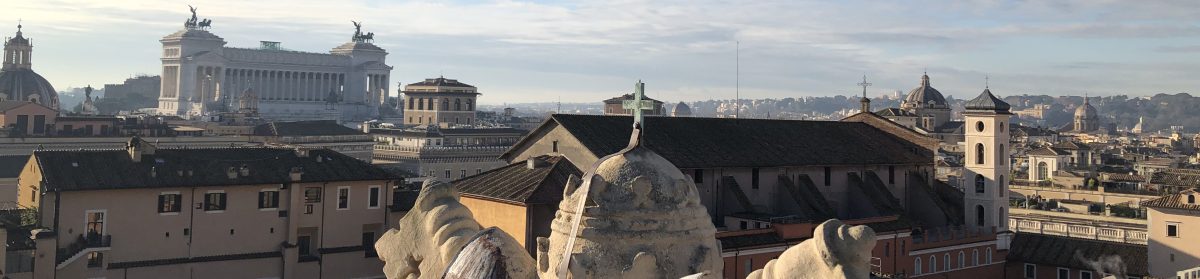
Column of the Immaculate Conception, Rome

This is the second Sunday of Advent, and normally the readings highlight the figure of St. John the Baptist, who speaks of another kind of preparation, another kind of cleaning—in fact, a much deeper cleaning than coffee stains. John the Baptist warns of the need for inner cleansing, moral and spiritual conversion. And this too is part of the preparation for Christmas. As a confessor, I have to do a little advertising for my profession, strangely absent from all the Black Friday advertising we received last month. But I must say that our special offer—the forgiveness of sins, eternal life—is truly the best deal in the world.

However, this year is a bit special, because this second Sunday of Advent is December 8, the Solemnity of the Immaculate Conception of Mary, the Mother of Jesus. This coincidence of dates is interesting because the Immaculate Conception is also a feast of preparation. But not the preparation we do during this season. The preparation that God has done for us.

Continue reading “The Immaculate Conception: God’s own Advent preparation”
Capernaum’s centurion: a man of faith and hope

Homily for Monday of the first week of Advent (2019).

The figure we encounter today in the Gospel, the centurion of Capernaum, helps us to prepare. We use his adapted words to prepare for communion: “Lord, I am not worthy that you should enter under my roof, but only say the word and my soul shall be healed.” And today, at the beginning of Advent, the season when we prepare for the coming of the Lord, the centurion appears in the readings.

A season of preparation is a season of faith and hope—and I think the centurion of Capernaum appears today because he is a figure of faith and hope.

Both of these virtues exist in imperfect situations. We need hope because of something we lack in the present; we need faith because there is something doubtful about the situation in which we find ourselves.

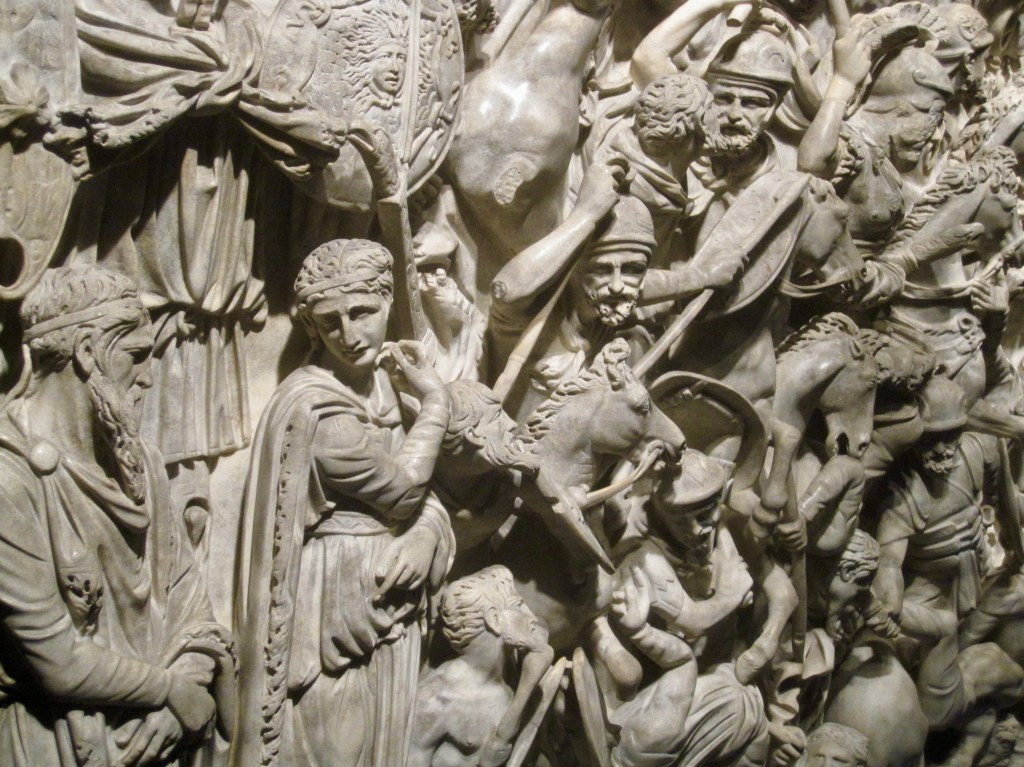
Roman Sarcophagus, Palazzo Massimo, Rome

The centurion comes to Jesus asking for help. And his words—“I am not worthy that you should enter under my roof”—are poignant because in them we hear the unvarnished truth. We can easily imagine that the centurion, an officer in the imperial army, has seen terrible things and perhaps–even if only out of duty–has had to do terrible things as well. His sense of unworthiness, however, does not prevent him from turning to the Lord.

Continue reading “Capernaum’s centurion: a man of faith and hope”

Look East! Homily for the Second Sunday of Advent

Homily for the Second Sunday of Advent (C)

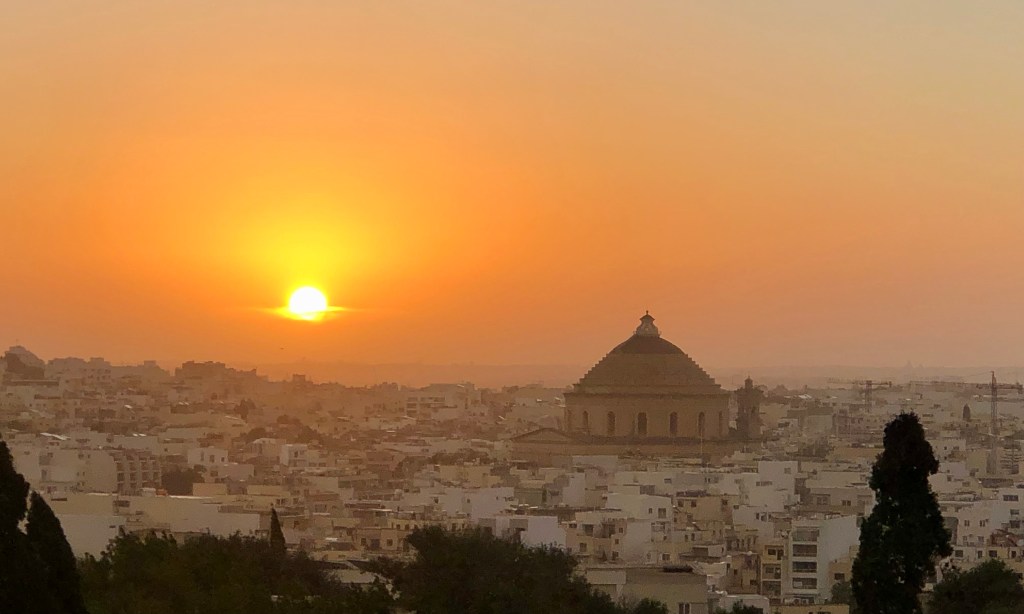
Dawn, Mosta, Malta

“Look to my coming,” Gandolf tells Aragorn in the second installment of the Lord of the Ringstrilogy, The Two Towers.  “At dawn on the fifth day, look east.”  Those familiar with the story, know that Gandolf’s words come at a particularly dramatic moment in the epic, when the last holdouts of Rohan—one of the two remaining kingdoms of men not to succumb to the forces of evil—have retreated to their mountain stronghold, Helms Deep, and the walls of the fortress have begun to crumble, its gates to give way, and its doors to crack under the onslaught of a massive army sent by the turncoat wizard Saruman, who, seduced by power, has joined the forces of darkness.  And as Aragorn, the king in exile, prepares for one final charge with what knights remain, he remembers the words of the faithful wizard Gandolf, who had left five days before to seek aid.  “At dawn on the fifth day, look east.”

We read a similar instruction in the Book of Baruch, directed to the holy city, “Up, Jerusalem! Stand upon the heights; look to the east.”  These words are echoed in the Advent hymn familiar to many of us, “People, Look East.”  There is something primordial in this call, in the instinct to look in hope to the east.  When I worked among the Lakota Sioux in South Dakota, I learned that in their traditional religion, east was the direction of prayer.  I found some Lakota Christians very insistent on a Christian tradition—which I did not know about—of burying the dead facing east.  The Christian tradition of prayer facing east goes back to the first centuries.  St. Ambrose talks about catechumens, after their baptism, turning from the west to the east as a sign of the new orientation of their lives.

Continue reading “Look East! Homily for the Second Sunday of Advent”

The Art of Waiting: Homily for the First Sunday of Advent

Basilica di Santa Maria Assunta, Torcello, Venice

Homily for the First Sunday of Advent (C)

One of the casualties of the smartphone revolution has been losing our ability to wait.  Instead of waiting, we scroll.  Losing the ability to wait may not seem a real loss, but I think it is.  Scrolling and checking messages and adding new apps has not made me more productive.  Instead, I’m more easily distracted and impatient.  Inside our electronic cocoons, we miss the things that used to happen while we waited—people watching, striking up conversations, noticing the landscape from the window, wondering at it.

Today’s readings are about the art of waiting.  But they warn us not to romanticize it.  Times of waiting can be dangerous.  Today’s Gospel identifies two dangers of waiting: anxiety and drowsiness.

The anxieties mentioned in the Gospel come from genuinely terrifying world events—“people will die of fright,” the Gospel warns—but also everyday anxieties that seem related to drowsiness.  The context of today’s readings, of course, is the Lord’s second coming, when Jesus will return in awesome and awful judgment, remaking all reality.  It may be that some of us are anxious about meeting Jesus because we’re afraid of that judgment.  Paul warns the Thessalonians to conduct themselves to please God, as they have been taught.  Advent is a time when the Church reminds us to examine our consciences, to make use of the sacrament of penance, to align our lives with Jesus’ teaching.  

Continue reading “The Art of Waiting: Homily for the First Sunday of Advent”

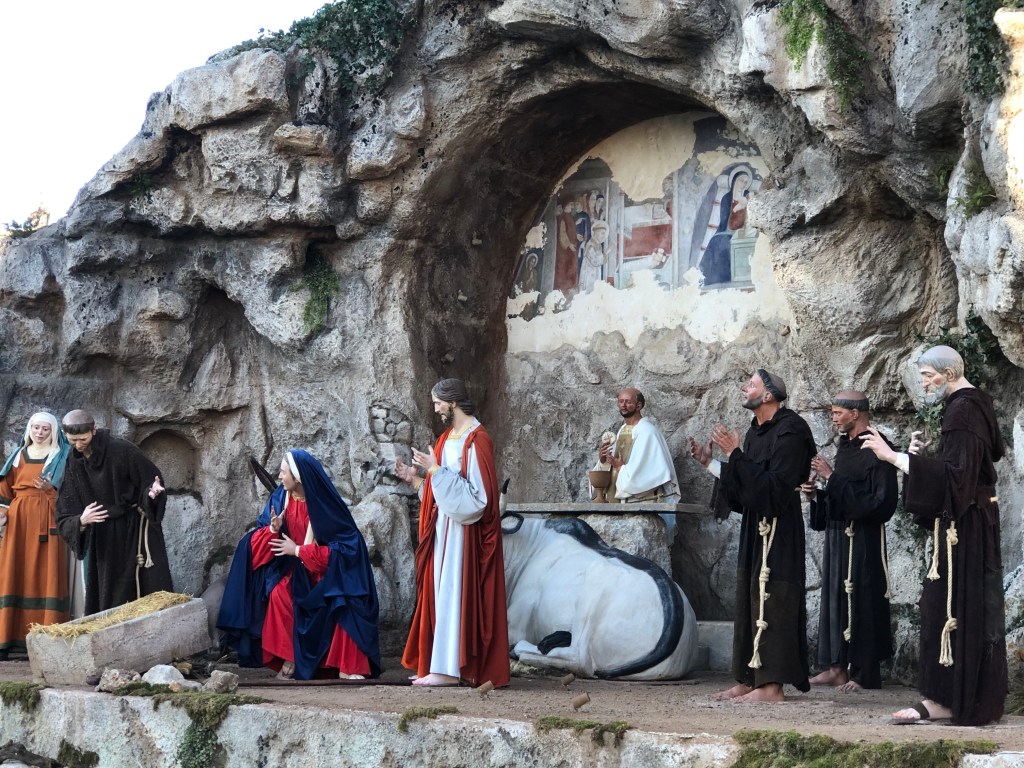
The Vatican Nativity scene, 2023

Nativity scene, St. Peter’s Square, 2023

Over the past few weeks, I’ve noted (here and here) that 2023 marks the 800th anniversary of the first Nativity scene set up by St. Francis in the little town of Greccio. The Vatican’s Nativity scene this year also reflects that anniversary. 

This year’s scene doesn’t aim for historical accuracy–thus, St. Francis alongside Mary and Joseph and the three friars replacing the three kings. (Oh, and there’s a priest celebrating Mass in the background too.) The fresco on the wall behind them is a replica of the one in the cave in Greccio.

The figures, perhaps, aren’t exquisitely beautiful. (And, come to think of it, the priest in the background seems a tad confused about what he’s supposed to be doing–too much realism?) But at least this year’s Nativity scene isn’t aggressively weird (like the aliens from 2020) or trying too hard to be modern (like… well, there are too many examples).

You’ll notice that the manger itself is empty. As per the tradition, the Baby Jesus doesn’t arrive until Christmas itself. This year he won’t find a perfect Nativity scene, a perfect Church, or a perfect world, but he’ll come nonetheless and we need him all the more because of it.

Nativity scene, St. Peter’s Square, 2023

Rome for the holidays

Advent is one of my favorite times of the year to be in Rome. What they call winter here is nothing to a Minnesotan, and the shortening days are counterbalanced by the city’s delightful display of Christmas lights. These generally don’t start appearing until after the Immaculate Conception (December 8) and they don’t come down until after the Epiphany (January 6).

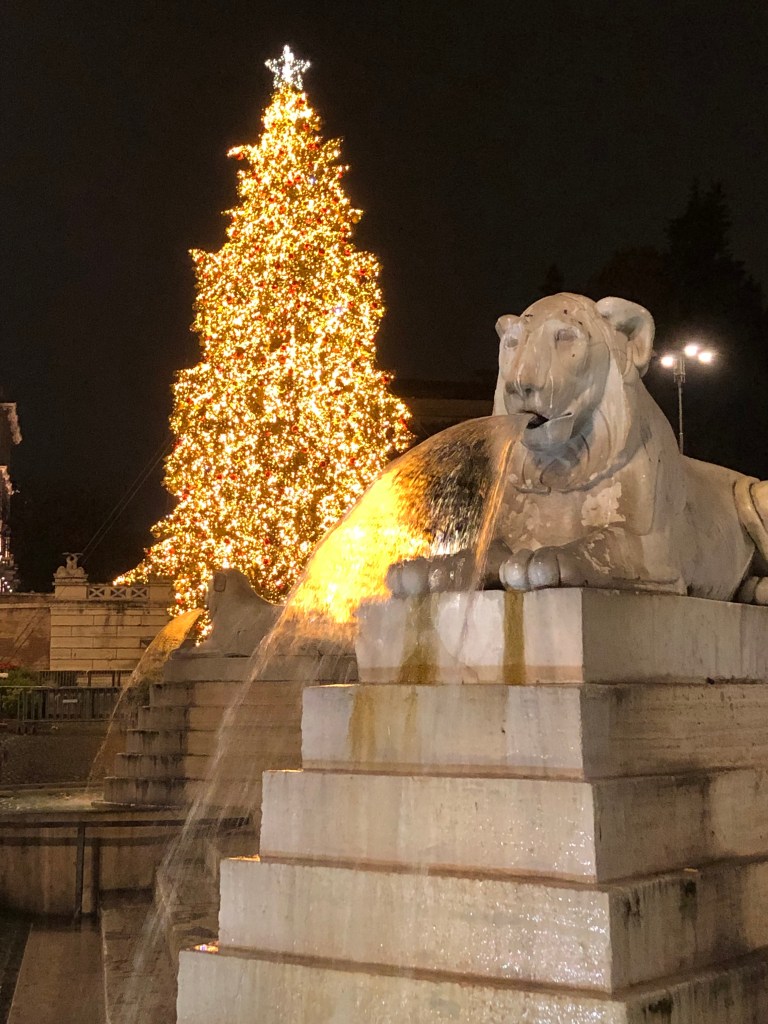
Rome’s Christmas tree, Piazza del Popolo

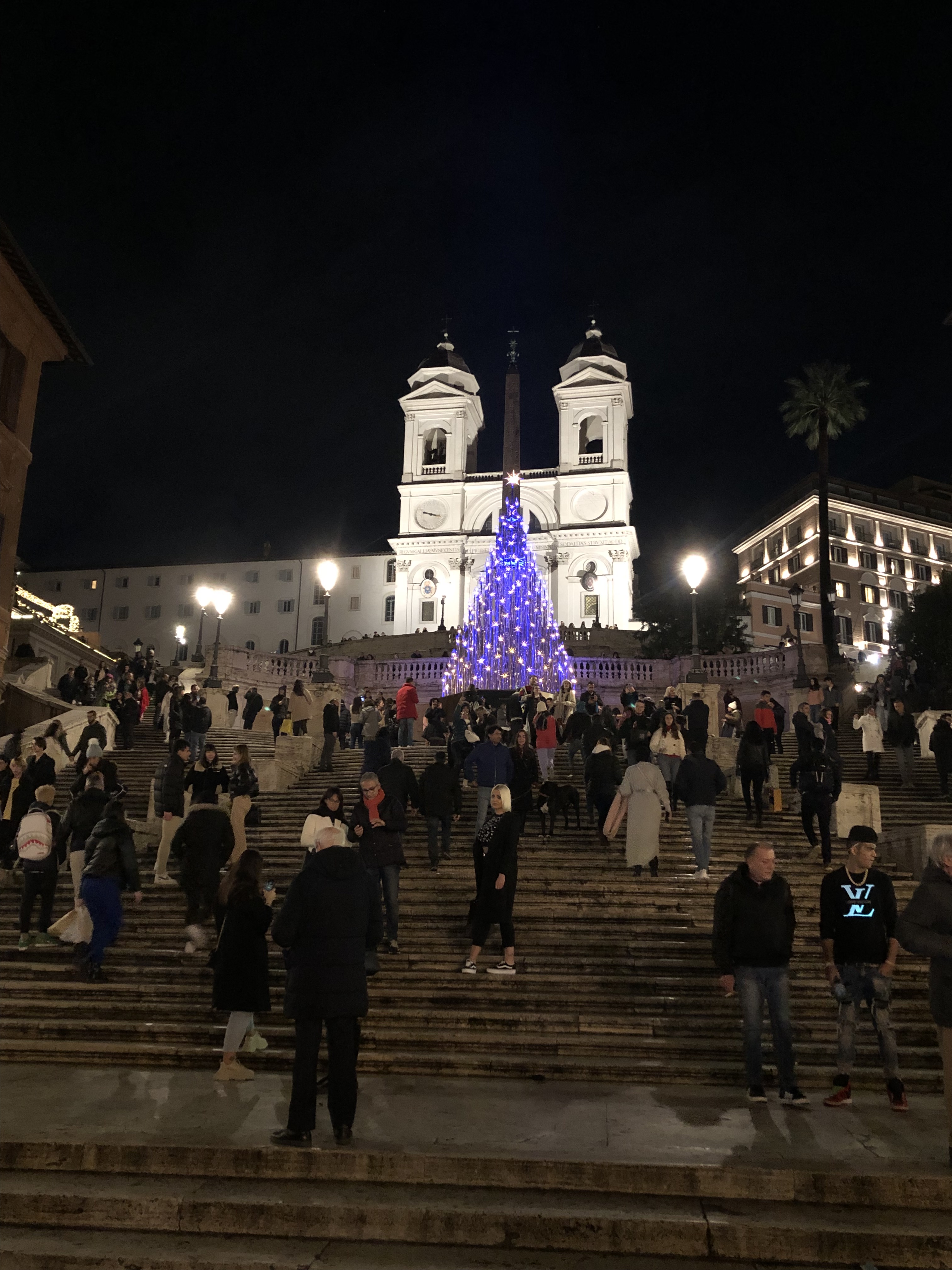
The city’s official Christmas tree, like the Vatican Nativity scene, is often the subject of local critique and Roman wit. This year, the tree got a new location due to construction work on Rome’s mythical new subway line–scheduled to open a few years after the Second Coming of Christ. The tree’s usual home, Piazza Venezia, is now a construction site, but its new location in Piazza del Popolo is a calmer setting away from the traffic. The official tree also has some competition from a glitzy counterpart at the Spanish Steps, given to the city by the fashion designer Dior.

Dior Christmas tree, Spanish Steps

I’d also be remiss not to mention what a delightful time of year Advent is to be at the Gregorian University, where the university’s international richness is on full display. Student groups from different countries take turns singing in the atrium between classes. It gives them an excuse to duck out of class early (ahem), but you’d have to be Ebenezer Scrooge not to appreciate the festive atmosphere. The Mexican college usually wins the prize for the best show not only because of their charm and energy but because you just can’t top a piñata. It’s a time to be grateful for our young priests, seminarians, religious, and lay students who are such a source of hope for me and for the Church.

Christmas at the Gregorian

Advent lights

One of the reasons I find the season of Advent so compelling is its central symbol of light growing in the darkness, as simple as it is powerful. The fifth of the O antiphons always strikes me as particularly poignant:

O Radiant Dawn, splendor of eternal light, sun of justice: come shine on those who dwell in darkness and the shadow of death.

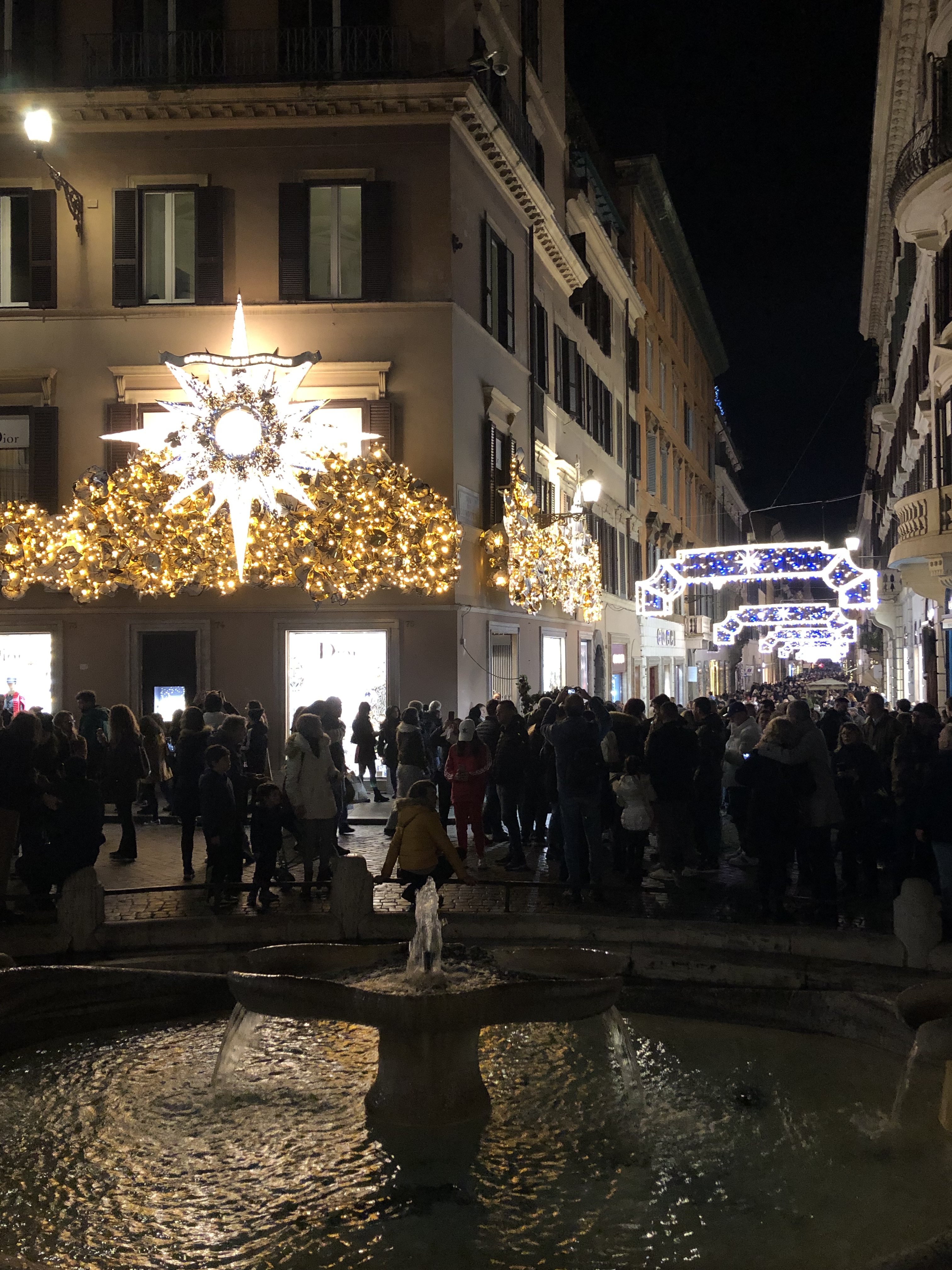
Mid-December also coincides with a slight lull in the crush of tourists here; between the Immaculate Conception and Christmas the streets are a tad calmer and one can get out and enjoy the decorations. In the northern hemisphere it is one of the darkest times of the year, but that only makes the lights all the more delightful.

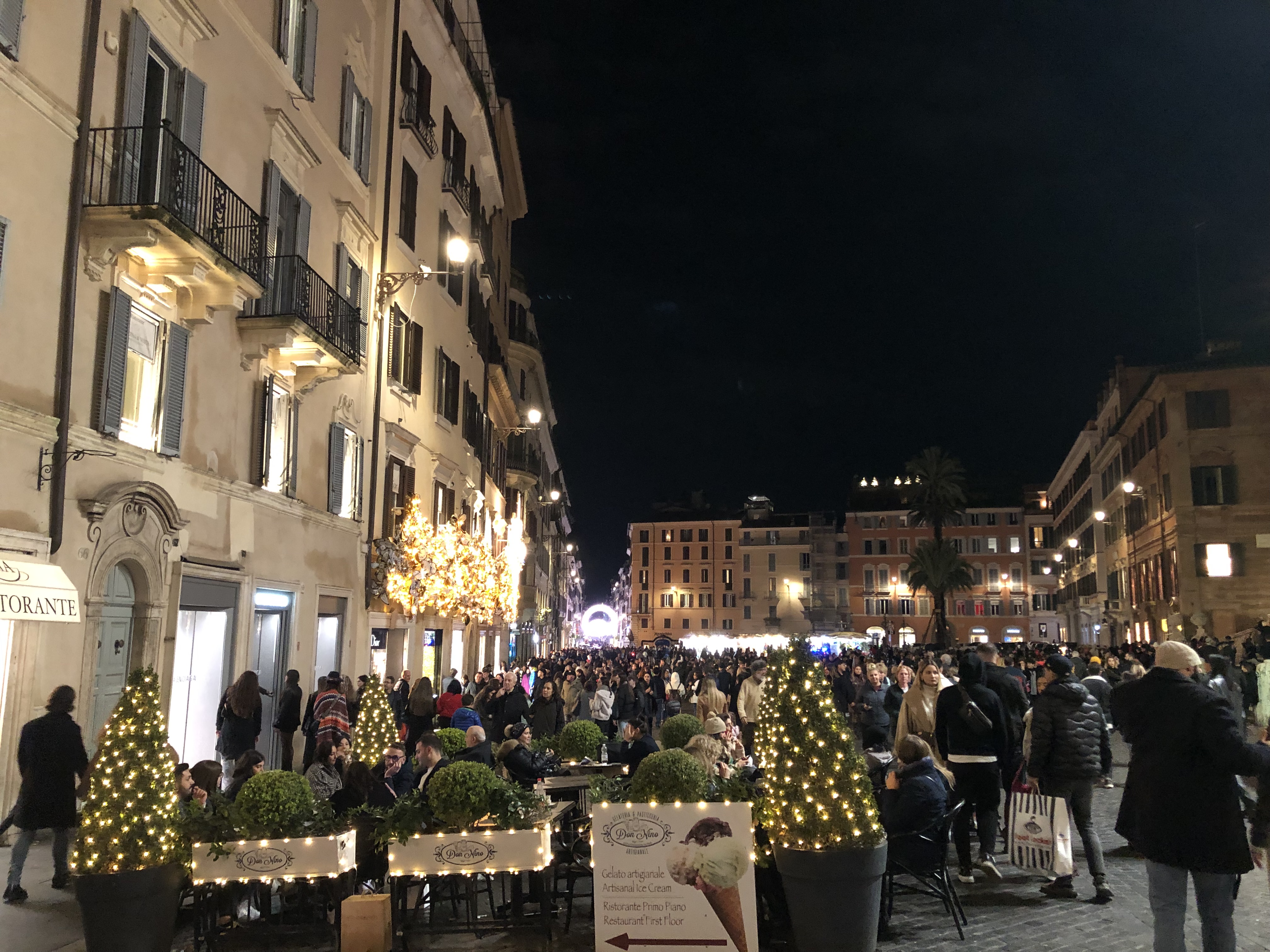
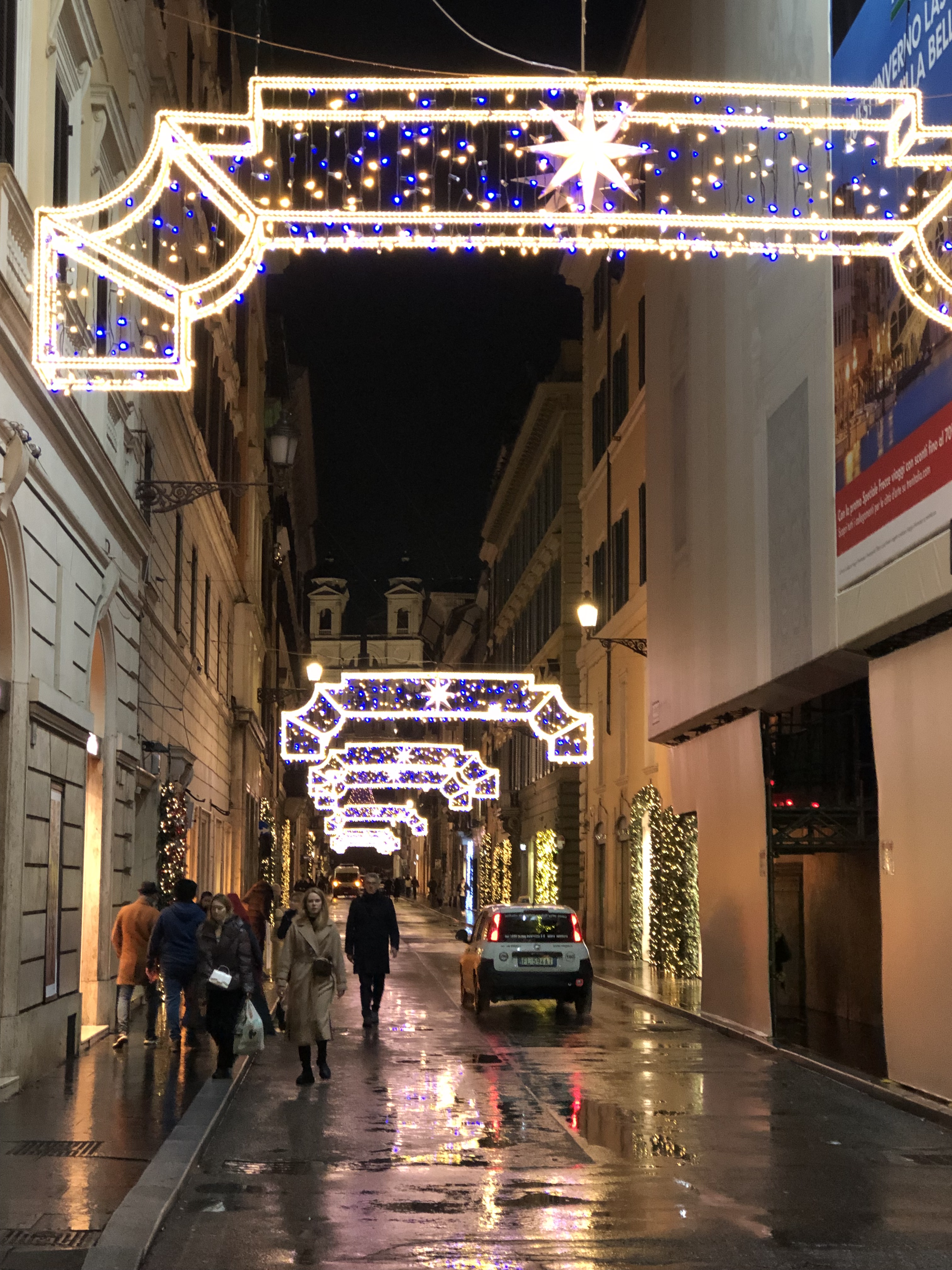
Here are a few shots of Rome’s lights…

Advent in Italy

In Italy the pre-Christmas countdown begins in earnest after the Immaculate Conception on December 8. One of the country’s less-known charms is that Holy Days of Obligation are national holidays, so the Immaculate Conception means a day off, and if, like this year, it falls on a Thursday, this means a long-weekend for many, rather like Thanksgiving.

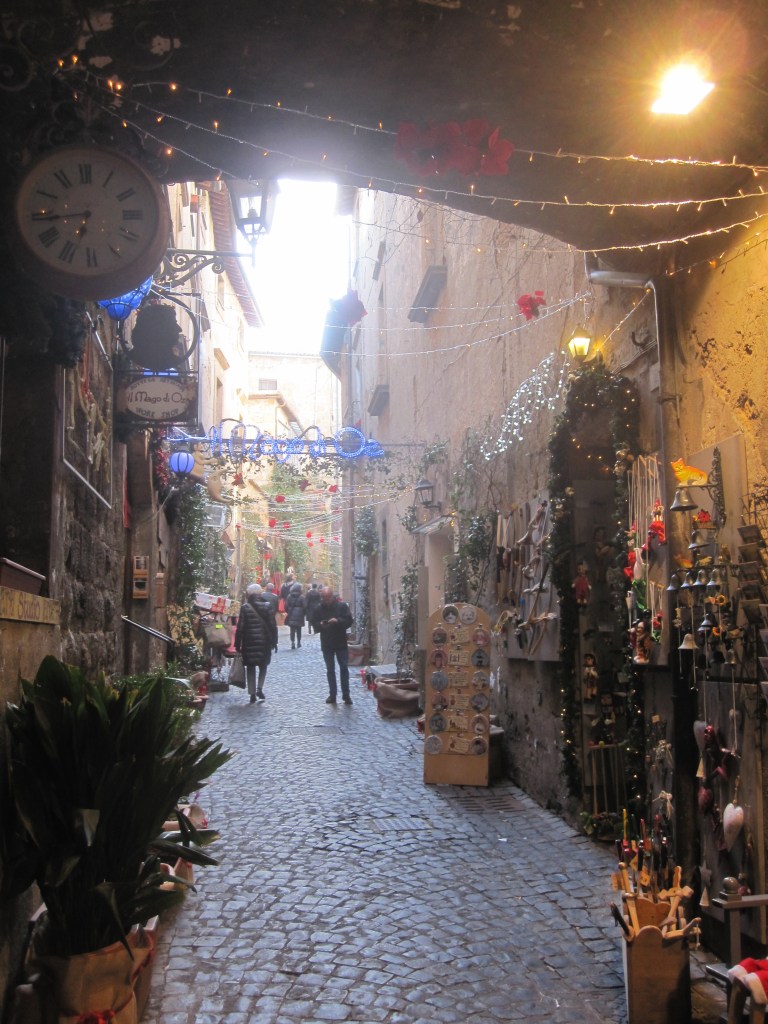
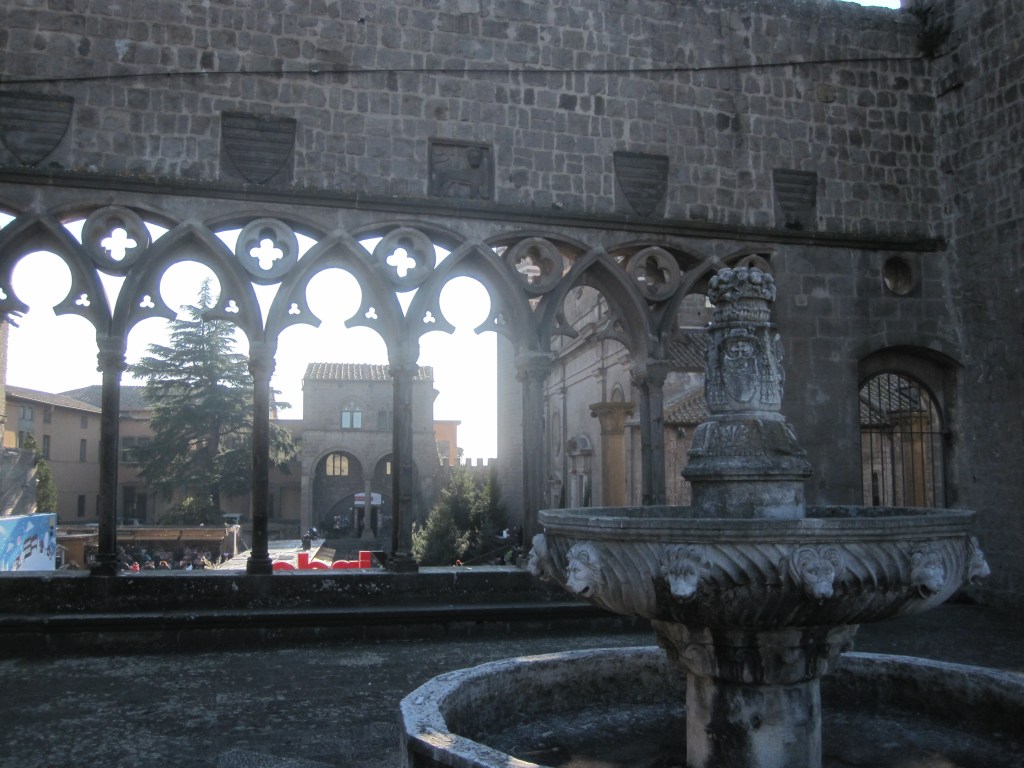
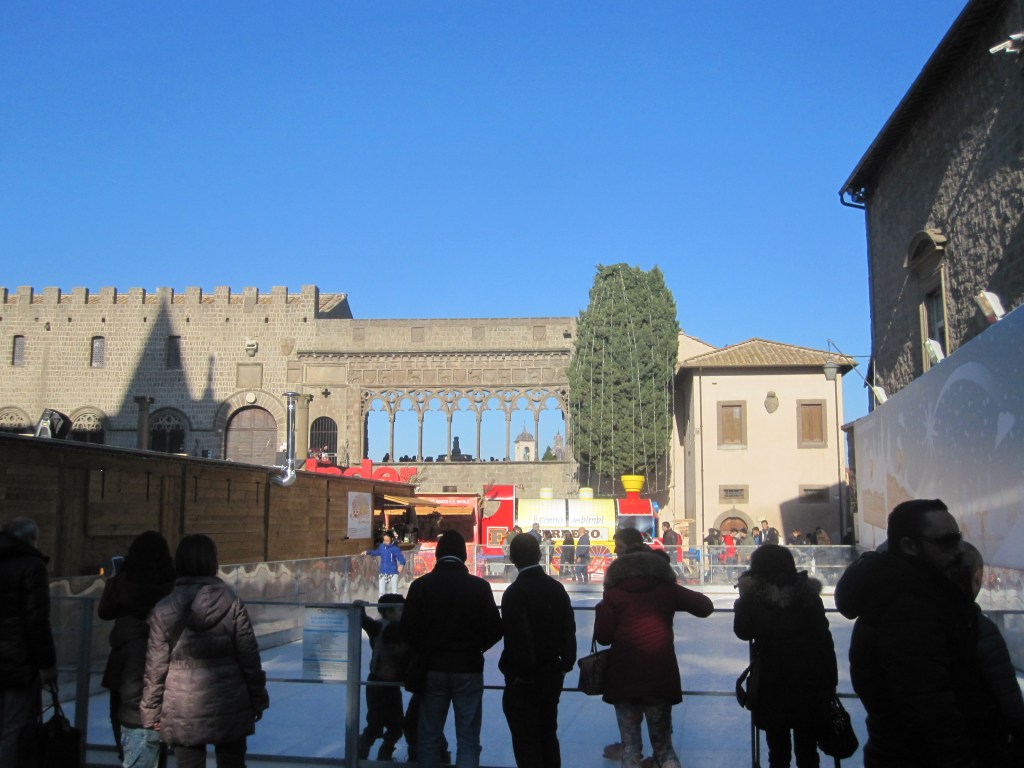
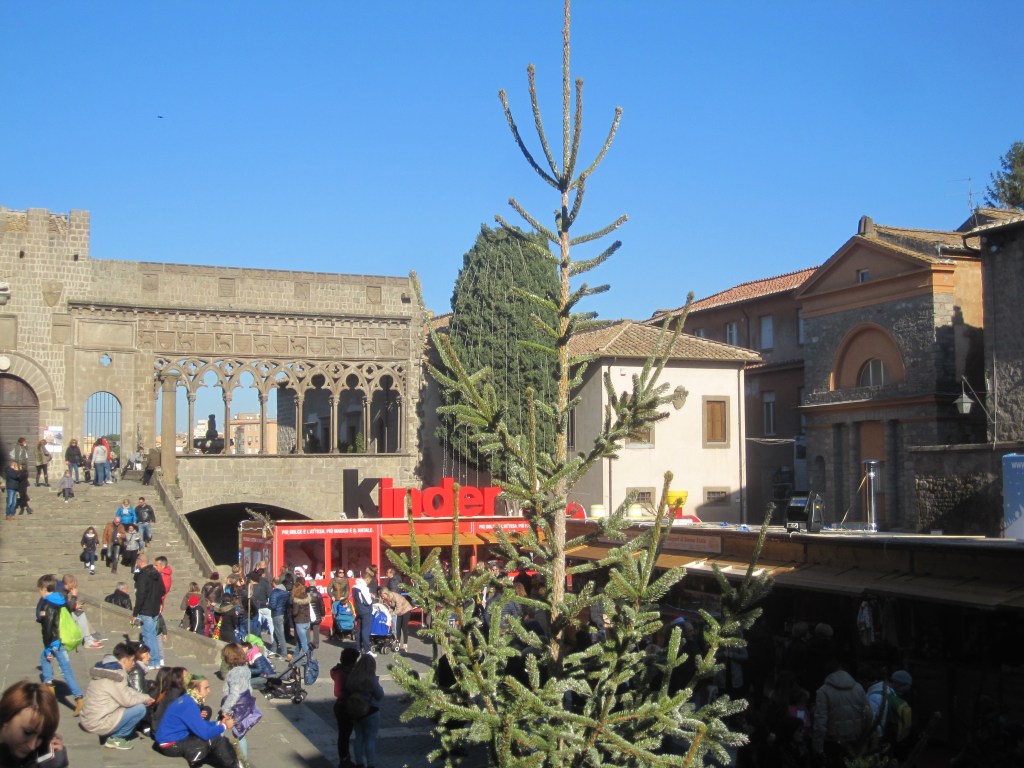
Advent is one of my favorite seasons, and, as the lights go up and manger scenes come out, I find it one of Italy’s most charming as well. (Christmas lights, fireworks, and outdoor summer operas are among the ways Italians take delight in being delightful.) Unfortunately, this year I was not among those to get last Friday off and the end of the semester is keeping me at my desk–so for this Gaudete Sunday , I rummaged through pictures of Advent trips past. Here’s a handful from Orvieto and Viterbo, the sort of small towns that are charming any time, but especially decked out for the season.

Happy Gaudete Sunday!

Rejoice in the Lord always; again I say, rejoice. Indeed, the Lord is near.

Sing, but keep going

Yesterday’s reading from the Office, the last of the liturgical year, is also one of the best, St. Augustine at his most eloquent. Like this time of year in the liturgy itself, it’s as much about beginning as it is about ending. It captures that joyful hope that so characterizes the Advent season and which I think is much in need these days — that flicker of unfailing light to guide us through the winter darkness.

Santa Croce in Gerusalemme, Rome

There’s nothing saccharine in Augustine — Rome was crumbling as he wrote, and his honesty about his own failings and man’s sinfulness is unflinching — but that’s what makes his alleluia really count. Despite his own weakness and wrongheadedness, he knew God’s pursuit was unfailing. And he knew — something I feel acutely today given the state of the Church and the world — that there is still so much work before us…

“Let us sing alleluia here on earth, while we still live in anxiety, so that we may sing it one day in heaven in full security… Even here amidst trials and temptations let us, let all men, sing alleluia. God is faithful, says holy Scripture, and he will not allow you to be tried beyond your strength. So let us sing alleluia, even here on earth. Man is still a debtor, but God is faithful…

“O the happiness of the heavenly alleluia, sung in security, in fear of no adversity! We shall have no enemies in heaven, we shall never lose a friend. God’s praises are sung both there and here, but here they are sung in anxiety, there, in security; here they are sung by those destined to die, there, by those destined to live forever; here they are sung in hope, there, in hope’s fulfillment; here they are sung by wayfarers, there, by those living in their own country.

“So, then, my brothers, let us sing now, not in order to enjoy a life of leisure, but in order to lighten our labors. You should sing as wayfarers do — sing, but continue your journey. Do not be lazy, but sing to make your journey more enjoyable. Sing, but keep going…”

St. Augustine, Sermo 256

Office of Readings

Saturday, 34th Week in Ordinary Time