Boundaries of Eden

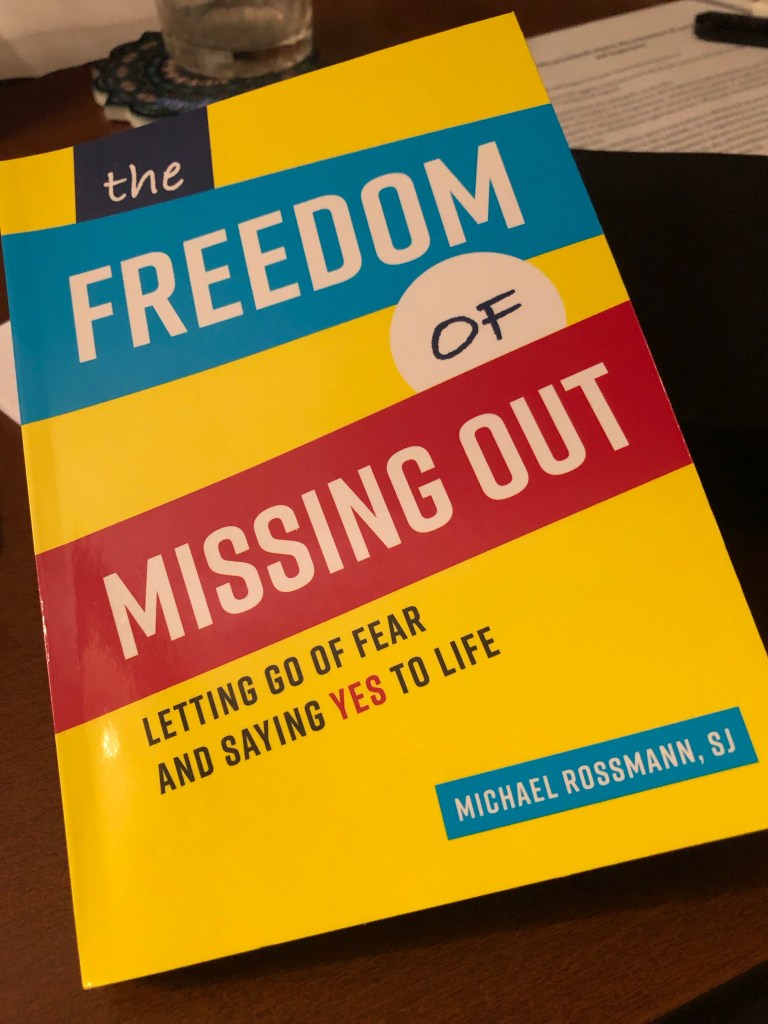
My recent pleasure reading has included Glenn Arbery’s Boundaries of Eden from Wiseblood Books. Always nice to discover another Catholic writer. Here’s a part I liked…

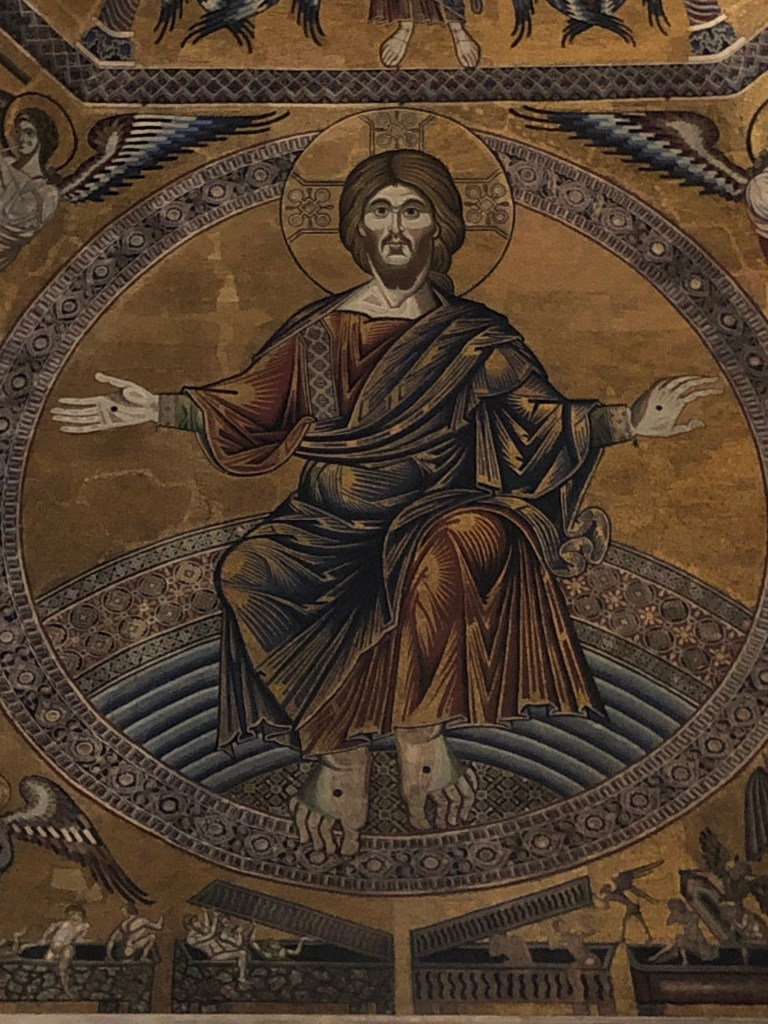
Why should there be providence with respect to Braxton Forrest, anyway? Hardest of all to imagine was that God Almighty, with the whole universe to look after, cared anything about the peccadilloes of a middle-aged literature professor. The apparent absurdity of it had to be balanced against the overwhelmingly convincing sense of an inner witness, an exacting (if often ignored) conscience, a kind of co-knowing whose ground lay deeper than his own conscious mind. So yes. Acceptance of providence brought him to see himself differently. It even brought him, if only occasionally, to the Gospels, where he did not encounter the sweet, naïve, androgynous new version of the fierce Old Testament God that he expected, but the Old Testament God incarnate, the fierce, severe, enigmatic otherness of a man whose absolute authority overflowed any apparent warrant for it….

Glenn Arbery, Boundaries of Eden

Pentecost Homily

The feast of Pentecost holds a special place in my heart because I presided at my first Mass on Pentecost Sunday. This year is the fifth anniversary of my ordination, so, for kicks, I dug up my homily from that Mass and thought I’d repost it here. A lot has happened since that day, yet in some ways it still feels like yesterday…

Pentecost Sunday 2017, Marquette University chapel

I’ll begin with homework.  Today’s first reading from Acts 2 tells the story of Pentecost, but it’s just the beginning of the story of Pentecost.  So on your i-Phones on the drive home, pull up Acts of the Apostles and read all of chapter 2.  (Unless you’re driving.)  

Now, since in my 22 years of formal education I have noted that occasionally students don’t do their homework, I will go ahead and tell you what happens in Acts 2.  The part we heard this morning takes place after Jesus had risen from the dead, appeared to his disciples for 40 days, and then ascended into heaven.  One thing I don’t think we realize when we talk about Easter is how disoriented the disciples were even after Jesus rose from the dead.  The Resurrection doesn’t immediately bring understanding to the disciples.  If you read all of John 20, the chapter from which today’s Gospel is taken (extra credit), you’ll note that even after the Resurrection there’s still disbelief, confusion, and fear.  Mary Magdalene meets Jesus but mistakes him for a gardener.  Then, when she realizes who it is, she won’t let go of him—to the point that Jesus has to tell her, “Stop holding on to me.”  After the horror of the crucifixion, we can understand why the disciples would be fearful and why Mary Magdalene wouldn’t want to let Jesus go.  But Jesus says he has to go to do something necessary for the disciples.  He promises that when he has ascended to the Father, he, with the Father, will send the Holy Spirit to the disciples.  

Continue reading “Pentecost Homily”

Leo the Great on the Ascension

The Ascension, 18th century, Molave wood, San Augustin Museum, Manila, Philippines

The conviction on which sacramental theology rests is nowhere better expressed than by St. Leo the Great in his sermon on the Ascension: after Jesus ascended into heaven, what was visible in his earthly life has passed over into the sacraments.

At Easter, beloved brethren, it was the Lord’s resurrection which was the cause of our joy; our present rejoicing is on account of his ascension into heaven. With all due solemnity we are commemorating that day on which our poor human nature was carried up, in Christ, above all the hosts of heaven, above all the ranks of angels, beyond the highest heavenly powers to the very throne of God the Father…

And so our Redeemer’s visible presence has passed into the sacraments…

The truth is that the Son of Man was revealed as Son of God in a more perfect and transcendent way once he had entered into his Father’s glory; he now began to be indescribably more present in his divinity to those from whom he was further removed in his humanity…

Leo the Great, Sermo 2 de Ascensione, Office of Readings, Friday of the Sixth Week of Easter

On Spiritual Communion

I was very pleased to get the new issue of Worship, where I have an article that brings together some thoughts from the early days of the COVID lockdown with research related to my work on baptism of desire. It provides some of the intellectual background for my thoughts on the limits of e-worship in America.

The article “Spiritual Communion or Desire for Communion?: Sacraments and Their Substitutes in the Time of COVID-19” appears in the April 2022 issue of Worship.

Here’s the abstract:

This article critiques the concept of “spiritual communion” in light of the COVID-19 pandemic. It traces the idea’s roots to the earlier doctrine of baptism of desire and explores how the scholastic distinction between the sacramentum and res sacramenti supports it. However, it argues that such a distinction runs the risk of reductivism, discounting the embodied and communal dimension of the celebration of the sacraments. It suggests that understanding the Eucharist to represent a single irreducible good which produces multiple secondary goods provides a better way to understand the sacrament. Such a framework is able to account for what is positive in such practices as spiritual communion or televised liturgies while avoiding the danger of presenting them as replacements for the sacrament itself.

Maximus of Turin on the Resurrection

Albrecht Dürer woodcut, cathedral museum, Mdina, Malta

Christ is risen! He has burst open the gates of hell and let the dead go free; he has renewed the earth through the members of his Church now born again in baptism, and has made it blossom afresh with men brought back to life. His Holy Spirit has unlocked the doors of heaven, which stand wide open to receive those who rise from the earth. Because of Christ’s resurrection the thief ascends to paradise, the bodies of the blessed enter the holy city, and the dead are restored to the company of the living. There is an upward movement in the whole of creation, each element raising itself to something higher. We see hell restoring its victims to the upper regions, earth sending its buried dead to heaven, and heaven presenting the new arrivals to the Lord. In one and the same movement, our Savior’s passion raises men from the depths, lifts them up form the earth, and sets them in the heights…

Continue reading “Maximus of Turin on the Resurrection”

A challenging examination of motherhood

Over at America, my friend Rachel Lu has authored the most thought-provoking reaction I’ve seen so far on what appears to be the downfall of Roe vs. Wade, Do we really honor motherhood?. It’s both personal and penetratingly analytical, a thought-provoking lead-up to Mother’s Day.

Roe vs. Wade was a horrific decision in every respect, an act of judicial lawlessness, the fruits of which can be seen in the lawless tactics — from slandering Supreme Court nominees to this week’s leak and violent protests — employed to defend it. Violence begets violence. There seems no line of decency or ethics that Roe’s partisans will not cross to protect it — like a lie that requires a whole string of other lies to keep it going. Listening to the President bluster about having the “right” to abortion-without-limits “because I’m just a child of God, I exist,” one cannot help but wonder, Have you no shame, man?

Rachel’s essay goes deeper than political debates and gets at more complex questions of our social and human identity. There’s plenty in it to challenge everyone’s thinking, including theologians and pro-lifers. It suggests ways in which we’ve ended up with the brutal culture of abortion that has prevailed in Roe’s wake by taking the sacrifices women make to be mothers for granted. I’ll offer just one example, Rachel’s surprising analogy between soldiers and mothers.

At first glance, it might seem strange to compare mothering to soldiering; one involves killing and the other fosters life. In many ways though, the parallels are quite strong. Historically, these are the only two demanding vocations that have been foisted on people in nearly all human societies, with little or no regard for their personal feelings or level of preparation. The demands are daunting, but failure can bring crippling consequences for individuals and society. Motherhood is also like military service in that both require recruits to put their very bodies on the line, running very real risks of disfigurement or death. These remarkable demands are justified in the simplest of terms: They are necessary. Civilization itself is at stake.

Rachel Lu

The rest is worth more than a casual read. Read the full article.

Signs of Easter

With winter now banished, one of my favorite signs of Roman spring is here — flowers sprouting from the tile rooftops. Above, my favorite, the corner of St. Ignatius Church seen from the terrace of our building, below a more modest view from my room. I’m not sure what this annual effusion of greenery means for the structural integrity of the tiles — and, I guess, I don’t really care. I find the flowers exuberant and surprising and, yes, just a tad reckless. In other words, a perfect sign of Easter.

I’ve always thought the flowers — life and beauty — breaking through the tiles a nice metaphor for the Resurrection, like the angels dressed in dazzling white among the scattered tombstones. This year they’ve also put me in mind of Peter. Peter is, after all, a slightly reckless figure, the desires of his heart a step ahead of his own moral capacities. His love for Jesus leads him to boast of his fidelity on Holy Thursday — “Lord, I am ready to go with you to prison and to death” — and then to find that his steadfastness has fallen short of his aspirations. It is devastating to read of Peter’s betrayal; one can imagine how much more devastating it was to live it.

Continue reading “Signs of Easter”

The origins of Arbor Day

Sequoia National Park

Happy Arbor Day! I guess the date varies from year to year, depending on the optimal conditions for tree planting. It so happens that this festival of tree planting has ecclesiastical origins, as I learned in Joan Maldoof’s delightful little book, Treepedia: A Brief Compendium of Arboreal Lore. Turns out, “In 1805 a Spanish priest initiated the first modern celebration of tree planting, called the fiesta de arbol.” A bit more research revealed that the precise location of the first Arbor Day was Villanueva de la Siera, Spain. The event began with the ringing of church bells and Mass, followed by the characteristic planting of trees–then a party. Viva España! The first official American celebration of the event came on April 10, 1872 in Nebraska. Today, according to Maldoof, it is celebrated in more than forty-three countries. Happy planting!

Innsbruck revisited

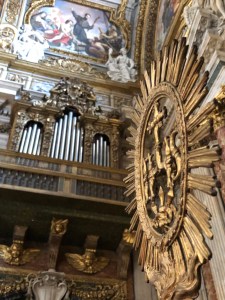
I was thrilled to get the news this week that my essay “Angels in Innsbruck” was selected by Dappled Things as the winner of their 2021 Jacques Maritain Prize for Nonfiction. Dappled Things is a wonderful literary journal, the only one I know of with the explicit mission of publishing Catholic literature. They’re both online and in print; the print journal features some really beautiful artwork and is well worth the subscription.

To celebrate the occasion, I thought I’d post a few pictures from my summer in Innsbruck to go along along with the essay. First the angels in the Jesuit church…

And then a few pictures of beautiful Innsbruck.

Bernini’s beads

Can you spot the rosary?

When I reached the end of the station pilgrimage the last time around, I was struck by the details.

For the sacramental theologian such as myself, there’s a deep lesson in the details of the journey. The Son of God’s Incarnation meant entering fully into the reality of human life, with all its diverse moments of suffering and disappointment, of hope and joy, of sometimes just getting by. The Passion narrative is the most vividly detailed part of the Gospels, and the Resurrection stories too, though reflecting the discombobulation of that utterly unprecedented event, also retain the sort of vivid details that stick out in one’s mind even when the world has just gone outside-in. Mary thinks Jesus is the gardener. Jesus eats a bit of fish. The sacraments depend on the details of the Lord’s life, too, on what he ate at his last meal.

Continue reading “Bernini’s beads”