Recently, I was fortunate to be able to take a brief trip to Barcelona for a research project (more on that to come). I spent as much time as I could at Antoni Gaudí’s marvel, La Sagrada Família (more on that, as well).
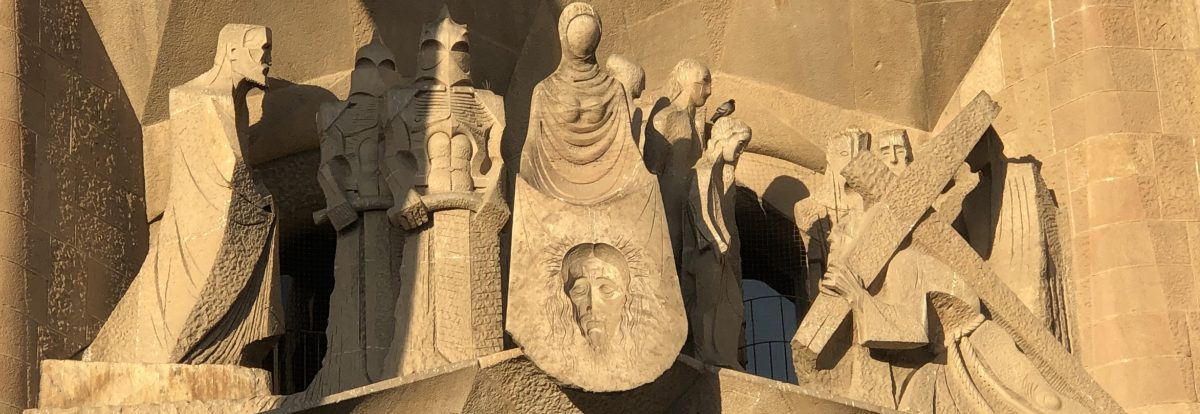
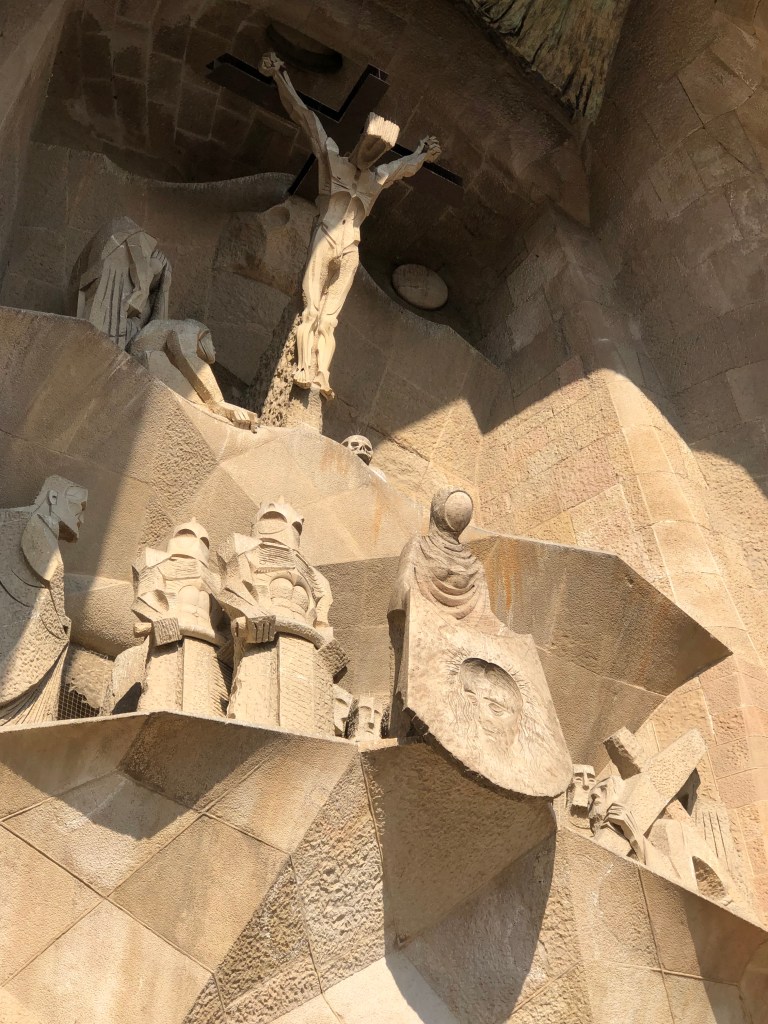
The entire basilica is a marvel, a deeply spiritual and prophetic building. This Holy Week, I thought it would be appropriate to share some photos of the Façana de la Passió, the Passion Facade. The sculptures broadly follow Gaudí’s instructions, though they are the work of Josep Maria Subirachs. If anything, the sculptures are even more harsh and austere than Gaudí’s original sketches. The hardness of the work is actually in keeping with Gaudí’s instructions.
With classes starting up again this week at the Greg, I’ve been looking back with gratitude on a full summer. Among the highlights was a unexpected trip to Slovakia to accompany the Free Society Seminar organized by the Faith & Reason Institute and the Kolégium Antona Neuwirtha. It was a delight to meet a diverse group of curious and insightful young people from Slovakia, Poland, and the States, all of them committed in one way or another to serving their societies and the common good. The faculty was equally a joy to be with.
In addition to chaplain duties, I was able to lead a seminar on the theme of “civil religion,” taking an article I wrote for The Catholic Thing last year “Rites (and Wrongs) of Democracy” and Robert Bellah’s 1967 article “Civil Religion in America” as jumping off points. Another article I wrote about public apologies and how we deal with historical wrongs, “Confessing Other People’s Sins,” produced an even livelier discussion, enriched by the diverse eastern European perspectives.
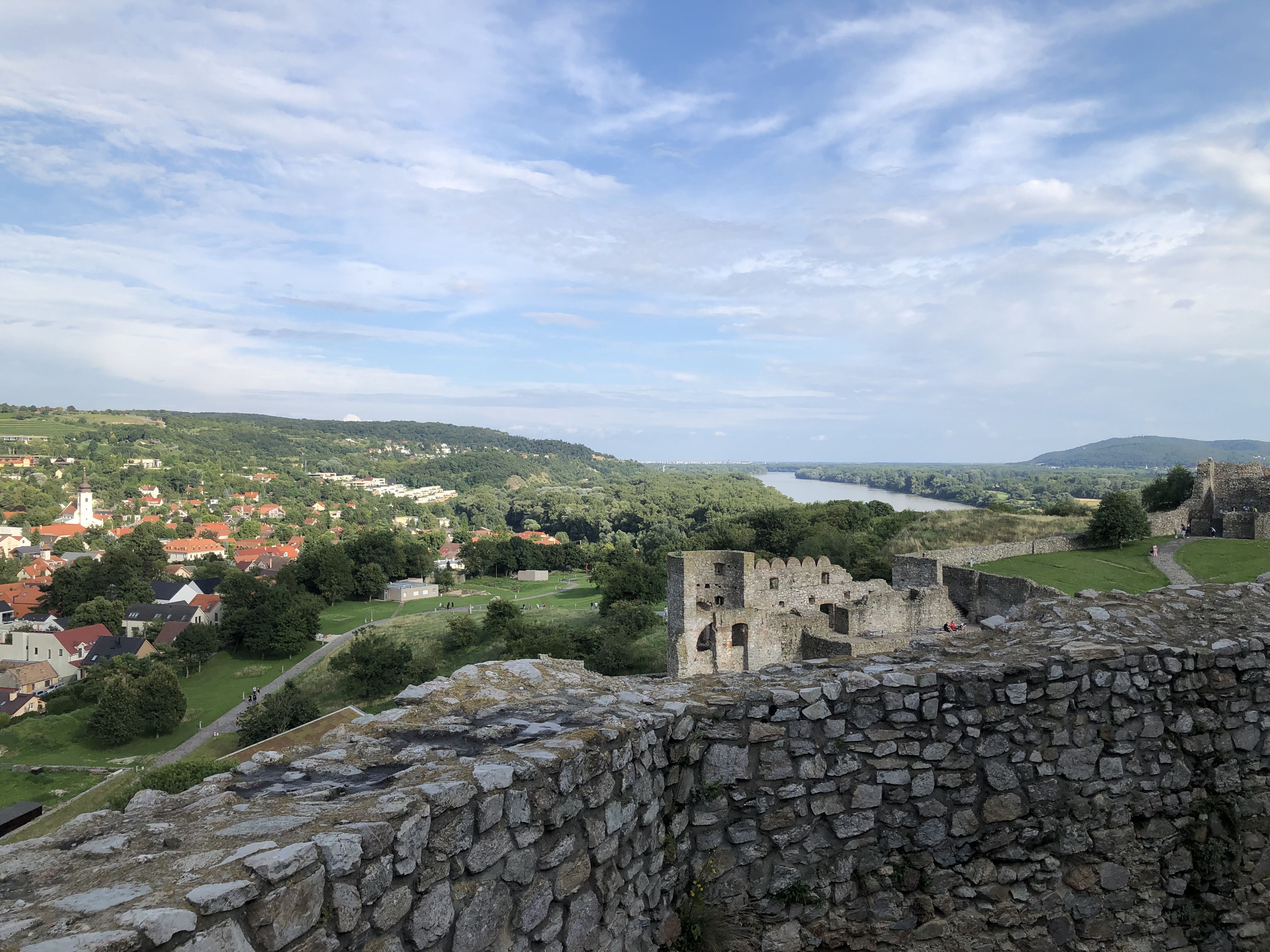
Slovakia is a country of castles, idyllic landscapes, and beautiful churches, but one of the trips’s most haunting memories has to do with the legacy of communism. We visited the Victims of Communism Museum in Košice, which seeks to keep the history of that dark time alive. The geography of Slovakia also provided a vivid reminder of the desperation that system produced. The ancient and strategically placed Devín Castle overlooks the Danube, with Austria–and during the Cold War, freedom–just on the other side. Displays detail the brutal lengths to which the border guards went to prevent Czechoslovak citizens from escaping. Some tried to swim the Danube at the narrow point by Devín. Thousands were imprisoned for illegally trying to cross the Czechoslovak-Austria frontier, and 42 people lost their lives.
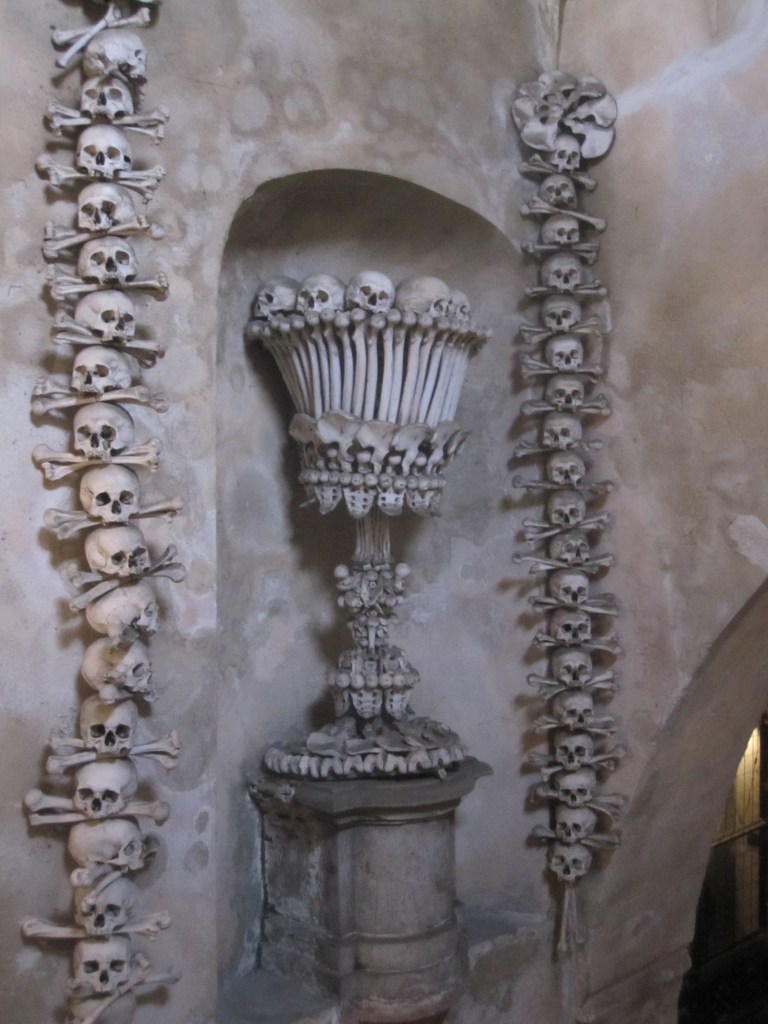
As I noted at the beginning of the month, November is a month dedicated to praying for the dead. It is also a time in which the readings begin to take on a somewhat apocalyptic flare. The theme of the end of things echoes with the changing seasons; at least in the northern hemisphere, this is the time when fall turns into winter.
Sedlec Ossuary, Kutna Hora, Czech Republic
It might seem macabre to dedicate a particular season to considering death, but it doesn’t have to be. In any case, not thinking about death will not prevent it from happening to each one of us. One reason to pray for the dead, as I wrote a few weeks ago, is to help them on their journey through purgatory. Another is to give us the proper attitude toward life. The things in this world are temporary; our relationship with God is eternal. We should plan accordingly.



 Tony Lusvardi, S.J.