Launched: book, articles, interview

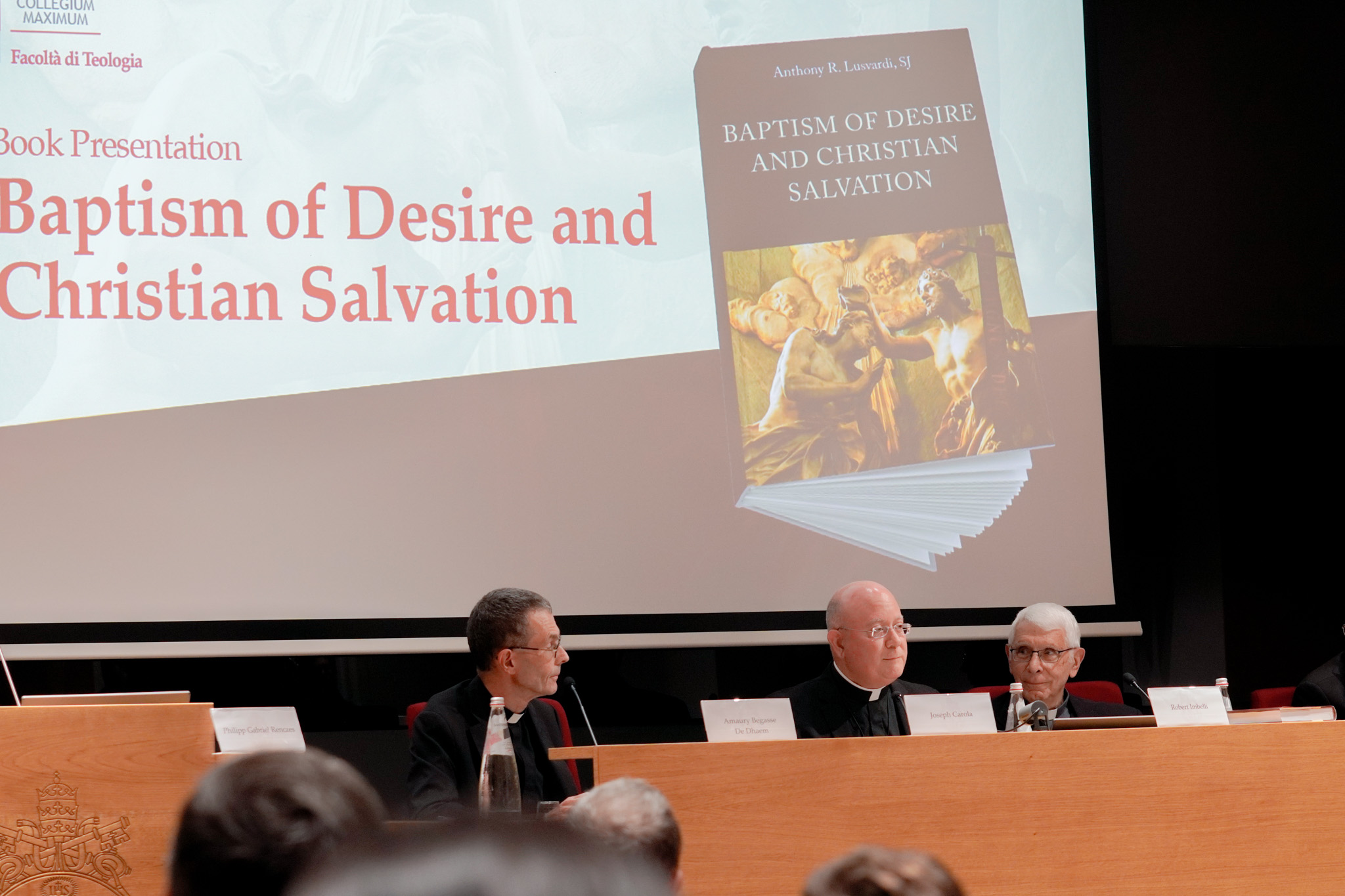
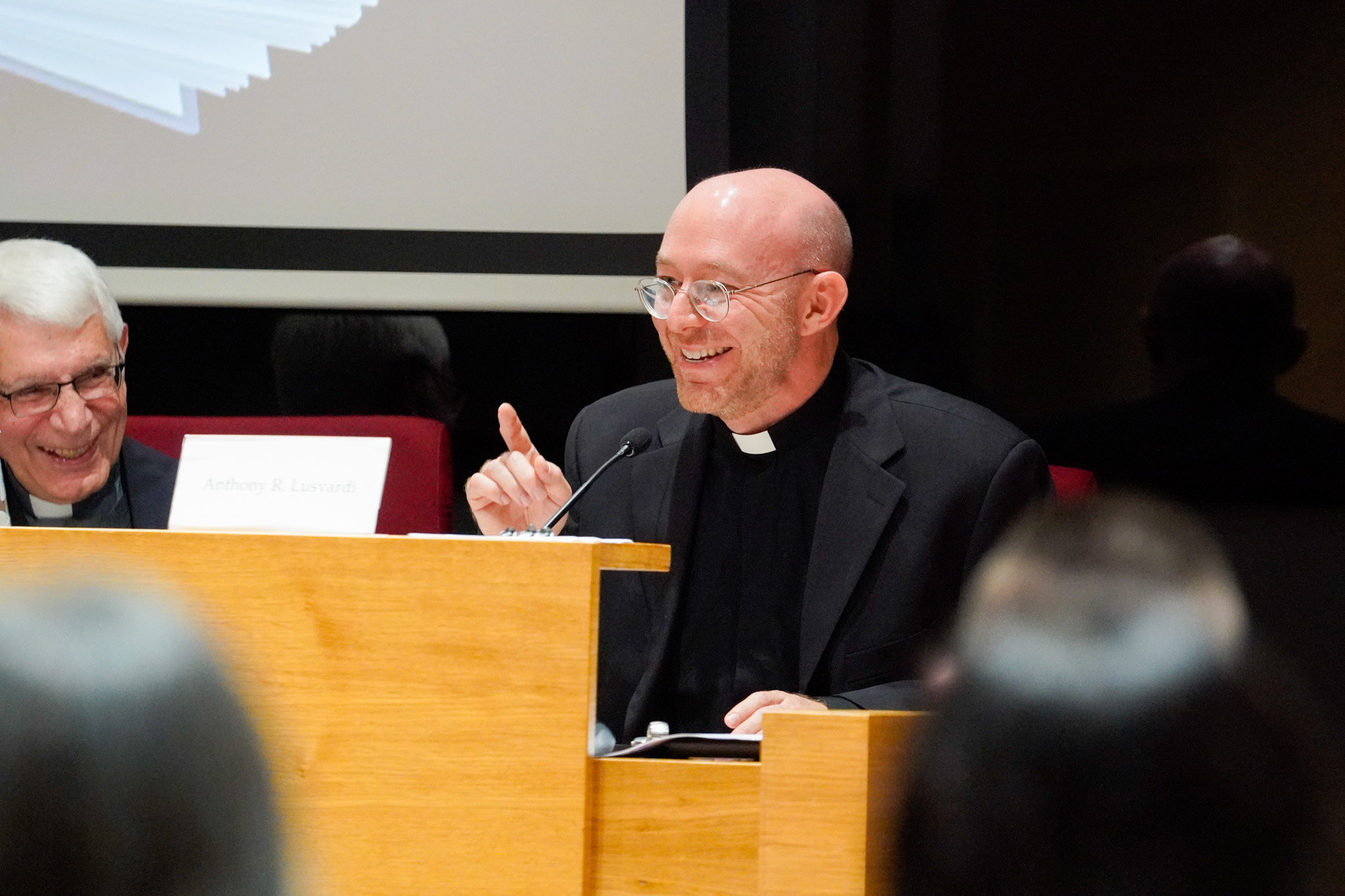
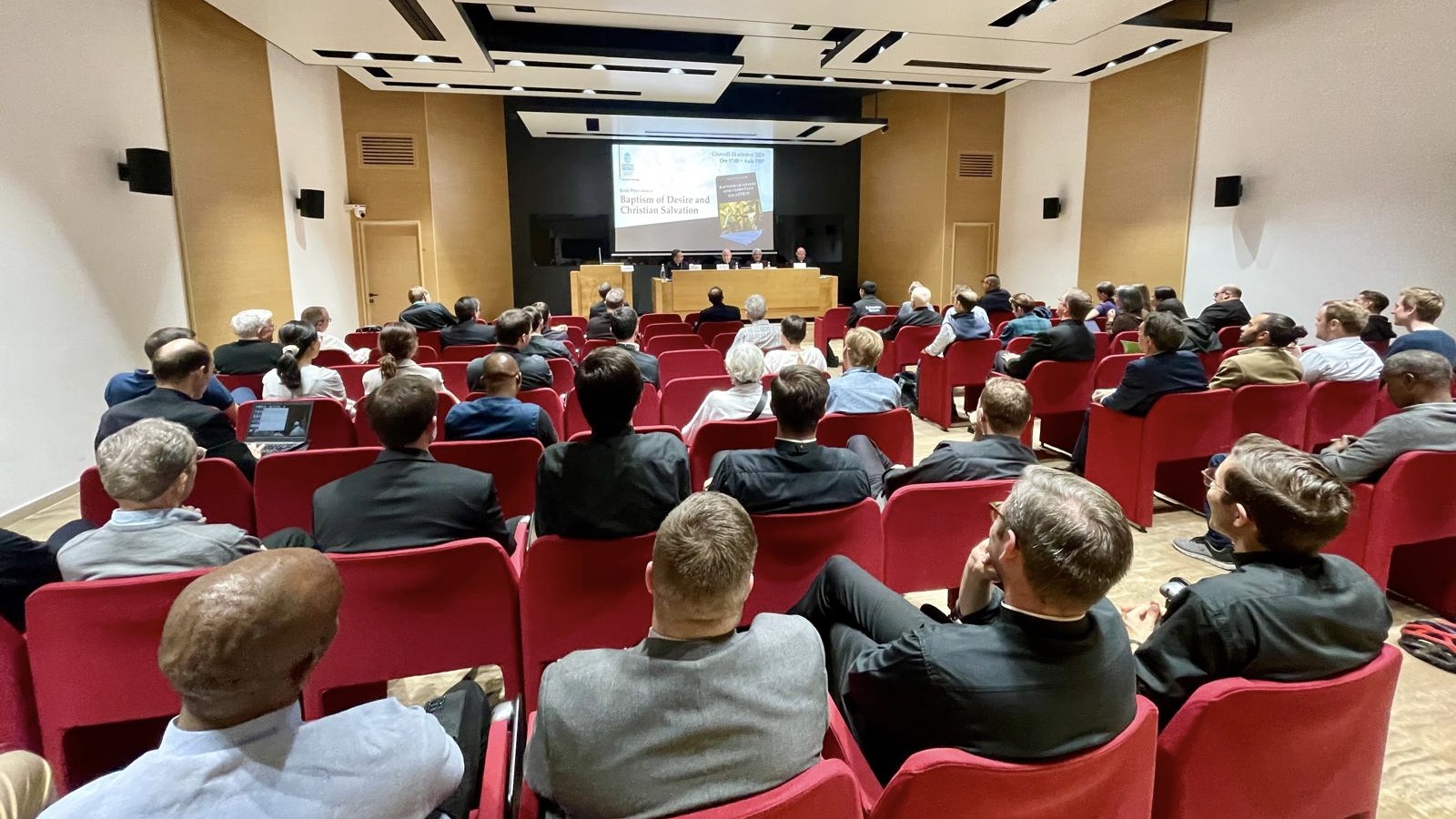
Baptism of Desire and Christian Salvation is now in orbit after an excellent turnout at the official book launch at the Gregorian last Thursday. More good news: the code CT10 still gives you a 20% discount if ordering the book directly from Catholic University of America Press. At the presentation of the book, Fr. Joseph Carola gave an overview of its content and shared some stories from personal experience to illustrate its pastoral relevance. Fr. Bob Imbelli drew on other contemporary thinkers, such as Khaled Anatolios, Charles Taylor, and William Cavanaugh to demonstrate its relevance. I hope to have video of the presentations up on the Baptism of Desire page soon.
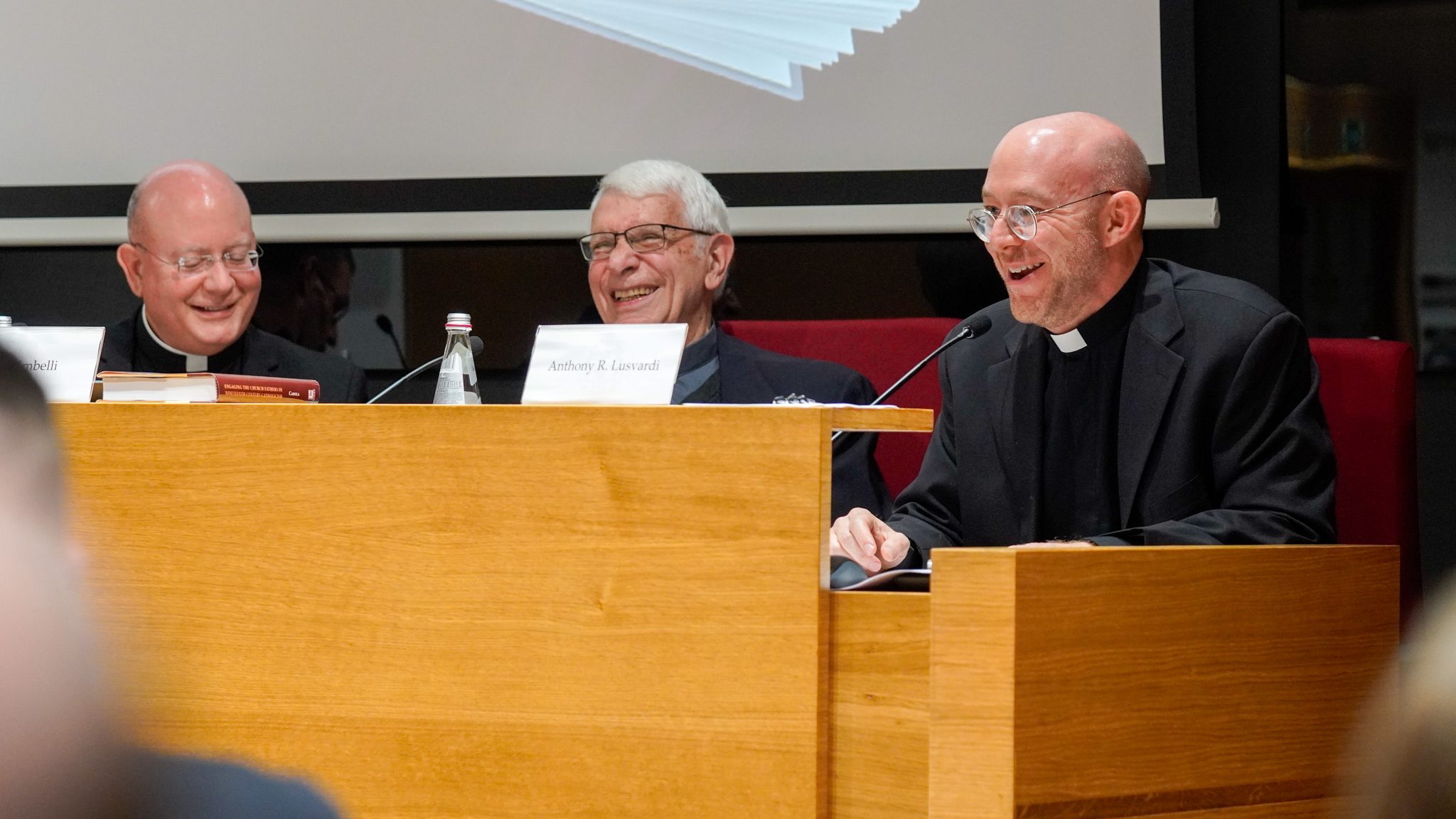
Fr. Joseph Carola, S.J., Fr. Robert Imbelli, Fr. Anthony Lusvardi, S.J.

Just a week before, I was also pleased to talk about the book with my old friend Sean Salai at Catholic World Report. Read the interview here: Defending the necessity of baptism: An interview with Fr. Anthony Lusvardi, S.J.

On another note, in this month’s First Things I return to an issue I raised a few years ago in an article in America magazine, the effects of technology on the liturgy. Here’s the new article: “Screens and Sacraments.” The original from 2020 is here.

And, finally, if you’re looking for some pre-election reading that isn’t about either Donald or Kamala, but instead about the way voting functions as a civic ritual, check out my latest at The Catholic Thing: “Rites (and Wrongs) of Democracy.

Summer roundup

Chocolate Hills, Bohol, Philippines

As you could probably tell from last week’s post, I’m back in Rome getting ready for the start of the new academic year next month. It was a full and eventful summer more than a restful one. It started out with my first trip to the Philippines for a meeting of the Jungmann Society, the international association of Jesuit liturgists, where I gave a talk on daily Mass in Jesuit communities. It was encouraging to meet many young Jesuits interested in the liturgy, especially those from Asia. Some new initiatives are coming out of the meeting as well. The initiative I am most excited about is an eight-day retreat for Jesuits I am preparing for next summer: “Praying the Liturgy,” which will be offered June 29 – July 7, 2025 at the Jesuit Retreat Center in Parma, OH. It is open to all Jesuits.

I also spent some quality time at St. Isaac Jogues in Rapid City and back at home in Minnesota, connecting with friends. For the first time, I led a retreat at the gorgeous new retreat center Cloisters on the Platte outside of Omaha, and attended a really excellent conference in Mundelein, IL on the divergent theologies of Karl Rahner and Joseph Ratzinger organized by Prof. Matthew Levering and the Greg’s own Fr. Aaron Pidel, SJ. Some theological all-stars there. A book will be coming out at a later date with papers from the conference, including my own contribution on the two theologians and the liturgy, arguing that Ratzinger continues the project of the Liturgical Movement while Rahner’s attitude toward the liturgy is an extension of pre-Vatican II scholasticism.

I’m also happy to have had a handful of new publications over the summer, including a pair of articles in America. One is about the sin of presumption, scientism, and Michael Jordan’s shoes, the other a broader perspective on the ‘Last Supper’ controversy at the Paris Olympics. Check ’em out if you haven’t already.

Also, if you didn’t get a chance, you might enjoy my article “Getting Back in the Baptizing Business” in The Catholic Thing which explains why I think my book on baptism of desire is important.

And speaking of Baptism of Desire and Christian Salvation, I was pleased to be able to bring my summer to a close by giving several talks on the book in Sweden. I had an enjoyable discussion with the participants of the Hörge seminariet at the Newman Institute in Uppsala and was deeply encouraged by the large and energetic group of young adults at Sankta Eugenia in Stockholm. It is great to see the book both resonating with people and provoking discussion.

More on Baptism of Desire and Christian Salvation will be coming soon, including an official “book launch” here in Rome…

Stockholm, Sweden

The Last Supper, the French Revolution, and Aleksandr Solzhenitsyn

Readers of this blog might be interested in this article America asked me to write on the Last Supper Olympics controversy. A bit of historic context and a bit of tongue-in-cheek… I may have had a warrant issued for my arrest in France.

I think Solzhenitsyn’s critique of the French Revolution is particularly important and something I hope to follow up on in the next book project.

And speaking of books, if you haven’t already ordered your copy of Baptism of Desire and Christian Salvation, do so quick. They’re selling like hotcakes here in Rapid City…

Intentions, motives, and what makes for a valid sacrament

The question of invalid baptisms has been in the news recently. In my commentary on the question in La Civiltà Cattolica, I pointed out that the Vatican’s most recent document on the question, Gestis verbisque, gives renewed attention to the minister’s intention. For a sacrament to be valid, a minister must intend to do what the Church does when celebrating that sacrament. And that means that if he changes what the Church prescribes in her official liturgical texts–by inserting his own words or deleting something required to be there–then he manifests an intention to do something else. It’s just as straightforward as it sounds. The proof is not in the pudding, but in the action.

Baptismal font, St. Peter’s Basilica

Last week, however, another question was sent to the Vatican about what sort of intention might invalidate a sacrament, this time an ordination. The question proposed the distasteful case of a bishop who ordained a man with whom he had engaged in an illicit sexual relationship. Could he possibly have the right intention? Wouldn’t such a sinful situation invalidate the ordination?

The article in which this question was raised described it as “potentially explosive.” Fortunately, this grenade was defused by St. Augustine in the fifth century. The great theologian was responding to controversy about the validity of baptisms, whether the sinfulness of a minster invalidated the sacrament. He responded no. Augustine’s principle has remained a bedrock of sacramental theology ever since. It is really Christ who baptizes, Augustine said, and he can do so even through profoundly imperfect human instruments. The same goes for ordinations. Augustine sagely realized that if perfection were required of ministers in order for sacraments to be valid, then we simply wouldn’t have sacraments.

So how does Augustine’s principle fit with the requirement that one has to have the right intention to celebrate a sacrament validly? Here we have to make what might at first seem like a rather technical distinction but is, once you’ve thought the question through, also rather straightforward. The distinction is between intention and motive.

Continue reading “Intentions, motives, and what makes for a valid sacrament”

Popular piety and tradition in Sardinia

I was fortunate this year to have spent Holy Week and Easter in Maracalagonis, Sardinia, a small town about a 20 minute drive from the center of Cagliari. It was a good break from the classroom and a wonderful taste of parish life.

Chiesa della Santa Vergine degli Angeli, Maracalagonis, Sardinia

The religious atmosphere I experienced was both warm and traditional. Masses were full; I heard confessions all week long; I met deeply committed Catholic families. I was especially impressed by the enthusiasm for traditional popular devotions. Teams of parishioners take responsibility for organizing different devotions throughout the year. Of particular note during Holy Week were the su Scravamentu, in which the nails are removed from the Lord’s hands and feet and he is taken down from the Cross after the Good Friday liturgy, and the many processions through the town streets–Stations of the Cross, Palm Sunday, Holy Thursday, the Sorrows of Mary on Good Friday, and then the S’Incontru on Easter morning.

Continue reading “Popular piety and tradition in Sardinia”

Praying for confusion

Church of St. Ignatius, Rome

One of the more puzzling turns of phrase in the Spiritual Exercises comes early in the First Week when St. Ignatius directs the person making the Exercises to ask God for “shame and confusion” for one’s sins (48). Shame I get; we ought to feel ashamed for our sins. If we say someone has no sense of shame, it means his conscience isn’t working. But confusion?

Confusion seems to cut against the whole thrust of the Spiritual Exercises and, indeed, Ignatian discernment in general. Isn’t the whole point of doing the Exercises to see the world more clearly, to cut through the illusions thrown up by the Evil Spirit in order to make good decisions and then stick to those decisions with confidence? Confusion is what we feel when we’re lost.

Continue reading “Praying for confusion”

The Virtue of Penance

Last week, I mentioned the seminar I taught this past semester about the sacrament of marriage. I also taught a course about the sacrament of penance. (I learned to be careful when describing my course load to make clear that those were, in fact, two different courses and not a sly commentary on marriage!)

Jonah sarcophagus (ca. AD 300), Vatican Museums

The sacrament of penance has a fascinating history, and the way in which it has been practiced over the centuries has varied more than perhaps any other sacrament. A major theme of the class, however, was that the sacrament itself is not the only way that Christians practice penance. As Thomas Aquinas pointed out (in the Summa Theologiae III q. 85), penance is not only a sacrament but also a virtue. He didn’t come up with that particular insight himself, of course, but was summarizing the theological tradition before him.

Continue reading “The Virtue of Penance”

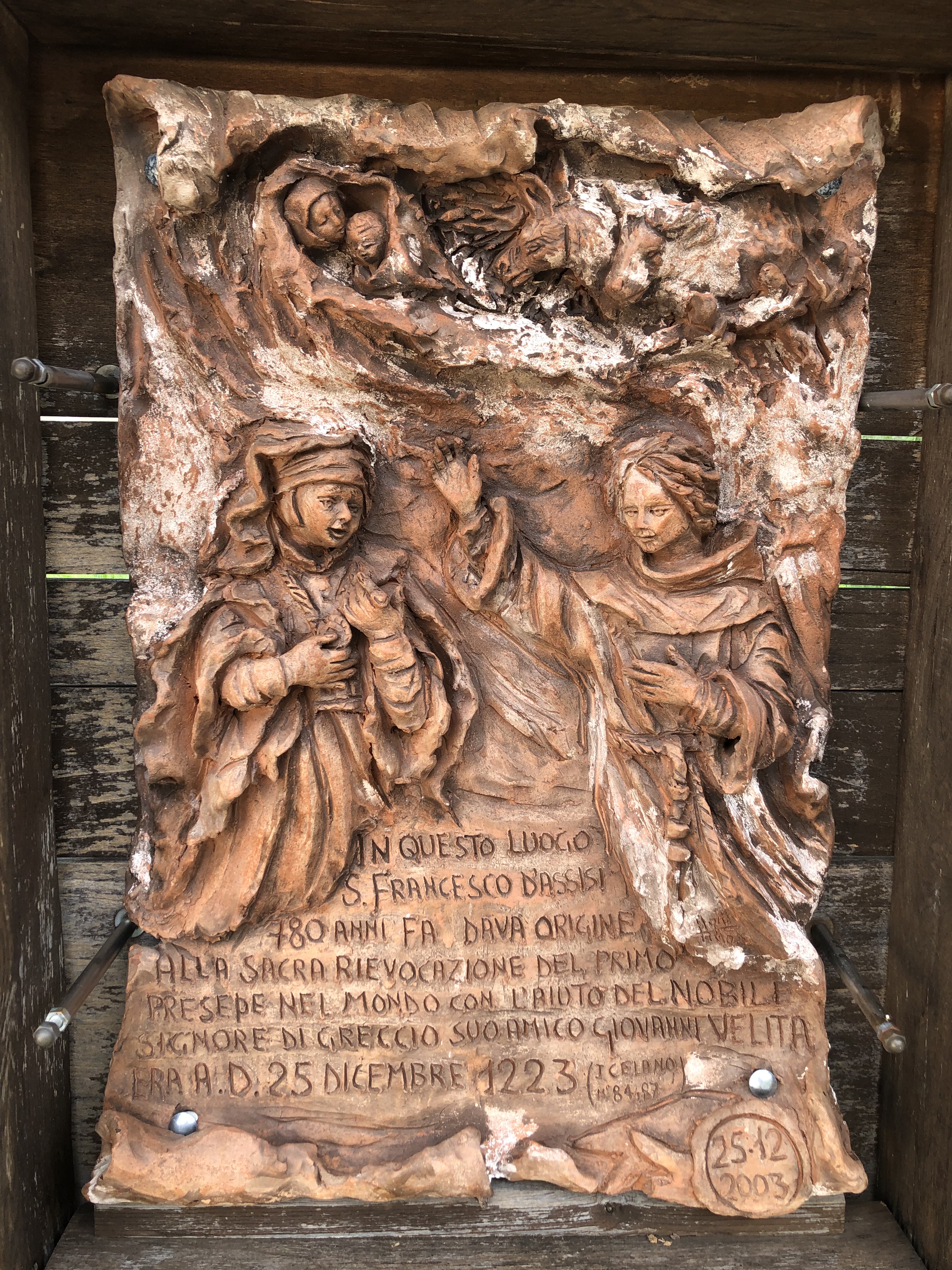
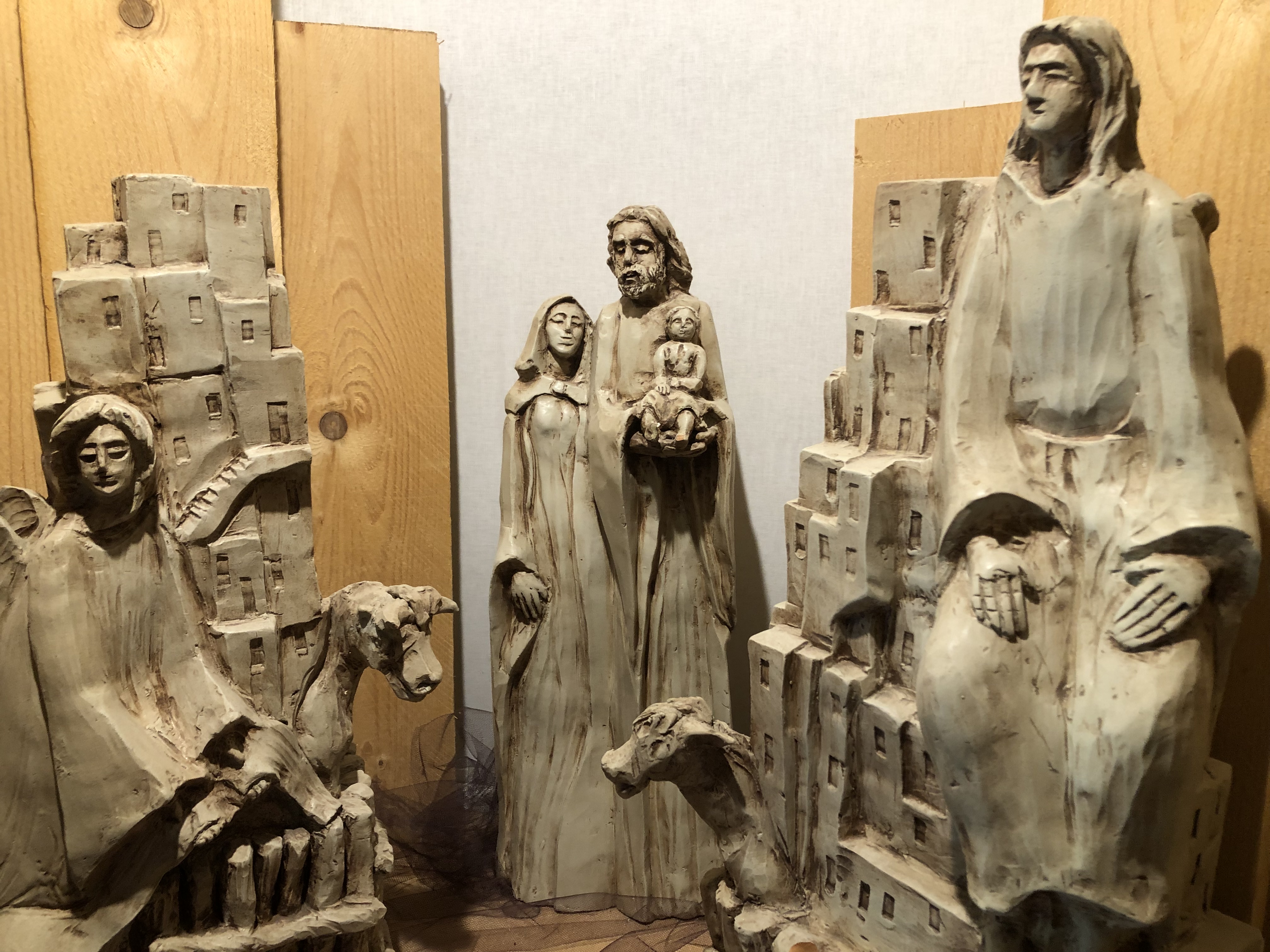
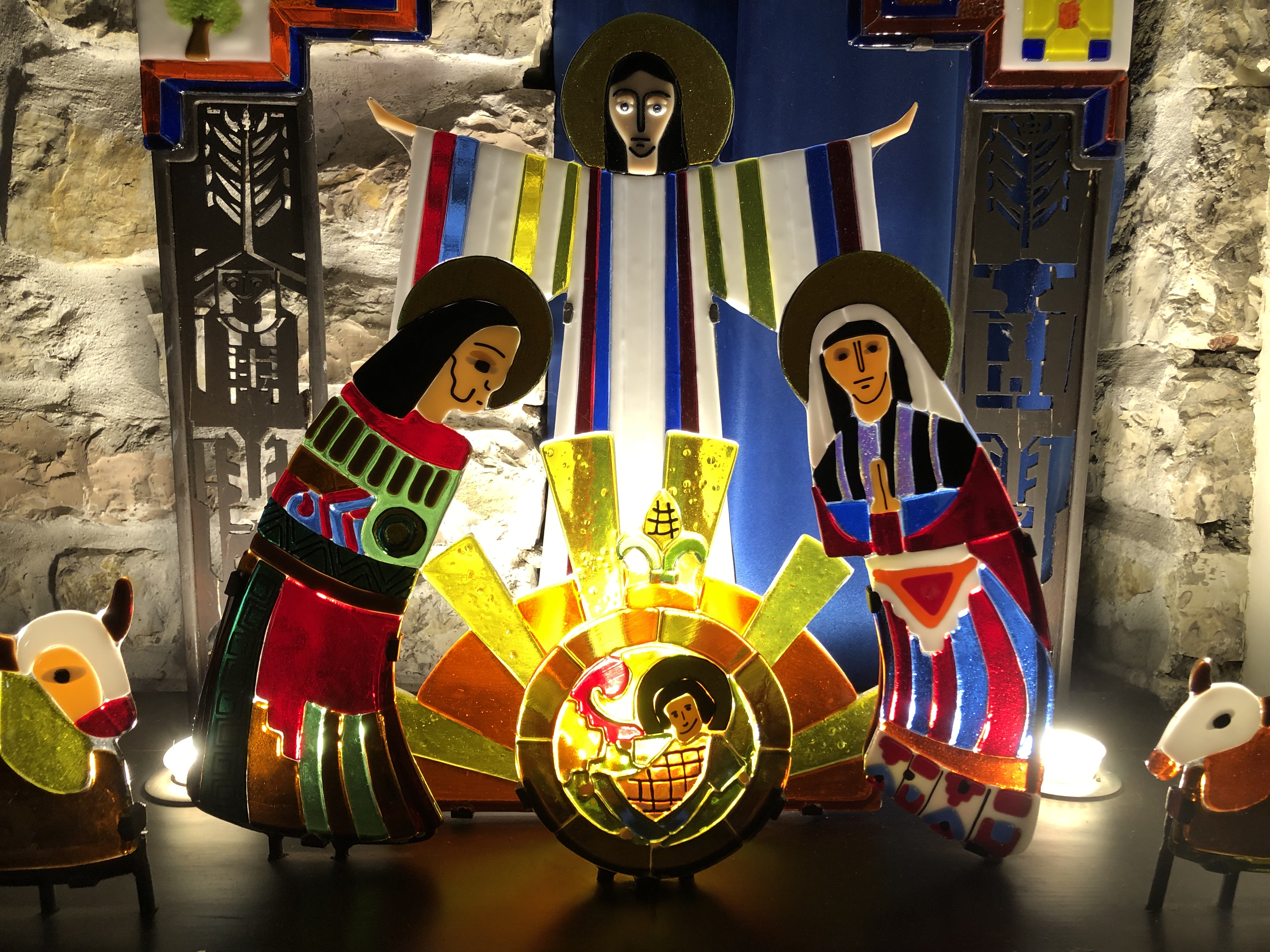
More from Greccio

Chiesa di San Michele Arcangelo, Greccio

Last week, I mentioned my pilgrimage to Greccio, the little town on the edge of Lazio where St. Francis put up the first Nativity scene. I thought I’d share a few more pictures from the (grandly named) Museo Internazionale del Presepio and the Franciscan Sanctuary just outside of town, which was built around the Grotto of the Presepio. Last week I mentioned the series The Chosen and how it demonstrates the same instinct behind the Nativity scene–to use the imagination to draw closer to Jesus in the flesh.

It occurred to me that The Chosen‘s great success–against the odds, without Hollywood backing–shows that the Gospel story remains just as compelling as ever. The commercial success of Mel Gibson’s 2004 The Passion of the Christ showed the same thing. In fact, given the commercial success of such projects, it’s perhaps surprising that the entertainment industry doesn’t try to tap the religious market more often. Then again, Hollywood’s attempts to do religion tend to fall flat because they’re so patently inauthentic–remember Noah (2014)? You didn’t miss much. Martin Scorsese’s 2016 Silence was also a bit of a dud.

Despite these films’ massive budgets, the talent behind them, and slick special effects, they weren’t all that compelling. Perhaps the missing element was simply faith. I suppose it’s something like the difference between a foreigner speaking a language and a native speaker; no matter the foreigner’s wealth or education, he’ll never be as eloquent as a peasant speaking his native tongue. Faith has no substitutes.

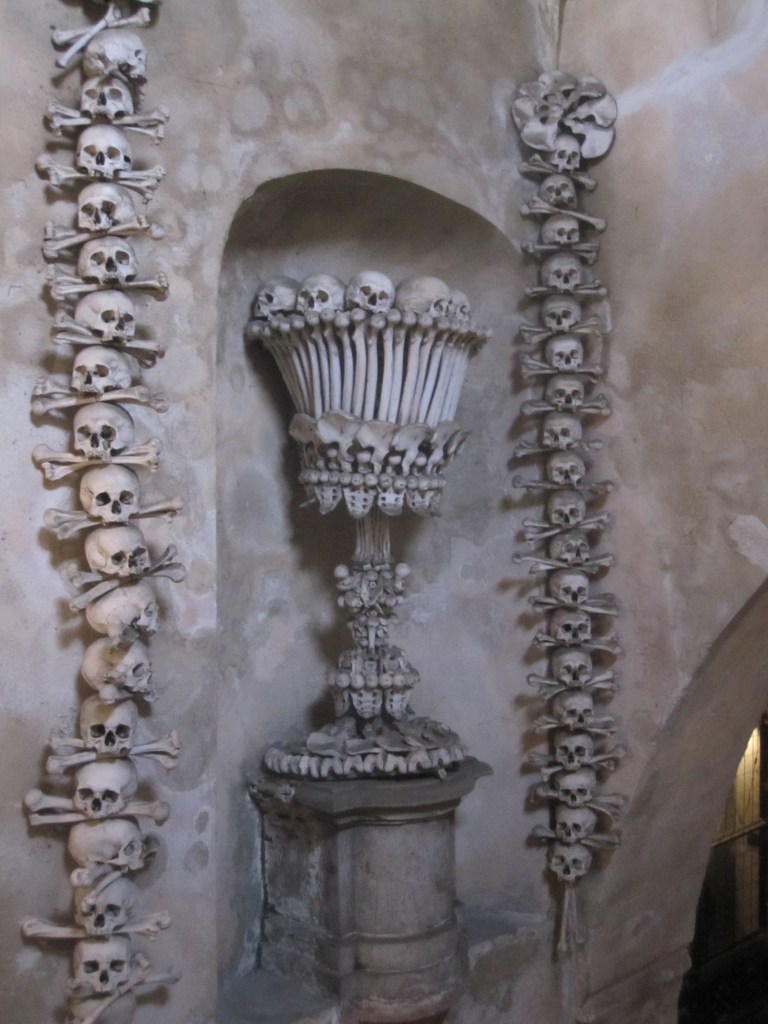
Memento mori

As I noted at the beginning of the month, November is a month dedicated to praying for the dead. It is also a time in which the readings begin to take on a somewhat apocalyptic flare. The theme of the end of things echoes with the changing seasons; at least in the northern hemisphere, this is the time when fall turns into winter.

Sedlec Ossuary, Kutna Hora, Czech Republic

It might seem macabre to dedicate a particular season to considering death, but it doesn’t have to be. In any case, not thinking about death will not prevent it from happening to each one of us. One reason to pray for the dead, as I wrote a few weeks ago, is to help them on their journey through purgatory. Another is to give us the proper attitude toward life. The things in this world are temporary; our relationship with God is eternal. We should plan accordingly.

Continue reading “Memento mori”

Our Great American Holiday

As an American abroad, I’ll readily confess to a bit of nostalgia come Thanksgiving time. As a national rite, the holiday is sublime in its simplicity: turkey, family, eating–and an implicit spirituality as unobtrusive and essential as bedrock. I do celebrate here in Rome with other expats, but the Italian interpretation of cranberry sauce, stuffing, and pumpkin pie, while sometimes whimsical and frequently tasty, is never quite the same. Thanksgiving is quintessentially American, expressing what is best about our country–and perhaps also something of what we seem to be losing.

Continue reading “Our Great American Holiday”