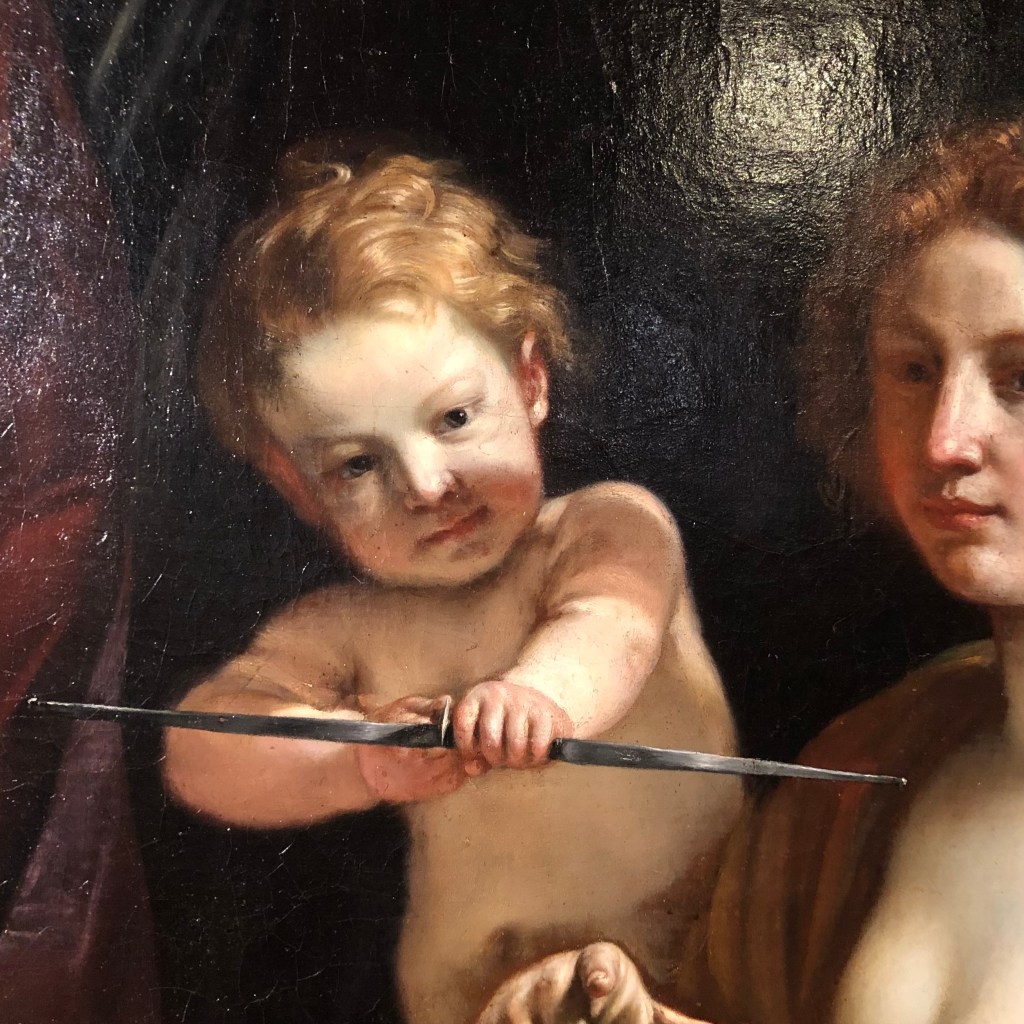
Cupid aims his arrow! From “Venus, Mars, and Cupid,” Guercino, 1633
Late last year, the Vatican’s Dicastery for the Doctrine of the Faith issued Una Caro a document praising monogamy. Monogamy is indeed a praiseworthy institution and not one to be taken for granted these days when everything seems up for grabs. In my seminar on marriage last semester, a student brought to my attention the story of a Protestant pastor in Berlin blessing a “marriage” of four men. And I know from the discussions about marriage in my introduction to the sacraments class at the Gregorian University that polygamy remains a real pastoral challenge in many parts of the globe.
I was happy to be able to review Una caro in the latest issue of La Civiltà Cattolica, adding some insights from recent sociological studies on marriage by Brad Wilcox, Mark Regnerus, and the Belgian sexologist Thérèse Hargot. These sort of studies cannot substitute for a theology of marriage, but they do provide an invaluable supplement to it, if for no other reason than that they help to dispel some of the myths used to deride the Christian vision of marriage.
We are now in the middle of the exam period at the Gregorian University. For me, that means a seemingly endless stack of papers to read and evaluate. My students know that I am prone to harp on the importance of clarity in writing. (When your professor has to read 500 pages of student writing, it’s really in your own interest not to make his job any harder than it has to be!) My students have heard repeatedly the advice I once received from a great philosophy professor at Loyola Chicago (Dr. Jacqueline Scott, who taught Nietzsche): always define your terms.
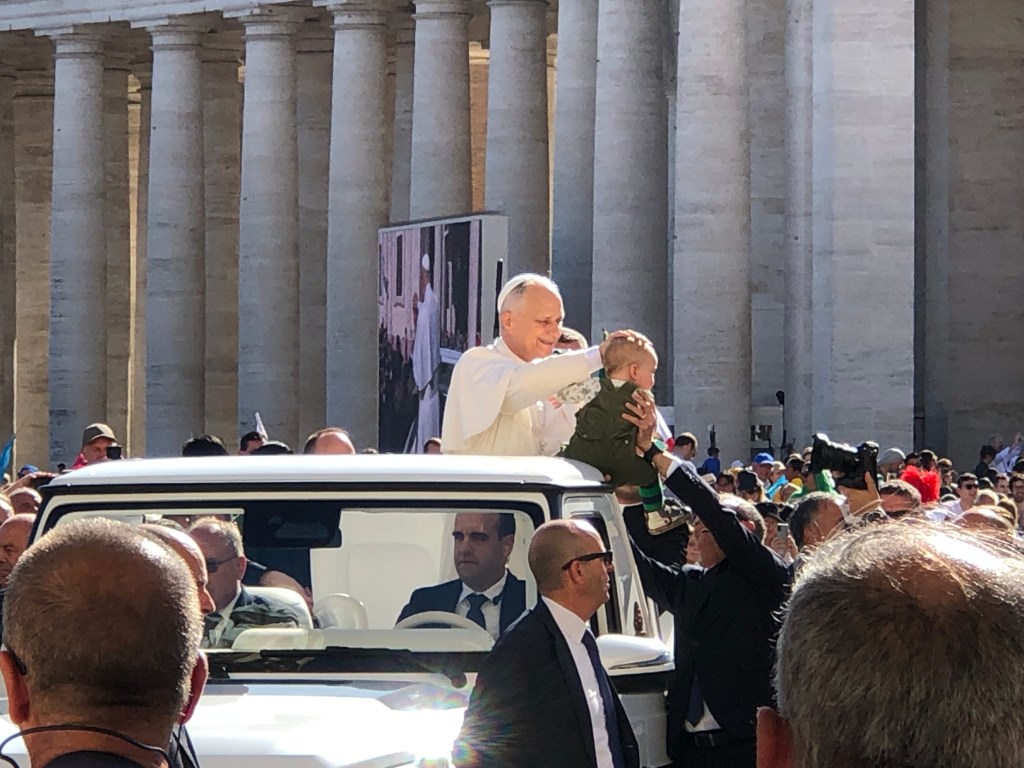
Pope Leo XIV in St. Peter’s Square
You can imagine my joy then to read the same advice (more or less) from no less an authority than Pope Leo XIV. His speech to the Vatican Diplomatic Corps from earlier this month is extremely interesting and among the most important of his papacy thus far. I found his reflections on language especially insightful and necessary, and they reawakened all my old writing teacher instincts. Muddled writing often means muddled thinking. And today’s public discourse is… well, let’s just say “muddled” is euphemistic. The ubiquitous use of “they” as a singular pronoun, for example, I find nothing short of barbaric. Not quite as bad as the guillotine, but close.
Here are a few of Leo’s words on the uses and misuses of language, though the whole speech is worthwhile. It wouldn’t be the worst side effect if a few Vatican documents got a bit shorter as a result… just saying.
“[I ]n order to engage in dialogue, there needs to be agreement on the words and concepts that are used. Rediscovering the meaning of words is perhaps one of the primary challenges of our time. When words lose their connection to reality, and reality itself becomes debatable and ultimately incommunicable, we become like the two people to whom Saint Augustine refers, who are forced to stay together without either of them knowing the other’s language. He observes that, “Dumb animals, even those of different species, understand each other more easily than these two individuals. For even though they are both human beings, their common nature is no help to friendliness when they are prevented by diversity of language from conveying their sentiments to one another; so that a man would more readily converse with his dog than with a foreigner!”
Today, the meaning of words is ever more fluid, and the concepts they represent are increasingly ambiguous. Language is no longer the preferred means by which human beings come to know and encounter one another. Moreover, in the contortions of semantic ambiguity, language is becoming more and more a weapon with which to deceive, or to strike and offend opponents. We need words once again to express distinct and clear realities unequivocally. Only in this way can authentic dialogue resume without misunderstandings. This should happen in our homes and public spaces, in politics, in the media and on social media. It should likewise occur in the context of international relations and multilateralism, so that the latter can regain the strength needed for undertaking its role of encounter and mediation. This is indeed necessary for preventing conflicts, and for ensuring that no one is tempted to prevail over others with the mindset of force, whether verbal, physical or military.
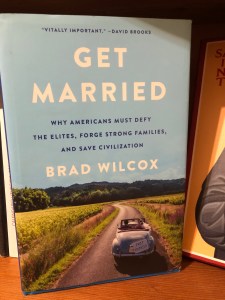
A couple of years ago I taught a seminar on the sacrament of marriage, using Mark Regnerus’s excellent book The Future of Christian Marriage, which I reviewed for the Homiletic and Pastoral Review. I taught the same seminar again this past semester and reviewed another recent contribution to the subject, Brad Wilcox’s Get Married: Why Americans Must Defy the Elites, Forge Strong Families, and Save Civilization (Broadside Books, 2024). You can read the review below or visit HRP and read it again!
Marriage is among the most important social justice issues of our day. Classic Catholic social teaching—think Leo XIII in Rerum Novarum—has long recognized the connection between social well-being and a family life built on marriage. As Brad Wilcox points out in Get Married: Why Americans Must Defy the Elites, Forge Strong Families, and Save Civilization, “questions of marriage and family” are better predictors of positive or negative social outcomes than “race, education, and government spending” (xiv). Yet even in Catholic circles, questions of marriage and sexual ethics are often treated not as issues of pressing social concern, but as matters of private morality—or dismissed as “cultural issues.”
Such dismissiveness has little theological basis. And Wilcox—a professor of sociology and the director of the National Marriage Project at the University of Virginia—demonstrates that it is even harder to justify from a sociological point of view. Marriage is good both for society as a whole—a higher percentage of married parents correlates with lower child poverty (73)—and for individuals, both men and women, who report higher rates of happiness, find more meaning in their lives, and are less lonely than their unmarried—and childless—peers (51-52, 115, 121).
With classes starting up again this week at the Greg, I’ve been looking back with gratitude on a full summer. Among the highlights was a unexpected trip to Slovakia to accompany the Free Society Seminar organized by the Faith & Reason Institute and the Kolégium Antona Neuwirtha. It was a delight to meet a diverse group of curious and insightful young people from Slovakia, Poland, and the States, all of them committed in one way or another to serving their societies and the common good. The faculty was equally a joy to be with.
In addition to chaplain duties, I was able to lead a seminar on the theme of “civil religion,” taking an article I wrote for The Catholic Thing last year “Rites (and Wrongs) of Democracy” and Robert Bellah’s 1967 article “Civil Religion in America” as jumping off points. Another article I wrote about public apologies and how we deal with historical wrongs, “Confessing Other People’s Sins,” produced an even livelier discussion, enriched by the diverse eastern European perspectives.
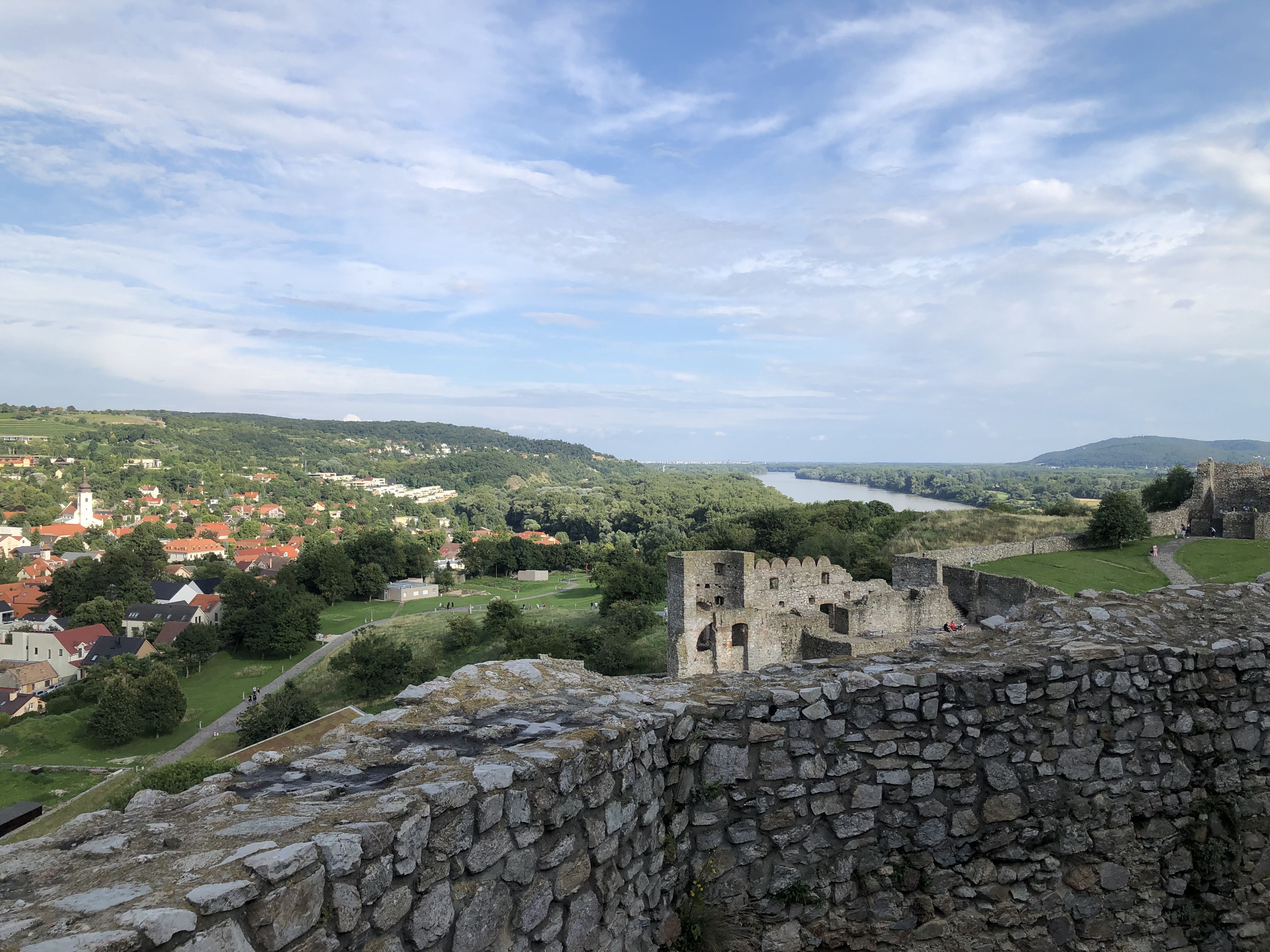
Slovakia is a country of castles, idyllic landscapes, and beautiful churches, but one of the trips’s most haunting memories has to do with the legacy of communism. We visited the Victims of Communism Museum in Košice, which seeks to keep the history of that dark time alive. The geography of Slovakia also provided a vivid reminder of the desperation that system produced. The ancient and strategically placed Devín Castle overlooks the Danube, with Austria–and during the Cold War, freedom–just on the other side. Displays detail the brutal lengths to which the border guards went to prevent Czechoslovak citizens from escaping. Some tried to swim the Danube at the narrow point by Devín. Thousands were imprisoned for illegally trying to cross the Czechoslovak-Austria frontier, and 42 people lost their lives.
With a year approaching since Baptism of Desire and Christian Salvation‘s publication, I’m pleased to see reviews starting to appear. I just read a great one by Joseph Arias of Christendom College in the journal of liturgical theology Antiphon. Arias provides a summary and identifies “controversial” points where I challenge the received wisdom. I’m grateful to have such careful readers and can’t say I mind having the book described as “monumental” and “unmatched”!
Here’s just a sample:
“The author takes the reader on a profoundly illuminating historical and dogmatic theology journey from the apostolic age to our own, acting throughout as an immensely capable and careful guide, making sure we do not miss either major or minor attractions that can enhance the experience of trying to arrive at a deeper understanding of a profoundly significant (though sometimes underappreciated) teaching that is firmly rooted in the Catholic tradition…
… this volume is unmatched in what it positively contributes towards a better understanding of this area of theology.”
And more good news — it looks like the price of the book may have dropped on Amazon as well.
Also, following up on my previous post on the Ukrainian bishops’ statement about the war in their country last week, I have a new piece out on the subject in America. It is equally about what is dysfunctional in our own American political culture right now.
Going through homilies from Lents past, I came upon this post, which happened to date from shortly after the Russian invasion of Ukraine three years ago. The Ukrainian resistance to that invasion, I noted, was something of a jolt to a West that had grown somnolent with self-indulgence, a reminder that some things are worth fighting for.
Just over a week ago, Archbishop Sviatoslav Shevhcuk issued a statement on behalf of Ukraine’s Greek Catholic bishops that should again jolt the conscience of a world gone loopy with self-absorption. “We have not become a people defined by war — we have become a people defined by sacrifice,” the bishops write. For the bishops and for their people, this war is not a card game or great television, not, as the Vice-President of the United States to his great shame recently suggested, a “propaganda tour.”
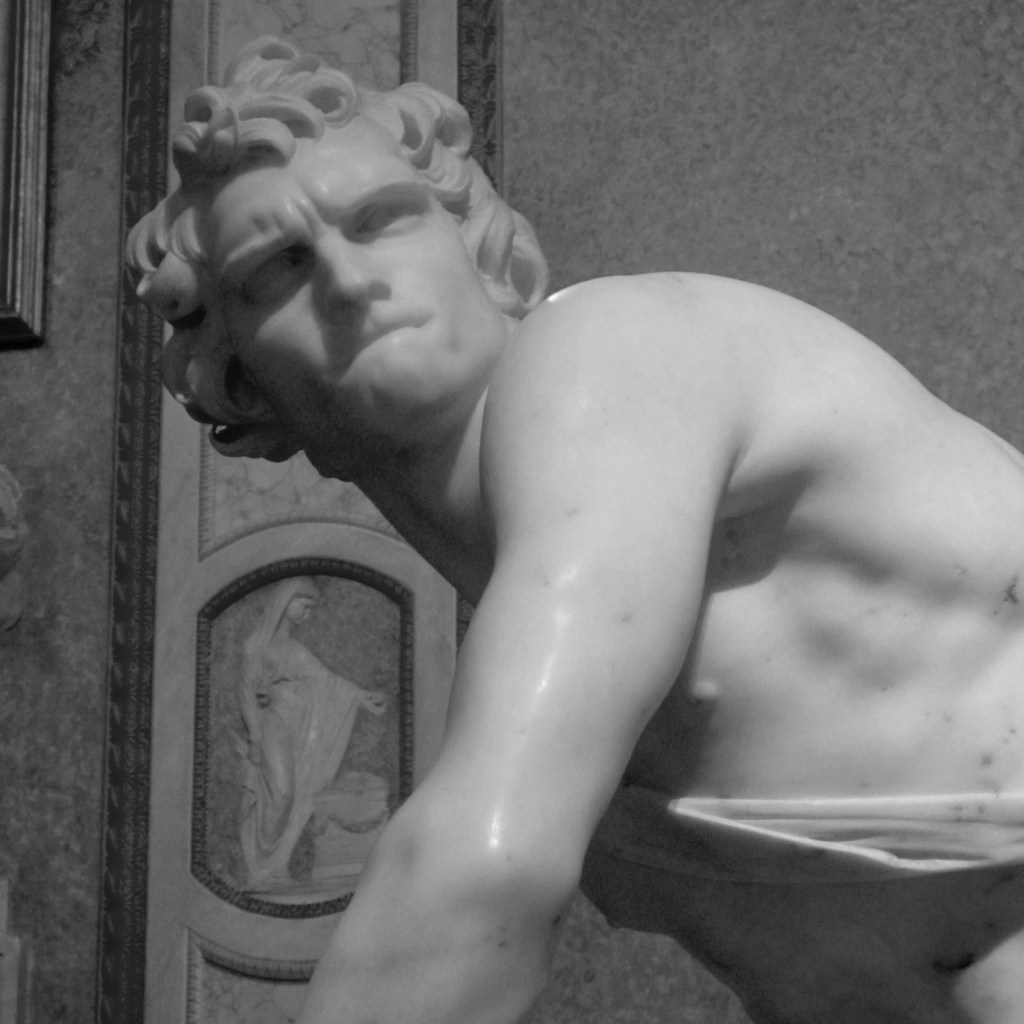
David, Gian Lorenzo Bernini
Noting the staggering trauma and destruction inflicted on their country, the bishops write: “But we have not come to terms with our losses—each one hurts. Every fallen defender, every innocent life lost remains in the memory of God and people. We remember and pray. We support and uphold. We stand and fight, ever mindful of the God-given dignity that no force on earth can take from us.”
It is obvious enough that the bishops want peace, but they also know that “peace” on Putin’s terms does not mean the end of killing Ukrainians, of kidnappings, or of brutality. The bishops know that Russian occupation will almost certainly include the persecution of Catholics; Archbishop Schevchuk was himself targeted for assassination by Russian invaders attacking Kyiv. No serious Christian should be taken in by Vladimir Putin’s pose as a defender of Christian values. His regime and its ideology are idolatrous.
Last week I mentioned the Church of Sant’ Agnese in Agone, one of Rome’s architectural gems and a monument to the city’s martyrs.
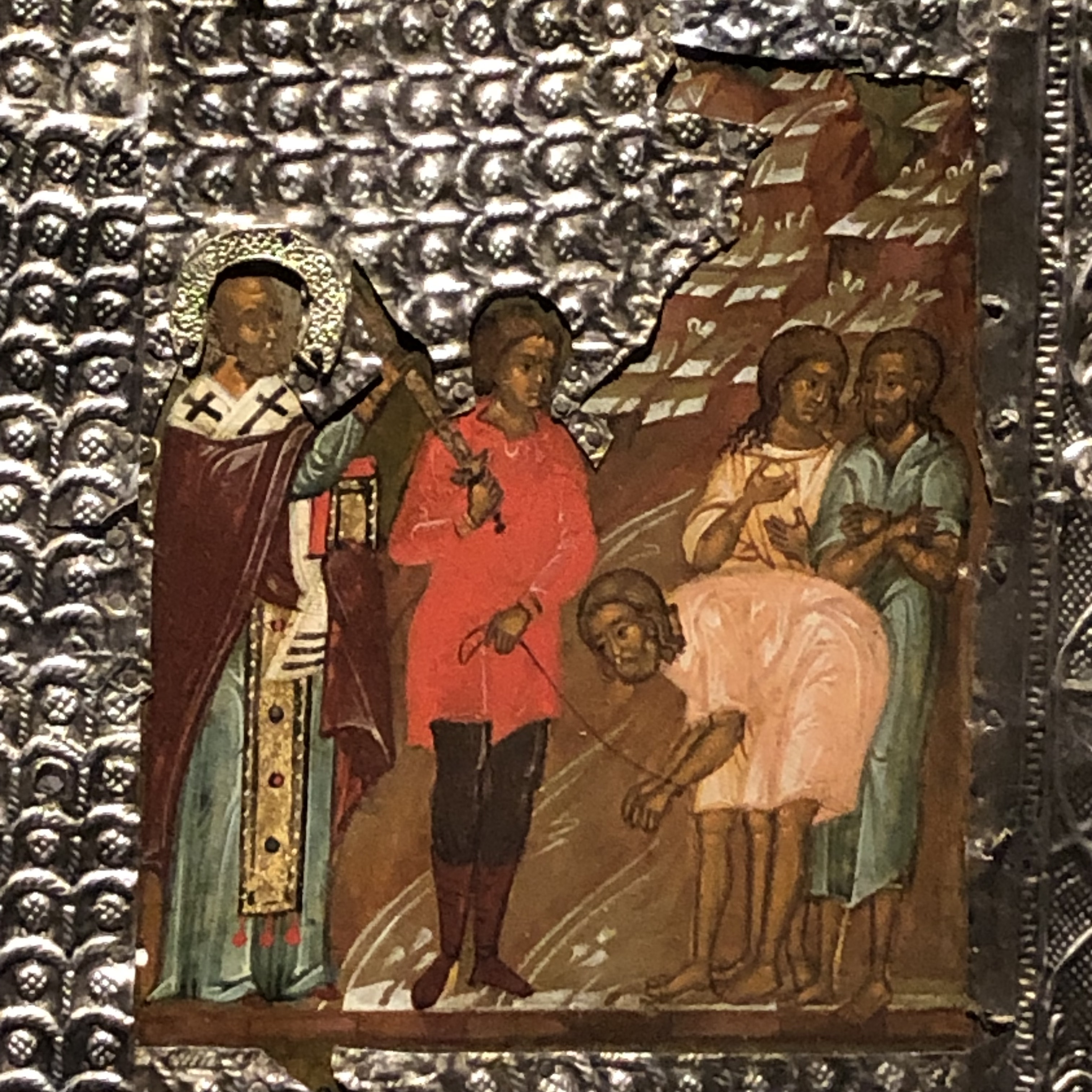
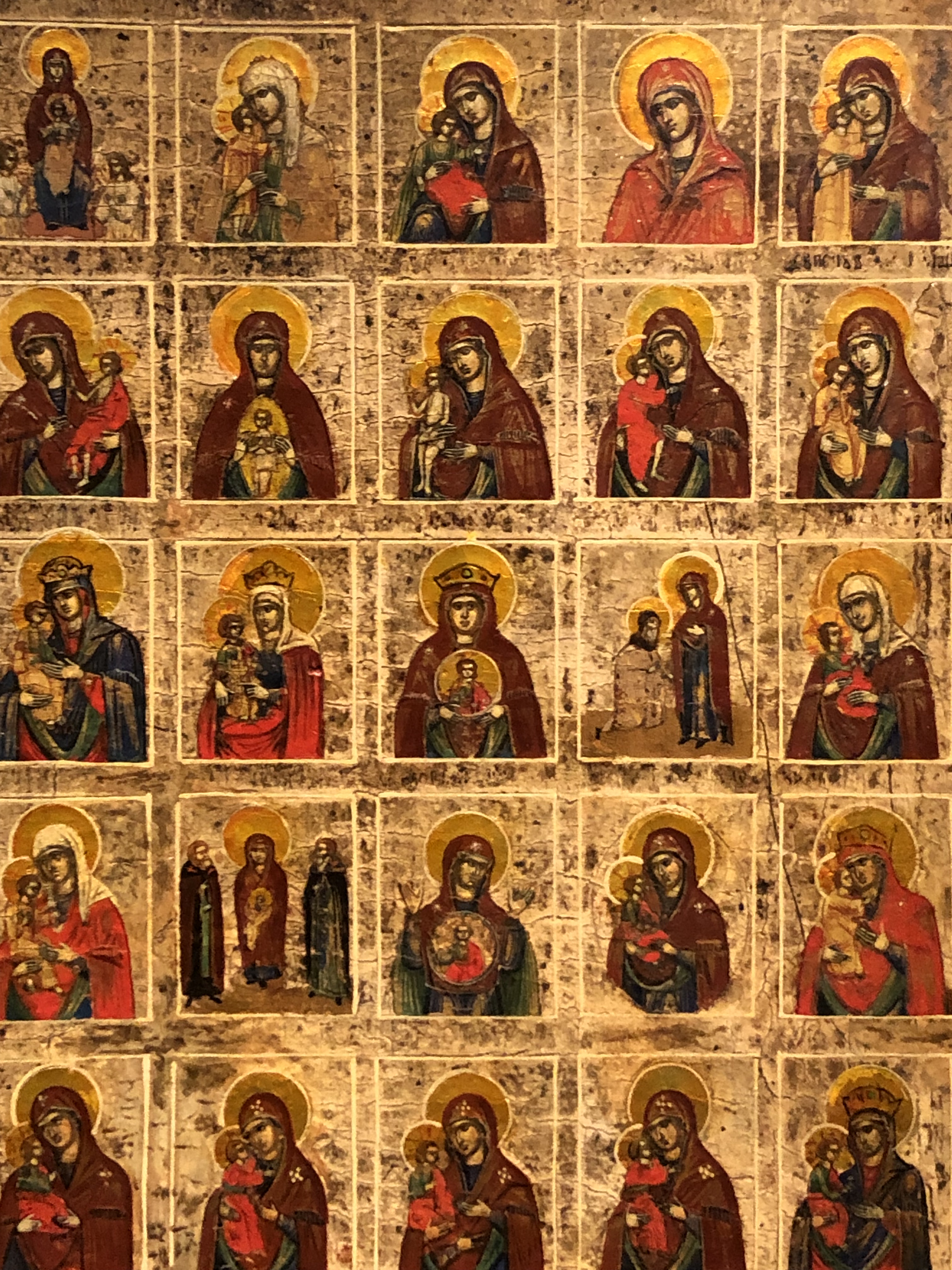
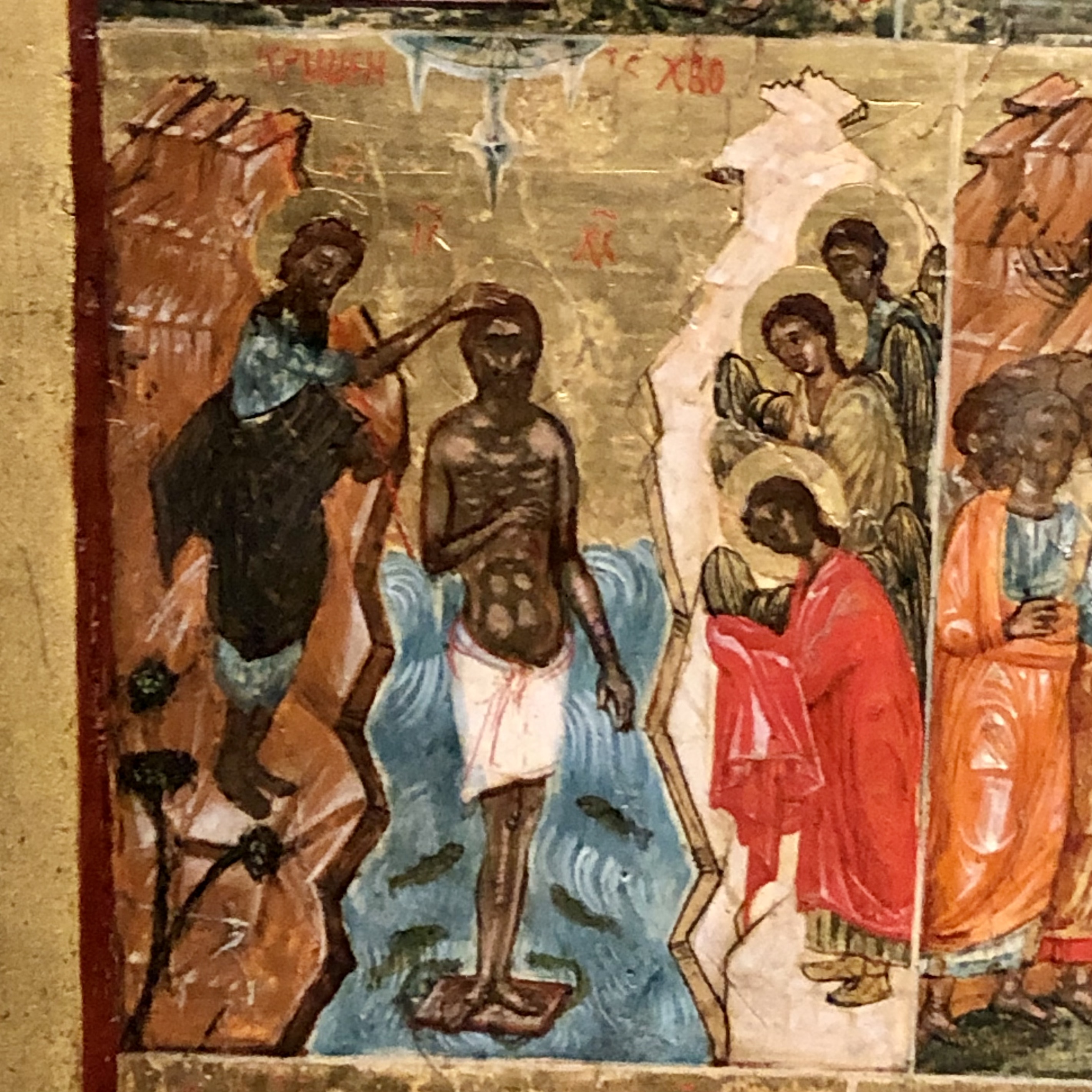
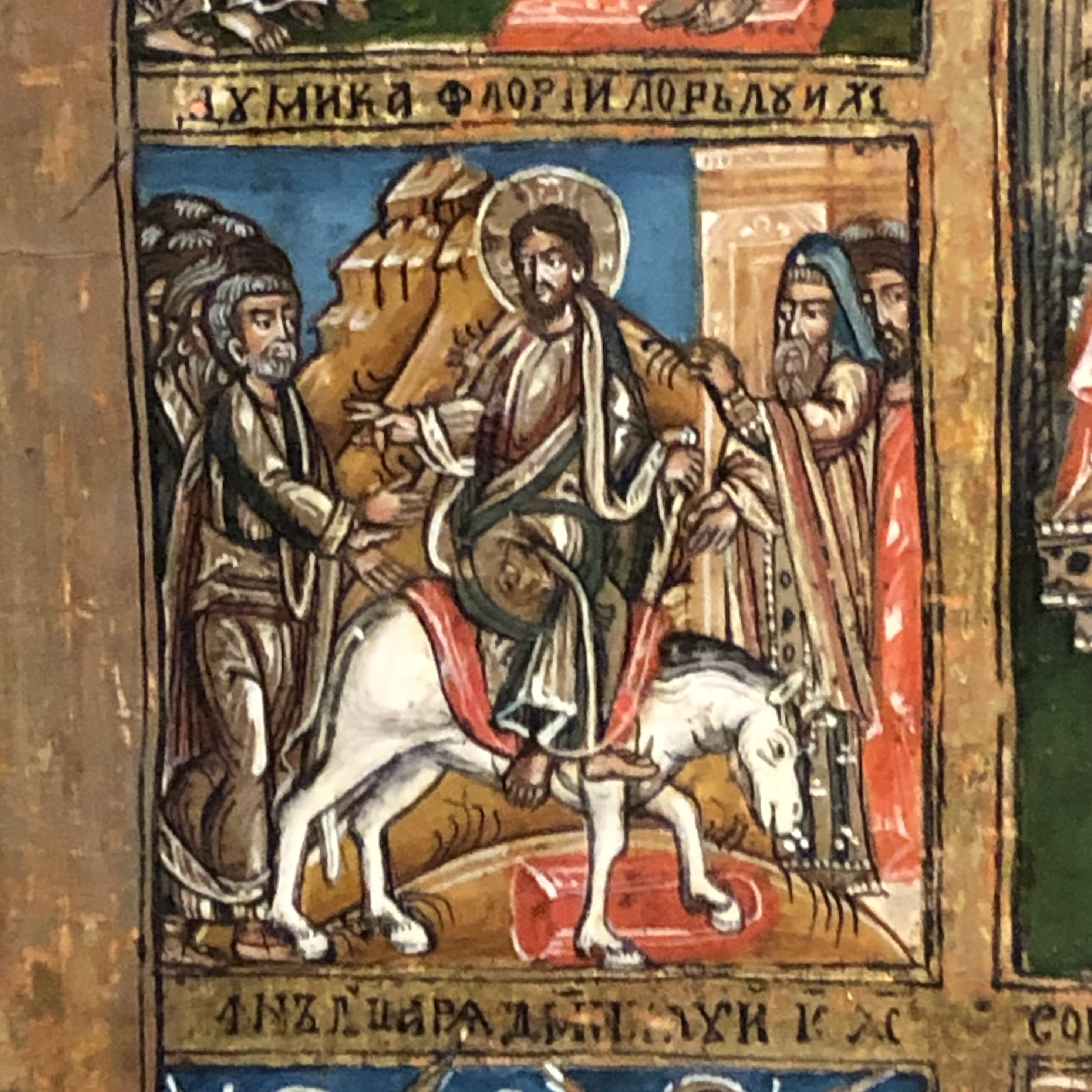
The last time I visited Sant’Agnese, I found that the Church was hosting a special display for the Jubilee (until February 16) dedicated to the theme “Icons of Hope.” The display brings together a number of icons from the Vatican Museum.
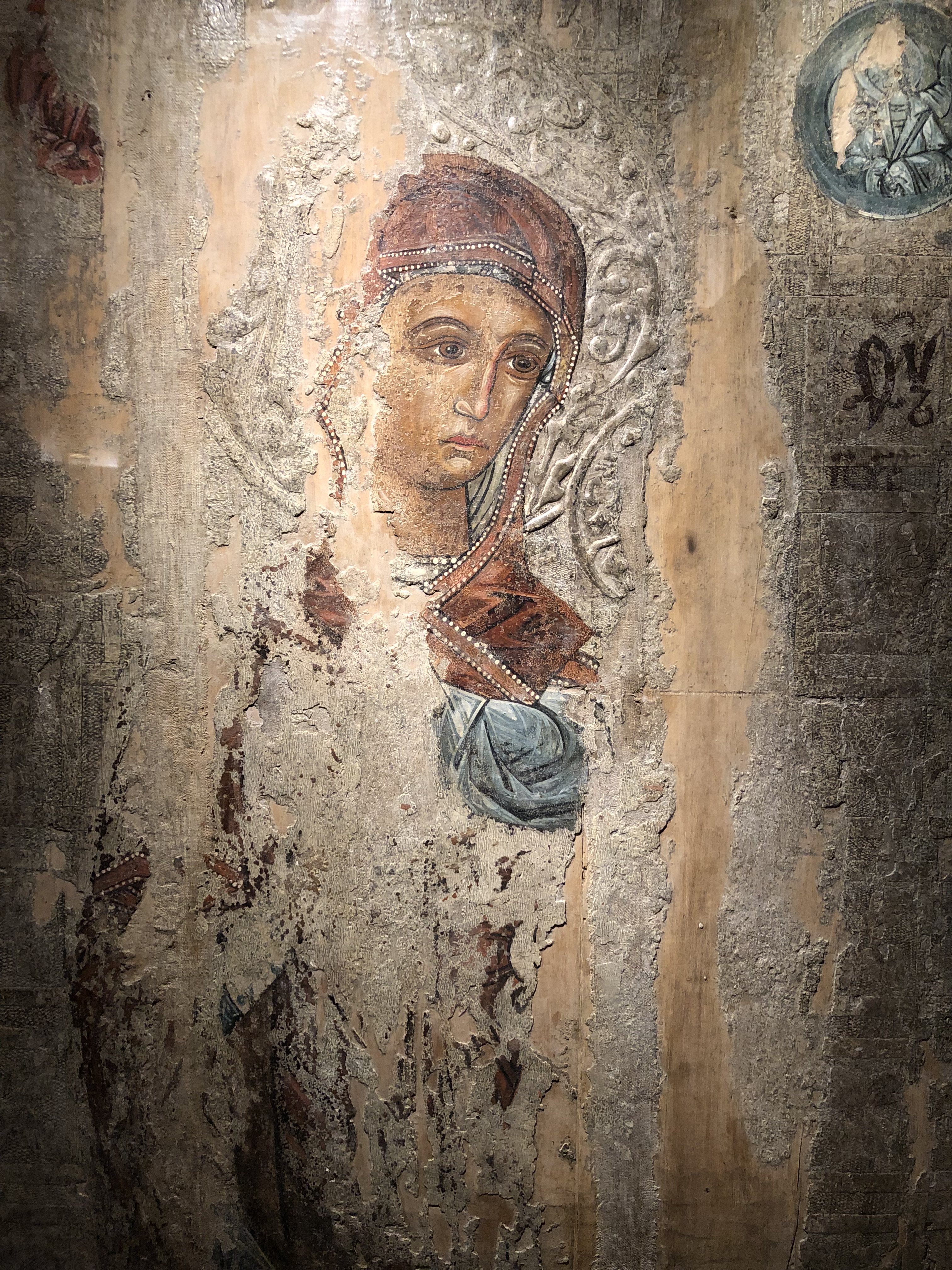
Virgin Hodegetria, Ukrainian, 17th-18th century
The most moving piece in the exhibition had to be the Ukrainian Virgin Hodegetria (17th/18th century). The engraved silver on a wood panel has been damaged over time, but the icon is all the more hauntingly beautiful. The Virgin’s face is still clearly visible, her eyes clear and sad, the expression that of someone who has known suffering but lost none of her dignity.
It is, of course, impossible to view the icon and not see in it the image of the suffering of the Ukrainian people as the Russian assault on their country every day grows more cruel and barbaric. Last week I wrote about the courage of the martyrs. Ukraine’s defense of its freedom and right to exist as a country has perhaps stung the conscience of the world because, in a self-indulgent age, the country’s display of genuine courage is bracing. And as George Weigel has pointed out, “Ukraine is fighting for all of us.”
The display also contains icons from other eastern European countries–a sampling below.
I’m happy to have another piece appear in Plough, the wonderful magazine published by the Bruderhof community. I’ve had a few essays in Plough before, about travel and nature and spirituality. This time I’m writing about Black Friday. Last year, I blogged here about what a great holiday Thanksgiving is — expressing what is best in the American character. Black Friday, on the other hand, expresses just about what’s worst — and yet it’s the holiday that has been exported around the globe. Here’s the essay: What Religion Is Black Friday?
The essay begins, however, not with Black Friday itself, but by reflecting on the odd experience of arriving in Singapore on the day after Christmas a couple of years ago as I was on my way to Australia. The modern city-state was a delight to visit and my brief stop-over gave me plenty to think about. So check out the essay at Plough, and enjoy some pictures of the Singaporean sites mentioned here below.
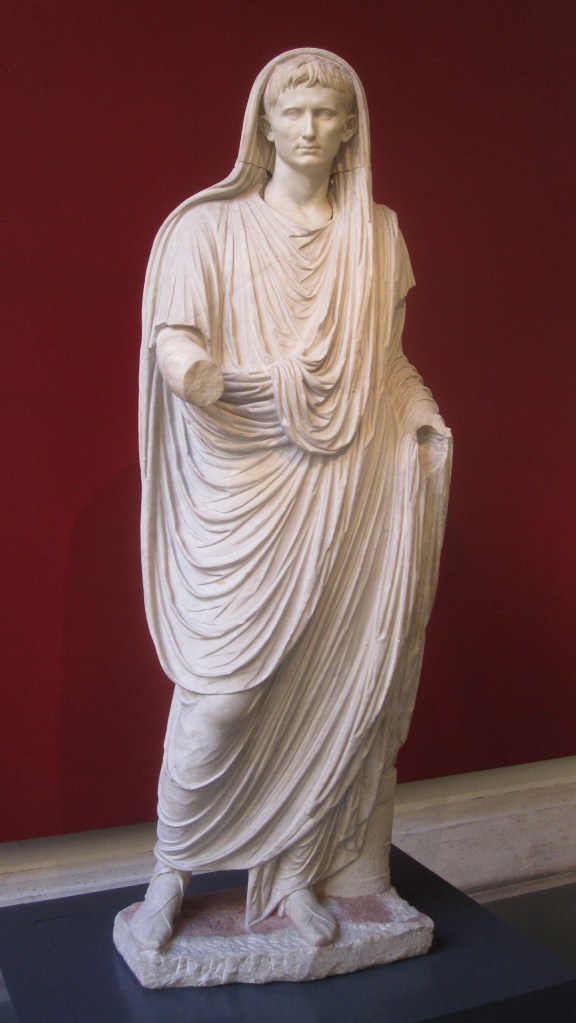
Augustus Caesar in the robes of supreme pontiff, Palazzo Massimo, Rome
As a follow up to my piece at The Catholic Thing on elections as civic rituals, America magazine asked me to reflect on how the US Presidential election looked from Rome. So here are my thoughts from an election morning walk to the Mausoleum of Caesar Augustus: Caesars, presidents and apostles: Viewing the presidential election from Rome. I was happy to see some pieces of our election rituals restored this time around; President Biden’s invitation of President-elect Trump to the White House was a gracious moment, more important as a symbol than because of anything said between the two men.
With the election now behind us, I also thought it worth sharing what for me was one of the more interesting–even edifying–reflections to come out of campaign. When he converted to Catholicism, Vice-President-elect JD Vance penned a thoughtful account of what led him to the faith in The Lamp (where yours truly has also published). Regardless of what you think of his politics, it is refreshing to read about a public figure’s faith journey, both personal and intellectual. I was particularly interested to read about the role René Girard’s work played in Vance’s conversion. From 2020, “How I joined the resistance” is worth a read.
Those who weren’t able to be at the book launch of Baptism of Desire and Christian Salvation last month might be interested to read Jonathan Liedl’s account of the event–with a tie-in to one of Rome’s most unique Jesuit relics–in The Catholic Spirit: What a severed arm can tell us about evangelization. A reminder that the discount code CT10 gives 20% off on new releases when purchasing directly from the CUA Press website. The book is also available on Amazon and seems to be in stock again. In Italy, it might be faster to order through IBS or La Feltrinelli. The Libreria Sole across from the Gregorian University was also supposed to order copies. I hope to have a video of the talks from the book launch up on the Baptism of Desire page soon.
If there is one theme consistently present throughout the whole Bible, from the first chapter of Genesis to today’s Gospel, it is that God desires to give us life. When he reveals the commandments to Moses on Mount Sinai, he tells the people of Israel, “I have set before you life and death, the blessing and the curse. Choose life, then, that you and your descendants may live” (Dt 30:19). Today the Eucharist too is presented as life-giving: “The bread that I will give is my flesh for the life of the world” (Jn 6:51).
It is fitting that today’s readings would highlight God’s desire to give us life, because, as I mentioned last week, the bishops of South Dakota have asked us to speak these two Sundays about a particularly urgent social issue: a measure, Amendment G, has been placed on the ballot this November, which would add the right to abortion without significant limits to the South Dakota constitution. As I pointed out last week, Christianity is not a political program, and Catholics can disagree about most political issues while still remaining faithful to the principles of our faith. Amendment G, however, is impossible to reconcile with the fundamental principle that it is always wrong to deliberately kill an innocent human being.
This principle is something that both conservatives and liberals should be able to embrace. Conservatives emphasize the government’s duty to protect and not usurp individual rights, and without the right to life no other rights are possible. Even a libertarian “live and let live” philosophy only works if you let the other live. Take away the right to life and you have neither conservative government nor a free people, but the oppression of the weak.



















 Tony Lusvardi, S.J.