The hunger and the harvest are abundant: homily for the eleventh Sunday of Ordinary Time

Homily for the 11th Sunday in Ordinary Time (A)

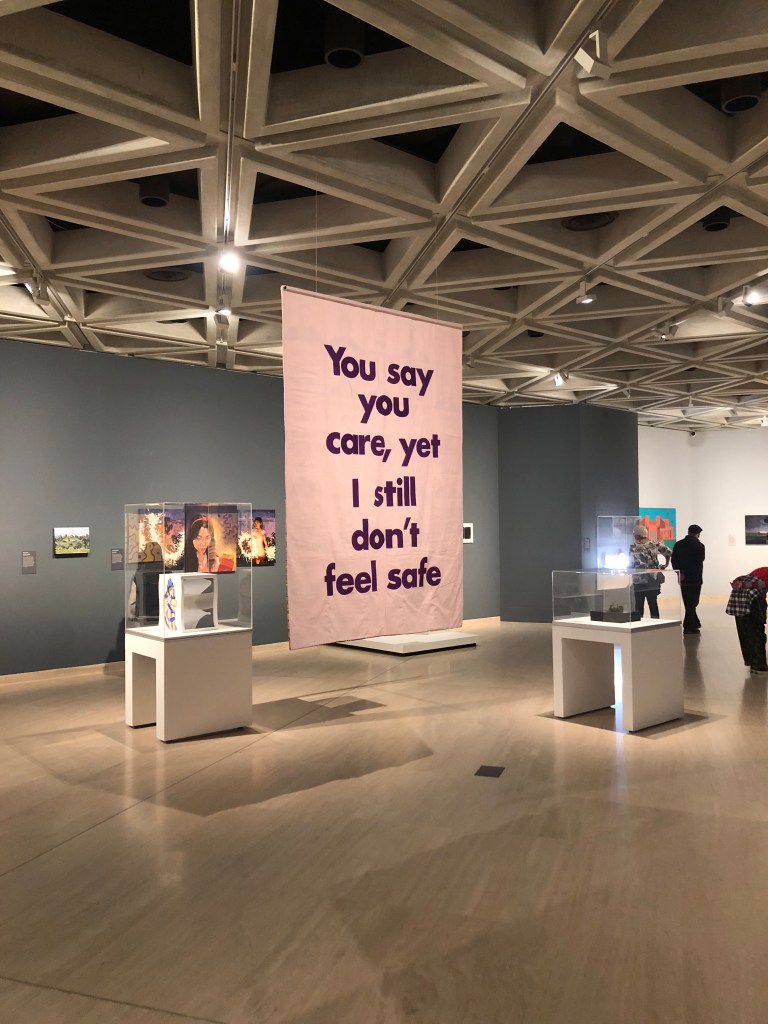
A couple of weeks ago I visited the Art Gallery of Western Australia, not very far from here, and I was moved by an exhibition of works by young artists, Year 12 Visual Arts graduates, from here in WA.  In addition to the talent of these young people, I was moved—even disturbed—by the pain that I saw expressed in their work.  Not youthful idealism, but pain.

Western Australia Pulse 2023 Exhibition, Perth

The pain that I saw expressed so honestly in art was not from material deprivation.  These young artists enjoyed all the advantages and opportunities of a state-of-the-art education system.  No generation has ever had the material advantages we enjoy today in the West.  Yet as I have traveled in America, in Australia, in Europe I have felt what I think many people today perceive, an ache, an emptiness—sometimes a sense of rootlessness, sometimes a vague, unspecified guilt, often a lack of purpose and meaning.  We claim to be free, yet fear of giving offense suffocates us.  We are hyperconnected through media and gadgets, yet no generation has ever been so lonely.  We boast of the diversity of our societies, yet we barely speak to those with whom we disagree.  Something is wrong, something is missing—something at the root of the hurt expressed in those young artists’ work.

In the popular culture of the West, the spiritual void is inescapable.  We have uncountable comforts.  In fact, I don’t think that our most characteristic compulsion is to acquire more stuff.  Instead, today, we are addicted to being entertained.  But our entertainment does not lift the soul—it is not like the art of Michelangelo.  It just keeps us occupied and keeps us paying.  How could we, beings created in the image of God, find this satisfying?  

Continue reading “The hunger and the harvest are abundant: homily for the eleventh Sunday of Ordinary Time”

Sacred Heart of Jesus homily

Sometimes certain people get on my nerves, and it’s hard to love them.  Sometimes people behave badly toward others, and it’s hard to love them, too.  Sometimes people have hurt me; it’s hard enough to forgive them and even harder to love them.  

The first letter of John tells us that God is love, and remaining in his love means loving others as he does.  In the Sermon on the Mount, Jesus commands us to love our enemies, just as our heavenly Father loves them.  From the cross, he even prays for the forgiveness of those who crucified him.  

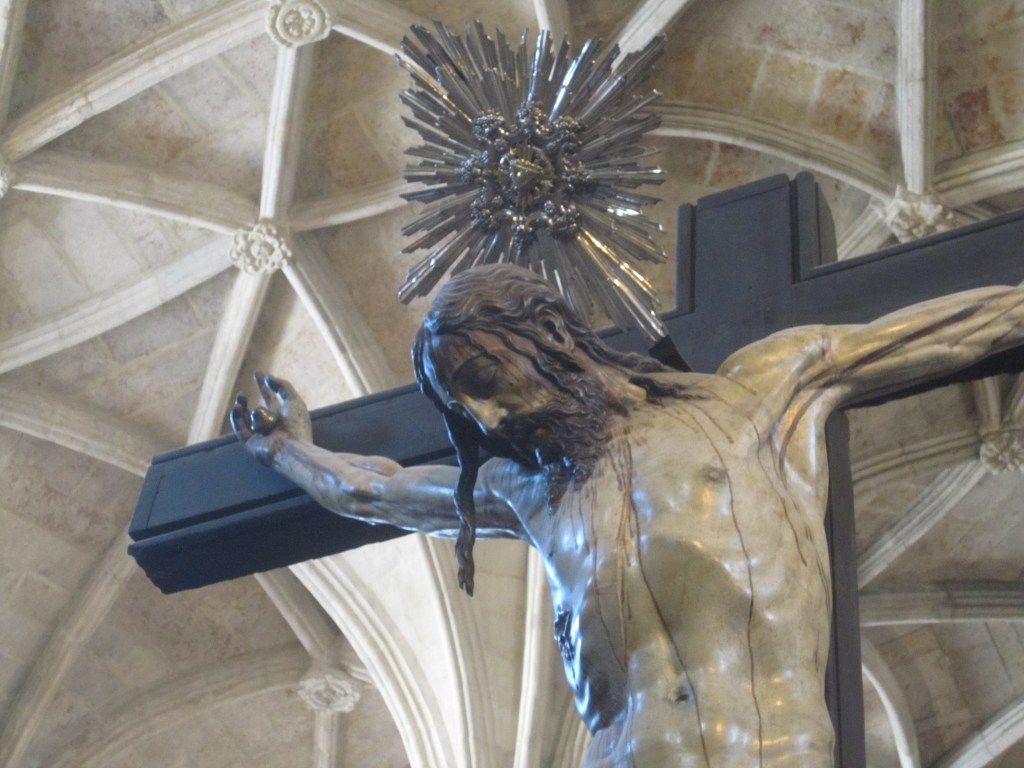
Jerónimos Monastery, Belén, Portugal

But it’s hard to love those who irritate me or who’ve hurt me or who behave obnoxiously or cruelly.  With effort, I succeed in being kind and fair to them maybe 75% of the time, though that percentage falls quickly if I’m tired or hungry or disappointed.  Sometimes I want to say to Jesus, “This yoke doesn’t seem easy to me.” 

Continue reading “Sacred Heart of Jesus homily”

Corpus Christi homily

Chapel of the Corporal, Orvieto Cathedral

“Unless you eat the flesh of the Son of Man and drink his blood, you do not have life within you.”  A few years ago, in Boston, I was talking to a group of kids preparing for their first communion, and one of them asked me, “If we eat the body of Jesus, does that mean we’re cannibals?”  

I thought it was a good question.  What Jesus teaches us about the Eucharist is not easy to understand.  In the Gospel, Jesus’ teaching provokes arguments and even causes some of his disciples to leave him.  But he doesn’t back down.  The Catholic Church, I’m happy to say, has also never backed down from the faith that the Eucharist is the Body and Blood of Jesus.  It’s not a prop in a play. It is not a mere symbolic reminder.  It’s not a visual aid from before the days of PowerPoint.  It may not look or taste like flesh and blood, but Jesus forces us to make a choice—do we believe our own senses or do we believe him?  It’s the same choice required to believe in eternal life, which we have never seen.  Do we trust his words?  And if we do, does that make us cannibals?

Continue reading “Corpus Christi homily”

Trinity Sunday homily

If you go to Mass on Trinity Sunday, there’s a very good chance that you will hear the word “mystery.”  What does that word “mystery” mean?  When we’re talking about a mystery of faith, it doesn’t mean a detective story.  A mystery of faith is something we can always understand more deeply, something we can never reach the end of, something that never gets old.  No matter how many times you see the sunset across the ocean, the beauty of it is always new, the colors always a little different each time.

Sunset, Malta

Trinity Sunday is a celebration of the mystery of God.  To be more precise, it’s a celebration of the fact that God has given us a starting point to discover him, to know him, and to be united with him.  God is so different than anything we know that without his help we could say almost nothing about him.  God is not a very big thing.  He’s not like a gas that gets into the nooks and crannies of everything.  He’s not nature and the universe.  We know he’s the Creator of the universe because the universe exists, but nothing in the universe is capable of creating the universe.  And it’s true that he exists and we exist, but even his way of existing is different than ours.  You know who Harry Potter is, so in a way he exists.  But he doesn’t exist in the same way that J.K. Rowlings exists.  They have different ways of being.  And it’s the same with us and God.

Continue reading “Trinity Sunday homily”

Pentecost homily

This weekend we celebrate Pentecost, which is sometimes called the birthday of the Church.  You might remember that Jesus told his disciples that he had to go—he had to ascend into heaven—so that he could send the Holy Spirit to them.  On Pentecost the Holy Spirit arrives.  Before that, the disciples could see Jesus because he was a man—both God and man.  So they could see him just as you can see me and I can see you.  The Holy Spirit is God, too, but he’s Spirit, and spirits, by definition, are not physical things.  You can’t see spirits.  

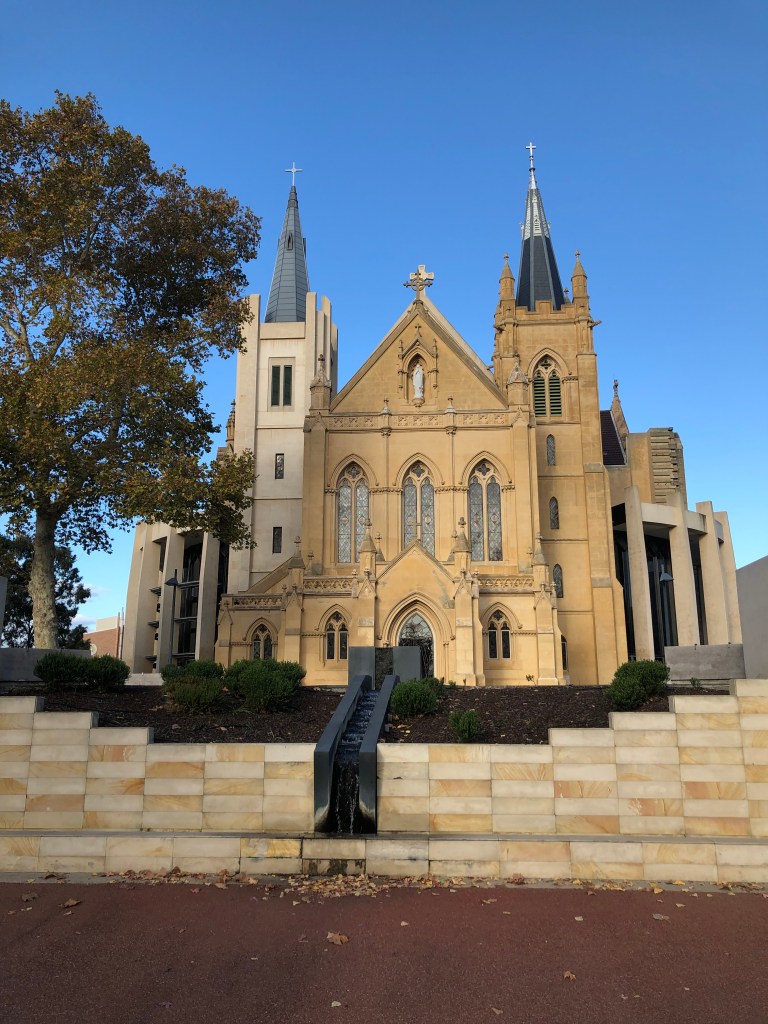
St. Mary’s Cathedral, Perth, Australia

So at Pentecost, the disciples don’t see the Holy Spirit.  Instead, they see his signs.  Those signs are a driving wind and flames shaped like tongues over the heads of the people there.  One sign in particular tells us a lot about the Church.  The people at Pentecost come from different countries, and they speak different languages, so normally they wouldn’t be able to understand each other.  But when the Holy Spirit comes, they do understand each other.  The Holy Spirit changes something inside of them.

Continue reading “Pentecost homily”

Ascension homily

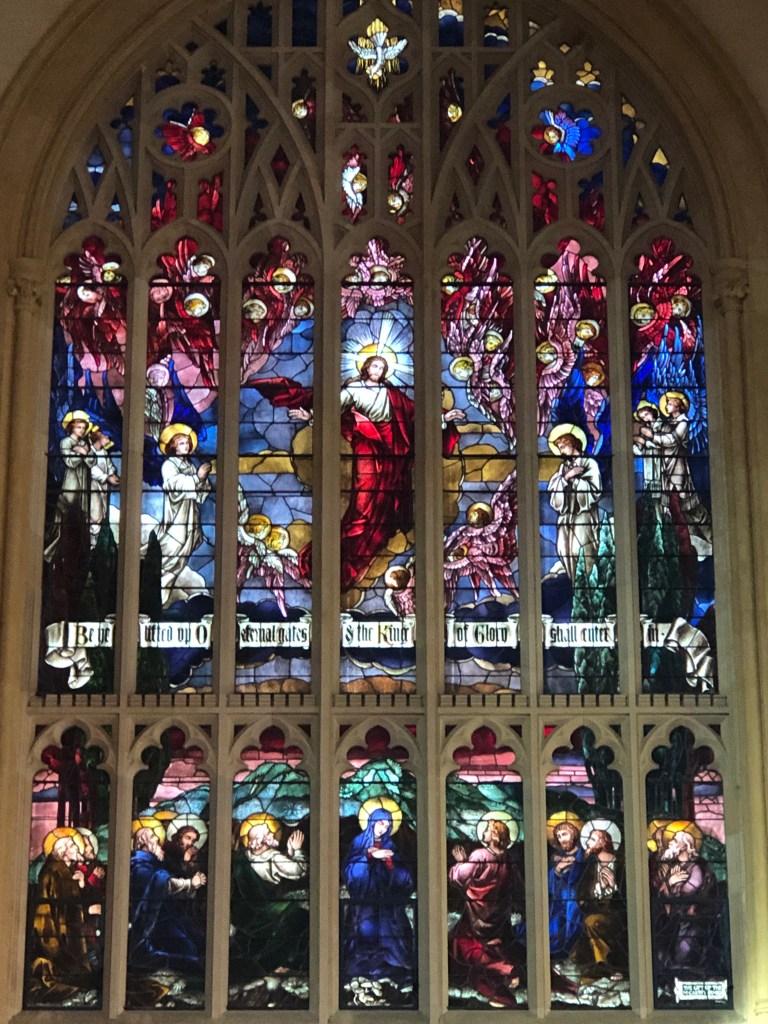
St. Mary’s Cathedral, Perth, Australia

Think about someone you know very well and love.  If you heard his voice, would you recognize it? Certainly.  If you saw her in the distance, would you recognize the way she walks?  Probably.  If it’s someone you love and know very well, you would recognize his laugh—and know the sort of things he finds funny, the jokes he tells or laughs it.  You might know her favorite foods, the kind of gestures that she makes.  You might even be able to recognize someone you know very well from the smell of the shampoo she uses.

Now another question.  If it’s someone that you love and maybe lives far away, if you had a choice, would you rather send him an email or make a phone call or zoom or see him in person and spend time with him?  I think all of us know it means so much more to spend time with someone we love in person, in the flesh.  You can’t give a hug over zoom.

What’s missing in a text message or a zoom call?  We could list a lot of things, those sorts of things I just mentioned—touch, our way of reacting to things, lots of little things, things it’s hard to describe exactly.  Let’s put a word on all these things—our humanity.

Continue reading “Ascension homily”

Doubt and bearing witness: a homily for the second Sunday of Easter

Explaining St. Paul’s first letter to the Corinthians, St. Thomas Aquinas says that in heaven there will be no faith. We will not need faith when we experience the beatific vision. We need faith now because we live in a world of uncertainties.

Palazzo Venezia, Rome (collection)

We live with doubts. Sometimes these doubts are justified. We doubt our political and church leadership when those in power are not honest, when they use words to hide the truth instead of expressing it. We doubt our abilities when we recognize the same tendency in our own hearts or when, despite our sincerity, our strength is insufficient and we fail. When the world changes unexpectedly, we doubt the future.

Why does Thomas doubt? From one point of view, uncertainty seems justifiable. Believing that a man has come back from the dead is not easy. But it would not have been the first time that Thomas witnessed such an event. He was present at the resurrection of Lazarus. And it seems unlikely that the other disciples had fabricated this story only to deceive him–it is hardly clear what motive they would have had to make up such a lie.

It is true that Thomas speaks of evidence, of what he can see and what he can touch, but his doubt is not really based on a lack of empirical evidence. He does not express the need for more study before coming to a conclusion. He expresses the refusal to believe, the decision not to believe: “I will not believe.”

Continue reading “Doubt and bearing witness: a homily for the second Sunday of Easter”

Theology of Carla Tortelli

I was blessed to spend last week as one of the spiritual directors for the Pontifical North American College’s pre-ordination retreat. I was humbled and deeply impressed by the sincerity and generosity of the young men preparing for ordination to the diaconate next week. I thought I’d share the homily I gave on one of the weekdays during the retreat. The Gospel for the day was:

The mother of Jesus and his brothers came to him
but were unable to join him because of the crowd.
He was told, “Your mother and your brothers are standing outside
and they wish to see you.”
He said to them in reply, “My mother and my brothers 
are those who hear the word of God and act on it.”

Luke 8:19-21

Many years ago, in the previous century, before streaming, when you could watch TV on one of three different channels–then four with Fox and maybe Channel 9 if you adjusted the antenna just right–there existed a neighborhood bar in Boston where everybody knew your name, and they were always glad you came because, well, troubles were all the same.

At that bar, Cheers, there worked a waitress, Carla Tortelli. Carla was a hardboiled Sicilian who didn’t take guff or prisoners. Carla was a Catholic, but she was not, let us say, in the running to be the mascot for the year of mercy.

Boston, 2014

On one episode of Cheers, Carla’s son decided to become a priest. Carla was thrilled because according to her belief, a priest’s mother automatically went to heaven. The rest of the episode, Carla behaves like a monster–spilling beer on the mailman Cliff Claven, being even more crass toward her customers than usual–because she can. She has a get-into-heaven-free card.

Continue reading “Theology of Carla Tortelli”

What was the father thinking? Homily for the twenty-fourth Sunday of Ordinary Time

Homily for the 24th Sunday in Ordinary Time (C).

Here’s another homily from my year as a deacon, this one given at St. Bridget’s and St. Charles Parishes on the Rosebud Reservation in South Dakota, places from which I have many warm memories.

I have looked forward to this morning for a very long time.  As many of you know, last weekend I was ordained a deacon in Boston.  I learned to be a minister of the Gospel here on Rosebud and all of you were my teachers, so I wanted my first weekend as a deacon to be here with you.  And God has answered that prayer.  As you can imagine, Paul’s letter to Timothy speaks to me.  Paul is writing to his friend and assistant Timothy and he’s marveling that God has trusted him to be a minister of the Gospel even though he himself was a sinner.  And after all his years of experience, Paul expresses the Gospel message with a single powerful sentence:  “Jesus Christ came into the world to save sinners.”  

Lakota crucifix, Sioux Spiritual Center, Howes, SD

So if there’s anyone here who’s not a sinner, I’m sorry, you’re in the wrong place.  Go have brunch.  I don’t have anything to offer you.  The Catholic Church is like a big AA meeting for recovering sinners.  We even begin each Mass by acknowledging that we are sinners: “I confess to Almighty God and to you my brothers and sisters, that I have sinned…”  As in AA, we’re here because we know we can’t overcome sin on our own; we need a higher power.  

Continue reading “What was the father thinking? Homily for the twenty-fourth Sunday of Ordinary Time”

What is wisdom? Homily for the twenty-third Sunday of Ordinary Time

Homily for the 23rd Sunday in Ordinary Time (C).

I’m back to my day job in Rome, so this week I’m posting a homily from 2016, given the day after my ordination to the diaconate.

Ordination to the diaconate 2016, St. Ignatius Church, Boston, MA

Today’s Gospel reading is perhaps the single most unfortunate passage in Scripture to have to preach about to a congregation consisting mostly of family members, so we’re going to work our way up to it by starting with the Old Testament.

The Old Testament reading is from the Book of Wisdom.  You’ll be happy to know that I took an entire course on the Biblical wisdom tradition and have prepared a brief 45-minute summary as an introduction to the homily.  We can skip all that, however, if you will consider for a moment the question of what it means to be wise.  

To understand what wisdom is, it can be helpful, first, to think about what it is not.  Wisdom is not the same thing as being clever; we probably know people who are clever manipulators, for example, but not really wise.  Wisdom is not the same as knowledge, as knowing lots of facts.  Teachers know that there’s a difference between a student who memorizes what he hears and then regurgitates it, and a student who actually thinks about what she’s learning.  Wisdom is not the same thing as being educated.  If you’ve been in school as long as I have, you realize that there are some very foolish people with PhDs.  And we all probably know people who didn’t receive much education who nonetheless we’d consider wise because they had a sense for people, a sense for what was right and wrong, a sense for what really matters in life. 

Continue reading “What is wisdom? Homily for the twenty-third Sunday of Ordinary Time”