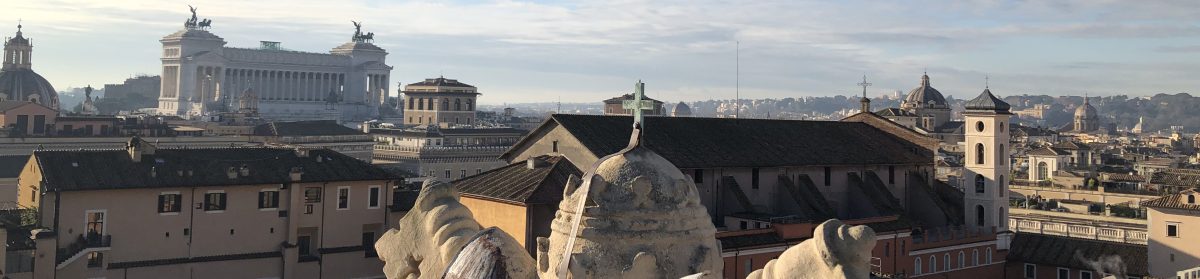
Bishop Erik Varden on beauty, chastity, and the contemporary world

As is traditional for the First Week of Lent, the Pope and the Roman Curia will spend several days making their annual spiritual exercises. This year’s retreat is being preached by Bishop Erik Varden of Trondeim, Norway. Some readers might know Bishop Varden already from his wonderful blog Coram Fratribus. A convert and then a Trappist monk, Bishop Varden has a gift for communication comparable to our own great Robert Barron, though with his own unique style.
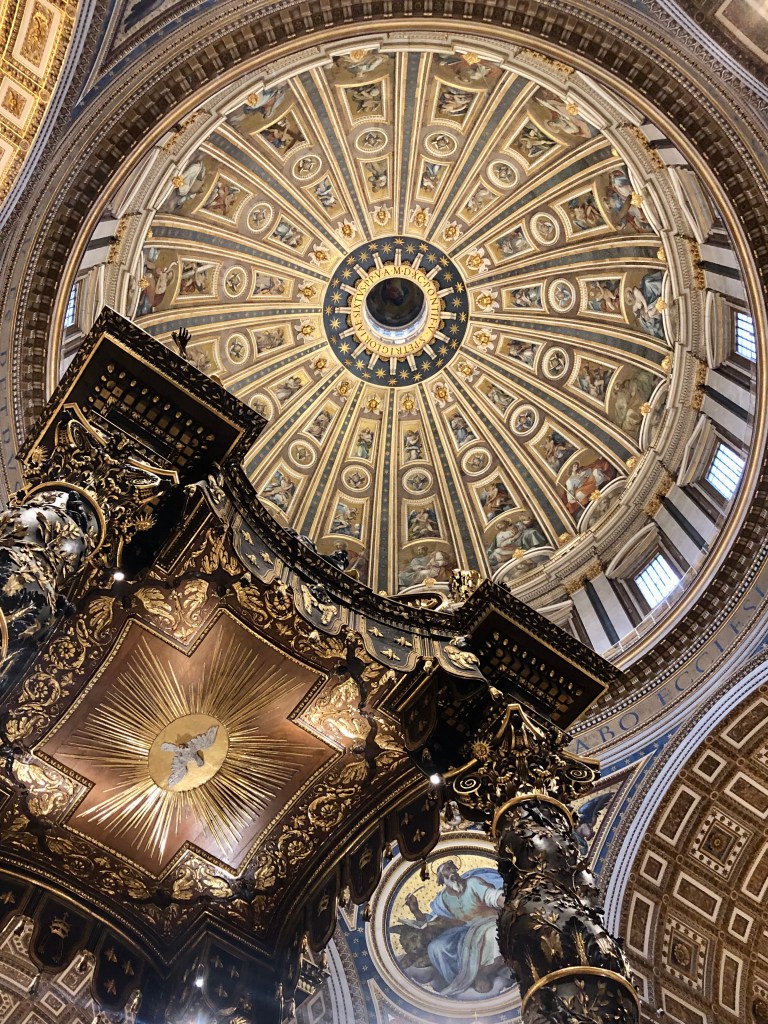
St. Peter’s Basilica, Rome

At a mere 51 years old, Bishop Varden also represents something of a turning of the page in the life of the Church. I’ve written before (here and here) that the zealous and youthful Church I encountered in Scandinavia hints at what fidelity and evangelization must look like in an increasingly secularized world. Bishop Varden–articulate, orthodox, cultured, and creative–seems to understand how to respond to our twenty-first century reality.

Last year I read Bishop Varden’s profound book Chastity: Reconciliation of the Senses, and I thought this week would be a good opportunity to share a few of its many insights…

Continue reading “Bishop Erik Varden on beauty, chastity, and the contemporary world”
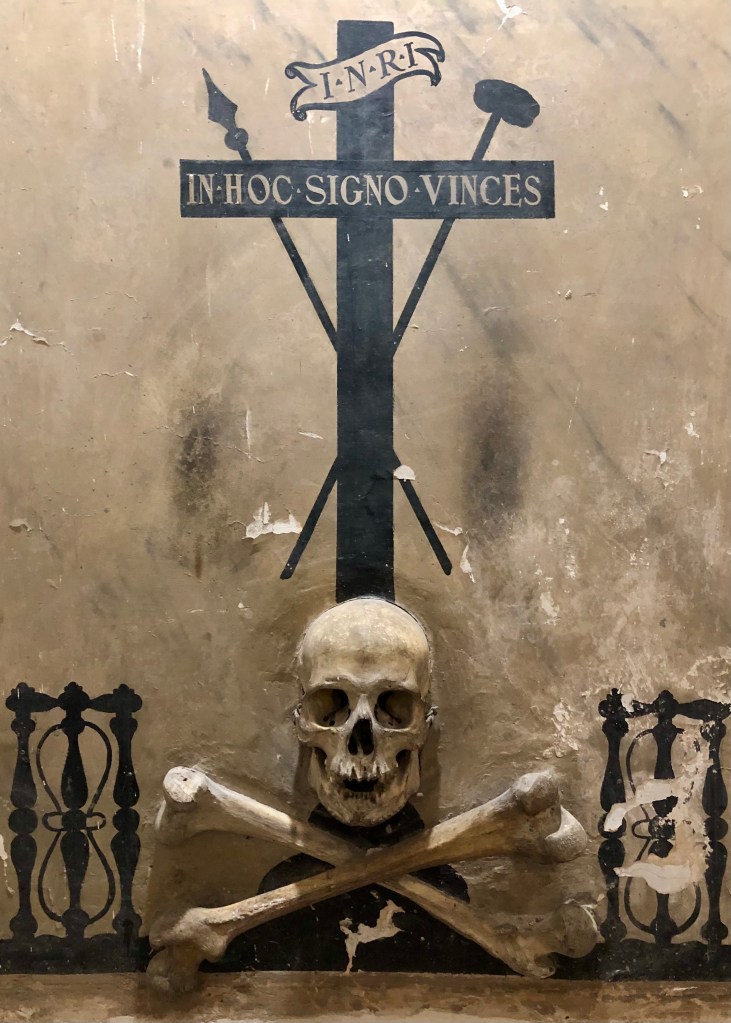
Ash Wednesday homily

Chiesa di S. Maria dell’Orazione e Morte, Rome

Last year’s (brief) homily for Ash Wednesday. Original Italian.

In the readings with which we begin Lent today, we see two sides to this season of conversion. There is a public side. In the first reading, Joel calls the people to gather together, to declare a public fast, and to renew their worship. In the second reading, too, we are called to public witness: we are “ambassadors” of Christ, says St. Paul.

It might seem that there is a certain tension between these readings and the Gospel, which exhorts us to perform pious practices in private. However, there is no contradiction, because both of these aspects are part of the mission of a Christian in this world. The Gospel is a warning against hypocrisy, against the temptation to try to gain something—even if only the esteem of others—through our religious observances. All our practices—almsgiving, fasting, prayer—must be directed to the glory of God and not to our own glory.

During this season of Lent, let us seek above all purity of heart, integrity of public conduct, and an interior life consistent with the great call to follow the Lord Jesus as his disciples.

Readings: Joel 2:12-18; 2 Cor 5:20-6:2; Matt 6:1-6, 16-18

(Original: Italian)

Gregorian University Chapel

2025

Staying salty in an indifferent sea: Homily for the 5th Sunday of Ordinary Time

Homily for the Fifth Sunday in Ordinary Time (Year A).

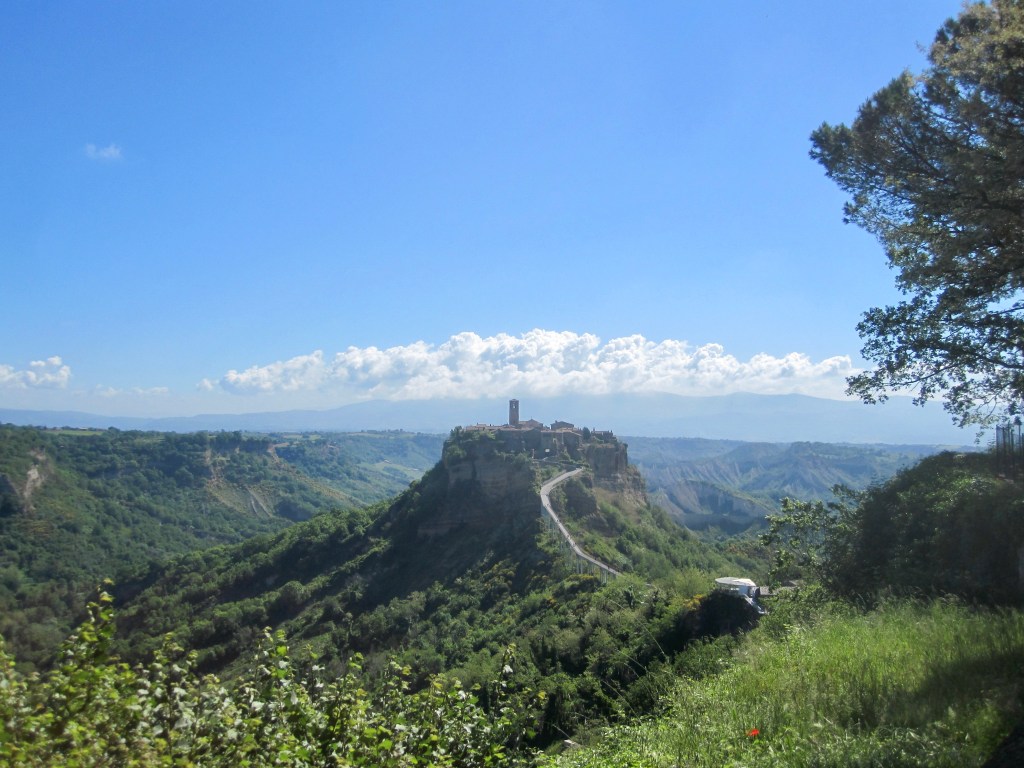
Bagnoregio, Italy

After the Christmas break another Jesuit in our community returned to Rome after having had corrective eye surgery.  The surgery went so well that for a week after he returned, he wore sunglasses at all times of day, even indoors; of course, we gave him a hard time about imagining that he had become a movie star.  What happened was that, with his vision corrected, at first his pupils were letting in too much light—so much light that he couldn’t see.  For our eyes to work, we need light, but we also need contrasts.  Some parts of our field of vision must be lighter or darker than others, otherwise we’ll end up falling down the stairs and running into walls.

If there is no light, of course, we cannot see.  But too much light can blind us too.  In the Biblical world, before electric lighting, the risk of darkness was almost always greater than having too much light.  In the Bible the metaphor of light is usually good, though occasionally the light of God is overwhelming—think of Jesus appearing to St. Paul on the road to Damascus.  Paul is knocked over and blinded by the vision.  If we were to be hit right now with heaven’s light in all its purity, we would probably be paralyzed too.  In order to experience that light, we need to grow, to be re-formed—the same way my confrere’s eyes had to convert after surgery and our own eyes have to adjust when we step outside at midday.  We might, in fact, say that God’s light shines even on those in hell, and that their darkness is the result of eyes grown used to the shadows, forever unwilling to adjust to the daylight.  However, this world in which we live right now contains both light and darkness.  In order to navigate in this world, we need to be able to recognize the contrasts.

Continue reading “Staying salty in an indifferent sea: Homily for the 5th Sunday of Ordinary Time”

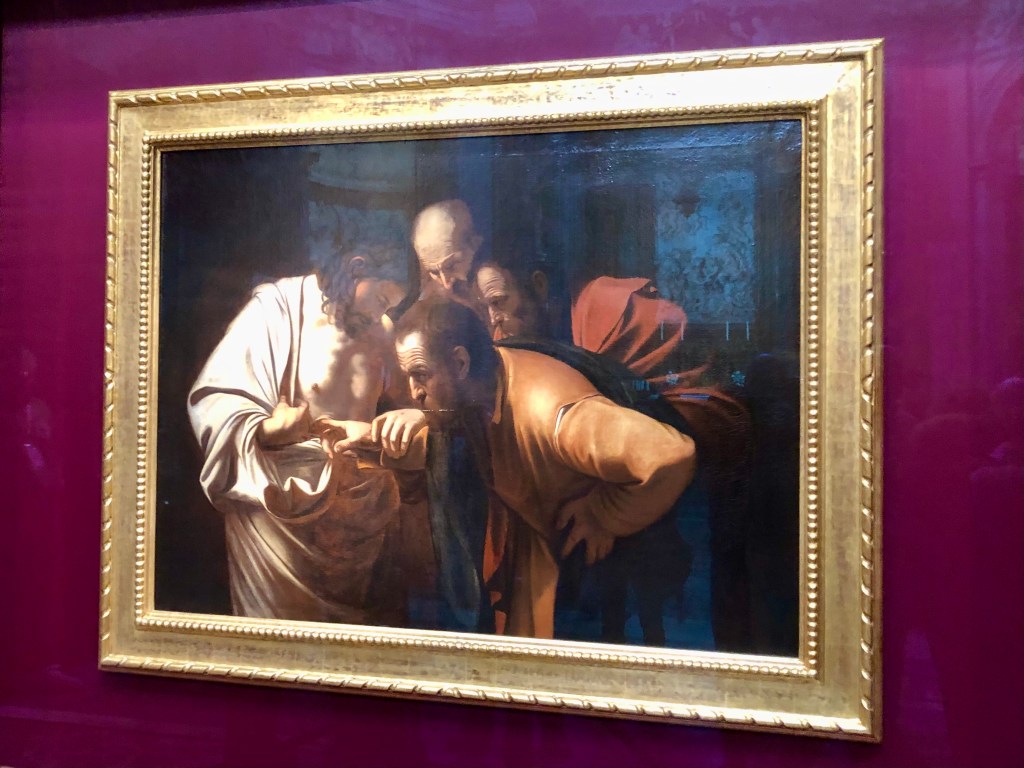
Doubting Caravaggio’s Doubting Thomas

The Incredulity of St. Thomas, Caravaggio (1602-7)

Readers of this blog will know that one of the delights of living in the center of Rome is that a Caravaggio is never more than a stroll away. I’ve written about the great spiritual insight in Caravaggio’s Matthew cycle in the Church of San Luigi dei Francesi. Last year, I reflected in The Catholic Thing on why Caravaggio so resonates with contemporary viewers after visiting an extraordinary exhibit of his work in Palazzo Barberini.

At the tail end of the Jubilee I caught another extraordinary exhibit, albeit of just one Caravaggio, at Sant’Agnese in Agone. The work, The Incredulity of St. Thomas (1602-7), was on loan from a private collection in Florence. It’s a work full of drama and humanity and shows Thomas wide-eyed while inserting his index finger into the Risen Lord’s side. Jesus himself is utterly serene as he guides the doubting apostle’s hand toward his torso. (A nice detail is that the Lord’s face seems a bit sunburned, while his body is not.) Two other apostles look on over Thomas’s shoulder with both concentration and astonishment.

Continue reading “Doubting Caravaggio’s Doubting Thomas”