Memento mori

As I noted at the beginning of the month, November is a month dedicated to praying for the dead. It is also a time in which the readings begin to take on a somewhat apocalyptic flare. The theme of the end of things echoes with the changing seasons; at least in the northern hemisphere, this is the time when fall turns into winter.
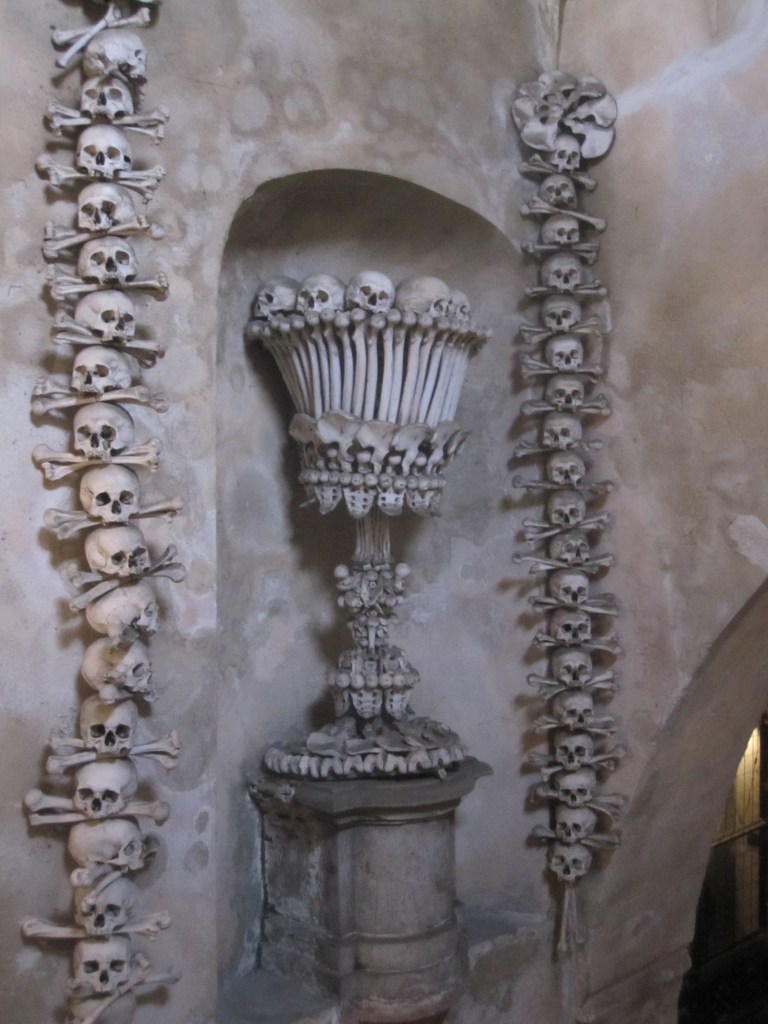
Sedlec Ossuary, Kutna Hora, Czech Republic

It might seem macabre to dedicate a particular season to considering death, but it doesn’t have to be. In any case, not thinking about death will not prevent it from happening to each one of us. One reason to pray for the dead, as I wrote a few weeks ago, is to help them on their journey through purgatory. Another is to give us the proper attitude toward life. The things in this world are temporary; our relationship with God is eternal. We should plan accordingly.

Continue reading “Memento mori”
Our Great American Holiday

As an American abroad, I’ll readily confess to a bit of nostalgia come Thanksgiving time. As a national rite, the holiday is sublime in its simplicity: turkey, family, eating–and an implicit spirituality as unobtrusive and essential as bedrock. I do celebrate here in Rome with other expats, but the Italian interpretation of cranberry sauce, stuffing, and pumpkin pie, while sometimes whimsical and frequently tasty, is never quite the same. Thanksgiving is quintessentially American, expressing what is best about our country–and perhaps also something of what we seem to be losing.

Continue reading “Our Great American Holiday”

No surprises on judgment day: homily for the thirty-second Sunday of Ordinary Time

Homily for the 32nd Sunday in Ordinary Time (A)

Many years ago, before I became a Jesuit, my parents celebrated their 25th wedding anniversary with a trip to Italy.  I had just finished two years as a Peace Corps volunteer in Kazakhstan, and I decided to meet them in Italy—but I wanted it to be a surprise.  So I made up an elaborate story about where I was going—a complete fake itinerary—and I pulled it off.  I have never seen my mom’s mouth open so wide as when I showed up and said, “Happy anniversary!”

If you’ve ever pulled off a surprise party—and it’s not easy—you know that both the anticipation and the surprise itself are fun.  There’s something about knowing what is going to happen when others don’t, the cleverness it requires, and then the shock, which in the end turns out to be joyful.

Rocca Albornoziana, Spoleto, Italy

Let me be clear about today’s reading.  Jesus is NOT trying to surprise us.  The arrival of the bridegroom surprises all of the virgins—they all doze off and are awakened by shouting in the night—but for the wise virgins it is a joyful surprise, which brings a wedding feast, and for the foolish virgins, it means darkness.  It means remaining outside in the darkness of the night because they did not care for the light that was their responsibility.  In the Gospel parable, the foolish virgins are surprised, but Jesus is telling us the parable precisely so that we will not be surprised.

Continue reading “No surprises on judgment day: homily for the thirty-second Sunday of Ordinary Time”

St. Josaphat Kuntsevych

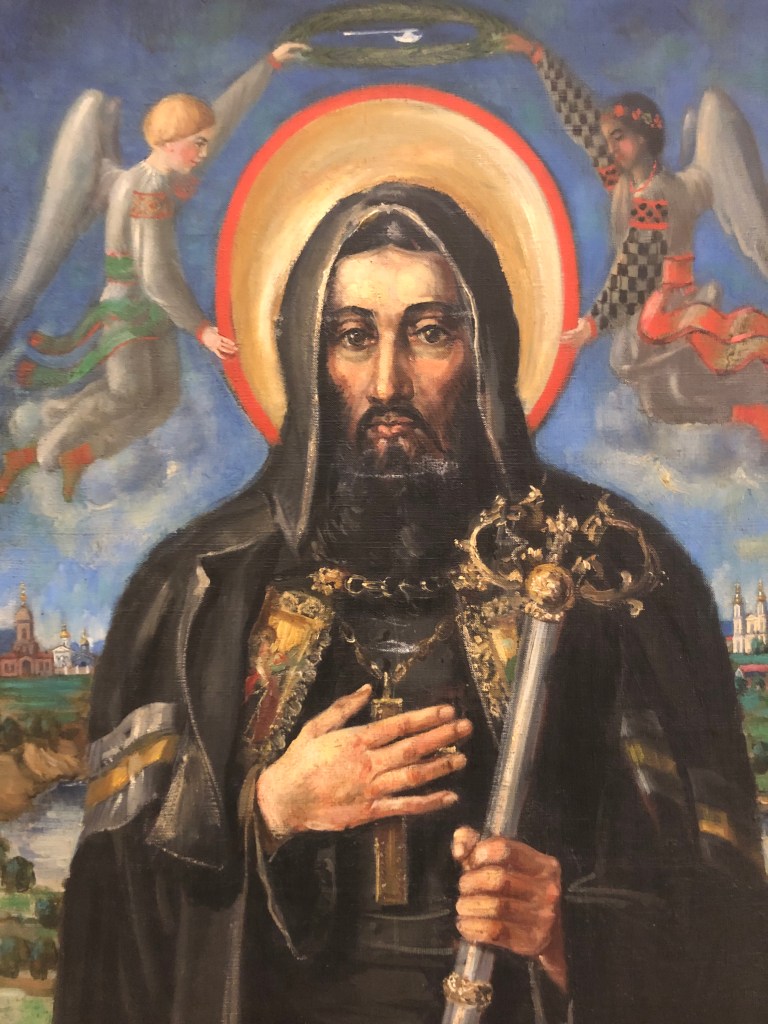
Sunday November 12 will mark the 400th anniversary of the martyrdom of the Ukrainian Catholic bishop St. Josaphat Kuntsevych. During his lifetime St. Josaphat worked for the reunion of eastern rite Christians with the Catholic Church. He was murdered by an Orthodox mob in 1623.

St. Josaphat, Mykola Azovskyj, 1946

St. Josaphat lived and worked, first as a Basilian monk and then as an archbishop in the part of the world that today includes Poland, Lithuania, and Ukraine. The anniversary is an opportunity to seek St. Josaphat’s intercession for the suffering people of Ukraine as they continue to fight for their nation’s freedom.

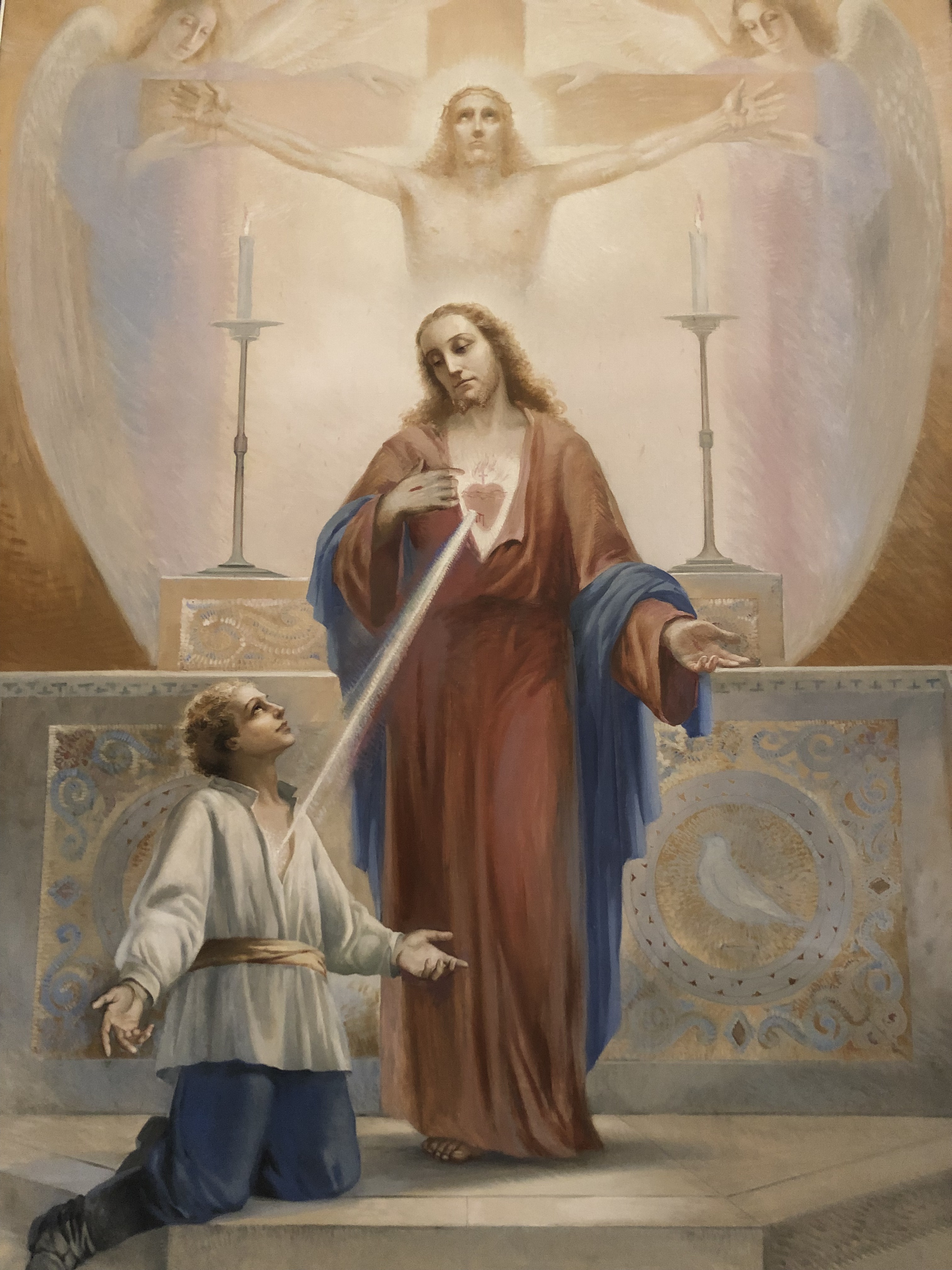
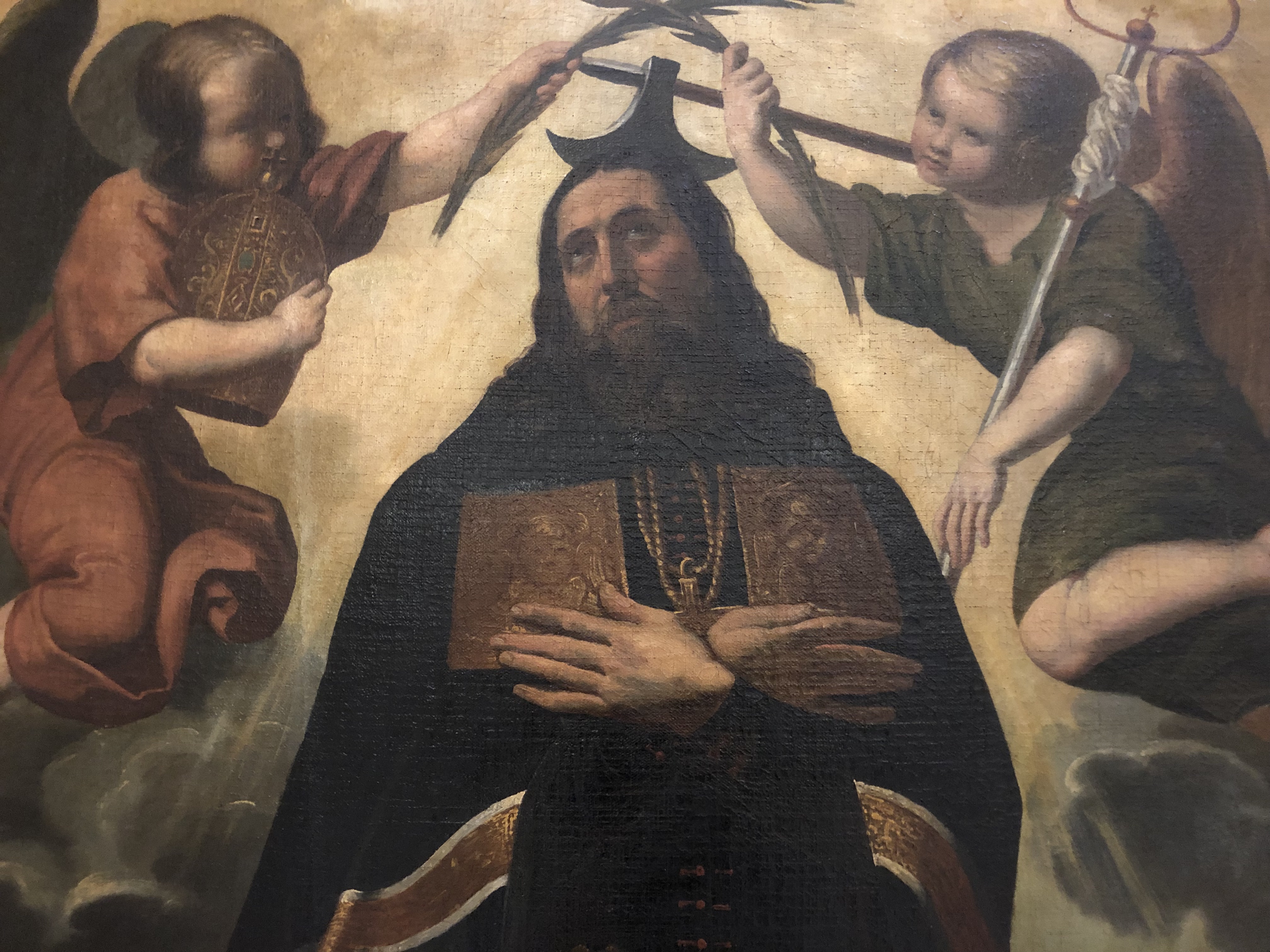
To celebrate the 400th anniversary of St. Josaphat’s martyrdom, the Gregorian University is sponsoring a conference on his life and legacy as well as an art show. I have to admit, I knew rather little about St. Josaphat before strolling through the display–though he is the patron of Milwaukee’s most beautiful church–and I have never seen so many paintings of the saint before. Here’s a sampling, showing all aspects of his life, from his calling to his monastic vocation, his ministry as bishop and his eventual martyrdom.

All Souls Day

November 2 is All Souls Day on which we remember and pray for the dead. For Catholics, November is traditionally a month dedicated to praying for the dead, a practice that goes back to the earliest days of the Church and, indeed, even to pre-Christian times. This pair of days, All Saints and All Souls, is a reminder of the profound solidarity that exists between all Christ’s faithful, on whichever side of the grave we currently find ourselves. Our lives and our journeys continue to intertwine with those who have come and gone before us.

Santa Maria del Purgatorio, Monopoli, Italy

The first reason we pray for the dead, of course, is to help those in the final process of purification we call purgatory. Since heaven means existing in a state of perfection and most of us still aren’t perfect when we die, purgatory is the time we need to reach that perfect way of being we long for.

This doesn’t mean that purgatory is a second chance, as if this earthly life were a video game in which you get five or six lives to move up levels. No, the choices we make in this life are decisive. Our free will really matters. Purgatory is the completion of what we start on earth.

Continue reading “All Souls Day”