Last year, Rome’s Palazzo Bonaparte hosted a special exhibition of the work of Vincent Van Gogh (1853-1890). It highlighted, among other things, the deep religiosity of this son of a Protestant minister. Van Gogh’s life was marked by inner turmoil, culminating in a horrendously painful suicide. The exhibition made me appreciate the ways in which faith, failure, sin, turmoil, and hope intersected in Van Gogh’s work. The artist’s tragic struggle gave his work its unique power.
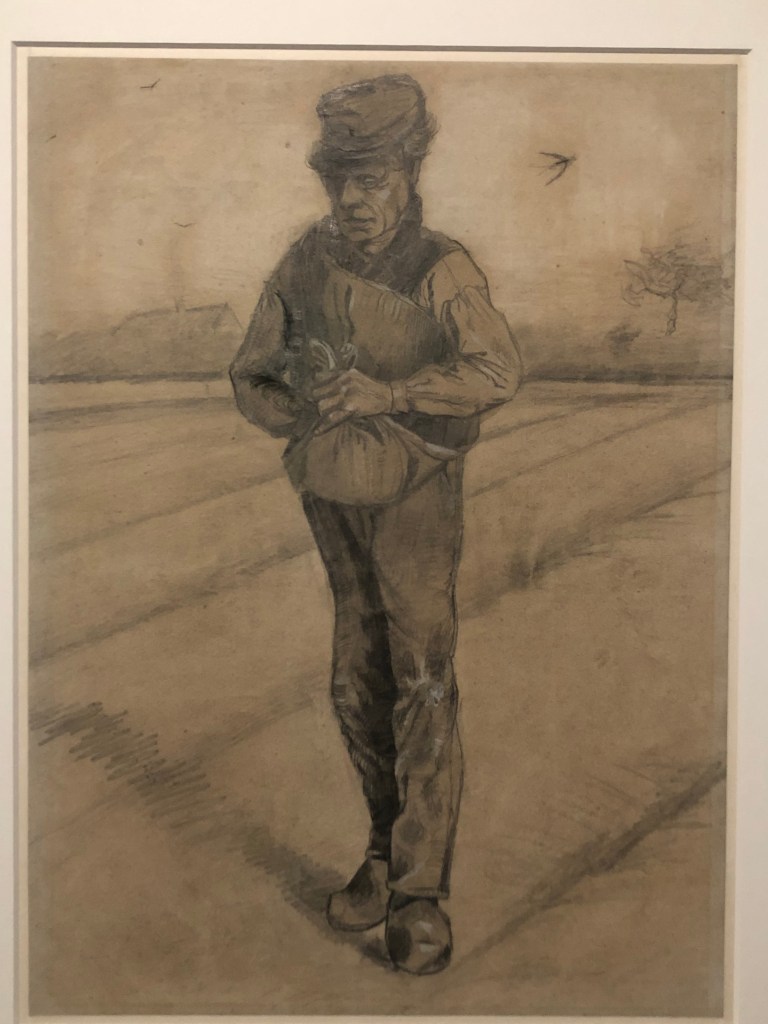
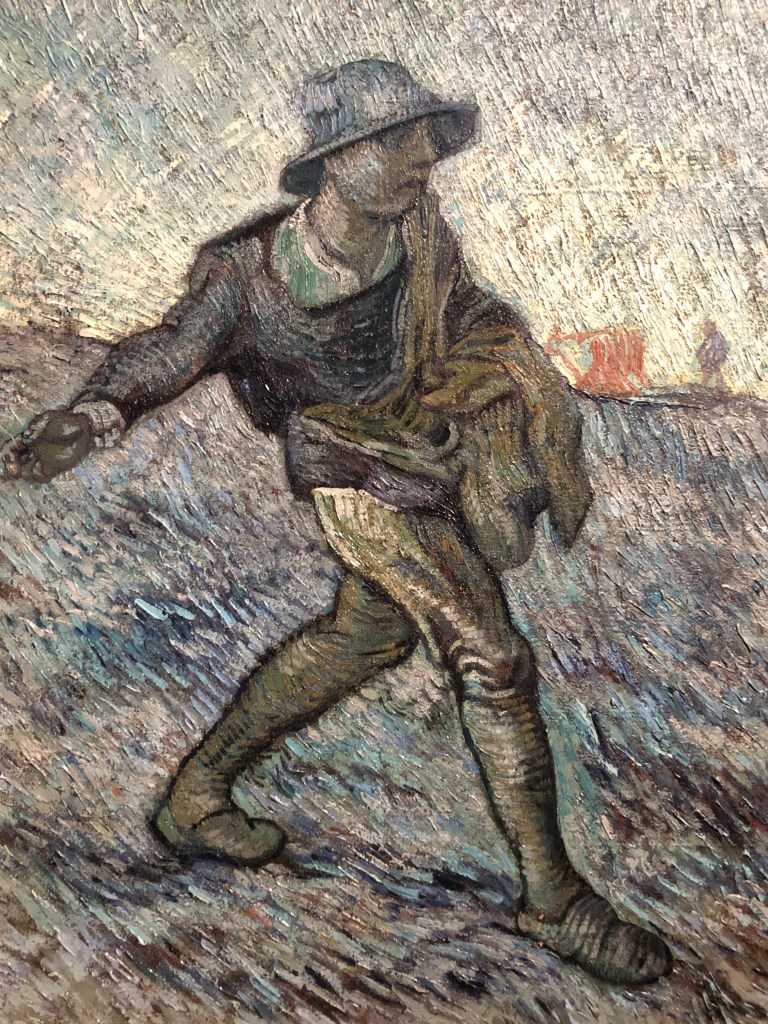
One of the themes to which Van Gogh repeatedly returned was the parable of the sower. Something about the the way the parable combines both failure and fecundity with the life cycle of the seed–being buried in order to give life–seemed to fascinate Van Gogh.
Here are three variations on the theme, which span the length of Van Gogh’s brief career. The first sketch shows Van Gogh’s early interest in peasants and bucolic scenes, which was to stick with him and characterize his work. The second shows his remarkable use of warm colors. And the final, darkening in color as in mood, was painted after Van Gogh had spent a month in an asylum, as he swung back and forth between moments of serenity and crisis.

About the sower, he wrote:
“I feel so strongly that the story of people is like the story of wheat. If one isn’t sown in the earth to germinate there, what does it matter, one is milled in order to become bread.”

 Tony Lusvardi, S.J.