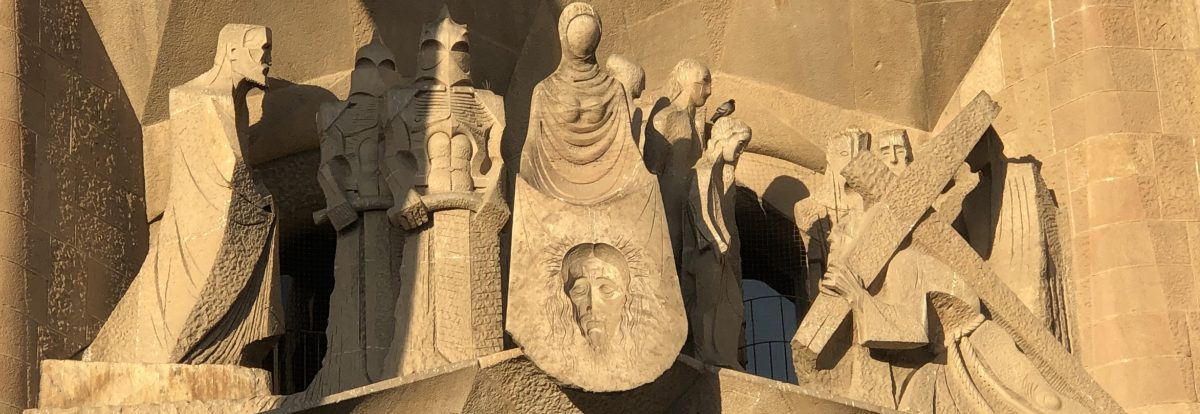
Fools for love: homily for the seventeenth Sunday of Ordinary Time

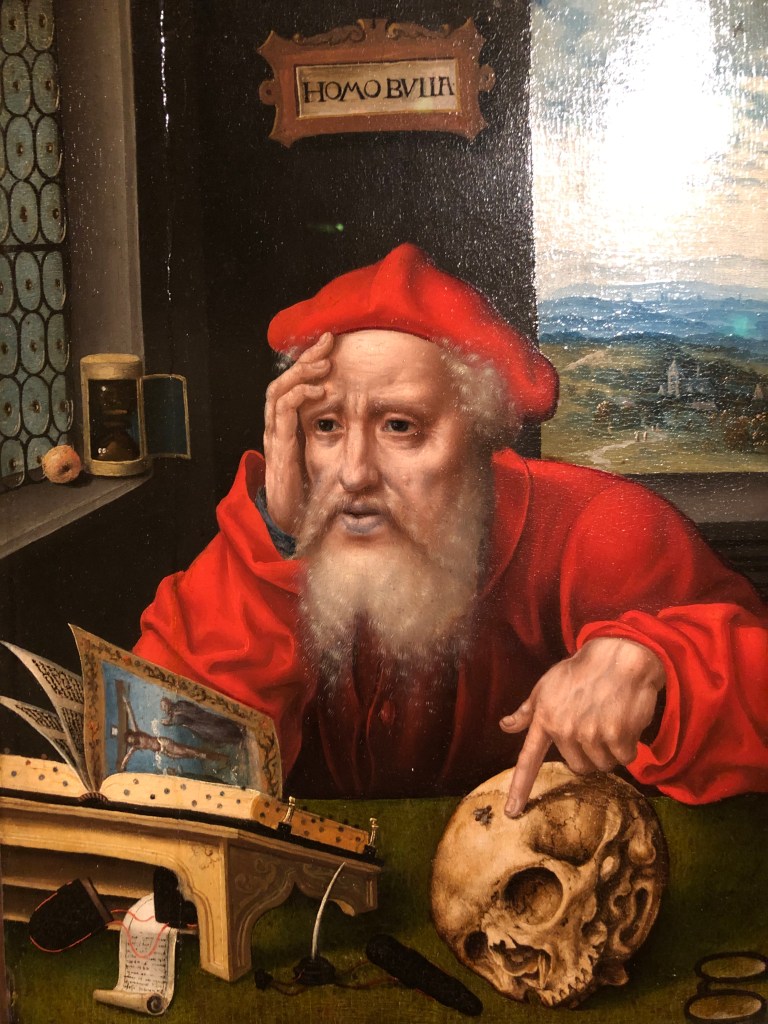
National Gallery of Victoria, Melbourne, Australia

Homily for the 17th Sunday of Ordinary Time (A)

When he was a young priest St. Philip Neri shaved off half his beard in order to counteract vanity.  St. Simeon the Stylite lived on a small platform on top of a 50-foot tall pillar in Syria for over 30 years. Another St. Simeon (of Emesa), known as the Holy Fool, walked through town with a dead dog tied around his waist.  St. Catherine of Siena lived for weeks on nothing more than the hosts she received at communion.  Shortly after his conversion, St. Francis stripped naked in front of the bishop of Assisi.  St. Francis Xavier, a Jesuit, tending plague victims in a hospital found himself holding back out of fear of contracting the disease.  (This one’s a little gross.)  So he scraped the back of one of the sick men he was tending, gathered up a handful of puss, and put it in his mouth.  And St. Maximiliam Kolbe, a Polish Franciscan priest imprisoned in Auschwitz, asked his Nazi guards if he could take the place of a man condemned to die in order to save that man’s life and give up his own instead.

I am not recommending that you try any of these things at home.  Instead I want to ask you a question:  are these saints foolish or wise?  And if they are wise, then what does wisdom really mean? 

In our first reading, the young King Solomon is praised by God for asking for the gift of wisdom.  But what makes someone wise?  Wisdom is not the same as memorizing lots of facts or accumulating knowledge.  You could go home and memorize the phonebook, but I’d consider someone who just looked up phone numbers as needed actually to be wiser.  We probably know people—perhaps grandparents—who received relatively little formal education but we’d consider wise.  And I’ve known a plenty of people with PhDs who were not nearly as smart as they told you they were.

Continue reading “Fools for love: homily for the seventeenth Sunday of Ordinary Time”
Judgments and Judgmentalism: homily for the sixteenth Sunday of Ordinary Time

Orvieto Cathedral

Homily for the 16th Sunday of Ordinary Time (A)

At the end of one of the great 20th century Catholic novels Brideshead Revisited there’s a dramatic deathbed scene.  The novel is about a British Catholic aristocratic family. Early on in the story the patriarch of the family, Lord Marchmain, abandons his wife and goes off to live with an Italian mistress who is younger than his children.  Needless to say, he becomes very hostile toward the Church and its teachings.  At the end of the novel, sick and dying, he comes back to the family estate in England, and all of his children—and even his Italian mistress—beg him to see a priest and be reconciled before he dies.  He refuses.  They call the local priest to visit the house several times, and each time Lord Marchmain angrily chases him away.  

The story is narrated by a friend of the family, Charles, who is an atheist.  Charles, the narrator, gets angry at the family for continuing to call the priest even though Lord Marchmain has chased him away again and again.  Finally, when Lord Marchmain really is dying, when he’s still conscious but no longer able to speak, the priest comes again and begins the last rites.  And Charles, the narrator, is indignant.  The dying man starts to move his hand, and Charles thinks, “Look, he’s trying to swat the priest away one last time.”  And the shaking old hand moves up to his forehead, and then down to his stomach and then across his chest.  The Sign of the Cross.

Now deathbed conversions are probably more common in literature than in real life, though they happen in real life too.  But there’s a reason deathbed conversions, though small in number, are important in our Catholic worldview.  This is because the fact that deathbed conversions are even possible tells us something important about God:  that his mercy is infinite, that his mercy is patient, that his mercy is more powerful than a lifetime of sin, that his mercy directs us toward a life that only begins in this world.  

The parables that Jesus tells today about the wheat and the weeds, about the mustard seed and the yeast, reflect this understanding of God.  God’s power is capable of bringing forth a good harvest even from a field that seems choked with weeds, of bringing forth a flowering tree from a tiny mustard seed, of bringing forth nourishing bread from what looks like a handful of dust.  

Continue reading “Judgments and Judgmentalism: homily for the sixteenth Sunday of Ordinary Time”

Van Gogh and the Sower

Last year, Rome’s Palazzo Bonaparte hosted a special exhibition of the work of Vincent Van Gogh (1853-1890). It highlighted, among other things, the deep religiosity of this son of a Protestant minister. Van Gogh’s life was marked by inner turmoil, culminating in a horrendously painful suicide. The exhibition made me appreciate the ways in which faith, failure, sin, turmoil, and hope intersected in Van Gogh’s work. The artist’s tragic struggle gave his work its unique power.

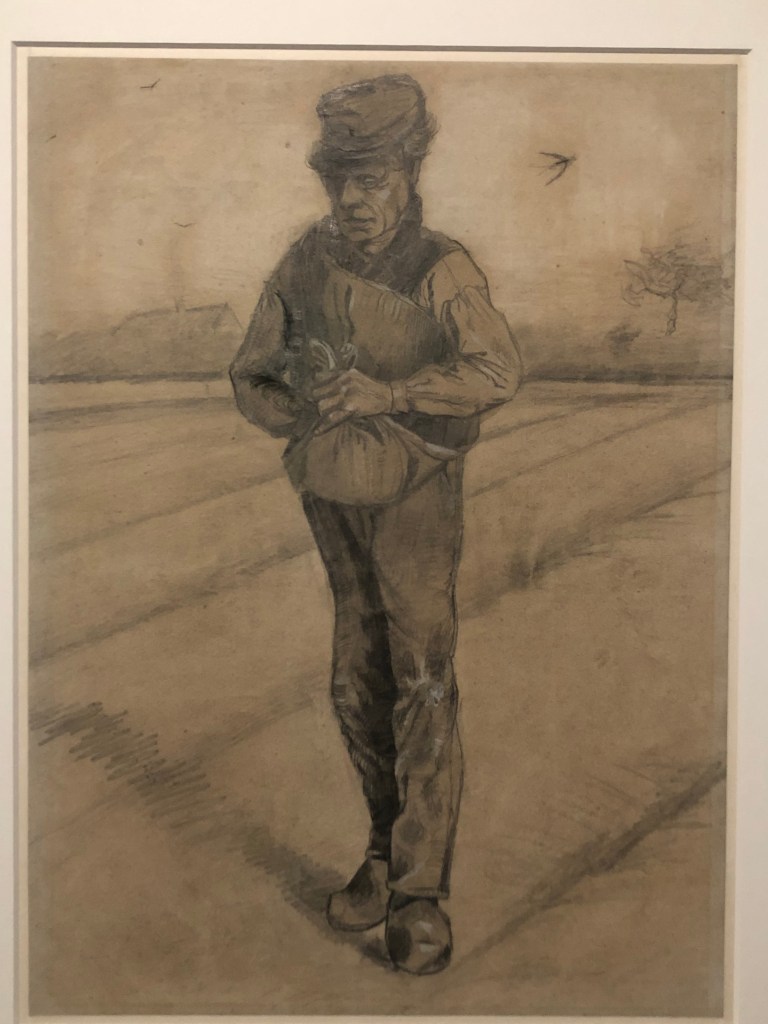
Vincent Van Gogh, The Sower, pencil, chalk, and watercolor

One of the themes to which Van Gogh repeatedly returned was the parable of the sower. Something about the the way the parable combines both failure and fecundity with the life cycle of the seed–being buried in order to give life–seemed to fascinate Van Gogh.

Continue reading “Van Gogh and the Sower”

The waters of Australia

Peaceful Bay, Western Australia

After a couple of months in Western Australia and half a year Down Under, I am still amazed by the diversity of this island continent’s landscapes. This includes unparalleled bio-diversity–all the birds and marsupials and one-of-a-kind wonders, like the platypus, that look like something out of a Dr. Seuss book–as well as the geological curiosities.

The Twelve Apostles, Victoria, Australia

On this, the driest of Earth’s continents, I’ve been especially fascinated by water. Most of Australia’s population (almost 90%) live within 30 miles of the coast, and some of the country’s greatest wonders–the Great Barrier Reef, for example–lie underwater. My own fascination with water comes in part from its sacramental usage. Water is the one physical element necessary for baptism and, thus, entry into Christianity.

Continue reading “The waters of Australia”