Authority and truth in the Church: homily for the twenty-first Sunday of Ordinary Time

Homily for the 21st Sunday in Ordinary Time (A)

St. Peter’s Basilica, Rome

How do you feel about authority?  I wish I had a little more?  I wish those with it would loosen up a bit?  I wish they’d clamp down?  When you hear the word authority do you feel defensive or safe?

Even if you don’t like the word, even if you like to think of yourself as a freethinker, you still rely on authority.  Almost everything we believe, we’ve come to believe on the authority of others.  Many of today’s political and social controversies come down to authority—can we trust the media?  The experts?  Universities?  Business?  Government?  The Church?

Yes, authority is important for the Church because the Church is a human institution.  Instituted by God, guided by God, but made up of men and women like you and me.  And each of us depends upon authority.  Any complex human undertaking—even rowing a boat in unison—requires some degree of authority if the boat is to go anywhere.  Learning requires trusting authority as well.  If you saw the eclipse last Monday, you probably relied on the authority of the news media, who relied on the calculations of scientists, relying on the observations of centuries of scientists and mathematicians before them.  Or maybe you really are a freethinker, and figured it all out yourself with binoculars and a calculator.  

Today’s readings put the spotlight on religious authority.  In the first reading, one official in the palace of the king of Israel, Shebna, is condemned and replaced by another, Eliakim.  Just before the part we read this morning, Isaiah explains that Shebna is being fired for looking after his own personal interests instead of the people’s.  Specifically, he seems to have used public funds to construct an elaborate tomb for himself.  Eliakim, on the other hand, cares for the people of Jerusalem like a father.  

We can observe a few of things from this story of petty corruption.  First, authority is different than power.  Power can be seized, but authority is given from above and those with authority are answerable to their higher-ups.  In this case, Shebna answers to God when he misuses his authority.  Second, the religious authority spoken of in this reading is given for the good of others.  The type of authority that comes from God is service; Eliakim is given the symbols of authority, robe and sash, because he will serve.  And finally, office-holders come and office-holders go.  Some are better than others.  God remains the same.

Continue reading “Authority and truth in the Church: homily for the twenty-first Sunday of Ordinary Time”
Judgments and Judgmentalism: homily for the sixteenth Sunday of Ordinary Time

Orvieto Cathedral

Homily for the 16th Sunday of Ordinary Time (A)

At the end of one of the great 20th century Catholic novels Brideshead Revisited there’s a dramatic deathbed scene.  The novel is about a British Catholic aristocratic family. Early on in the story the patriarch of the family, Lord Marchmain, abandons his wife and goes off to live with an Italian mistress who is younger than his children.  Needless to say, he becomes very hostile toward the Church and its teachings.  At the end of the novel, sick and dying, he comes back to the family estate in England, and all of his children—and even his Italian mistress—beg him to see a priest and be reconciled before he dies.  He refuses.  They call the local priest to visit the house several times, and each time Lord Marchmain angrily chases him away.  

The story is narrated by a friend of the family, Charles, who is an atheist.  Charles, the narrator, gets angry at the family for continuing to call the priest even though Lord Marchmain has chased him away again and again.  Finally, when Lord Marchmain really is dying, when he’s still conscious but no longer able to speak, the priest comes again and begins the last rites.  And Charles, the narrator, is indignant.  The dying man starts to move his hand, and Charles thinks, “Look, he’s trying to swat the priest away one last time.”  And the shaking old hand moves up to his forehead, and then down to his stomach and then across his chest.  The Sign of the Cross.

Now deathbed conversions are probably more common in literature than in real life, though they happen in real life too.  But there’s a reason deathbed conversions, though small in number, are important in our Catholic worldview.  This is because the fact that deathbed conversions are even possible tells us something important about God:  that his mercy is infinite, that his mercy is patient, that his mercy is more powerful than a lifetime of sin, that his mercy directs us toward a life that only begins in this world.  

The parables that Jesus tells today about the wheat and the weeds, about the mustard seed and the yeast, reflect this understanding of God.  God’s power is capable of bringing forth a good harvest even from a field that seems choked with weeds, of bringing forth a flowering tree from a tiny mustard seed, of bringing forth nourishing bread from what looks like a handful of dust.  

Continue reading “Judgments and Judgmentalism: homily for the sixteenth Sunday of Ordinary Time”

Can travel make us better?

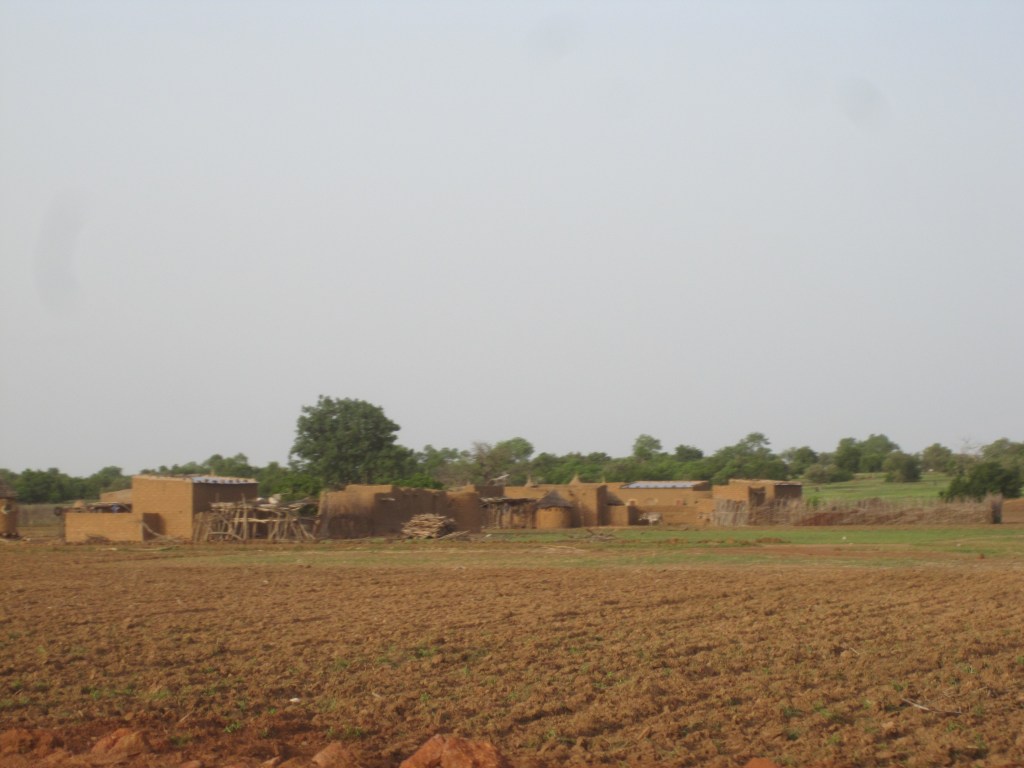
I have a new piece this week at the excellent Plough Quarterly magazine on one of my favorite themes, travel. It was fun to write, letting me look back at visits to Jesuit brothers in Burkina Faso, my Peace Corps days in Kazakhstan, and my one time riding a helicopter in the Alps. Plus thinking about Chinua Achebe’s great novel Things Fall Apart. Here is a link to the essay “Between Continents“.