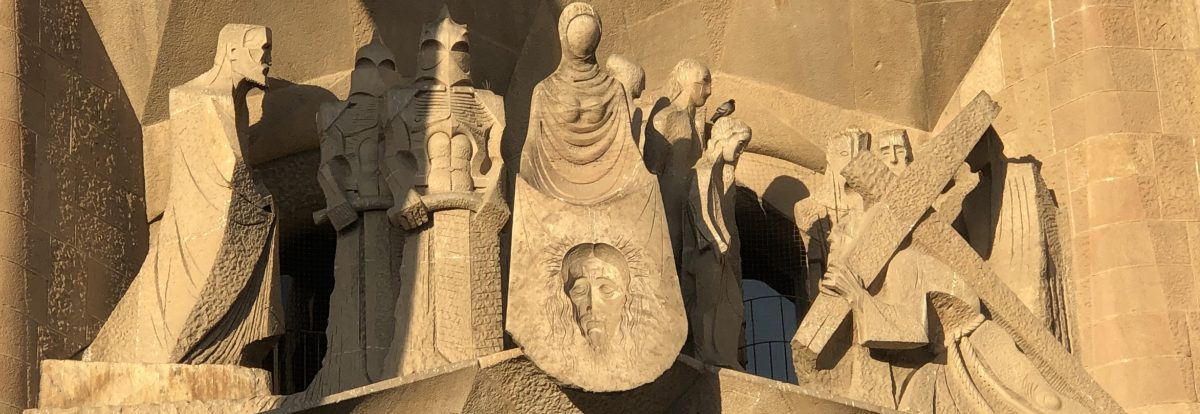
Humility is our glory: homily for the 22nd Sunday in Ordinary Time

Homily for the twenty-second Sunday in Ordinary Time (C).
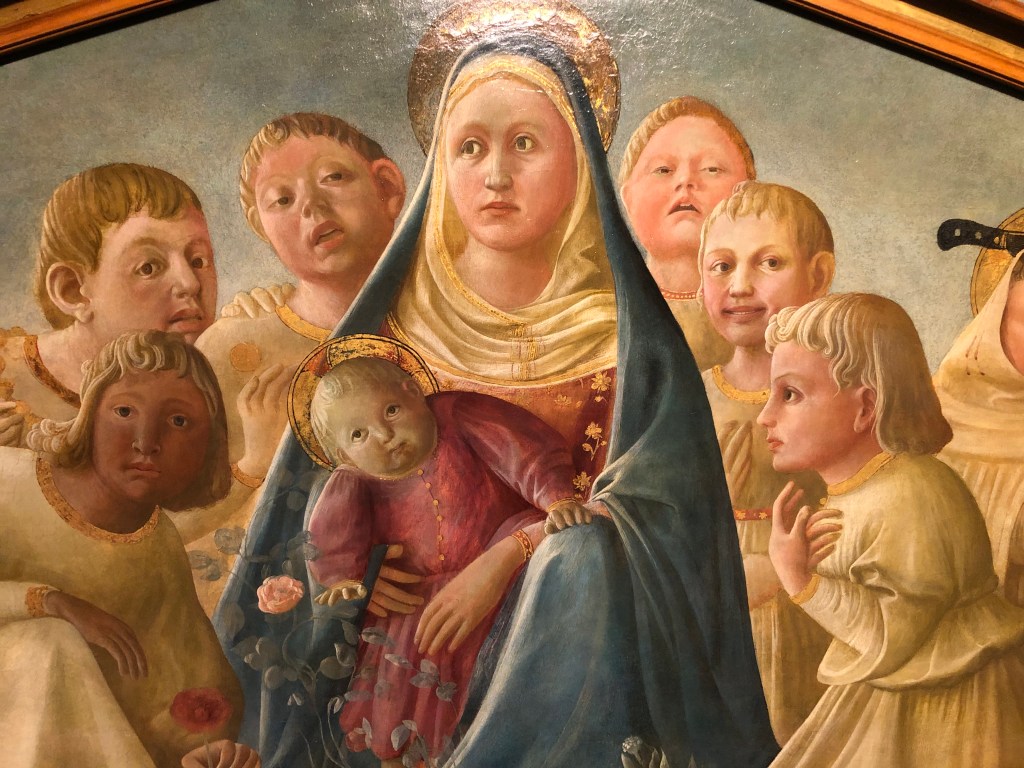
Filippo Lippi, Madonna of Humility, 1420

Humility is the virtue that stands out both in today’s Gospel reading and in Sirach’s advice to “conduct your affairs with humility” and to “humble yourself the more, the greater you are.”  I’ve been thinking about humility a lot this summer because I’ve been thinking about my grandfathers.  One passed away in June, the other fourteen years ago, and “humble” is one of the first words that comes to mind when I think of either of them—perhaps in both cases because my grandfathers were the quiet ones, and my grandmothers were the talkers!  One grandfather was a baker, the other lived his whole life in the same small town in Minnesota.  I think of them both as great men not because they sought attention or prestige, but because they didn’t.  Because they dedicated themselves to others, to their families and to their communities, without making a fuss about it, and left the lives of many better as a result.  In the homely etiquette lesson Jesus offers in the Gospel—take the lower place instead of elbowing your way to the head of the table—he points to one way in which a humble act can leave one better off in the long run.

Continue reading “Humility is our glory: homily for the 22nd Sunday in Ordinary Time”
Fools for love: homily for the seventeenth Sunday of Ordinary Time

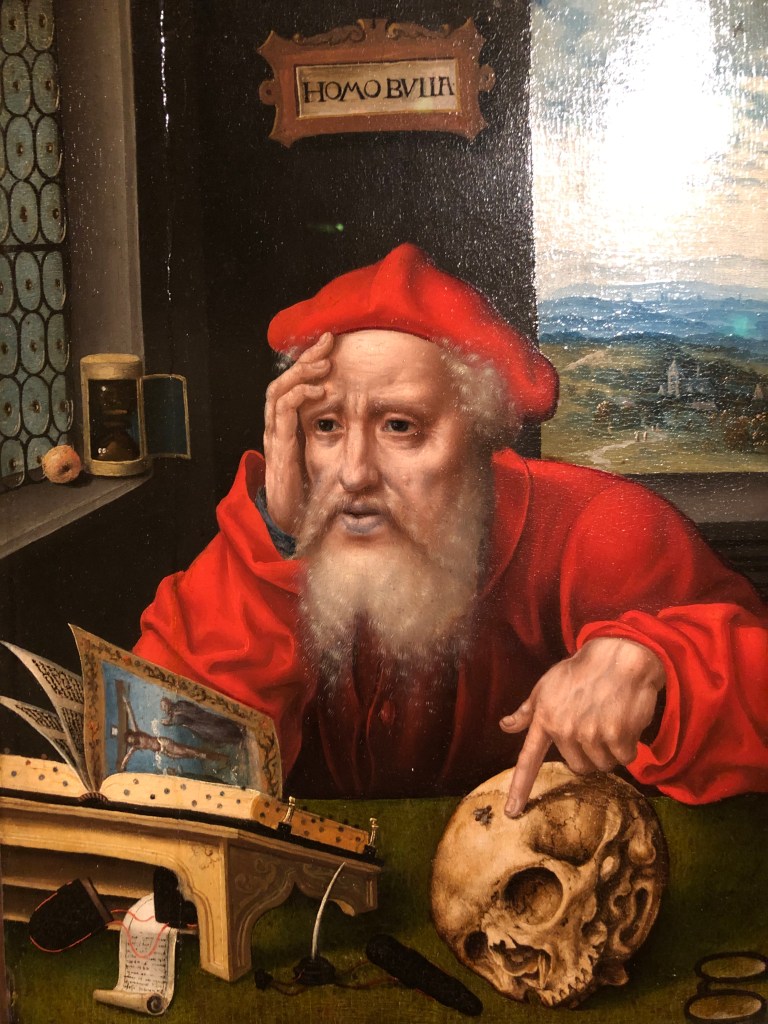
National Gallery of Victoria, Melbourne, Australia

Homily for the 17th Sunday of Ordinary Time (A)

When he was a young priest St. Philip Neri shaved off half his beard in order to counteract vanity.  St. Simeon the Stylite lived on a small platform on top of a 50-foot tall pillar in Syria for over 30 years. Another St. Simeon (of Emesa), known as the Holy Fool, walked through town with a dead dog tied around his waist.  St. Catherine of Siena lived for weeks on nothing more than the hosts she received at communion.  Shortly after his conversion, St. Francis stripped naked in front of the bishop of Assisi.  St. Francis Xavier, a Jesuit, tending plague victims in a hospital found himself holding back out of fear of contracting the disease.  (This one’s a little gross.)  So he scraped the back of one of the sick men he was tending, gathered up a handful of puss, and put it in his mouth.  And St. Maximiliam Kolbe, a Polish Franciscan priest imprisoned in Auschwitz, asked his Nazi guards if he could take the place of a man condemned to die in order to save that man’s life and give up his own instead.

I am not recommending that you try any of these things at home.  Instead I want to ask you a question:  are these saints foolish or wise?  And if they are wise, then what does wisdom really mean? 

In our first reading, the young King Solomon is praised by God for asking for the gift of wisdom.  But what makes someone wise?  Wisdom is not the same as memorizing lots of facts or accumulating knowledge.  You could go home and memorize the phonebook, but I’d consider someone who just looked up phone numbers as needed actually to be wiser.  We probably know people—perhaps grandparents—who received relatively little formal education but we’d consider wise.  And I’ve known a plenty of people with PhDs who were not nearly as smart as they told you they were.

Continue reading “Fools for love: homily for the seventeenth Sunday of Ordinary Time”

What is wisdom? Homily for the twenty-third Sunday of Ordinary Time

Homily for the 23rd Sunday in Ordinary Time (C).

I’m back to my day job in Rome, so this week I’m posting a homily from 2016, given the day after my ordination to the diaconate.

Ordination to the diaconate 2016, St. Ignatius Church, Boston, MA

Today’s Gospel reading is perhaps the single most unfortunate passage in Scripture to have to preach about to a congregation consisting mostly of family members, so we’re going to work our way up to it by starting with the Old Testament.

The Old Testament reading is from the Book of Wisdom.  You’ll be happy to know that I took an entire course on the Biblical wisdom tradition and have prepared a brief 45-minute summary as an introduction to the homily.  We can skip all that, however, if you will consider for a moment the question of what it means to be wise.  

To understand what wisdom is, it can be helpful, first, to think about what it is not.  Wisdom is not the same thing as being clever; we probably know people who are clever manipulators, for example, but not really wise.  Wisdom is not the same as knowledge, as knowing lots of facts.  Teachers know that there’s a difference between a student who memorizes what he hears and then regurgitates it, and a student who actually thinks about what she’s learning.  Wisdom is not the same thing as being educated.  If you’ve been in school as long as I have, you realize that there are some very foolish people with PhDs.  And we all probably know people who didn’t receive much education who nonetheless we’d consider wise because they had a sense for people, a sense for what was right and wrong, a sense for what really matters in life. 

Continue reading “What is wisdom? Homily for the twenty-third Sunday of Ordinary Time”