Homily for the Solemnity of Saints Peter and Paul

Throughout this month, I’ve been reposting the homilies I wrote for the Homiletic and Pastoral Review. You can check them all out on their site, as well as Friday’s Homily for the Sacred Heart. This feast seems especially joyful this year, coming so soon after the election of Pope Leo XIV.


Homily for the Solemnity of Saints Peter and Paul

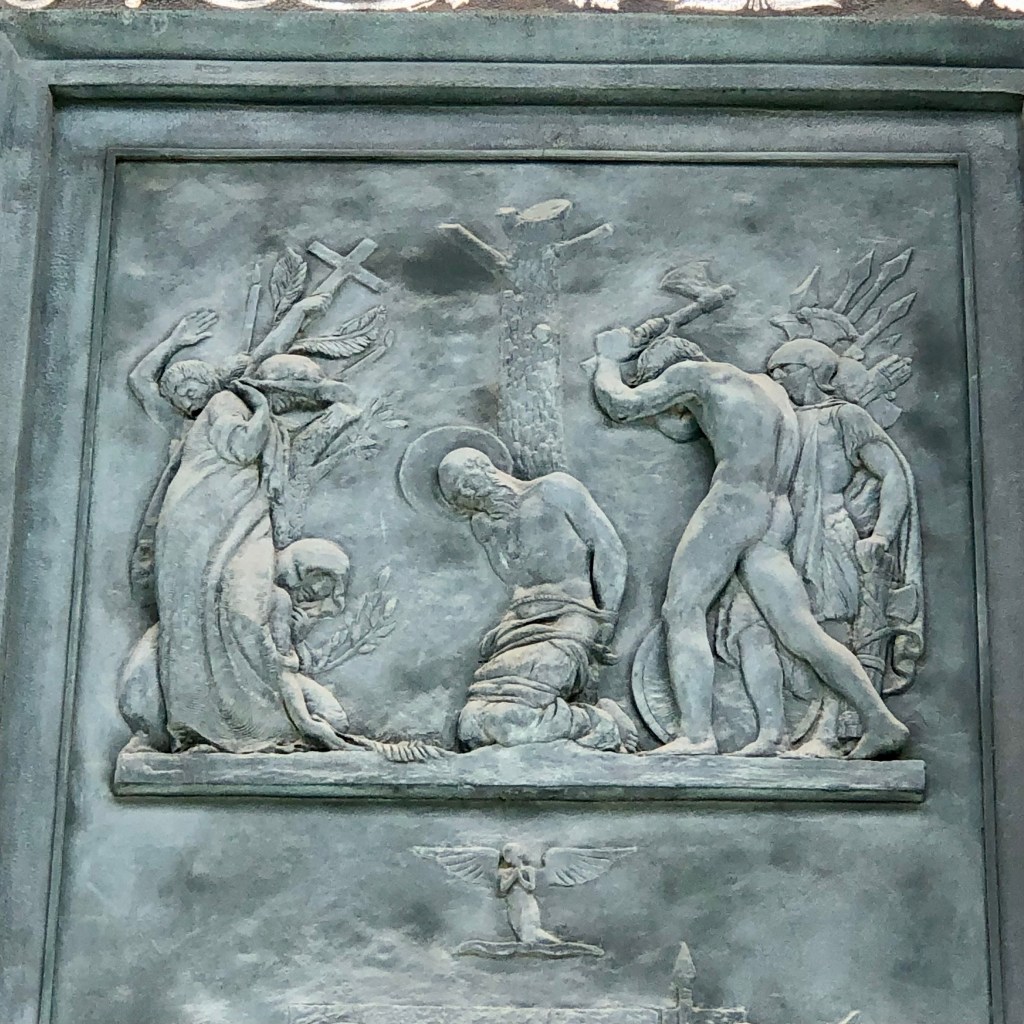
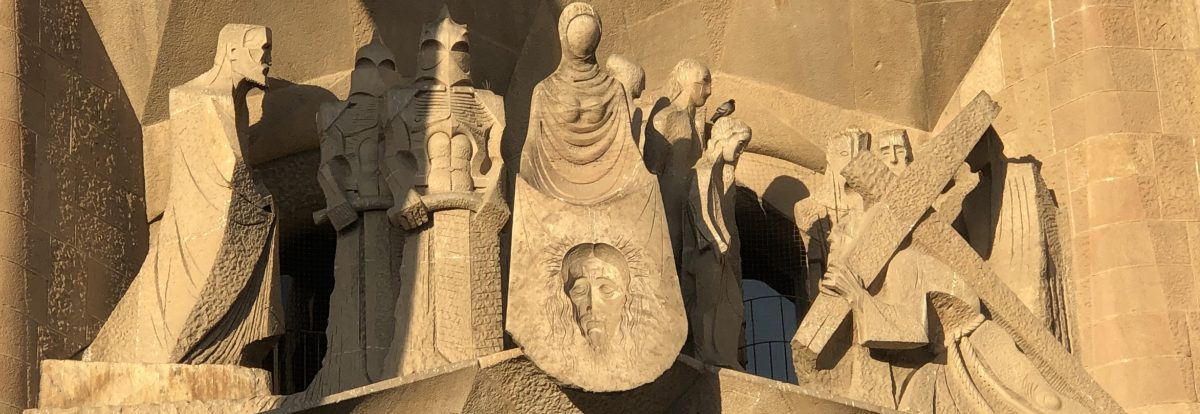
Martyrdom of St. Peter (Doors of the Basilica of St. Paul Outside the Walls, Rome)
Martyrdom of St. Paul (Doors of the Basilica of St. Paul Outside the Walls, Rome)

Peter and Paul were great men.  It is common in preaching to hear about Peter’s failures—his weaknesses and false steps, which the Gospels make no attempt to hide.  And we first meet Paul, of course, when he is persecuting the Church.  Peter and Paul were both flawed men, but nonetheless they are great men.

In fact, one of the things that makes them both great is that they acknowledge their flaws. Practically the first words out of Simon Peter’s mouth in the Gospel of Luke are, “Depart from me, Lord, for I am a sinful man” (Lk 5:8).  In one of his letters, Paul claims to boast in his weakness (2 Cor 12:9).

Yet, in the Acts of the Apostles, Peter raises the dead to life.  Paul becomes the most remarkable missionary in history.  The faithful of Jerusalem bring their sick into the streets just so that Peter’s shadow will fall upon them.  And in today’s Gospel we hear those remarkable words from the mouth of the Lord himself, “You are Peter, and upon this rock I will build my Church, and gates of the netherworld shall not prevail against it.”  The greatness of both Peter and Paul comes from Jesus.

Continue reading “Homily for the Solemnity of Saints Peter and Paul”
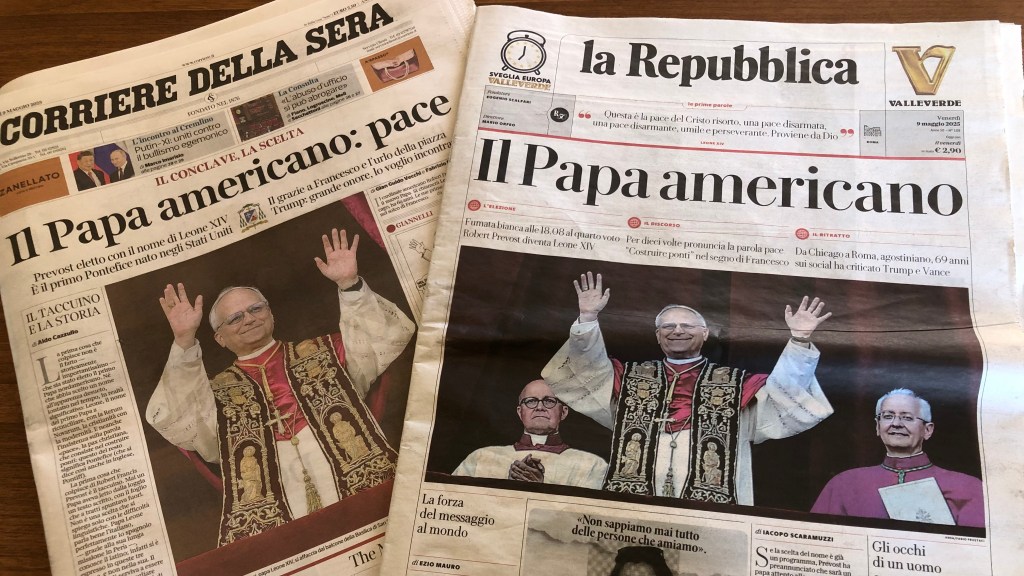
Pope Leo: an ever-ancient, ever-new beginning for the Church

Just over a week ago I stood among the throng in St. Peter’s Square waiting for Pope Leo XIV’s Mass of installation. As the new pope emerged on the back of a white truck and made the rounds through the square, one of the priests who was with me to concelebrate whispered, “It still feels surreal.”

It still does.

The one iron-clad rule of papal elections, after all, used to be that the cardinals would never elect an American pope. And now we have a pope who grew up cheering for the Chicago White Sox. Going into the conclave, the Church seemed tired and divided. Yet Pope Leo has managed to evoke good will on all sides, and he hasn’t had to resort to any particular gimmicks to do so. Rome is elated.

What is perhaps most striking about our new Holy Father is the paradoxical way in which he seems both totally at ease in his new role–as if he’d been pope-ing for years already–and at the same time totally unassuming. One could imagine sitting next to him at a baseball game and him introducing himself as “Bob from Chicago.” At the same time, seeing him on the balcony of St. Peter’s Basilica or meeting world leaders in the robes of his office, one senses the quiet dignity of a successor of the Apostles.

A lot has already been written about Pope Leo on the basis of relatively scant pre-conclave writings and interviews. I was particularly impressed by the first homily he gave to the cardinals after his election. His brief address to the Synod of Bishops on evangelization more than a decade ago equally impressed me because he seemed to grasp one of the central problems facing the Church: the role of the media in communicating–and sometimes miscommunicating–our message. I remember an interview given by the late Cardinal Avery Dulles to Charlie Rose, in which the cardinal observed that the biggest problem faced by the Church was that most Catholics learn what they know about Catholicism not from the Church herself, but from the media. Leo XIV understands that dynamic–and he is alert to the equally challenging frontiers now being opened by artificial intelligence.

Continue reading “Pope Leo: an ever-ancient, ever-new beginning for the Church”