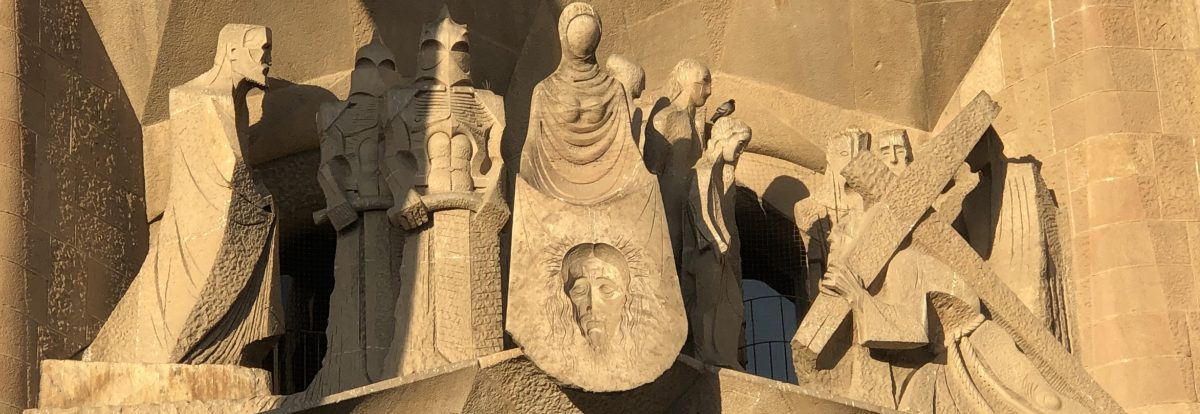
The Immaculate Conception: God’s own Advent preparation

Homily for the Immaculate Conception (2019. Note, that year, the Solemnity fell on a Sunday.)

On the first Sunday of Advent, I cleaned my room. I must admit, it needed it—there were coffee stains on the desk; the trash can was overflowing; I found forgotten lists of things not to forget. But Advent is the beginning of a new liturgical year, the season when we prepare for Christmas, and it seemed right to start with a clean room. In the coming weeks, there will be many other things to prepare: food, gifts, decorations, travel.

Column of the Immaculate Conception, Rome

This is the second Sunday of Advent, and normally the readings highlight the figure of St. John the Baptist, who speaks of another kind of preparation, another kind of cleaning—in fact, a much deeper cleaning than coffee stains. John the Baptist warns of the need for inner cleansing, moral and spiritual conversion. And this too is part of the preparation for Christmas. As a confessor, I have to do a little advertising for my profession, strangely absent from all the Black Friday advertising we received last month. But I must say that our special offer—the forgiveness of sins, eternal life—is truly the best deal in the world.

However, this year is a bit special, because this second Sunday of Advent is December 8, the Solemnity of the Immaculate Conception of Mary, the Mother of Jesus. This coincidence of dates is interesting because the Immaculate Conception is also a feast of preparation. But not the preparation we do during this season. The preparation that God has done for us.

Continue reading “The Immaculate Conception: God’s own Advent preparation”
The uniqueness of Christian Baptism: homily for the Baptism of the Lord

Homily for the Baptism of the Lord (C)

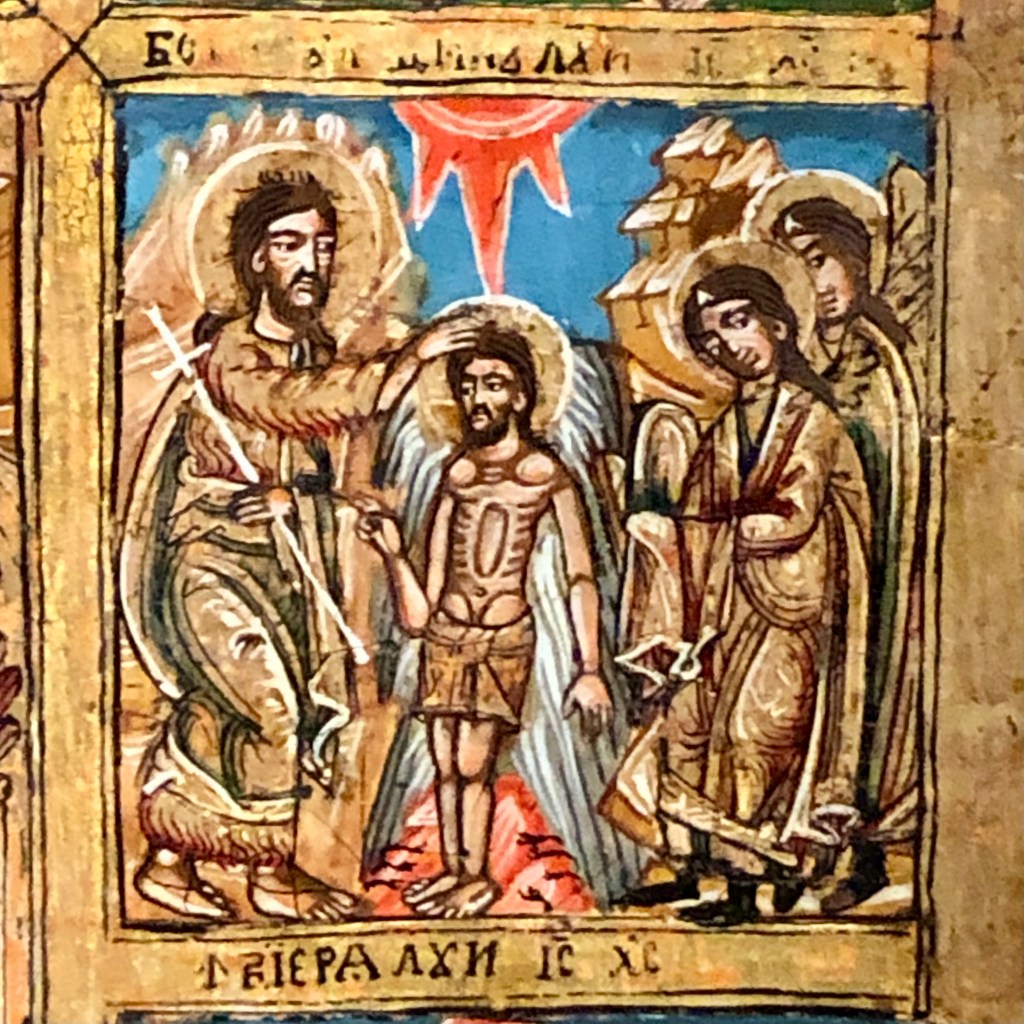
Baptism of the Lord from “Praznicar,” Romanian, 19th century

Today’s readings use some artful cinematography.  Today we celebrate the Baptism of the Lord.  Our readings give us scenes before baptism and immediately after baptism, but they cut away so that we don’t see the baptisms.  This montage of before and after shots nonetheless serves to highlight the uniqueness of Christian baptism.  Luke cuts from John the Baptist’s preaching to Jesus praying after his baptism.  The Holy Spirit descends like a dove and a voice from heaven speaks to the Lord.  The scene is obviously meant to show approval for Jesus’ baptism at the hands of John.

The scene chosen today from Acts of the Apostles is also meant to put the stamp of divine approval on baptism.  To understand Peter’s words in the house of Cornelius, we need to remember the whole context of the chapter in which they occur, Acts 10.  The scene unfolds in the earliest days of the Church when there was still doubt about who could belong to the Church: was the message of Jesus directed only to Jews or were all people called to Christianity?  In Acts 10, the centurion Cornelius—a Roman, not a Jew—receives a vision that prompts him to call Peter to his house.  At the same time, Peter receives a vision in which he’s told to eat all of the animals that Jewish dietary laws consider forbidden.  The vision was not a marketing ploy for the pork and shellfish industry, but instead it ensured that Peter didn’t hesitate to go to a Gentile’s house when Cornelius’s servants came to find him.  At Cornelius’s house Peter preached the message that we hear today.  The word was sent to the Israelites, he says, but it was intended, as Isaiah prophesied in the first reading, “to bring forth justice to the nations,” in other words, to extend beyond Israel itself. 

What we unfortunately don’t read today is what happens next.  As if anyone missed the first several hints, the Holy Spirit descends on the people in Cornelius’s house, who begin to speak in tongues, and Peter says, “Can anyone forbid water for baptizing these people?” (Acts 10:47).  God’s will is that baptism should be conferred on Gentiles as well as Jews and that all nations should enter the Church, even Roman centurions.

Now if you were a medieval theologian, who spent your days raising difficulties about sacramental theology, the story of Cornelius’s baptism might provoke another question: if the Holy Spirit had already descended on everyone in Cornelius’s household, why did they even need to be baptized?  Isn’t getting the Holy Spirit the whole point of baptism?  And once you’ve got the Holy Spirit, doesn’t the ceremony become redundant?  If you remember from Matthew’s account of the baptism of Jesus, John the Baptist himself poses a similar question about the baptism of Jesus.  “I need to be baptized by you,” he says.  “Why do you come to me?” (Matt 3:4).

Continue reading “The uniqueness of Christian Baptism: homily for the Baptism of the Lord”