Guercino, Rome, and the Jesuit baroque

Guercino, Moses

One is always discovering new artists in Rome, and earlier this year, thanks to a special exhibit at the Scuderie del Quirinale and the recommendation of a friend, I discovered Guercino (1591-1666). Born Giovanni Francesco Barbieri in Cento (Emilia-Romagna), he worked in Rome when baroque art was at its zenith.

Guercino, Gregory XV, ca. 1621

The exhibit was of particular interest to me because Guercino’s time in Rome corresponded to the period when the Jesuits were also at their zenith. The pope who proved to be Guercino’s great patron, Gregory XV (Alessandro Ludovisi), also favored the Society of Jesus, especially in its mission of spreading Catholicism around the globe.

The Jesuits have often been associated with the baroque because it was the artistic style in vogue around the time of our founding, so our great Roman churches, the Gesù and Sant’Ignazio — and all the other Jesuit churches around the world built to imitate them — are classic examples of baroque architecture.

Guercino, St. Peter Raising Tabitha, 1618
Continue reading “Guercino, Rome, and the Jesuit baroque”

M.C. Escher in Rome

We’re now smack in the middle of another busy semester at the Gregorian University, which doesn’t leave much time for getting out in Rome. (Seeing the hordes of tourists you might not believe it, but not everyone in Rome is on vacation!)

M.C. Escher, Street in Scanno, Abruzzi

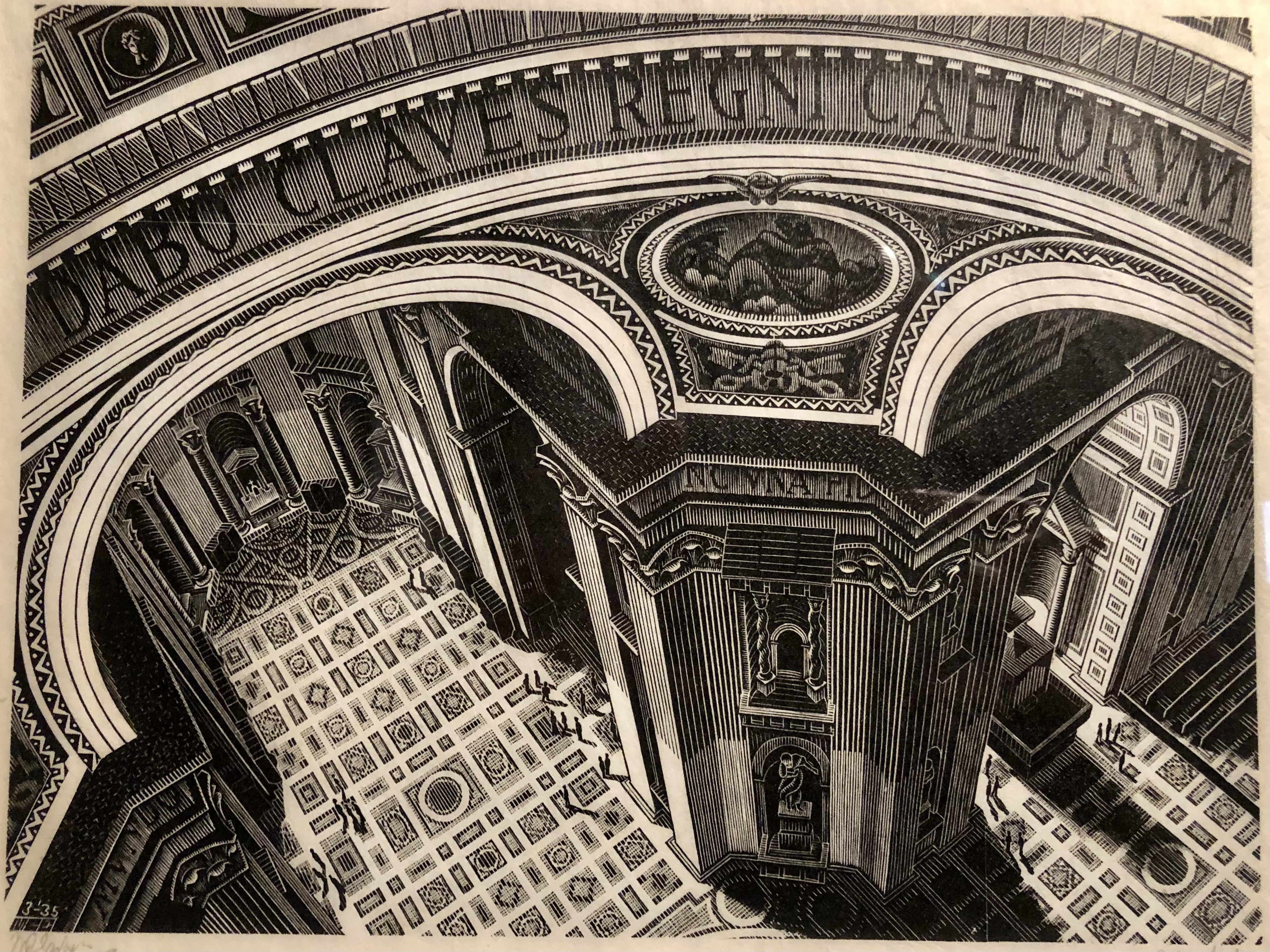
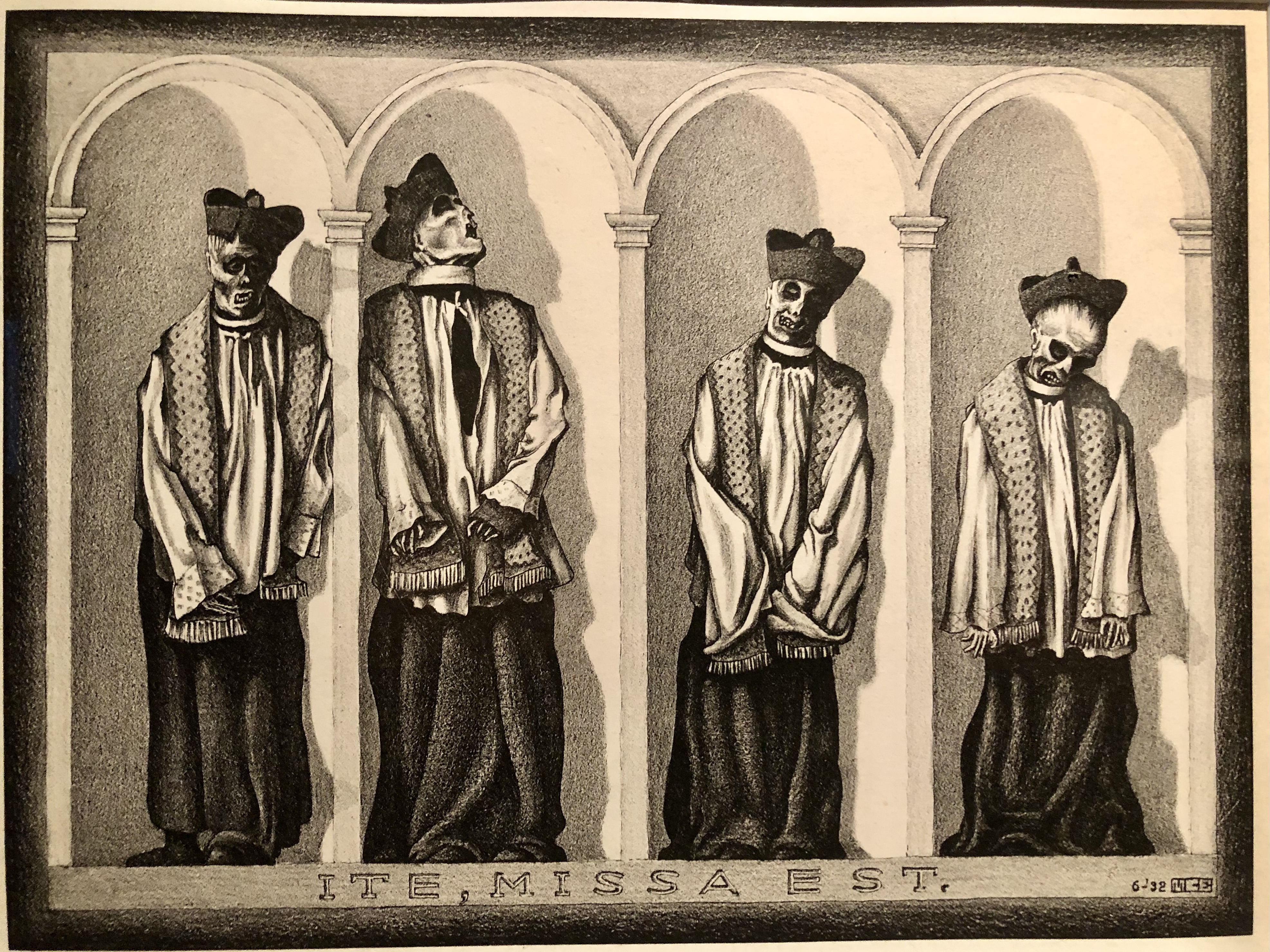
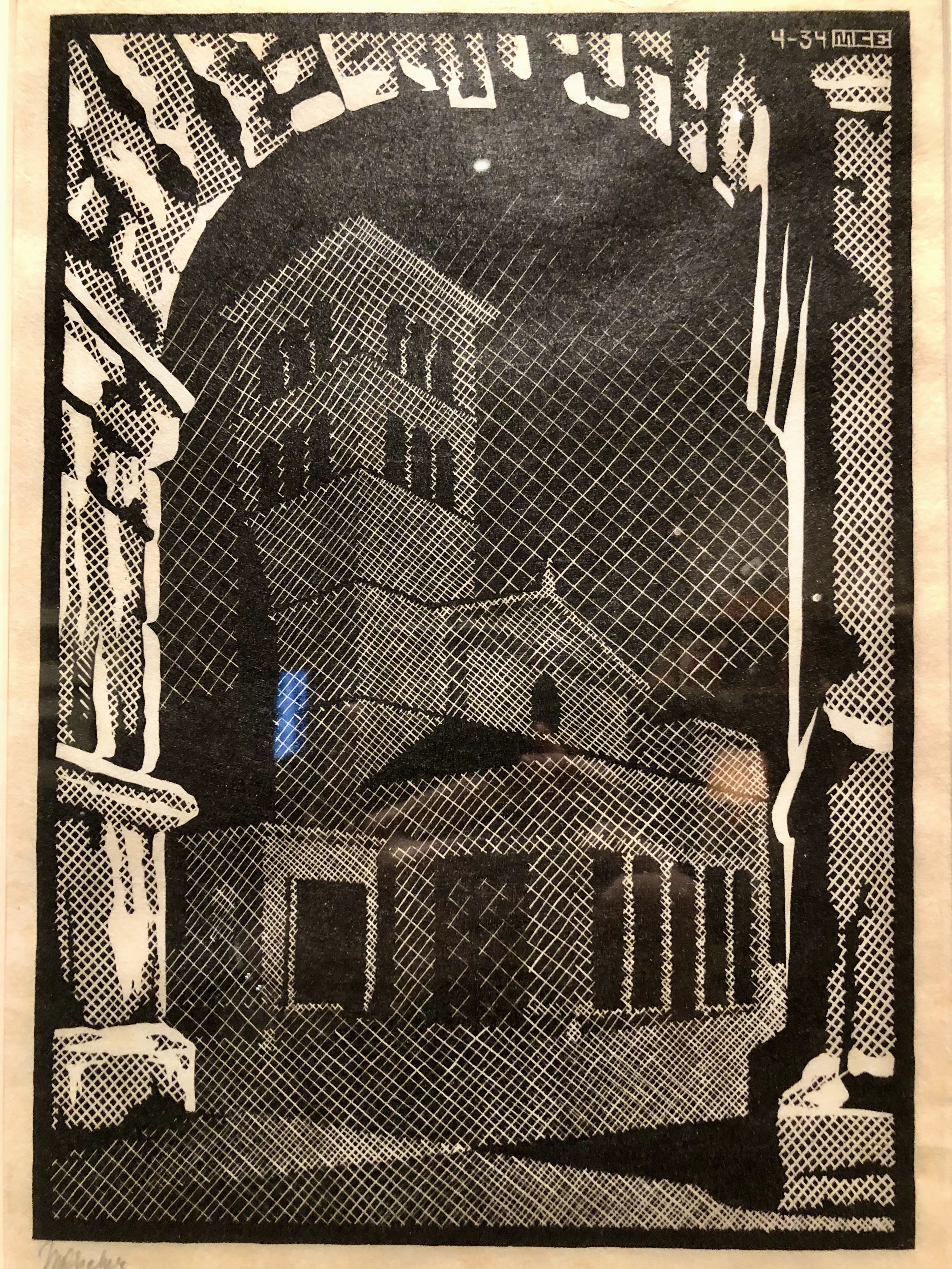
The Eternal City remains eternally fascinating, however, and every once in a while will throw something at you that you weren’t expecting. I thought I’d share a few pictures from a visiting exhibition at Palazzo Bonaparte from last year on M.C. Escher (1898-1972). The Dutchman is perhaps not who you think of when picturing an Italian artist, yet his travels in Italy between 1925-1935, especially in Calabria, were particularly formative for him. When you realize this, you begin to notice that the impossibly fantastical geometric architecture in so many of his works bears a striking resemblance to the look and feel of an Italian hilltop village.

(Below: Inside St. Peter’s [1935]; Mummified Priests in Gangi, Sicily [1932]; San Giorgio in Velabro [1934]; Still Life with Mirror [1934]. Note the holy card of St. Anthony in the corner of the mirror.)

Continue reading “M.C. Escher in Rome”

Rome’s Cosmatesque floors

Italy is such living sculpture that one could easily fill a coffee table book with pictures of otherwise mundane objects that, here, have have taken on artistic flare. You could fill a profitable day just searching out interesting door knockers or doorways, drinking fountains or the weeds that sprout from rooftop tiles. We owe much of this picturesqueness to the medieval spirit that allowed craftsmanship and creativity to flourish on a human scale–and which has become less common in our age of planned obsolescence and Made in China.

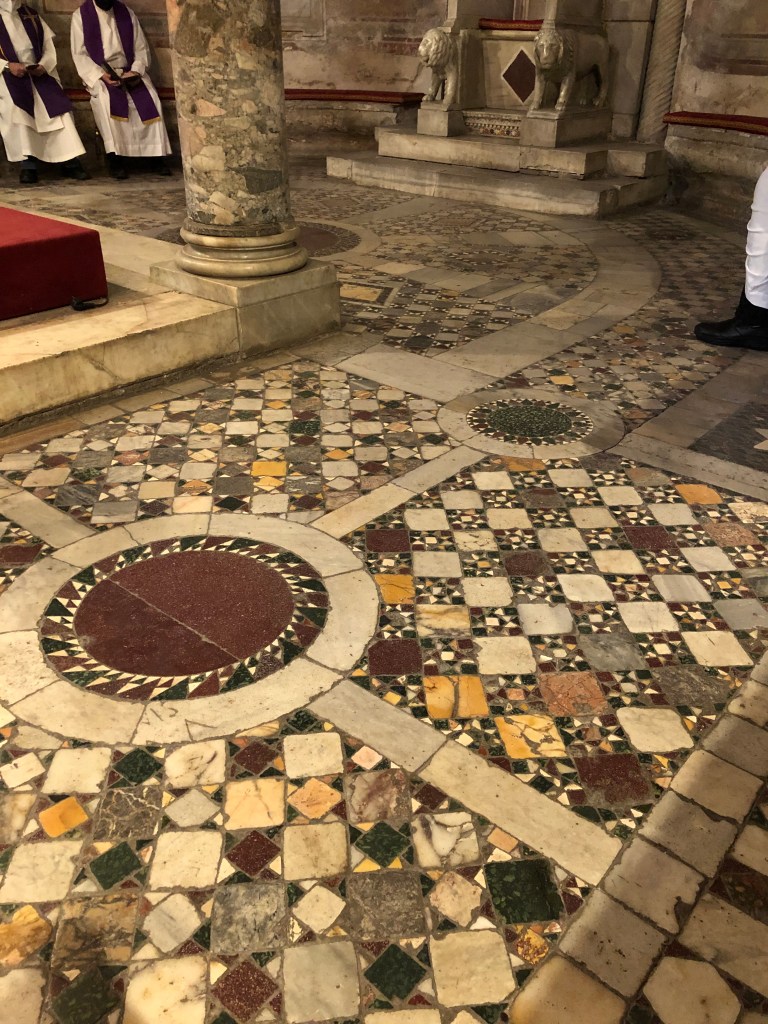
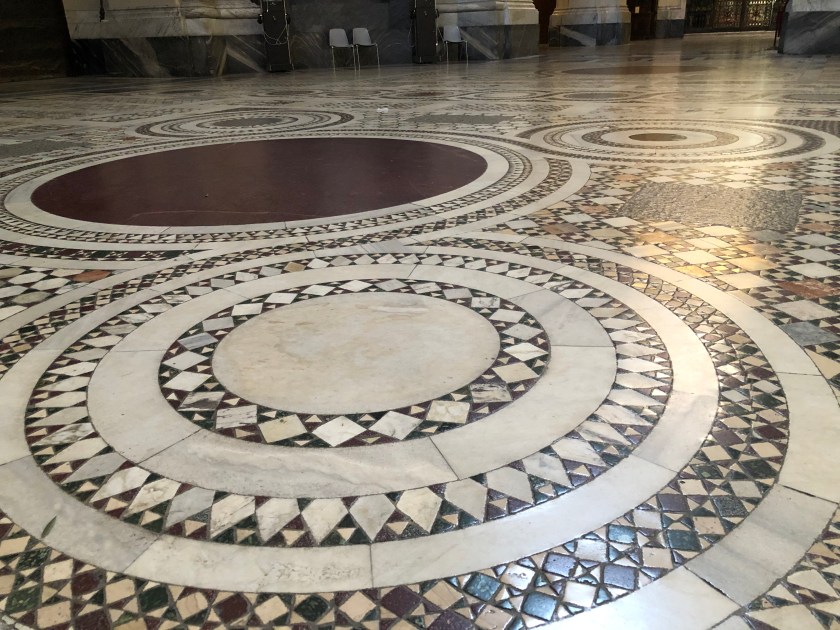
Making the station church pilgrimage this year, I’ve been looking at the ground. I wrote before of the marvelous Cosmatesque floors in so many of Rome’s churches. This style is named after the Cosmati family, the medieval craftsmen who made use of Rome’s overflow of broken marble to turn what would otherwise have been refuse into charming and sometimes Escher-esque designs. It’s especially appropriate that the Cosmati’s work paves Christian churches, where sins are absolved and, picking up the fragments left by our mistakes, we are reminded that, with the help of grace, we can still manage something beautiful.

So here’s a slideshow of a handful of Rome’s graceful floors…