The latest reactions to Baptism of Desire and Christian Salvation

With yesterday’s feast of the Baptism of the Lord reminding us of the beauty and uniqueness of the sacrament of baptism, it seemed an opportune moment for an update on my work on baptism of desire. I’ve continued to do a bit of research on the question of infants that die before baptism and posted some reflections on the issue here and here late last year.

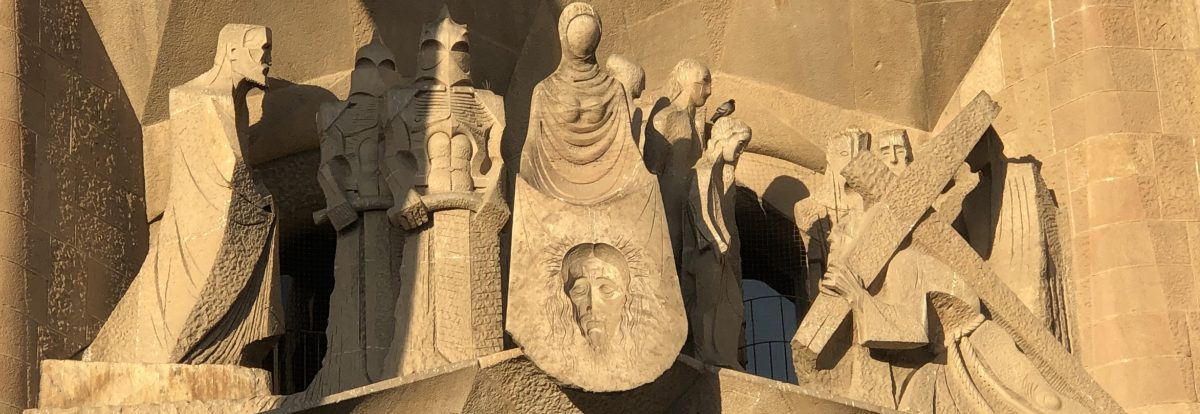
The Baptism of the Lord (above), Guglielmo of Pisa (1160), pulpit, Cagliari cathedral (Sardinia)
The Baptism of the Lord, El Greco

Reviews of Baptism of Desire and Christian Salvation continue to come out, so far all deeply appreciative. Theology today is no longer an exclusively European enterprise, so I’m especially excited to have an international response to the book. The Hekima Review, Africa’s leading theological journal, recommends it for both “Catholic clergy and lay people as it foregrounds the pastoral implications of the doctrine and the need for evangelisation.” Meanwhile, India’s top theological journal, the Vidyajyoti Journal of Theological Reflection published a particularly detailed and insightful review, which noted the specific value of the book in the context of Indian religious pluralism. It expressed the hope that the book would become the standard “theological ‘textbook'” for discussing such issues. The reviewer also picked up on the way the work responds to the deeper philosophical currents of the twentieth century:

This work belongs to what the dogmatic theologian José Granados has identified as a corporeal turn in theology, an emphasis on the body after the heady years of the twentieth century that – whether primarily or exclusively – emphasized cognition. This corporeal turn has meant a returning emphasis on not just the body, but the embodied nature of the Christian faith. It recognizes that the embrace of the faith cannot be restricted to some conceptual nod, but must necessarily embrace ritual, and recognize that the materiality of ritual is important. As Lusvardi writes “The instinct of the early Church to emphasize the ritual was not wrong, for the ritual says and does what nothing else can” (p. 342). In stressing the importance of the corporeal, Lusvardi’s work also becomes part of the corpus of the critique of modernity, which consciously, or unconsciously, seeks to restore a holistic view of the world, sundered through modernity’s adoption of Cartesian binaries, and has powered so much of Indian post-colonial thought.

Closer to home, The New Ressourcement journal said:

Lusvardi’s excellent book … is a must-read for anyone interested in the history of baptism, the nature of sin and salvation, or the hope for non-Christians and infants. It is hard to do justice to the extensive ground this book covers. In a compelling way, it draws the reader to see that the good news of Christian salvation is truly good news for its hearers precisely because the experience of Christ’s saving death and life is available to all in baptism.

Baptism of Desire and Christian Salvation in an Indian stole

The reviewer also offered a defense of the standard scholastic approach to the doctrine, aspects of which I call into question in the book–evidence, I think, that the issues the book raises are worthy of robust theological examination and debate.

So put it on your reading list for the new year!

Baptism of Desire and Christian Salvation is available from Catholic University of America Press (20% discount with the code CT10), Amazon, and other online booksellers. I have collected reviews, interviews, and other news here.

A Thousand Pounds: A review

The Homiletic & Pastoral Review has graciously published my review of Bri Edwards’s moving book,  A Thousand Pounds: Finding the Strength to Live and Love Under the Weight of Unbearable Loss, which I am reproducing below. (It was Bri who first brought the story of Baby Brian to my attention this past summer.) Check out the other great reviews and articles on the HPR site — and pick up a copy of Bri’s book!

A Thousand Pounds: Finding the Strength to Live and Love Under the Weight of Unbearable Loss is a profound and beautiful book, as hope-giving as it is heart-breaking.  In it, Brianne Edwards, a Catholic mother of six from South Dakota’s Black Hills, tells the story of the death of her son Lachlan to sudden infant death syndrome and the long process of learning to live anew after that loss.

The first part of the book is simply an account of Lachlan’s death.  It is a hard read, told with a directness that gives the reader access to what for most of us is an unimaginable experience.  For those involved in pastoral ministry such an opportunity to walk alongside Brianne and her family through the days of grief and confusion is invaluable.  Alongside Brianne’s own grief we see numerous other people—relatives and friends, a few priests, funeral directors, co-workers and near strangers—come in and out of the picture, often unsure how to react, some helpful and others not.  The author writes with sympathy and understanding even of those who do not quite manage to be helpful, but it is immensely valuable to see and reflect upon the different ways of being present to those experiencing such excruciating loss.

Continue reading “A Thousand Pounds: A review”

Baby Brian’s story and baptism of desire

Those of you who have been following this blog know that over the summer I was put in touch with a group of people dedicated to telling the story of baby Brian Gallagher, an infant who died shortly after his birth but whose body was discovered to be apparently incorrupt 37 years after his burial. Because Brian was not baptized before he died, the story raised the question of the eternal destiny of babies who die before baptism and my work on baptism of desire.

That story has started to get attention in several Catholic media outlets, and last week I had the chance to talk about baptism of desire on Real Presence Radio; you can listen to the interview here .

Hats off also to Dr. Kody Cooper for his opinion piece about baptism of desire and infants on the Word on Fire site. The author comes to similar conclusions to my own, arguing that baptism of desire is the best theological doctrine with which to consider this tough case, even citing Cardinal Cajetan who I discuss in my book . Baptism of desire seems to me a superior approach to what the author calls the “post-conciliar view,” which means hoping that the babies will be saved while remaining agnostic about the means. This approach, it seems to me, has two serious flaws. It seems to invite hope in a kind of divine Plan B which turns out to be more effective than those means revealed to us by Jesus. Revelation, then, seems not so revealing. At the same time, precisely because whatever those means happen to be can’t be found in revelation, such hope remains necessarily vague and not particularly well-grounded.

Baptism of desire, on the other hand, identifies our grounds for hope in the Church’s sacramental practice — the practice of a sacrament instituted by Jesus Christ and declared by him to be necessary for salvation (John 3:5). I posted a brief description of my position on the question here a few weeks ago.

Continue reading “Baby Brian’s story and baptism of desire”

Summer articles

The October start of the Roman academic year means that I am wrapping up my time in the States before heading home (and back to work!) next week. Nonetheless, I haven’t been idle over the course of the summer. In addition to seminars and retreats, I published a couple of articles which might be of interest.

First Things asked me to weigh in on the questions surrounding transsexuals and the sacrament of baptism: Can Transsexuals Be Baptized?

America magazine also published a long-planned article on baptism of desire, in which I distinguish the implications for evangelization of my position from those of two other people I admire but (partially) disagree with: Is there salvation outside baptism? A better way of looking at a difficult question.

The relationship between salvation and evangelization, however, is only one of the difficult questions my book addresses. I also suggest a new approach to the question of unbaptized infants and children dying in utero. This summer, I was contacted by some folks involved in ministry to Catholic parents who have lost children either through miscarriage or in early infancy. I found a quite enthusiastic reception for my work among those who are involved in this kind of grief ministry, and, a week ago, a group of the faithful put up a statement online in support of the position that I advance in my book: that baptism of desire can, in some cases, apply to the children of Christian parents. You can find this statement in support of the development of doctrine I outline here and sign if you wish: A Statement of Hope regarding Salvation through Baptism of Desire for Infants.

The statement also mentions the case of baby Brian Gallagher, whose grave I visited at Black Hills National Cemetery. On the outskirts of the cemetery I snapped a photo of a quintessentially American scene: a giant flag waving from a piece of heavy machinery with the Western landscape in the background. What else is there to say but, God bless the USA!