Get Married: A review

A couple of years ago I taught a seminar on the sacrament of marriage, using Mark Regnerus’s excellent book The Future of Christian Marriage, which I reviewed for the Homiletic and Pastoral Review. I taught the same seminar again this past semester and reviewed another recent contribution to the subject, Brad Wilcox’s  Get Married: Why Americans Must Defy the Elites, Forge Strong Families, and Save Civilization (Broadside Books, 2024). You can read the review below or visit HRP and read it again!
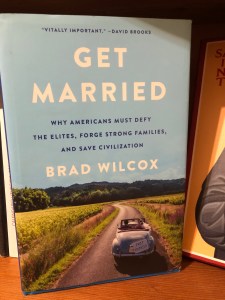
Marriage is among the most important social justice issues of our day.  Classic Catholic social teaching—think Leo XIII in Rerum Novarum—has long recognized the connection between social well-being and a family life built on marriage. As Brad Wilcox points out in Get Married: Why Americans Must Defy the Elites, Forge Strong Families, and Save Civilization, “questions of marriage and family” are better predictors of positive or negative social outcomes than “race, education, and government spending” (xiv).  Yet even in Catholic circles, questions of marriage and sexual ethics are often treated not as issues of pressing social concern, but as matters of private morality—or dismissed as “cultural issues.”

Such dismissiveness has little theological basis.  And Wilcox—a professor of sociology and the director of the National Marriage Project at the University of Virginia—demonstrates that it is even harder to justify from a sociological point of view.  Marriage is good both for society as a whole—a higher percentage of married parents correlates with lower child poverty (73)—and for individuals, both men and women, who report higher rates of happiness, find more meaning in their lives, and are less lonely than their unmarried—and childless—peers (51-52, 115, 121).

Continue reading “Get Married: A review”
Homily for the Feast of the Holy Family

Homily for the Feast of the Holy Family (Year A). Original Italian.

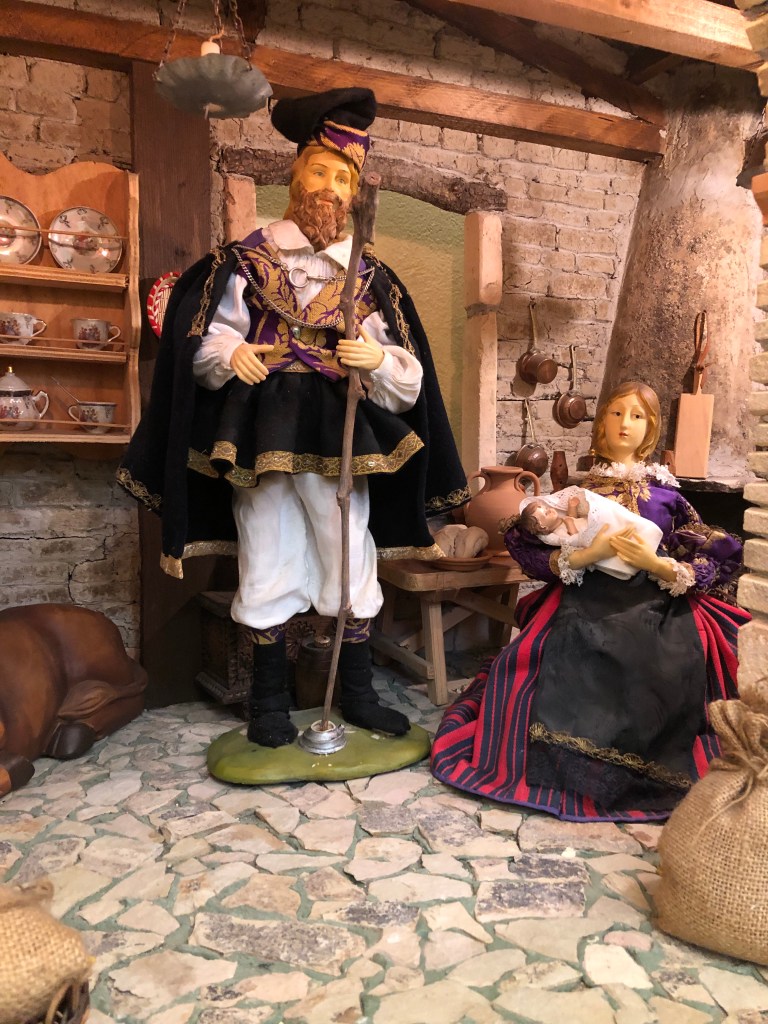
Sardinian Nativity scene, Maracalagonis (Sardinia)

Today we celebrate the story of one particular family—and the story of every family.

On the one hand, the story of the Holy Family of Jesus, Mary, and Joseph is absolutely unique. There is no other historical event comparable to the Incarnation of the Son of God, and the birth of Jesus is surrounded by other miraculous events—the appearance of the archangel Gabriel, the angelic messages that come to Joseph in dreams, the arrival of the Magi, the adoration of the shepherds—which highlight the unique identity of Jesus Christ. Furthermore, Jesus is divine, Mary is immaculate, and Joseph is holy; therefore, this family is threatened by sin, but always from outside. Herod’s envy is one example.

In our families, however, we must admit that often the most damaging wounds are caused by our own sins. Nevertheless, I do not believe that this difference—the holiness of the Holy Family—creates a distance between them and us, because all the actions of the Holy Family are done for us. They are a guide, a support, and a source of hope for us.

Joseph and Mary faced great challenges: an unexpected pregnancy that changed all their plans, the misunderstanding of their neighbors, a period of extreme poverty, danger, a threat to their child’s life, exile; and then all the daily challenges, including—if we think of Jesus’ disappearance in the temple—the difficulties of communication that sometimes occur even between people of good will. At the same time, the Holy Family experienced unexpected joys, tenderness, the celebrations of their religion, and belonging to their people. They experienced the fullness of family life.

Their particular experience offers us inspiration and encouragement to live our Christian mission fully, despite the challenges.

Continue reading “Homily for the Feast of the Holy Family”

Catholic self-help

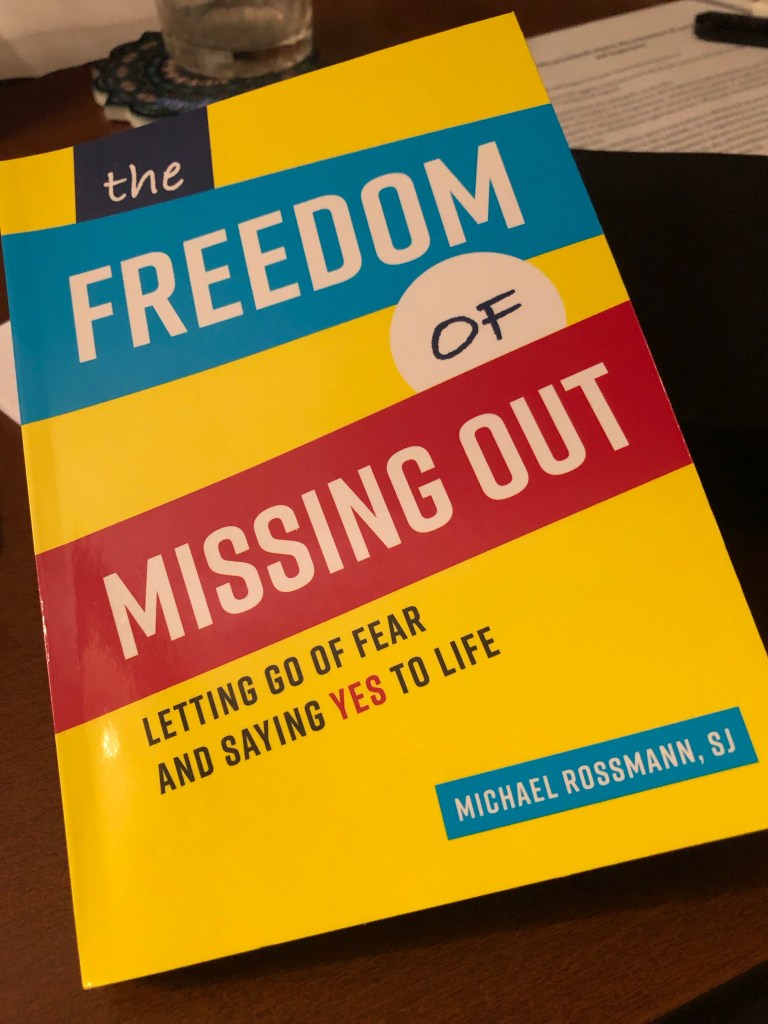
My friend and Jesuit classmate Fr. Michael Rossmann has just published a book, which upon its release held the status of Amazon’s #1 book in “self-help for Catholics”. Actually, I didn’t know there was such a category (and neither did Fr. Rossmann).

Inside the snappy cover, Fr. Rossmann makes a point I think is very important today — really saying yes to something or someone means saying no to other things. Never committing in order to keep one’s options open means refusing to choose the things that matter most.

The book is called The Freedom of Missing Out and continues the long Jesuit tradition of practical help for good decision-making that goes back to St. Ignatius’s rules for discernment. In fact, the influence of Ignatius is not far below the surface, though the book is illustrated with examples from all walks of life and lots of contemporary research. While Rossmann draws on the best of the Catholic tradition, his words about commitment and freedom will ring true to people of any religion.