Italy’s largest monastery and a few surprises in the Cilento

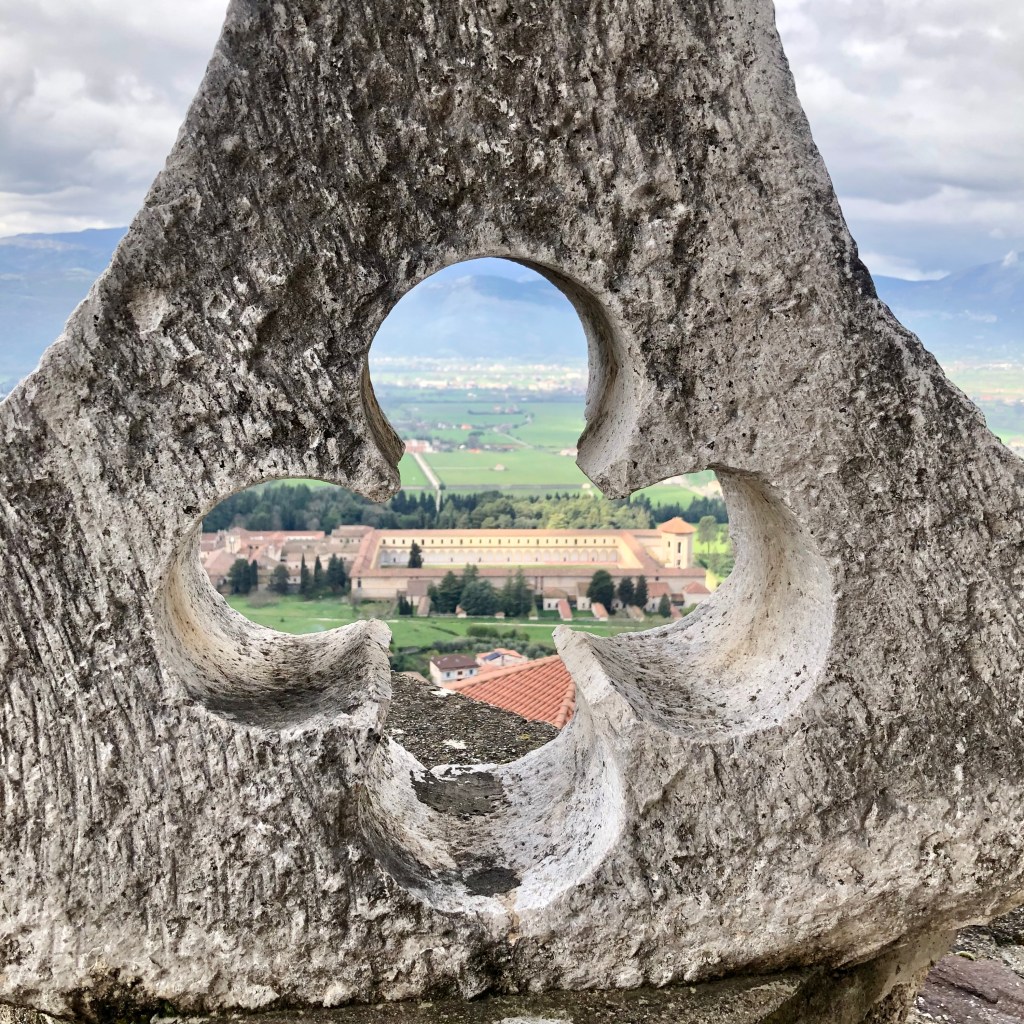
Certosa di San Lorenzo, seen from Padula

A few weeks ago, I mentioned stumbling across the Certosa of San Martino while visiting Naples with my parents earlier this spring. I was fortunate enough to catch up with them for a few more days in southern Italy, this time in the Cilento region. Like all of Italy’s regions, the Cilento overflows with layers of history to discover. We found this paleo-Christian baptistry almost by coincidence and yet another — even more monumental — “Certosa” or Charterhouse, a Carthusian monastery.

The Certosa di San Lorenzo, just outside of Padula, in fact, is the largest monastery in Italy. Founded in 1306, like the Certosa of San Martino, it was redone in the 18th century in baroque style. Carthusian monasteries are divided into a public-facing outer courtyard, around which the lay brothers lived, engaging in the practical work of the place, and an inner cloister in which the Carthusian priests lived in hermetic seclusion.
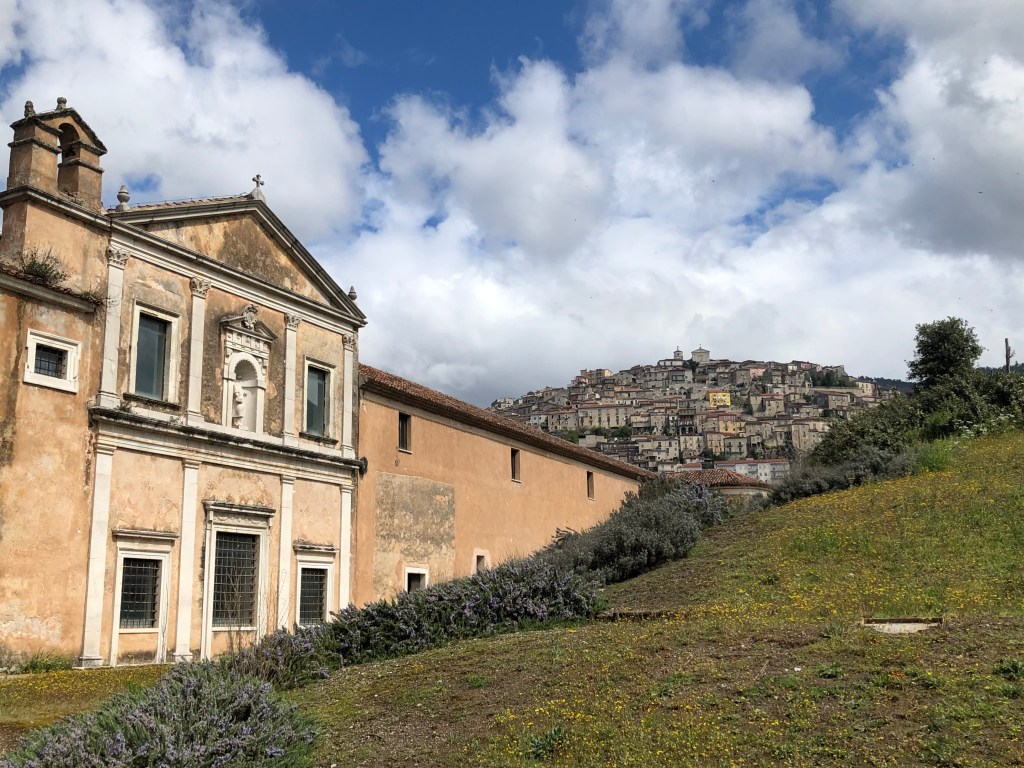
Certosa di San Lorenzo, Padula in the background

The Carthusian way of life is quite distinct, with the monks spending most of their time in near total isolation in their cells. These cells, in fact, are fairly spacious to accommodate all of the monks’ activities — each one is like a mini-monastery — including a garden, where they grow their own food, a small chapel, a study, and a place set aside for engaging in small industry, such as book-repair. While quite austere, the Carthusian life is nonetheless not inhuman. St. Bruno’s rule designates a certain time each week for conversation, which takes place as the monks walk together around their cloister. At San Lorenzo, a covered second story was added over the monks’ cells so that this time of conversation could occur even in inclement weather.

Continue reading “Italy’s largest monastery and a few surprises in the Cilento”
The Certosa di San Martino and the Neapolitan baroque

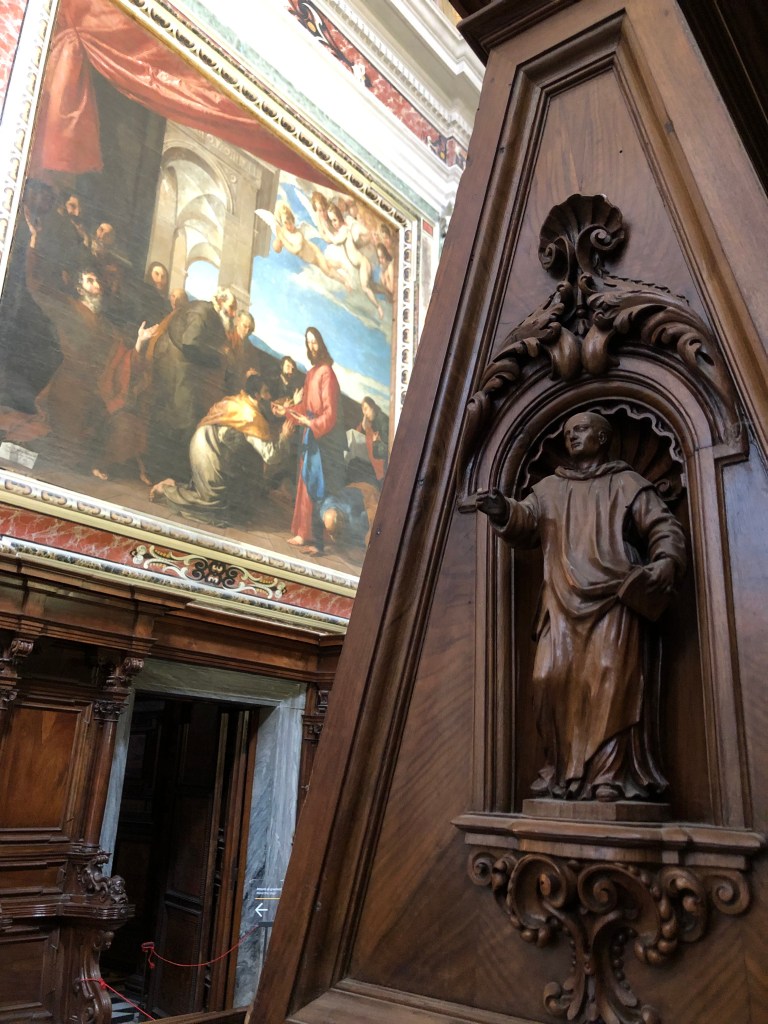
Inside the choir of the Certosa di San Martino (Naples)

A couple of weeks ago, I wrote about the connection between the baroque style, the Jesuits, and the city of Rome. It’s hard to find a city that can outdo Rome in baroqueness, though Naples gives the Eternal City a run for its money. I took a day trip down to Naples in mid-March to meet up with my parents who were vacationing there and was reminded what a treasure trove of marvels that city is.

We got in to visit one of the sights I’ve been wanting to see for a long time, Giuseppe Sanmartino’s Veiled Christ (1753). I had seen pictures before of this virtuoso use of marble–carved as if a thin, almost translucent, shroud had been draped over the figure of the dead Christ. What makes the sculpture so moving, however–something I hadn’t appreciated until seeing it in person–is the liquid quality the shroud creates. The way it clings to the flesh below, with the wounds visible through it, and pools around the edge of the body almost makes you feel the life draining from the corpse. The rest of the chapel is chockfull of allegorical figures, though photography is prohibited inside, so you’ll just have to go to Naples to see for yourself!

Chapel, Certosa di San Martino (Naples)

One of the visit’s surprises was to discover the Certosa di San Martino, a Carthusian Monastery, now a museum, tucked under imposing walls of the Castle of Sant’Elmo overlooking the city. We went up for the view from the Vomero hill and just happened into the Certosa, founded in 1368 but redone in extravagant baroque in 1623.

Continue reading “The Certosa di San Martino and the Neapolitan baroque”