Giving credit to the Holy Spirit: a homily for Pentecost

As I mentioned last week, this month I’ve been asked to contribute Sunday homilies to the Homiletic and Pastoral Review. Be sure to pay them a visit. Here’s this week’s contribution:


Homily for Pentecost (C)

Guido Reni, Trinity of the Pilgrims (1625-6)

Today’s feast of Pentecost is a great reminder to give credit where credit is due.  For us Christians, both as individuals and as a Church, credit is due to the Holy Spirit.

This is something that is easy to forget because the Holy Spirit, being spirit, is unseen.  The Son of God, the second Person of the Trinity, becomes visible to us in the Incarnation.  And in the Gospel, Jesus explains that when we see him, we see the Father.  He makes God accessible to us in a visible, human way.  Not everyone who sees Jesus, of course, recognizes him as God.  Recognizing Jesus for who he is requires a certain openness from us, and, for some people—probably for most—it requires being opened up by the Holy Spirit.  It requires the Holy Spirit to break through our blindness.

The necessity of the Holy Spirit’s intervention is made especially clear in the events we celebrate today.  Jesus promises to send the Holy Spirit to his disciples after the Ascension.  They certainly need it.  We remember, of course, the behavior of the apostles at the time of the crucifixion—Peter denying Christ and the rest of the group scattering.  Even after the Resurrection, the disciples seem uncertain. Out of fear, they lock themselves indoors.  After the Ascension, they seem dumfounded by the event and require two angels to appear and shake them from their paralysis.  I can’t blame them, actually; the events that they had witnessed were beyond any human experience.  Knowing how to respond to them was beyond any normal human capacity.  They needed the Spirit that Christ would send.

Continue reading “Giving credit to the Holy Spirit: a homily for Pentecost”

Christ made visible in his martyrs: Homily for the 7th Sunday of Easter

I’m pleased and honored that the Homiletic and Pastoral Review asked me to provide homilies for the Sundays of June this year. You can find the full text of all the month’s homilies here. (Regular readers might note that the homilies may not be as fleshed out as usual since they are meant to be adapted.) Be sure to visit the HPR site and check out the other articles, reviews, and fine catechetical materials they provide. Below, to give you a taste, is a homily for the Seventh Sunday of Easter (for those places where the Ascension is celebrated on its proper Thursday).


Homily for the Seventh Sunday of Easter (C).

Chapel of St. Stephen, Certosa di San Lorenzo, Padula, Italy

Nowhere is Jesus Christ more visible than in his martyrs.  In the Gospel of John, Jesus, who makes the Father visible to the world, prays that his disciples may be in him and he in them.  In today’s first reading, we see God become dramatically visible in the life of one of those disciples, the deacon Stephen.

First, however, Stephen gazes on God.  He sees Jesus standing at the right hand of his Father in the heavens.  This vision is made possible by the action of the Holy Spirit, already present in Stephen’s life.  In the first part of the chapter from which today’s reading is taken, Stephen delivers a sermon which is both learned and fiery, retelling the story of Israel from a Christian point of view and leveling a hard judgement against the men of Jerusalem who crucified Jesus.

Continue reading “Christ made visible in his martyrs: Homily for the 7th Sunday of Easter”

Pope Leo: an ever-ancient, ever-new beginning for the Church

Just over a week ago I stood among the throng in St. Peter’s Square waiting for Pope Leo XIV’s Mass of installation. As the new pope emerged on the back of a white truck and made the rounds through the square, one of the priests who was with me to concelebrate whispered, “It still feels surreal.”

It still does.

The one iron-clad rule of papal elections, after all, used to be that the cardinals would never elect an American pope. And now we have a pope who grew up cheering for the Chicago White Sox. Going into the conclave, the Church seemed tired and divided. Yet Pope Leo has managed to evoke good will on all sides, and he hasn’t had to resort to any particular gimmicks to do so. Rome is elated.

What is perhaps most striking about our new Holy Father is the paradoxical way in which he seems both totally at ease in his new role–as if he’d been pope-ing for years already–and at the same time totally unassuming. One could imagine sitting next to him at a baseball game and him introducing himself as “Bob from Chicago.” At the same time, seeing him on the balcony of St. Peter’s Basilica or meeting world leaders in the robes of his office, one senses the quiet dignity of a successor of the Apostles.

A lot has already been written about Pope Leo on the basis of relatively scant pre-conclave writings and interviews. I was particularly impressed by the first homily he gave to the cardinals after his election. His brief address to the Synod of Bishops on evangelization more than a decade ago equally impressed me because he seemed to grasp one of the central problems facing the Church: the role of the media in communicating–and sometimes miscommunicating–our message. I remember an interview given by the late Cardinal Avery Dulles to Charlie Rose, in which the cardinal observed that the biggest problem faced by the Church was that most Catholics learn what they know about Catholicism not from the Church herself, but from the media. Leo XIV understands that dynamic–and he is alert to the equally challenging frontiers now being opened by artificial intelligence.

Continue reading “Pope Leo: an ever-ancient, ever-new beginning for the Church”

Italy’s largest monastery and a few surprises in the Cilento

Certosa di San Lorenzo, seen from Padula

A few weeks ago, I mentioned stumbling across the Certosa of San Martino while visiting Naples with my parents earlier this spring. I was fortunate enough to catch up with them for a few more days in southern Italy, this time in the Cilento region. Like all of Italy’s regions, the Cilento overflows with layers of history to discover. We found this paleo-Christian baptistry almost by coincidence and yet another — even more monumental — “Certosa” or Charterhouse, a Carthusian monastery.

The Certosa di San Lorenzo, just outside of Padula, in fact, is the largest monastery in Italy. Founded in 1306, like the Certosa of San Martino, it was redone in the 18th century in baroque style. Carthusian monasteries are divided into a public-facing outer courtyard, around which the lay brothers lived, engaging in the practical work of the place, and an inner cloister in which the Carthusian priests lived in hermetic seclusion.

Certosa di San Lorenzo, Padula in the background

The Carthusian way of life is quite distinct, with the monks spending most of their time in near total isolation in their cells. These cells, in fact, are fairly spacious to accommodate all of the monks’ activities — each one is like a mini-monastery — including a garden, where they grow their own food, a small chapel, a study, and a place set aside for engaging in small industry, such as book-repair. While quite austere, the Carthusian life is nonetheless not inhuman. St. Bruno’s rule designates a certain time each week for conversation, which takes place as the monks walk together around their cloister. At San Lorenzo, a covered second story was added over the monks’ cells so that this time of conversation could occur even in inclement weather.

Continue reading “Italy’s largest monastery and a few surprises in the Cilento”

Radiant in the darkness: Caravaggio 2025

Caravaggio, Flagellation of Christ, 1607

Several weeks ago I spent a wonderful afternoon at a special exhibit of 24 paintings by Caravaggio brought together in Palazzo Barberini and dubbed Caravaggio 2025. The exhibition made me wonder at Caravaggio’s extraordinary popularity. Why is Caravaggio so popular today? And what does this tell us about where we are spiritually? I think the answer is not unrelated to the other recent events in Rome: the election of a missionary as Pope Leo XIV; our new Holy Father’s goal of steering the Church faithfully through the digital revolution, just as Leo XIII provided guidance during the industrial revolution; and this Jubilee year’s theme of hope.

I’ll have more on Pope Leo soon. For now, suffice it to say that the mood here in Rome is elated. In the meantime, you can read my thoughts on Caravaggio at The Catholic Thing.

Caravaggio, Supper at Emmaus, 1606

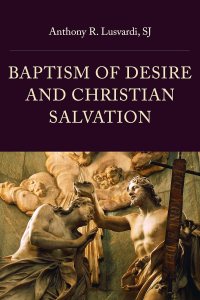
While you’re at it, check out some reflections from a few months back on the artist’s spectacular St. Matthew cycle and a different conversion of St. Paul. And there’s plenty of other great work at The Catholic Thing, including, if you missed it, an explanation of why I think my book on baptism of desire is so important at this time when renewing the Church’s missionary spirit is such a vital challenge: Getting Back into the Baptizing Business. The price on Amazon seems to have dropped a bit recently.

What to do when you don’t have a pope? Preach Jesus Christ

Homily for Wednesday of the Third Week of Easter.

Brothers and sisters, papam non habemus. We do not have a pope. Not yet.

We live in uncertain and, often, disturbing times. I’m not talking only about the sede vacante in the Church of Rome. The last few years–the last few decades, really–have been a difficult time for the Catholic Church. The Church sometimes seems confused and divided from within, and opposed by powerful forces from without. And today we also live with all the uncertainty of a papal election.

In this uncertain moment, today’s first reading reminds us of a simple but profound lesson: things have been worse. Much worse. Here we see the Church at its very beginning, tiny and persecuted. Stephen, one of the first deacons, has just been killed. The faithful are scattered. Those who persecute the Church are full of zeal, backed by the age’s political powers in all their strength. It seems like a catastrophic moment for the nascent Church, but it becomes a moment of triumph, a moment of growth. The dispersion of the faithful–even if caused by persecution–becomes the condition for the spread of the Word. Soon, we know, even the great persecutor, Saul, will convert and become the greatest missionary in the history of the Church.

Caravaggio, The Conversion of St. Paul, 1600-1

What I most want to emphasize today is the response of the disciples, who transformed this apparent catastrophe into a moment of growth: They continued to preach Jesus. Without panic, without discouragement. They returned and remained steadfast in the most fundamental mission of the Christian: to bear witness to the life, death and resurrection of Jesus Christ.

Today’s Gospel reading also calls us back to the heart of our Catholic faith: “I am the bread of life,” says Jesus. There is no action more important for the Catholic than to encounter the Lord in the Eucharist, in his true body and in his true blood.

Brothers and sisters, despite our anxieties and our doubts, despite the moments of uncertainty that alternate with moments of glory in the life of the Church, this message remains our rock. If we continue to proclaim it, we cannot go wrong. In a few days we will have a new pope, but our mission will not change. Times change. Popes change. Jesus Christ does not change.

Jesus Christ is the bread of life. Jesus Christ is Lord.

Readings: Acts 8:1b-8; John 6:35-40

(Original: Italian)

May 7, 2025

Gregorian University Chapel, Rome


Those interested can see my interview on the CBS Evening News with Maurice Dubois here.

Build back baptistries! A trip to the Baptistry of San Giovanni in Fonte

An unexpected discovery on my recent trip to Italy’s Cilento was the Baptistry of San Giovanni in Fonte, just outside of Padula. Also known as the Battistero Marcelliano, after Pope Marcellus, it dates from the fourth century, putting it among the oldest Christian structures in the world. A letter from Cassiodorus in AD 527 mentions a miracle occurring at the baptistry, its water level rising unexpectedly while a priest was pronouncing the prayer over the baptismal waters on the vigil of the feast of St. Cyprian.

Battistero di San Giovanni in Fonte, Paula, Italy

The structure itself sits on the site of a natural spring, so the baptismal font was a pool of “living” water. The baptistry was built on the ruins of an earlier pagan structure and underwent several renovations and expansions throughout history. Hints of a fresco, dating from the 11th century when the structure was converted into a chapel, remain on the wall. The remains of still earlier frescoes from the 6th and 7th centuries were removed and taken to a local museum.

Rising water levels caused the chapel to be abandoned in the 19th century, though the site of the remains and spring, down a winding country road, are quite a pleasant spot today.

This reminder of baptism from Christianity’s earliest days is worth reflecting on during the Easter season. I discuss some of the theological and practical consequences of the shift away from the patristic catechumenate and toward near-universal infant baptism in the Christian cultures of the Middle Ages in Baptism of Desire and Christian Salvation, but the subject is worth more reflection than what I’m able to give it there.

Reflecting on early Christian baptismal practices is important because we are moving into a new phase in Christian history that in some ways will more closely resemble the Church of the Fathers — in which Christianity was a minority — than medieval Christendom. Some of our sacramental practices, I am convinced, will have to shift to respond to this new reality. This may not be entirely a bad thing. When it comes to baptism, for example, too often the sacrament, celebrated in a minimalistic way, has become a mere formality with little connection new life in Christ.

Continue reading “Build back baptistries! A trip to the Baptistry of San Giovanni in Fonte”

Entering the tomb: a homily for Easter

This Homily for Easter Sunday comes from 2019 and was given just a few days after the fire at Notre Dame Cathedral in Paris — thus the reference to the rose window at the end. Seems appropriate this year when Notre Dame has been reopened…

Occasionally the most erudite theologians overlook the most obvious things. This morning’s gospel contains a curious detail that has provoked a great deal of discussion among theologians: why do Mary of Magdala and John, the other disciple, not enter the tomb? Mary sees the stone removed from the tomb and returns to the apostles. John, running and perhaps a bit younger than Peter, arrives at the tomb first, but remains outside. Why? Biblical exegetes have explained this event symbolically–maybe John represents prophecy and Peter represents the institutional Church–but in my opinion the reason is simpler.

It’s a tomb. They were afraid.

Sometimes the simplest explanations are also the most profound. We know that Jesus is risen–maybe this announcement has become too familiar and gets taken for granted–but at that moment Mary, John and Peter did not have that advantage. We must imagine their psychological state that morning. Two days ago, they had seen the humiliation and killing of their Lord, teacher and friend at the hands of evil men. We must imagine the darkness of those days, when violence, lies and selfishness defeated the truth.

Continue reading “Entering the tomb: a homily for Easter”

The Anointing at Bethany and Holy Week’s unsettling beginning

Going through some old files, I came across this homily for the Monday of Holy Week, written, in my younger and more vulnerable years, when I was a novice in St. Paul, Minnesota.

St. Mary Magdalene penitent, Guercino 1622

During the Third Week of the Spiritual Exercises, St. Ignatius asks us to contemplate the suffering and death of Our Lord.  This week, Holy Week, the Church, liturgically, asks us to do the same.  The Third Week is one of the times in the Exercises when we ask for strange graces—shame, sorrow, confusion.  

The Church’s liturgy also evokes these troubling graces, and it does so by, among other things, confronting us with today’s passage from John, the Anointing at Bethany.  The shock this passage should provoke in us is perhaps diminished by its familiarity, but if we really deeply consider what is happening here, then we should be confused.  We should be confused because part of us is tempted to side with Judas.  

Three hundred days wages!  Put in contemporary terms this must amount to something like $30,000, $40,000, $50,000—enough for college scholarships for one or several years, or private high school scholarships for several students; in some Third World countries that much money could build a school.  And instead it is being spent on a jar of ointment.  An expensive perfume.  An ostentatious toiletry.  

Continue reading “The Anointing at Bethany and Holy Week’s unsettling beginning”

Susanna and the wicked judges

Monday of the fifth week of Lent brings one of the Bible’s great courtroom dramas — the story of Susanna and the elders from the Book of Daniel. It’s one of the longest readings in the lectionary, but one that deserves to be read with relish. An innocent woman does what is right even at the cost of her life. Two powerful and corrupt men, overthrown by lust, suppress their consciences, and compound debauchery with vindictiveness. And a lone idealistic voice, indignant at the injustice of the crowd, speaks out — and the old goats are snared in the net they’ve woven.

Susanna and the Elders, Guercino, 1617

There’s something refreshing about the story. It’s not hard to tell the bad guys from the good gal, and for once justice is throughly vindicated. A few weeks ago in my post about Guercino, I mentioned the baroque era’s love of drama (one might be excused for saying “melodrama”). I was happy to see Guercino take up the story of Susanna. Quite a lot could be said about tale — the Lord hears the cry of the innocent even when everyone else seems deaf — but it is, first of all, a great yarn. As we look forward to Holy Week, Susanna’s travail is a reminder that, even if it doesn’t always happen quickly — or even in this life — justice will ultimately prevail.

Susanna and the Elders, Guercino, 1617