Is the Great Gatsby the Great American Novel?

The dome of the Cathedral of St. Paul from Summit Avenue, not far from where F. Scott Fitzgerald grew up.

As an undergraduate, I was an English major, so it was a real treat for me to have the chance to reread one the classics of American literature, F. Scott Fitzgerald’s The Great Gatsby this spring. This year marks the 100th anniversary of the novel’s publishing. My essay to mark the occasion recently appeared in Law & Liberty, and you can check it out here. The occasion prompted me to dig up another essay I wrote several years ago about “Benediction,” one of Fitzgerald’s few stories with an explicitly Catholic theme (check it out here).

As much as any other book, I think, Gatsby can stake a claim to be the Great American Novel, in part because the novel itself grapples with the question of what it really means to be “great.” Equally important, it wrestles with the nature of the American character. It is an elegantly slim novel but, as I realized while writing and rewriting my reflection on it and still feeling like I couldn’t quite do it justice, it is taut with beauty, irony, and subtle meaning.

F. Scott Fitzgerald’s Jesuit story

2025 represents the 100 year anniversary of a book that, as much as any other, has a claim to be called the Great American Novel — F. Scott Fitzgerald’s The Great Gatsby. Revisiting the book this year, I came upon something I wrote on the blog Whosoever Desires back in 2011 about one of Fitzgerald’s few explicitly Catholic stories “Benediction.” I thought I’d share it here. This weekend, I’ll have something at Law & Liberty about Gatsby.

I have long thought F. Scott Fitzgerald to be a very Catholic writer, though explicitly Catholic themes show up only rarely in his work.  There’s the urbane Monsignor Darcy in This Side of Paradise, for example, and a few scattered references in Tender is the Night, but mostly Fitzgerald’s Catholic sensibilities come through in his moral vision, in the interplay of truth and illusion we see, for example, in The Great Gatsby.

In a Fitzgerald biography, however, I’d once come upon a reference to an early (1920) short story called “Benediction,” and I took advantage of a Chicago snow day last week to track the story down.  I was not disappointed.

The story is a gem, written in the witty, dancing prose of the youthful Fitzgerald, and touching on many of his typical themes—the giddiness of coming of age, the wistful sadness of romance, even a hint at class sensitivities.  The story centers around Lois, a romantic and beautiful nineteen-year-old travelling to Baltimore to meet her lover, Howard; on her way to their rendezvous she stops to visit her only brother Keith, a seminarian she has not seen in seventeen years.

Fitzgerald’s description of the seminarians spilling out onto the lawn after class like “a swarm of black human leaves” carrying thick volumes of Kant and Aquinas is typical of his lapidary prose—and hints at the identity of the crowd that Keith has gotten himself involved with:

There were many Americans and some Irish and some tough Irish and a few French, and several Italians and Poles, and they walked informally arm in arm with each other in twos and threes or in long rows, almost universally distinguished by the straight mouth and the considerable chin—for this was the Society of Jesus, founded in Spain five hundred years before by a tough-minded soldier who trained men to hold a breach or a salon, preach a sermon or write a treaty, and do it and not argue…

Keith, whom Lois remembers chiefly from the picture of a skinny teenager their mother keeps on her bureau, turns out to be a true brother—understanding, kind, insightful, sympathetic, confident.  Lois describes him as “sweet.”  He recounts his vocation story with slight dissatisfaction, feeling, as one often does when telling one’s vocation story, that something inexpressible—the most important thing—has been left out.

In Keith and his fellow Jesuits, Lois encounters something she recognizes as beautiful and weighty—and different.  What is more, Lois, a Catholic herself, though by her own description a “lukewarm” one, seems to realize that this different something around which her brother’s life revolves makes a claim on her too.

Continue reading “F. Scott Fitzgerald’s Jesuit story”
Some recent publications…

Lisbon, Portugal

I’m honored to have a couple of recent works appear in print in the past few weeks, the first an article in La Civiltà Cattolica, a publication founded by Italian Jesuits in 1850, which has since gone international. The article “Gestis Verbisque: The Words and Actions of the Sacraments” (the Italian is here) analyzes a recent Vatican document dealing with sacramental theology — specifically the question of invalid baptisms. The document Gestis verbisque was available only in Italian at the time I wrote the article, but has since come out in English (and other languages) here. It’s an important document because it reminds priests and deacons of the need to faithfully celebrate the sacraments according to the Church’s tradition and liturgical books. We probably all have had unfortunate experiences of goofy things happening in liturgy because Father thought that he could improve upon a centuries-old ritual with regrettable results. Gestis verbisque reminds us that “The Church is the ‘minister’ of the Sacraments, but she does not own them.” My own article fleshes out some of the background behind the document and points out where I think it adds something theologically (its treatment of the minister’s intention). It was interesting to see some of the strange cases in history that I found while researching Baptism of Desire and Christian Salvation come up again in modern settings. You’d think we’d learn!

The other publication is the first short story I’ve published in a while–too busy with academic work–in a magazine that will be familiar to readers of these pages, Dappled Things. Dappled Things is the only literary magazine I know of dedicated exclusively to Catholic literature. I’ve been honored to have a number of short stories and essays appear in their pages over the years, some of which can be found on their site. My most recent story, “Pious Tchotchkes,” is in their Easter 2024 issue, which is only available in print. Their print issues are always beautifully crafted.

The story is set in Portugal, and here are a couple of places alluded to — baroque exuberance in Coimbra and Cabo da Roca, the westernmost point in continental Europe.

A poem and a prayer for Australia (and Jesuits!)

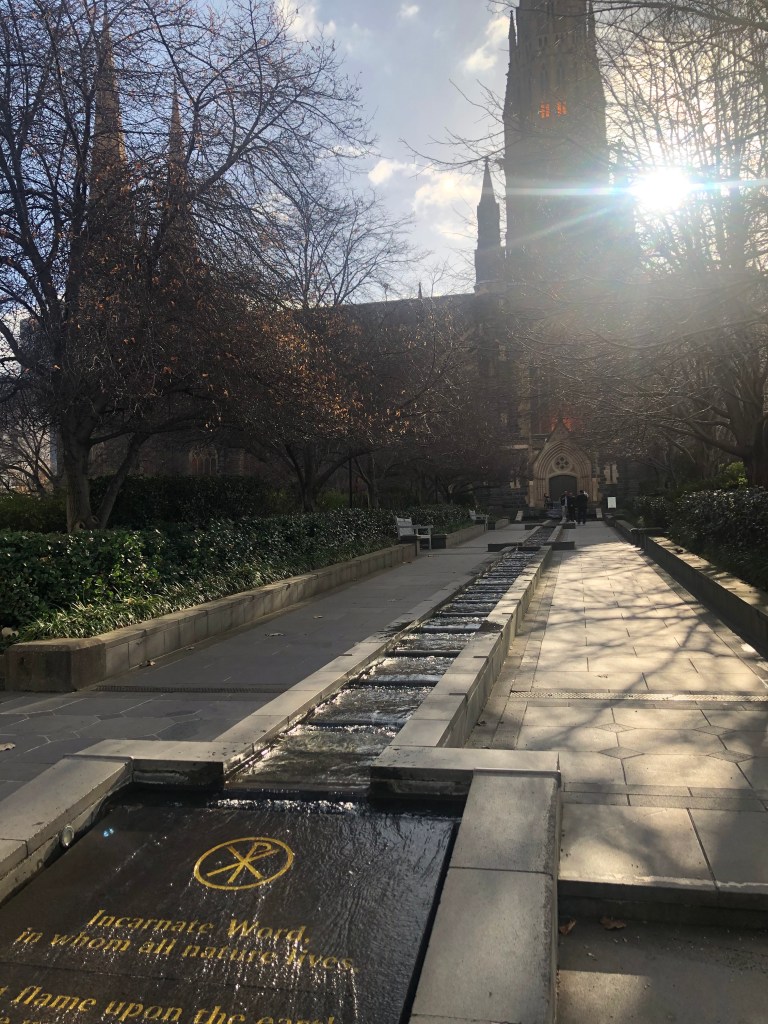
St. Patrick’s Cathedral, Melbourne, Australia

After a very blessed time of tertianship–the final formal part of Jesuit formation–and travel afterwards, I arrived back in Rome this week to begin preparing for the semester ahead. For me, this new beginning is also a time to look back with gratitude at my time in Australia’s tertianship program. I thought I’d share this poem from Australian poet James McAuley (1917-1976), a prayer for his remarkable country that could just as easily be a prayer for us Jesuits.

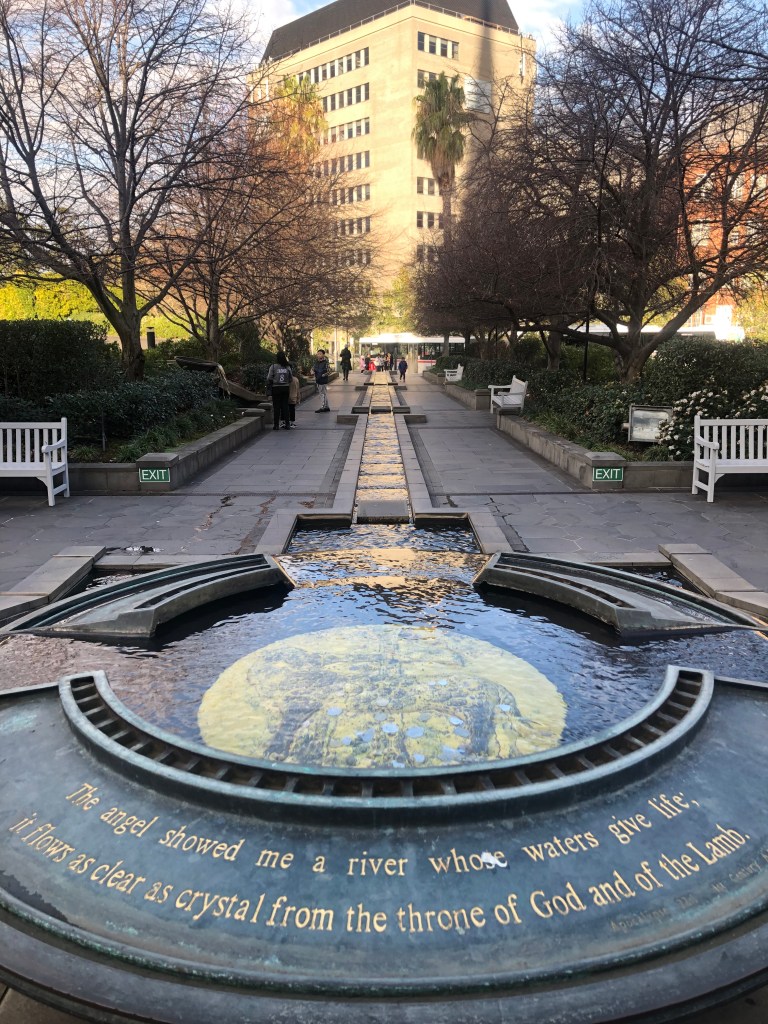
The poem is a part of a fountain outside of Melbourne’s cathedral that runs from the doors of the church out toward the city–evoking Ezekiel’s image of the waters of life flowing from the temple. The sculpture includes quotations from both the Old and New Testaments (John 4:14, Ps 23:2-3). It is inspired by the words of Revelation: “Then [the angel] showed me the river of the water of life, bright as crystal, flowing from the throne of God and of the Lamb through the middle of the street of the city; also, on either side of the river, the tree of life […] and the leaves of the tree were for the healing of the nations” (Rv 22:1-2).

St. Patrick’s Cathedral, Melbourne, Australia

Here’s McAuley’s poem:

Incarnate Word,

in whom all nature lives,

cast flame upon the earth:

raise up contemplatives

among us, men who walk within the fire

of ceaseless prayer,

impetuous desire.

Set pools of silence in this thirsty land.

James McAuley (1917-1976), Australian poet
St. Patrick’s Cathedral, Melbourne, Australia

Can travel make us better?

I have a new piece this week at the excellent Plough Quarterly magazine on one of my favorite themes, travel. It was fun to write, letting me look back at visits to Jesuit brothers in Burkina Faso, my Peace Corps days in Kazakhstan, and my one time riding a helicopter in the Alps. Plus thinking about Chinua Achebe’s great novel Things Fall Apart. Here is a link to the essay “Between Continents“.

Hope and satire

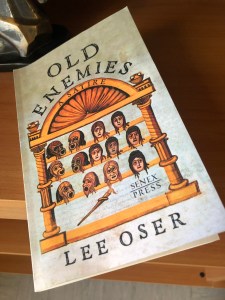
I don’t have much time for leisure reading this semester, but I was pleased to pick up Lee Oser’s witty satire Old Enemies as I settled back into Roman life last month. It’s both funny and thought-provoking. In fact, you can read the thoughts it provoked in my review “Hope in the Ruins” published at Law & Liberty. I also muse about what grounds we have for hope during the West’s current self-destructive cultural moment.

Saints Joachim and Anne, grandparents of Jesus

Santa Maria in Trastevere

It’s been one of the great blessings of my life to have gotten to know all four of my grandparents and to have them with me well into adulthood. Particularly in times that change so quickly and so dramatically, grandparents give us access not just to another generation but, really, to other worlds.

On this memorial of St. Joachim and St. Anne, I came across this quotation from one of the 20th century’s literary giants:

I feel that all my writing has been about the experiences of the time I spent with my grandparents.

Gabriel García Márquez

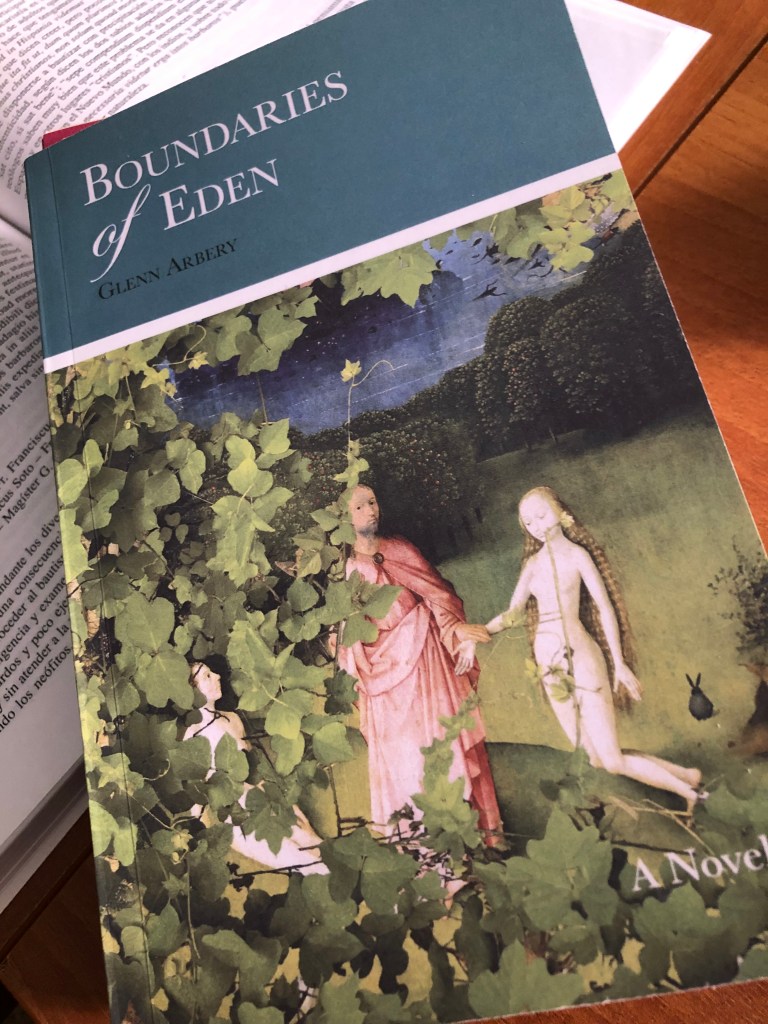
Boundaries of Eden

My recent pleasure reading has included Glenn Arbery’s Boundaries of Eden from Wiseblood Books. Always nice to discover another Catholic writer. Here’s a part I liked…

Why should there be providence with respect to Braxton Forrest, anyway? Hardest of all to imagine was that God Almighty, with the whole universe to look after, cared anything about the peccadilloes of a middle-aged literature professor. The apparent absurdity of it had to be balanced against the overwhelmingly convincing sense of an inner witness, an exacting (if often ignored) conscience, a kind of co-knowing whose ground lay deeper than his own conscious mind. So yes. Acceptance of providence brought him to see himself differently. It even brought him, if only occasionally, to the Gospels, where he did not encounter the sweet, naïve, androgynous new version of the fierce Old Testament God that he expected, but the Old Testament God incarnate, the fierce, severe, enigmatic otherness of a man whose absolute authority overflowed any apparent warrant for it….

Glenn Arbery, Boundaries of Eden

Innsbruck revisited

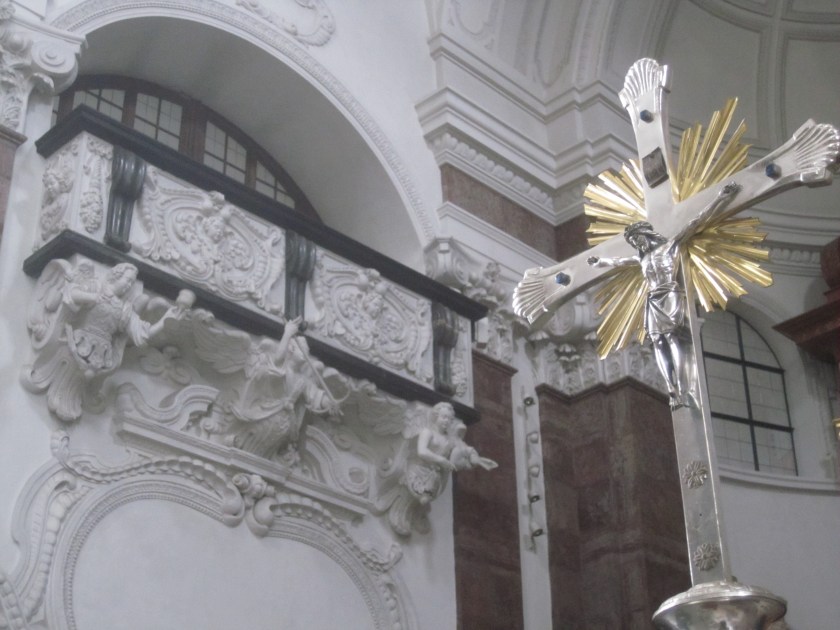
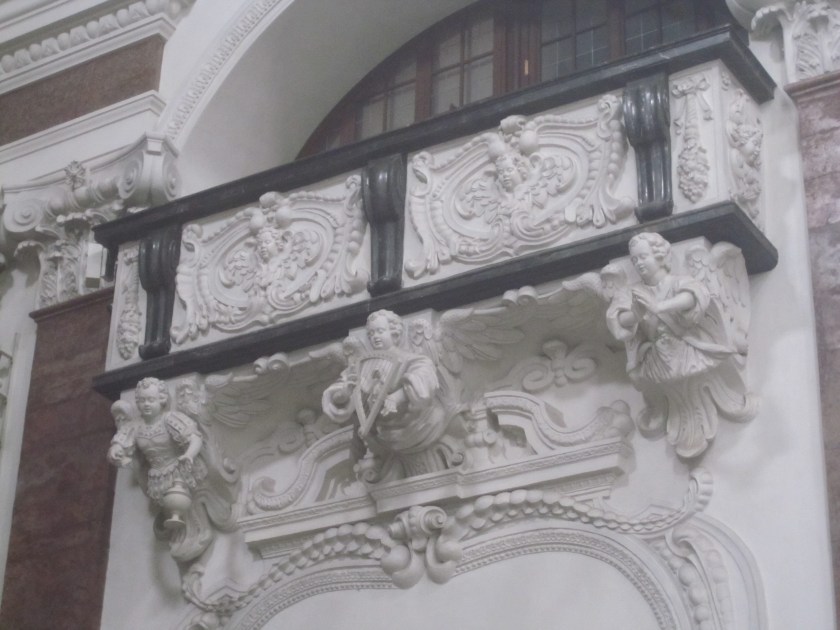
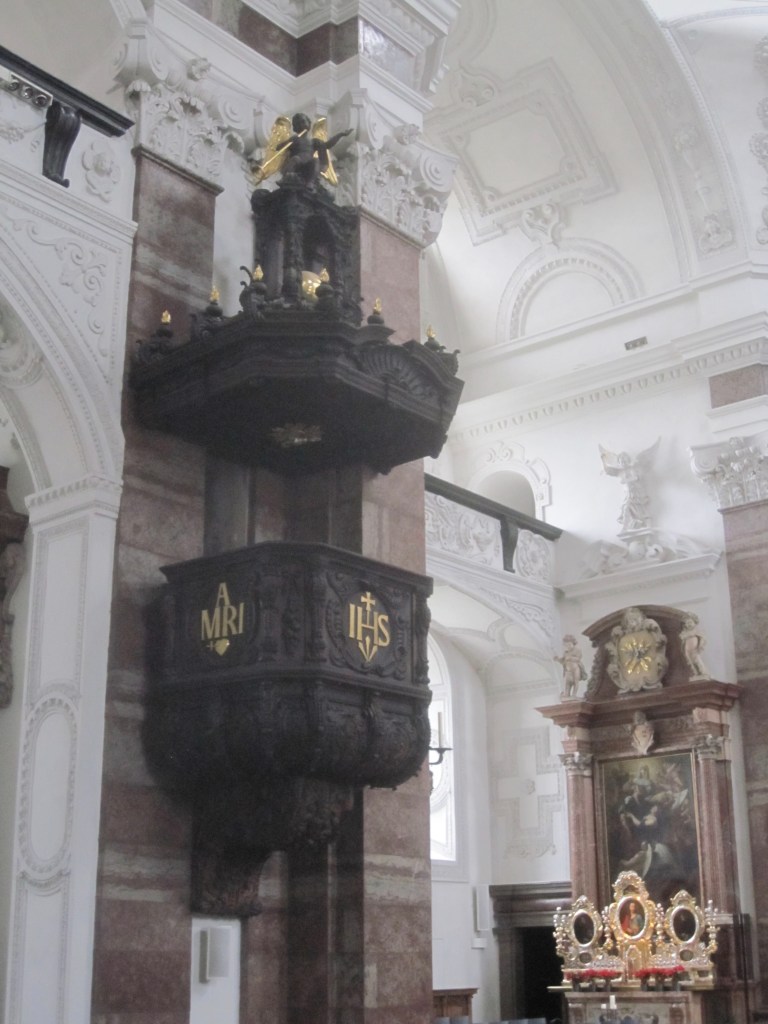
I was thrilled to get the news this week that my essay “Angels in Innsbruck” was selected by Dappled Things as the winner of their 2021 Jacques Maritain Prize for Nonfiction. Dappled Things is a wonderful literary journal, the only one I know of with the explicit mission of publishing Catholic literature. They’re both online and in print; the print journal features some really beautiful artwork and is well worth the subscription.

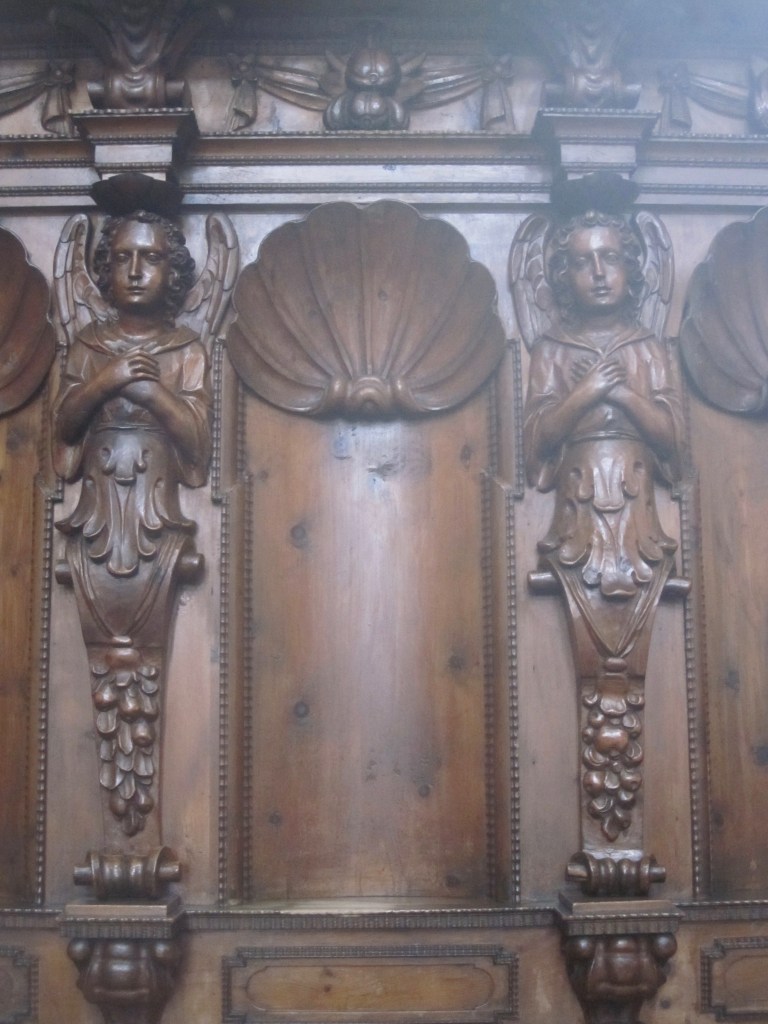
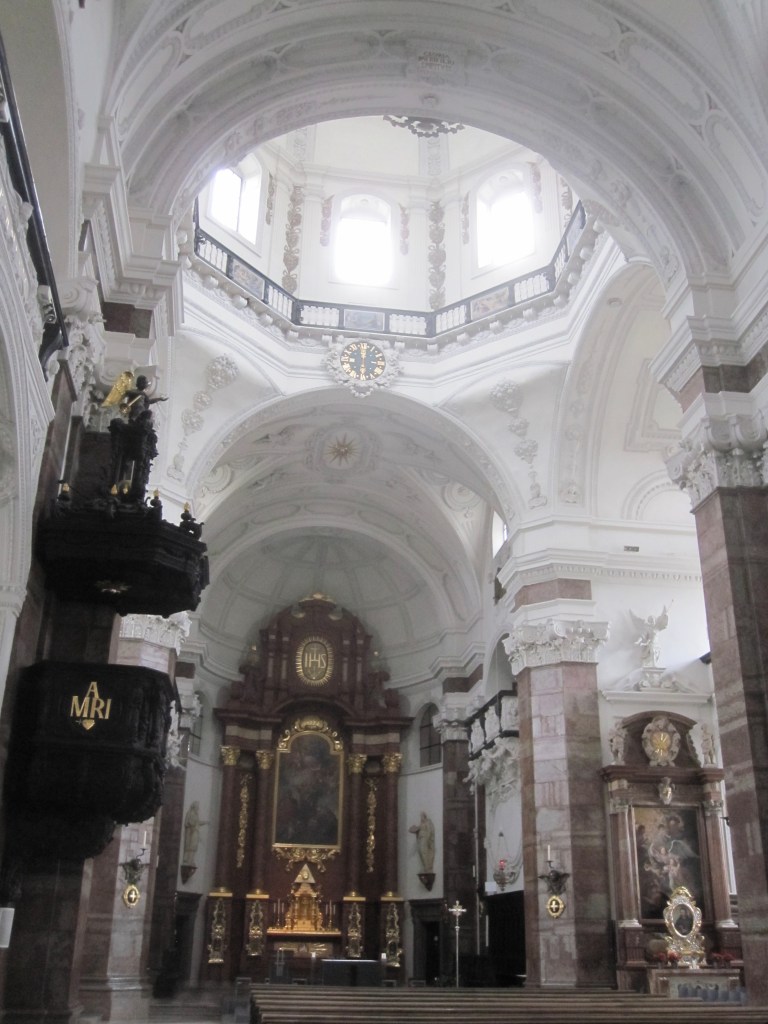
To celebrate the occasion, I thought I’d post a few pictures from my summer in Innsbruck to go along along with the essay. First the angels in the Jesuit church…

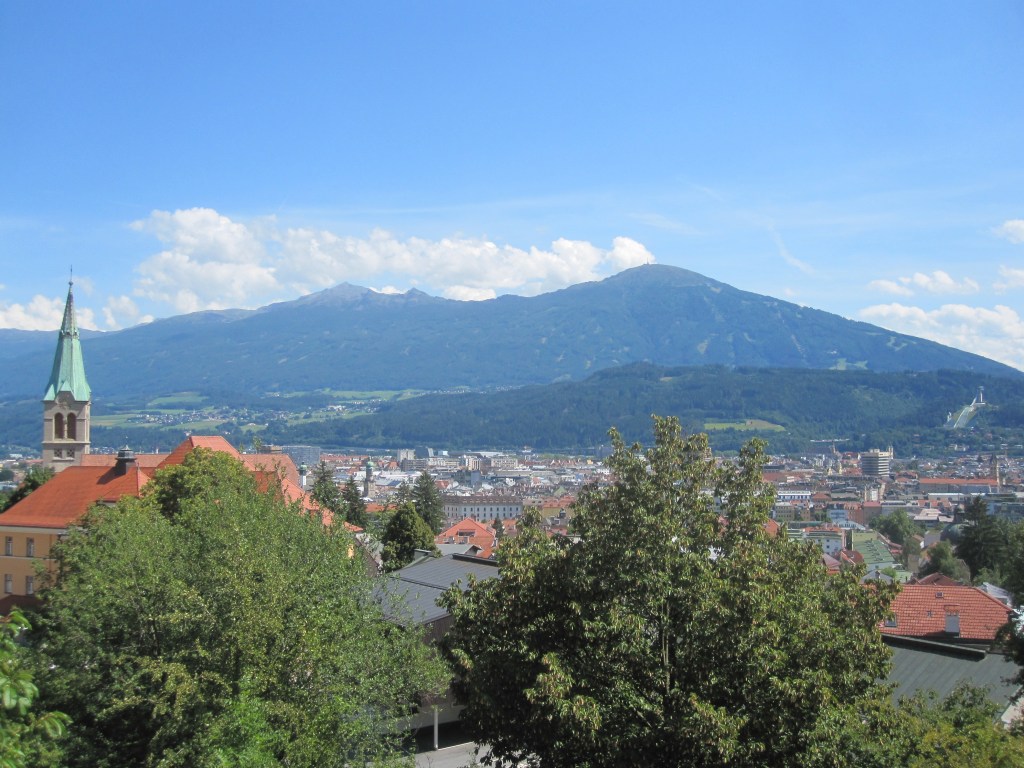
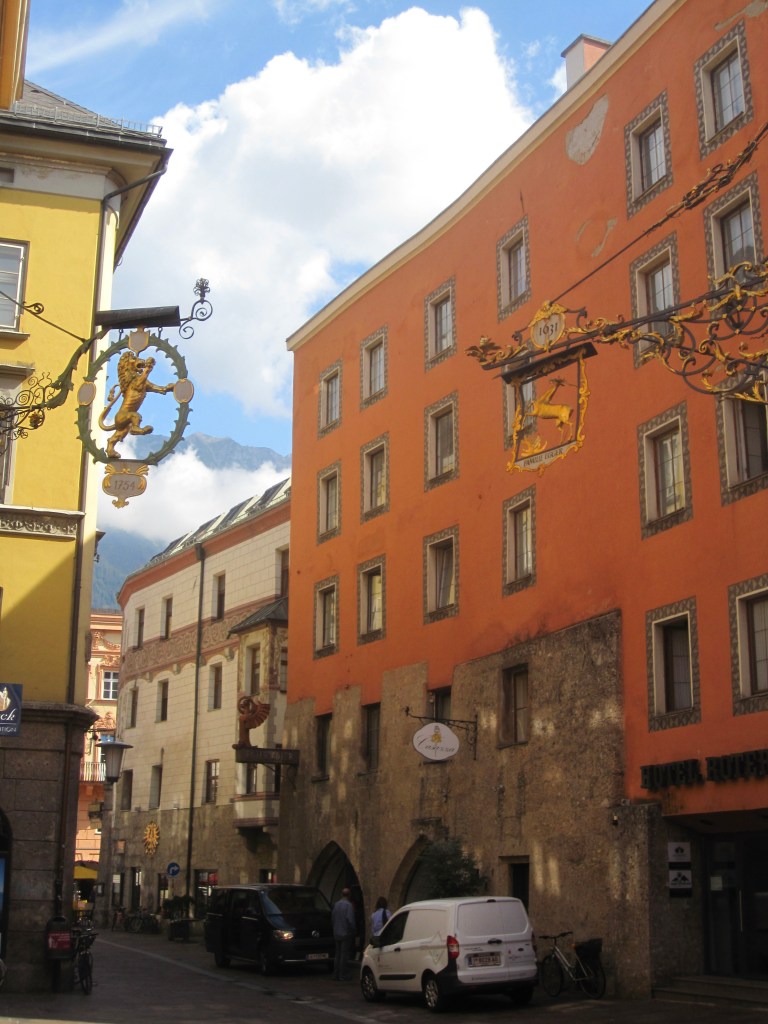
And then a few pictures of beautiful Innsbruck.