Readers of this blog will know that one of the delights of living in the center of Rome is that a Caravaggio is never more than a stroll away. I’ve written about the great spiritual insight in Caravaggio’s Matthew cycle in the Church of San Luigi dei Francesi. Last year, I reflected in The Catholic Thing on why Caravaggio so resonates with contemporary viewers after visiting an extraordinary exhibit of his work in Palazzo Barberini.
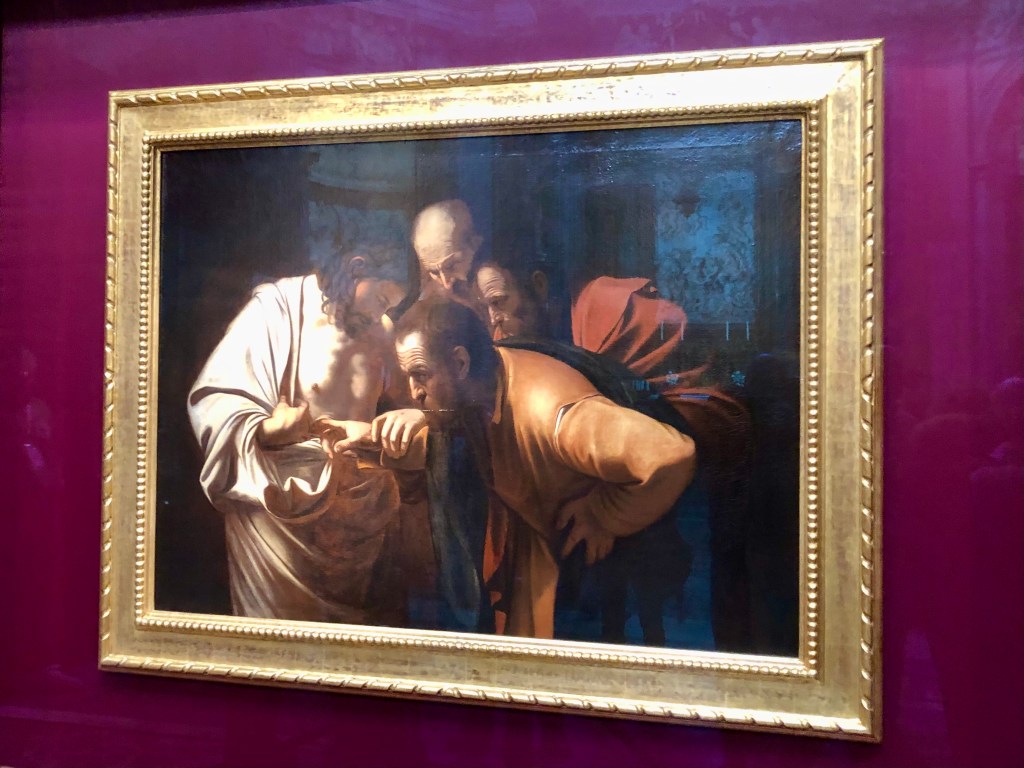
At the tail end of the Jubilee I caught another extraordinary exhibit, albeit of just one Caravaggio, at Sant’Agnese in Agone. The work, The Incredulity of St. Thomas (1602-7), was on loan from a private collection in Florence. It’s a work full of drama and humanity and shows Thomas wide-eyed while inserting his index finger into the Risen Lord’s side. Jesus himself is utterly serene as he guides the doubting apostle’s hand toward his torso. (A nice detail is that the Lord’s face seems a bit sunburned, while his body is not.) Two other apostles look on over Thomas’s shoulder with both concentration and astonishment.
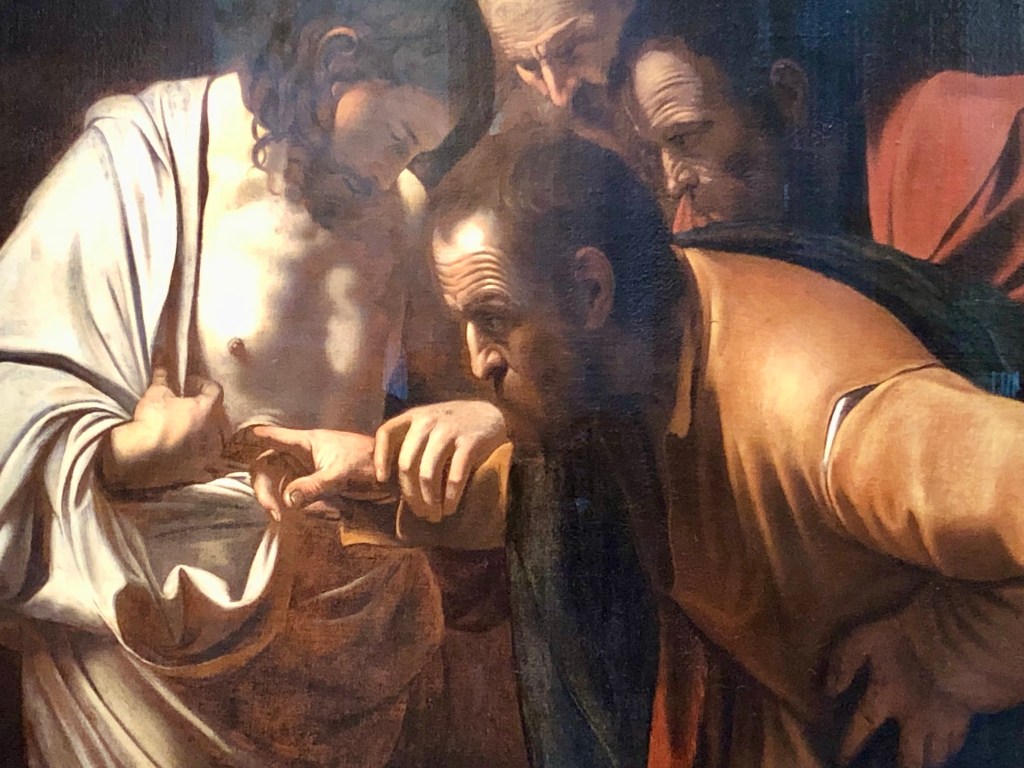
The expressions on their faces call to mind the shock of the disciples from Caravaggio’s depictions of the supper at Emmaus, but this is one painting where I think the artist has misjudged the theme. As I’ve argued before, Thomas’s doubt was about much more than just not being able to work out the biology of a body risen from the dead. Thomas has been hurt and disappointed and is afraid to believe. It’s rare, in fact, that unbelief is merely an intellectual question; often enough, it is really a question of trust and fear. Caravaggio’s Thomas seems mostly curious, surprised rather than moved, and I think in this case the artist has missed the psychological and spiritual layers of the event.
Still, even as a whiff, it’s a painting that makes you think. Perhaps, instead of Thomas, Caravaggio was thinking more about the Lord gently guiding even the stubborn to faith when he painted the scene.
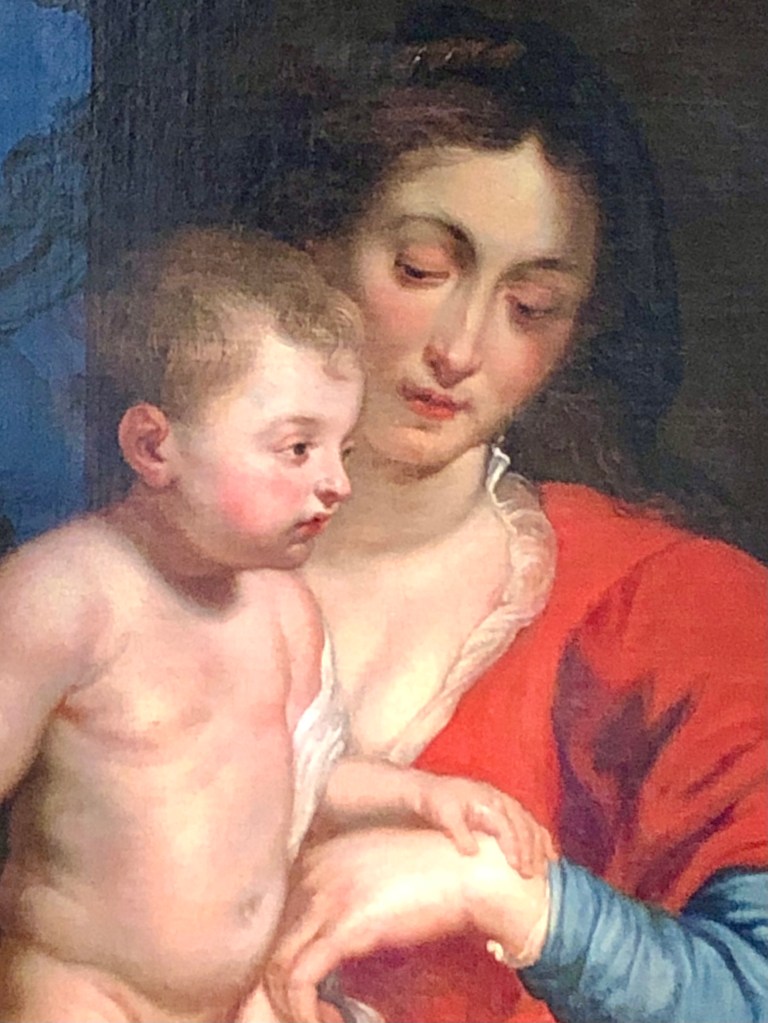
Also included in the small exhibit is an attractive Madonna and Child (1617-8) by Pieter Paul Rubens, on loan from a private Swiss collection. It’s one of those many Madonnas with Child in which the baby seems to have the–in this case rather intense–face of an older man!

 Tony Lusvardi, S.J.