Homily for the Solemnity of Saints Peter and Paul

Throughout this month, I’ve been reposting the homilies I wrote for the Homiletic and Pastoral Review. You can check them all out on their site, as well as Friday’s Homily for the Sacred Heart. This feast seems especially joyful this year, coming so soon after the election of Pope Leo XIV.


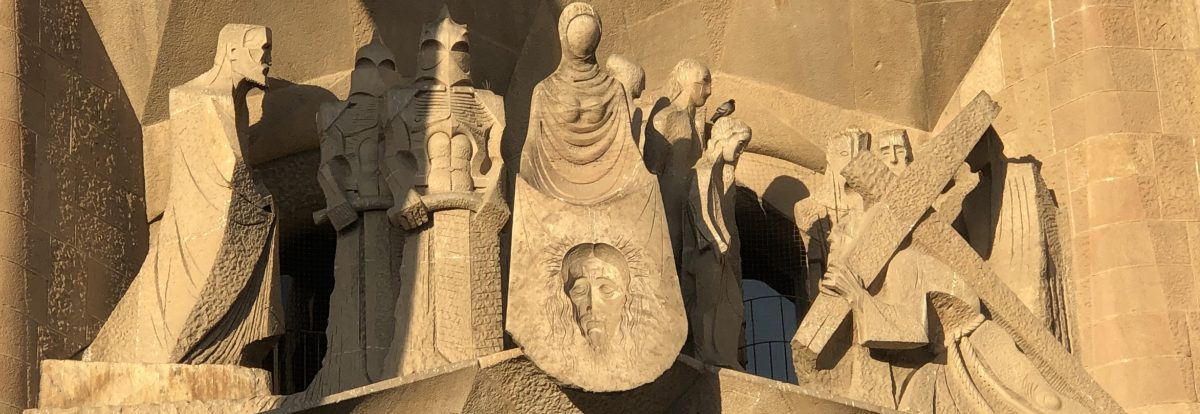
Homily for the Solemnity of Saints Peter and Paul

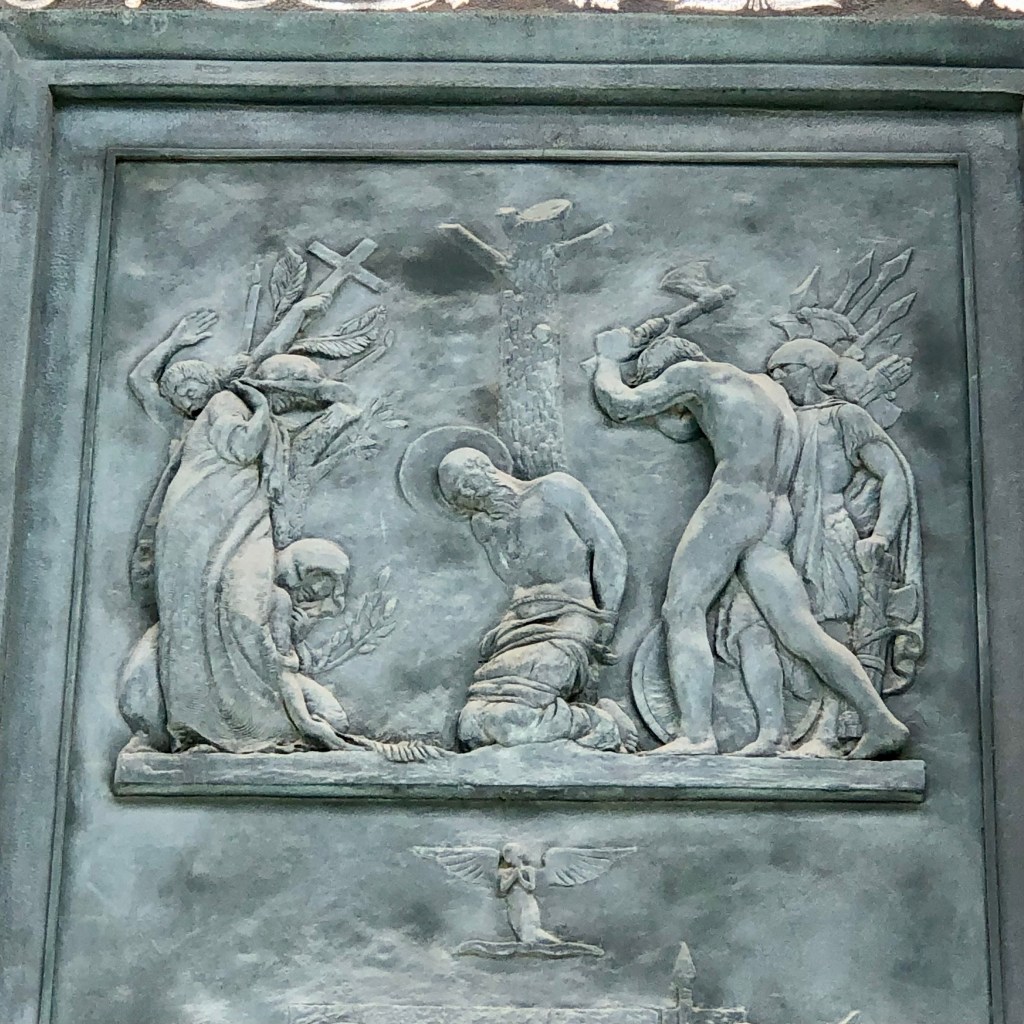
Martyrdom of St. Peter (Doors of the Basilica of St. Paul Outside the Walls, Rome)
Martyrdom of St. Paul (Doors of the Basilica of St. Paul Outside the Walls, Rome)

Peter and Paul were great men.  It is common in preaching to hear about Peter’s failures—his weaknesses and false steps, which the Gospels make no attempt to hide.  And we first meet Paul, of course, when he is persecuting the Church.  Peter and Paul were both flawed men, but nonetheless they are great men.

In fact, one of the things that makes them both great is that they acknowledge their flaws. Practically the first words out of Simon Peter’s mouth in the Gospel of Luke are, “Depart from me, Lord, for I am a sinful man” (Lk 5:8).  In one of his letters, Paul claims to boast in his weakness (2 Cor 12:9).

Yet, in the Acts of the Apostles, Peter raises the dead to life.  Paul becomes the most remarkable missionary in history.  The faithful of Jerusalem bring their sick into the streets just so that Peter’s shadow will fall upon them.  And in today’s Gospel we hear those remarkable words from the mouth of the Lord himself, “You are Peter, and upon this rock I will build my Church, and gates of the netherworld shall not prevail against it.”  The greatness of both Peter and Paul comes from Jesus.

Continue reading “Homily for the Solemnity of Saints Peter and Paul”

Melchizedek, Jesus, and perfect sacrifice: Homily for Corpus Christi

This month I’ve been asked to contribute Sunday homilies to the Homiletic and Pastoral Review. You can find the rest of the month’s homilies there as well. Here’s this week’s contribution:


Homily for the Most Holy Body and Blood of Christ (C)

I thought I’d begin today by saying a word about Melchizedek. I’d wager most of you don’t know much of anything about Melchizedek. It’s a safe wager because nobody knows much about Melchizedek. His biographical details are limited to what you just heard in the first reading. But Melchizedek turns out to be an important figure. In the first reading, in Genesis, he seems to come out of nowhere. It turns out, when we get to the Letter to the Hebrews in the New Testament, that this mysterious origin is what makes him interesting. The New Testament speaks of Melchizedek as a forerunner of Jesus, the great high priest who has neither beginning nor end. Melchizedek, the Letter to the Hebrews says, represents an eternal priesthood — the priesthood of Jesus Christ.

In fact, perhaps it’s surprising that Genesis would mention Melchizedek at all. Even more surprising is that it mentions the sacrifice that he offers — bread and wine. At the time, bread and wine were not particularly impressive sacrifices. In the ancient world, if you wanted to impress, you offered meat. Birds were OK, lamb was better, a bull best of all. Bread and wine were not the sort of sacrifice a king would brag about.

Continue reading “Melchizedek, Jesus, and perfect sacrifice: Homily for Corpus Christi”

The Trinity, mystery and relationship: homily for Trinity Sunday

This month I’ve been asked to contribute Sunday homilies to the Homiletic and Pastoral Review. You can find the rest of the month’s homilies there as well. Here’s this week’s contribution:


Homily for Trinity Sunday (C)

The Holy Trinity, Camarines Sur, 18th century, molave wood (St. Augustine Museum, Manila)

There’s an old saying, which probably goes back to Socrates, that the more you know, the more you realize you don’t know.  This observation on what it means to be truly wise is not meant to discourage learning or study or reflection.  When used in a Christian context it’s not meant to suggest, for example, that our faith should be reduced to a couple of folksy slogans.  Nor does it mean that when reflecting on the doctrine which we remember today—the Most Holy Trinity—that we should take an anti-intellectual approach—it’s a mystery, just have faith, don’t ask any questions.

The Trinity is a mystery, but today’s readings suggest the attitude we should have toward “mystery” in the context of our faith.  Calling the Trinity a mystery means that we will never get to the end of understanding it, but that should not make us want to throw up our hands and give up.  Instead, it should make us want to know more.  There’s a great history podcast that I listen to, and, after each episode, I often want to go online and start buying books about the subject to discover more.  Usually, I have to restrain that impulse because the books start to pile up and I don’t have time to read them!  

When we talk about the mysteries of our faith, that’s the dynamic we’re suggesting: not that we don’t want any questions, but that there will always be more to say and our capacity to learn is limited. Jesus suggests as much in the Gospel when he ways, “I have much more to tell you, but you cannot bear it now.”  Those words tell us something important about God.  Jesus talks about knowing the Father by seeing the Son and living in the Spirit of truth.  If you tried to diagram what that meant, you might end up with a triangle and lots of arrows going back and forth between the angles.  Perhaps that’s not a bad start because one thing that we can take from the invitation of Jesus to know him and know his Father and know the Holy Spirit is that he is inviting us into a relationship that will change us.  It’s a relationship that, in a way, is always moving.

Continue reading “The Trinity, mystery and relationship: homily for Trinity Sunday”

Giving credit to the Holy Spirit: a homily for Pentecost

As I mentioned last week, this month I’ve been asked to contribute Sunday homilies to the Homiletic and Pastoral Review. Be sure to pay them a visit. Here’s this week’s contribution:


Homily for Pentecost (C)

Guido Reni, Trinity of the Pilgrims (1625-6)

Today’s feast of Pentecost is a great reminder to give credit where credit is due.  For us Christians, both as individuals and as a Church, credit is due to the Holy Spirit.

This is something that is easy to forget because the Holy Spirit, being spirit, is unseen.  The Son of God, the second Person of the Trinity, becomes visible to us in the Incarnation.  And in the Gospel, Jesus explains that when we see him, we see the Father.  He makes God accessible to us in a visible, human way.  Not everyone who sees Jesus, of course, recognizes him as God.  Recognizing Jesus for who he is requires a certain openness from us, and, for some people—probably for most—it requires being opened up by the Holy Spirit.  It requires the Holy Spirit to break through our blindness.

The necessity of the Holy Spirit’s intervention is made especially clear in the events we celebrate today.  Jesus promises to send the Holy Spirit to his disciples after the Ascension.  They certainly need it.  We remember, of course, the behavior of the apostles at the time of the crucifixion—Peter denying Christ and the rest of the group scattering.  Even after the Resurrection, the disciples seem uncertain. Out of fear, they lock themselves indoors.  After the Ascension, they seem dumfounded by the event and require two angels to appear and shake them from their paralysis.  I can’t blame them, actually; the events that they had witnessed were beyond any human experience.  Knowing how to respond to them was beyond any normal human capacity.  They needed the Spirit that Christ would send.

Continue reading “Giving credit to the Holy Spirit: a homily for Pentecost”

Christ made visible in his martyrs: Homily for the 7th Sunday of Easter

I’m pleased and honored that the Homiletic and Pastoral Review asked me to provide homilies for the Sundays of June this year. You can find the full text of all the month’s homilies here. (Regular readers might note that the homilies may not be as fleshed out as usual since they are meant to be adapted.) Be sure to visit the HPR site and check out the other articles, reviews, and fine catechetical materials they provide. Below, to give you a taste, is a homily for the Seventh Sunday of Easter (for those places where the Ascension is celebrated on its proper Thursday).


Homily for the Seventh Sunday of Easter (C).

Chapel of St. Stephen, Certosa di San Lorenzo, Padula, Italy

Nowhere is Jesus Christ more visible than in his martyrs.  In the Gospel of John, Jesus, who makes the Father visible to the world, prays that his disciples may be in him and he in them.  In today’s first reading, we see God become dramatically visible in the life of one of those disciples, the deacon Stephen.

First, however, Stephen gazes on God.  He sees Jesus standing at the right hand of his Father in the heavens.  This vision is made possible by the action of the Holy Spirit, already present in Stephen’s life.  In the first part of the chapter from which today’s reading is taken, Stephen delivers a sermon which is both learned and fiery, retelling the story of Israel from a Christian point of view and leveling a hard judgement against the men of Jerusalem who crucified Jesus.

Continue reading “Christ made visible in his martyrs: Homily for the 7th Sunday of Easter”