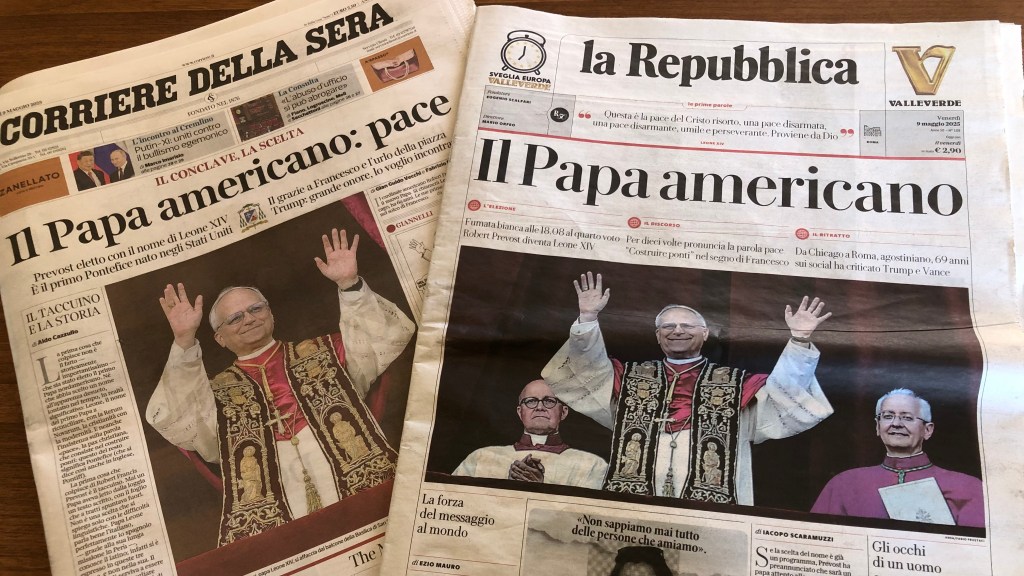
Just over a week ago I stood among the throng in St. Peter’s Square waiting for Pope Leo XIV’s Mass of installation. As the new pope emerged on the back of a white truck and made the rounds through the square, one of the priests who was with me to concelebrate whispered, “It still feels surreal.”
It still does.
The one iron-clad rule of papal elections, after all, used to be that the cardinals would never elect an American pope. And now we have a pope who grew up cheering for the Chicago White Sox. Going into the conclave, the Church seemed tired and divided. Yet Pope Leo has managed to evoke good will on all sides, and he hasn’t had to resort to any particular gimmicks to do so. Rome is elated.

What is perhaps most striking about our new Holy Father is the paradoxical way in which he seems both totally at ease in his new role–as if he’d been pope-ing for years already–and at the same time totally unassuming. One could imagine sitting next to him at a baseball game and him introducing himself as “Bob from Chicago.” At the same time, seeing him on the balcony of St. Peter’s Basilica or meeting world leaders in the robes of his office, one senses the quiet dignity of a successor of the Apostles.
A lot has already been written about Pope Leo on the basis of relatively scant pre-conclave writings and interviews. I was particularly impressed by the first homily he gave to the cardinals after his election. His brief address to the Synod of Bishops on evangelization more than a decade ago equally impressed me because he seemed to grasp one of the central problems facing the Church: the role of the media in communicating–and sometimes miscommunicating–our message. I remember an interview given by the late Cardinal Avery Dulles to Charlie Rose, in which the cardinal observed that the biggest problem faced by the Church was that most Catholics learn what they know about Catholicism not from the Church herself, but from the media. Leo XIV understands that dynamic–and he is alert to the equally challenging frontiers now being opened by artificial intelligence.
One of the puzzling aspects of the previous pontificate was that Pope Francis’s personal popularity never seemed to translate into more favorable views of the Church–or, indeed, greater practice among Catholics. I suspect this had to do with how the late pope’s words and actions were often spun in the press. The storyline that unfortunately seemed to prevail was that: (1) Catholicism was benighted; (2) the trends of secular “progress” were good; and (3) Francis was following these trends, making the Church more progressive and more modern. Good for him, but notice that in this storyline, Catholicism remains benighted. If this narrative were true, nobody would ever have a motive for becoming or remaining Catholic. Accepting this narrative, non-practicing Catholics who order their lives around secular trends could feel better about themselves, confident that in the end the Church would follow them, rather than the other way around. It’s a narrative that means the end of discipleship.
It goes without saying that such a narrative was hardly fair to Pope Francis, but spin rarely is. Unfortunately, not a few Church leaders have unconsciously bought into this narrative themselves. Several years ago, I heard a prominent theologian here in Rome describe the modern world as a train; the job of theologians, she said, was getting the Church onto the train so that we could watch the world through the window. Then we’d have the wonder of an ever-changing perspective–all aboard, choo-choo!
What makes the metaphor so grim, however, is that it eliminates both the freedom and the responsibility of discipleship. Christ gives us a choice to follow him–or not. In this theologian’s vision, the secular world offered the only track and no choice but to jump aboard. We weren’t called to be disciples, but passengers.

But, even if it means traveling by foot, we’re always better off following Christ. And that, I have to say, is what I like best about Pope Leo so far — he’s always putting Christ first. It comes across in small things, like his first words after appearing on the balcony as pope: “Peace be with you all,” which, the Holy Father immediately pointed out, were Jesus’ first words to the disciples after the Resurrection. Those who’ve had experience working with him have summed up Leo’s style with John the Baptist’s words about the Lord: “He must increase, but I must decrease” (John 3:30).
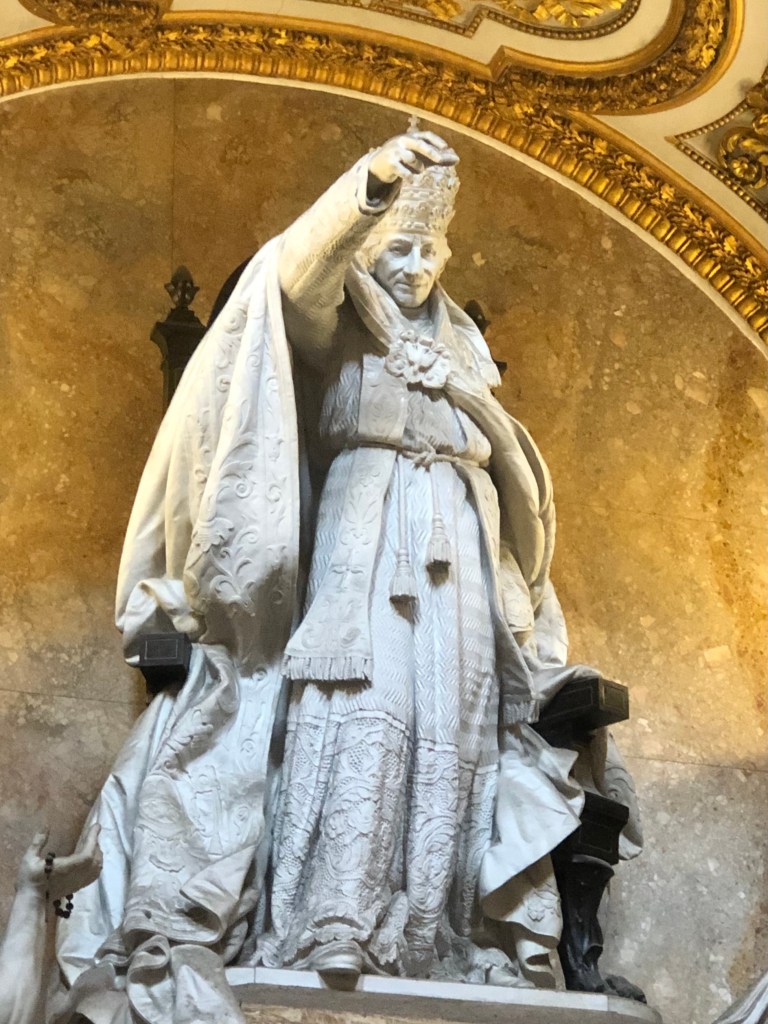
One of the first things that struck me about our new pope on the night of his election–after I got over the shock of an American pope–was how much I liked his name. “Leo” hearkens back to the best of papal traditions: Leo the Great, a theologian, pastor, and–as the times demanded–diplomat, and Leo XIII who reasonably and robustly articulated the Church’s social doctrine in the face of the challenges posed by industrialization and ascendant anti-clerical regimes.

As a youngish theologian–as far theologians go–I confess to sometimes feeling a certain weariness when it comes to the stale trench warfare of the post-Vatican II era. If we actually listened to that Council’s call for ressourcement, it seems to me, we’d realize we need to draw on deeper spiritual wells than those offered by the late twentieth century. I’ve tried to do that in my own work, proposing the ancient doctrine of baptism of desire as an approach to questions about salvation that more recent theology has obscured. I love the fact that Leo rather naturally peppers his speeches with quotes from Augustine and the Church Fathers.
If we’re to face the challenges of the twenty-first century, we will need the company of the Fathers. Those ancient martyrs and dogged bishops, after all, faced challenges that make present difficulties pale in comparison — heresies and schisms, pagan persecution, and, in the case of Leo I, Attila the Hun. Knowing where we’ve come from, we can face today’s challenges with confidence.

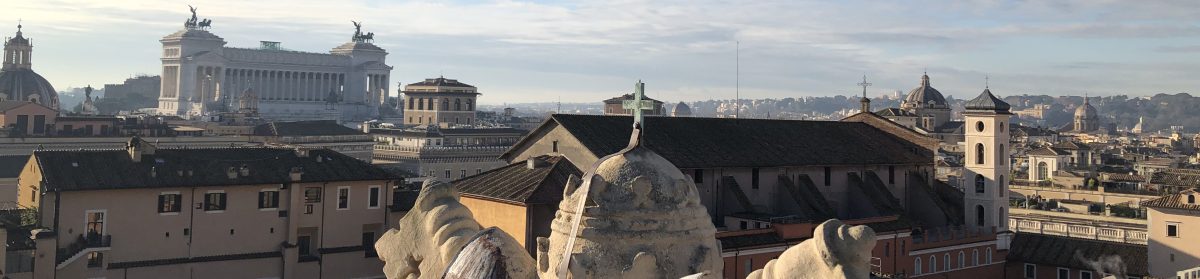
When, a few weeks ago, I was rushing to St. Peter’s Square to greet the still-unknown pope after the white smoke had appeared, I was struck by how gloriously antiquated our way of announcing a papal election is. Not a tweet or a news conference or even a radio bulletin–but smoke signals from a jerry-rigged chimney. Two days before I’d given an interview for CBS Evening News, and the reporter and producers working on the piece, who had covered previous papal conclaves, assured me that nothing in the world compared to the excitement of new pope’s election. As I joined the crowd on Via della Conciliazione, I realized how right they were.
The Latin phrases–Extra omnes! Habemus papam!–the silence and the secrecy, the Renaissance backdrop, the ancient symbols–not all Netflix’s billions could create better drama. But more than just stagecraft is at work. The holiness and the antiquity, the mix of divine authority–“You are Peter… I will give you the keys of the kingdom of heaven” (Matt 16:18-19)–and human quirkiness–the world transfixed by the gulls perched around the chimney–are just so, well, Catholic.
Perhaps that’s what we’re feeling in Rome right now–hope, a touch of giddiness, and the sense that things are just as they are meant to be. The papacy, after all, is no ordinary institution, but one which traces its origins back to the words of Jesus Christ. The Church can trundle along with a sede vacante for a while, as we do every time a pope dies, but there’s something missing–a gap even in the Eucharistic prayer. The papacy is an essential part of the divine constitution that has allowed the Catholic Church to weather the storms of time, so it is quite a relief–a great joy, in fact–to hear those words from the balcony, “Habemus papam,” even when you don’t yet know who he is.
St. Augustine–whom Pope Leo loves so well–described God as that “Beauty ever-ancient, ever-new” ceaselessly calling us to himself. Over the past few weeks, we’ve seen that Beauty still present in the traditions of the Church founded by Jesus some two-thousand years ago–and in a new pope with the name of a lion and a gentle, wobbly smile as disarming as it is sincere. Nothing, after all, is as fresh as our ancient faith.
It’s great to be Catholic.

For email updates, consider subscribing to this blog:

 Tony Lusvardi, S.J.
This is a very inspiring
LikeLike
the more I see and watch The Pope the more I realize how divinely he was chosen. The world and especially Catholics needed Pope Leo at exactly this time. He’s already given the world a new meaning. How he’s been able to accomplish that on his very first day is truly an astonishing spiritual intervention. God Bless him and pray for his health and safety as he leads us into a close relationship with Jesus our Lord and Savior 🙏🩷
LikeLike