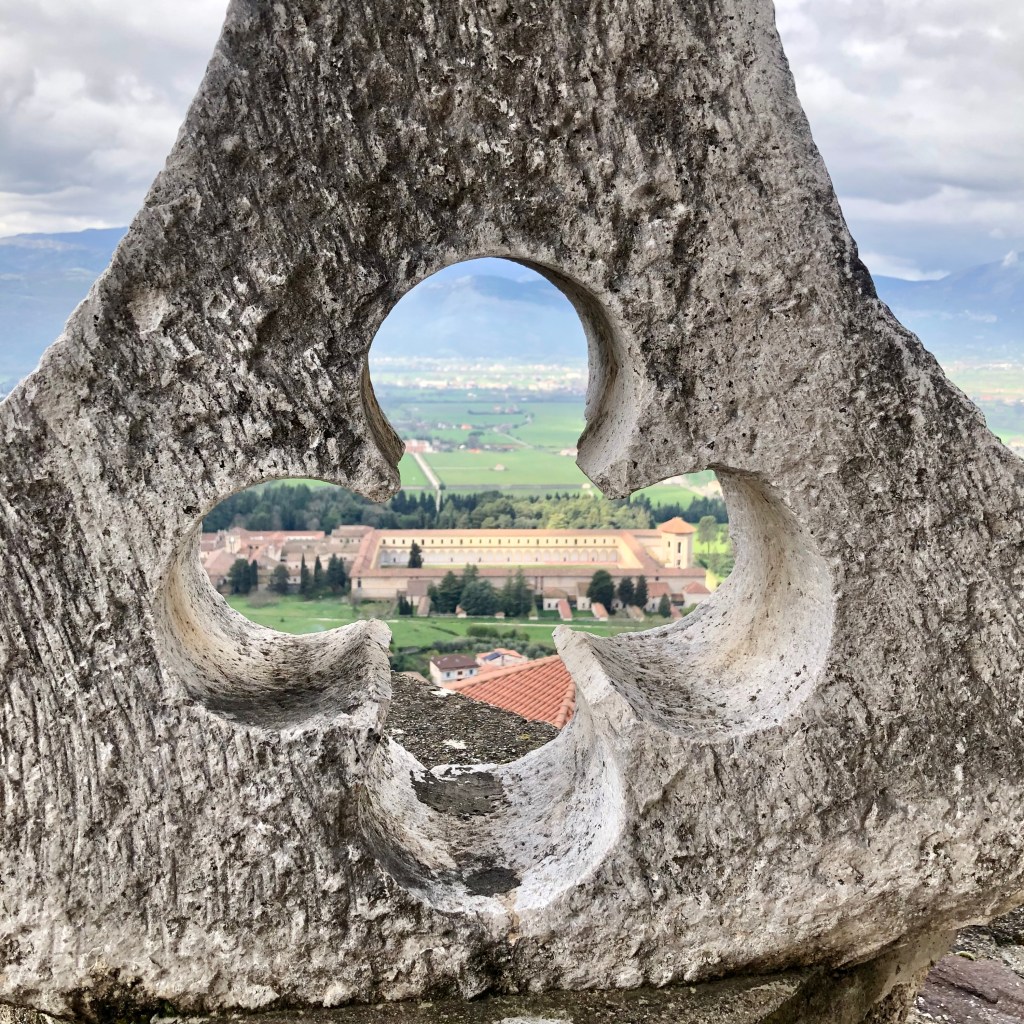
A few weeks ago, I mentioned stumbling across the Certosa of San Martino while visiting Naples with my parents earlier this spring. I was fortunate enough to catch up with them for a few more days in southern Italy, this time in the Cilento region. Like all of Italy’s regions, the Cilento overflows with layers of history to discover. We found this paleo-Christian baptistry almost by coincidence and yet another — even more monumental — “Certosa” or Charterhouse, a Carthusian monastery.
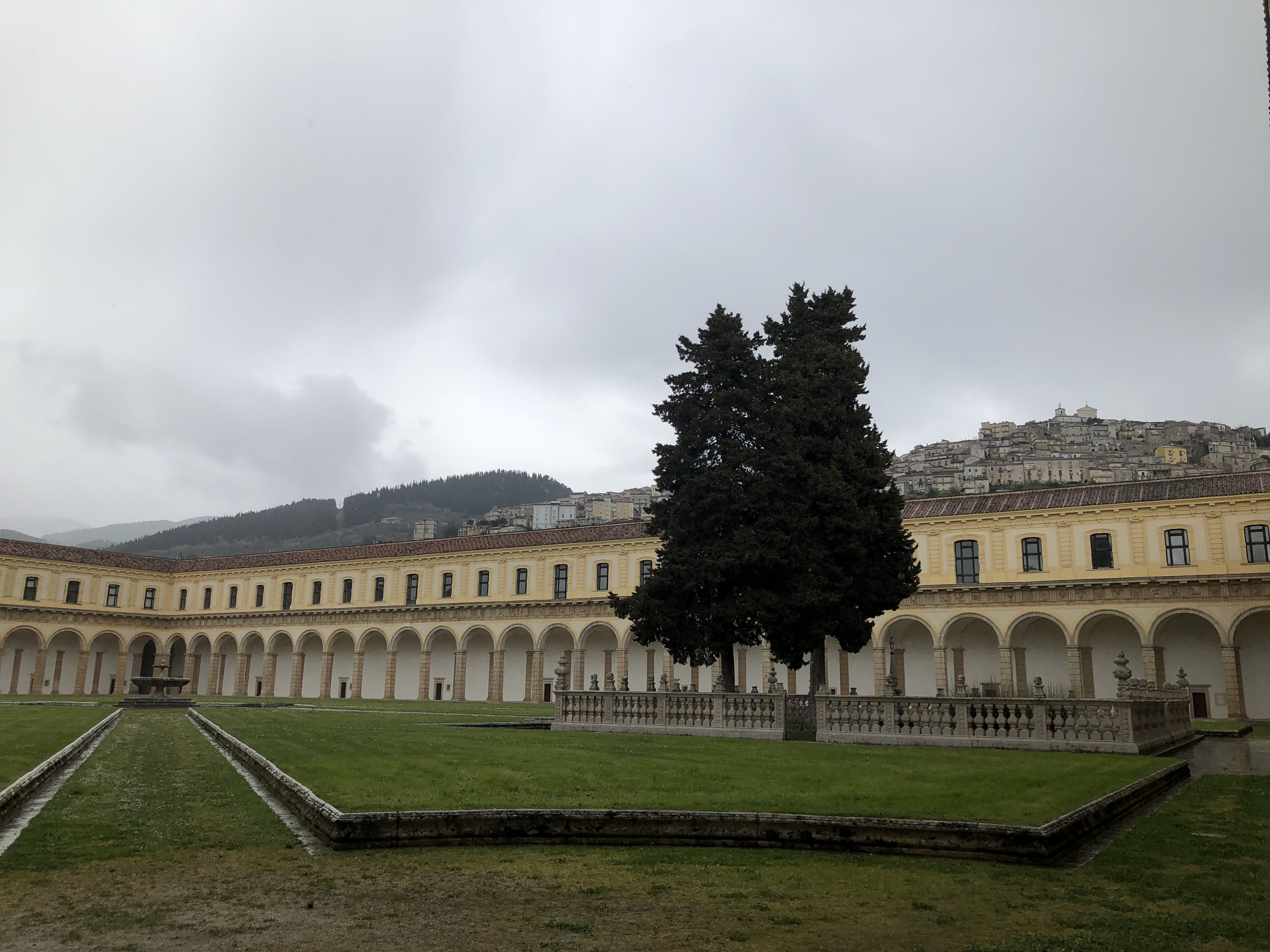
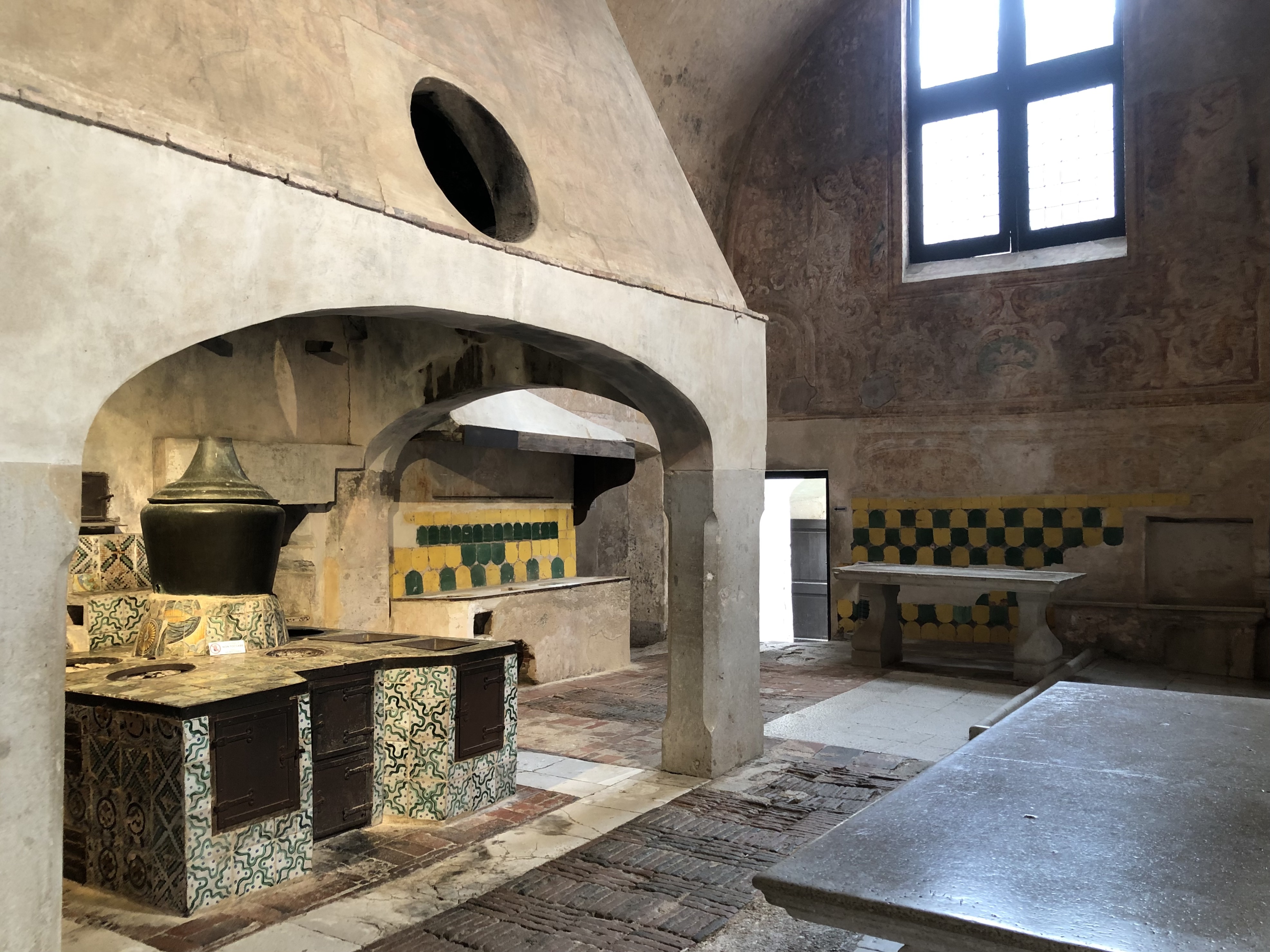
The Certosa di San Lorenzo, just outside of Padula, in fact, is the largest monastery in Italy. Founded in 1306, like the Certosa of San Martino, it was redone in the 18th century in baroque style. Carthusian monasteries are divided into a public-facing outer courtyard, around which the lay brothers lived, engaging in the practical work of the place, and an inner cloister in which the Carthusian priests lived in hermetic seclusion.
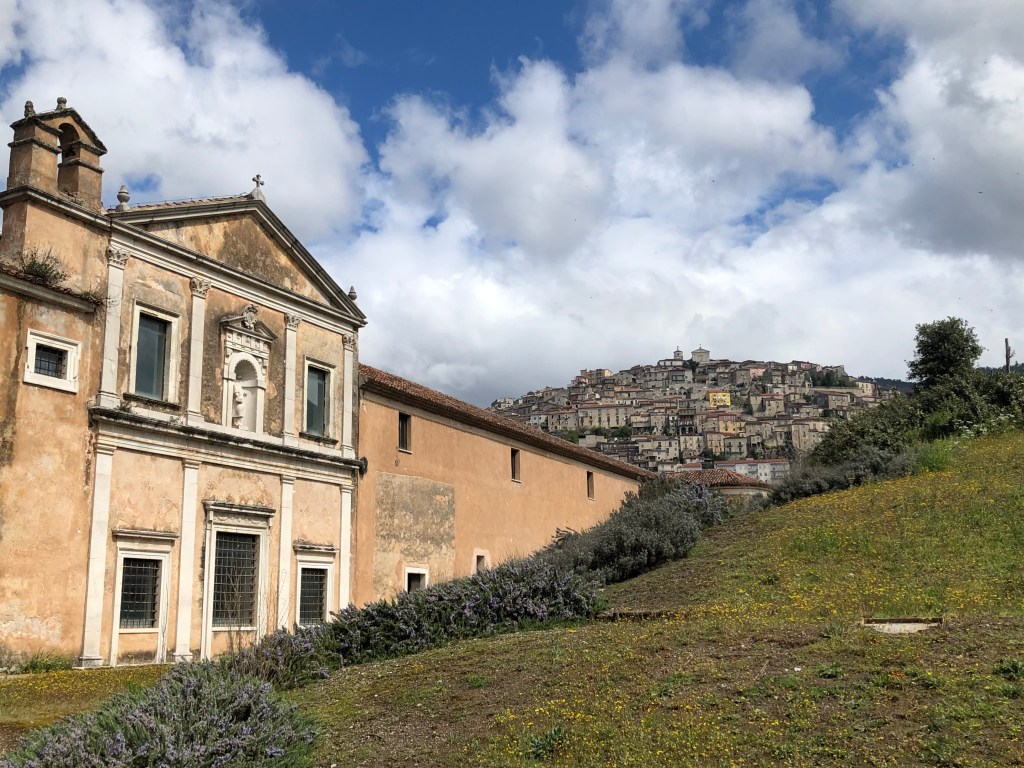
The Carthusian way of life is quite distinct, with the monks spending most of their time in near total isolation in their cells. These cells, in fact, are fairly spacious to accommodate all of the monks’ activities — each one is like a mini-monastery — including a garden, where they grow their own food, a small chapel, a study, and a place set aside for engaging in small industry, such as book-repair. While quite austere, the Carthusian life is nonetheless not inhuman. St. Bruno’s rule designates a certain time each week for conversation, which takes place as the monks walk together around their cloister. At San Lorenzo, a covered second story was added over the monks’ cells so that this time of conversation could occur even in inclement weather.
Further distinctive features of the Carthusian life are evident at San Lorenzo, such as the cemetery located within the cloister. Carthusian funerals are celebrated as a monk’s true birthday. Some readers might recall that chartreuse liqueur was a product of the original Charterhouse in France, and monasteries such as San Lorenzo were evidently major economic and cultural centers as well. The suppression of the monastery, then, first by Napoleon and later in the civil war that resulted in the unification of Italy, represented a double-loss, both spiritual and cultural. Perhaps that was the intention.



On a very different note, the town of Padula contains a small but fascinating museum dedicated to a great Italian-American crime-fighter, Joe Petrosino. The young Petrosino, an immigrant, joined the New York City police at the age of 23 after overhearing and then foiling a plot to assassinate a visiting Italian official by several mafiosi who mistakenly believed no one listening could understand their local dialect. Petrosino was the first to organize a “bomb squad,” and his work led to the arrest, it is estimated, of some 20,000 criminals. He was a personal friend and advisor of Theodore Roosevelt.
Arguably his greatest contribution to crimefighting was identifying the links between the Italian and the American branches of the Mafia. He was assassinated in 1909, while following up on these connections in Palermo, Sicily. He had been traveling under an assumed name in order to conceal his identity, but someone — his betrayer was never identified — leaked the news of his visit. He was honored with state funerals in both Italy and New York. An organization dedicated to combatting the Mafia runs a fascinating museum in his family home in Padula, where he stayed days before his assassination.


 Tony Lusvardi, S.J.