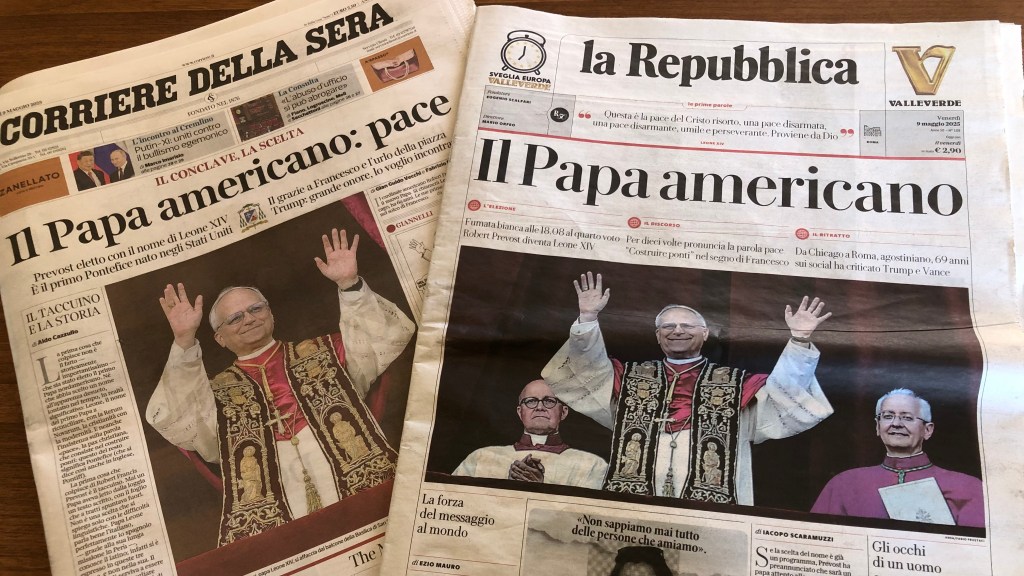
Pope Leo: an ever-ancient, ever-new beginning for the Church

Just over a week ago I stood among the throng in St. Peter’s Square waiting for Pope Leo XIV’s Mass of installation. As the new pope emerged on the back of a white truck and made the rounds through the square, one of the priests who was with me to concelebrate whispered, “It still feels surreal.”

It still does.

The one iron-clad rule of papal elections, after all, used to be that the cardinals would never elect an American pope. And now we have a pope who grew up cheering for the Chicago White Sox. Going into the conclave, the Church seemed tired and divided. Yet Pope Leo has managed to evoke good will on all sides, and he hasn’t had to resort to any particular gimmicks to do so. Rome is elated.

What is perhaps most striking about our new Holy Father is the paradoxical way in which he seems both totally at ease in his new role–as if he’d been pope-ing for years already–and at the same time totally unassuming. One could imagine sitting next to him at a baseball game and him introducing himself as “Bob from Chicago.” At the same time, seeing him on the balcony of St. Peter’s Basilica or meeting world leaders in the robes of his office, one senses the quiet dignity of a successor of the Apostles.

A lot has already been written about Pope Leo on the basis of relatively scant pre-conclave writings and interviews. I was particularly impressed by the first homily he gave to the cardinals after his election. His brief address to the Synod of Bishops on evangelization more than a decade ago equally impressed me because he seemed to grasp one of the central problems facing the Church: the role of the media in communicating–and sometimes miscommunicating–our message. I remember an interview given by the late Cardinal Avery Dulles to Charlie Rose, in which the cardinal observed that the biggest problem faced by the Church was that most Catholics learn what they know about Catholicism not from the Church herself, but from the media. Leo XIV understands that dynamic–and he is alert to the equally challenging frontiers now being opened by artificial intelligence.

Continue reading “Pope Leo: an ever-ancient, ever-new beginning for the Church”
Italy’s largest monastery and a few surprises in the Cilento

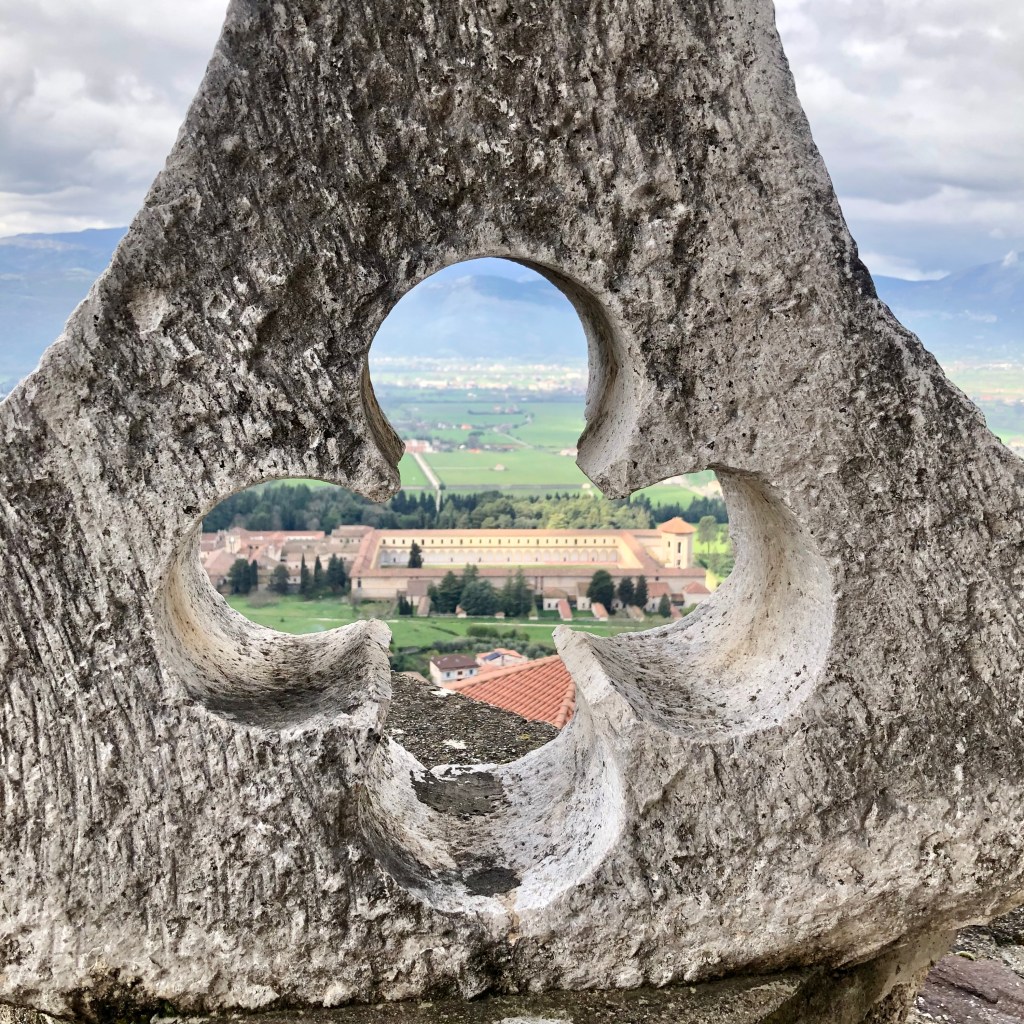
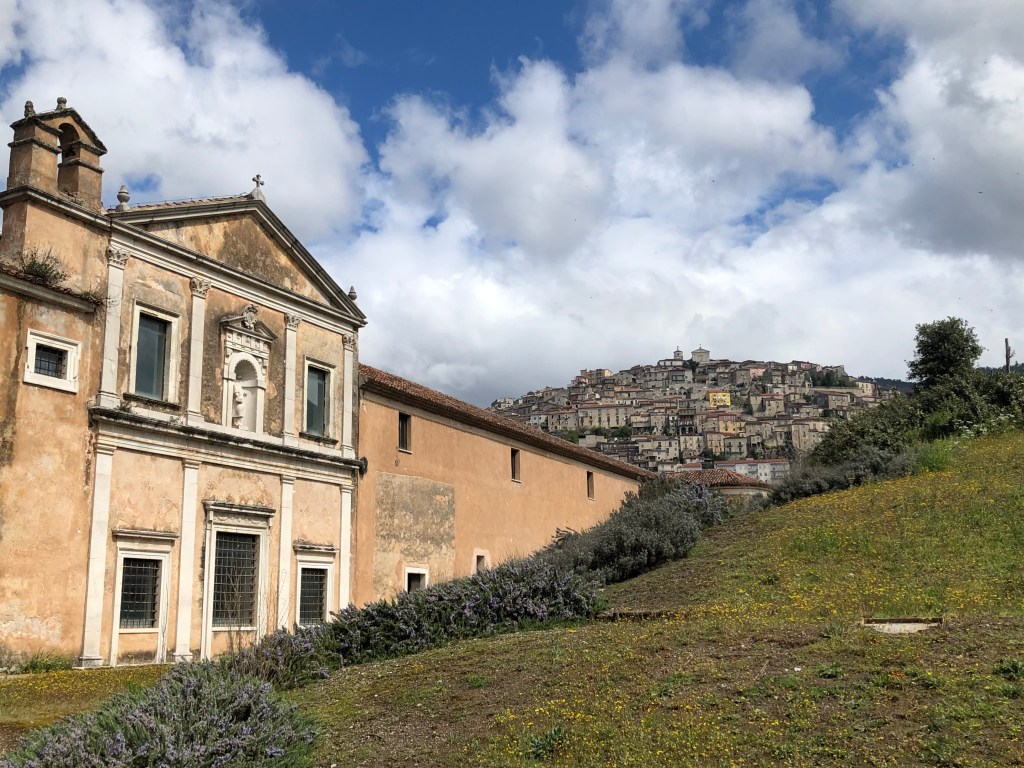
Certosa di San Lorenzo, seen from Padula

A few weeks ago, I mentioned stumbling across the Certosa of San Martino while visiting Naples with my parents earlier this spring. I was fortunate enough to catch up with them for a few more days in southern Italy, this time in the Cilento region. Like all of Italy’s regions, the Cilento overflows with layers of history to discover. We found this paleo-Christian baptistry almost by coincidence and yet another — even more monumental — “Certosa” or Charterhouse, a Carthusian monastery.

The Certosa di San Lorenzo, just outside of Padula, in fact, is the largest monastery in Italy. Founded in 1306, like the Certosa of San Martino, it was redone in the 18th century in baroque style. Carthusian monasteries are divided into a public-facing outer courtyard, around which the lay brothers lived, engaging in the practical work of the place, and an inner cloister in which the Carthusian priests lived in hermetic seclusion.

Certosa di San Lorenzo, Padula in the background

The Carthusian way of life is quite distinct, with the monks spending most of their time in near total isolation in their cells. These cells, in fact, are fairly spacious to accommodate all of the monks’ activities — each one is like a mini-monastery — including a garden, where they grow their own food, a small chapel, a study, and a place set aside for engaging in small industry, such as book-repair. While quite austere, the Carthusian life is nonetheless not inhuman. St. Bruno’s rule designates a certain time each week for conversation, which takes place as the monks walk together around their cloister. At San Lorenzo, a covered second story was added over the monks’ cells so that this time of conversation could occur even in inclement weather.

Continue reading “Italy’s largest monastery and a few surprises in the Cilento”

Radiant in the darkness: Caravaggio 2025

Caravaggio, Flagellation of Christ, 1607

Several weeks ago I spent a wonderful afternoon at a special exhibit of 24 paintings by Caravaggio brought together in Palazzo Barberini and dubbed Caravaggio 2025. The exhibition made me wonder at Caravaggio’s extraordinary popularity. Why is Caravaggio so popular today? And what does this tell us about where we are spiritually? I think the answer is not unrelated to the other recent events in Rome: the election of a missionary as Pope Leo XIV; our new Holy Father’s goal of steering the Church faithfully through the digital revolution, just as Leo XIII provided guidance during the industrial revolution; and this Jubilee year’s theme of hope.

I’ll have more on Pope Leo soon. For now, suffice it to say that the mood here in Rome is elated. In the meantime, you can read my thoughts on Caravaggio at The Catholic Thing.

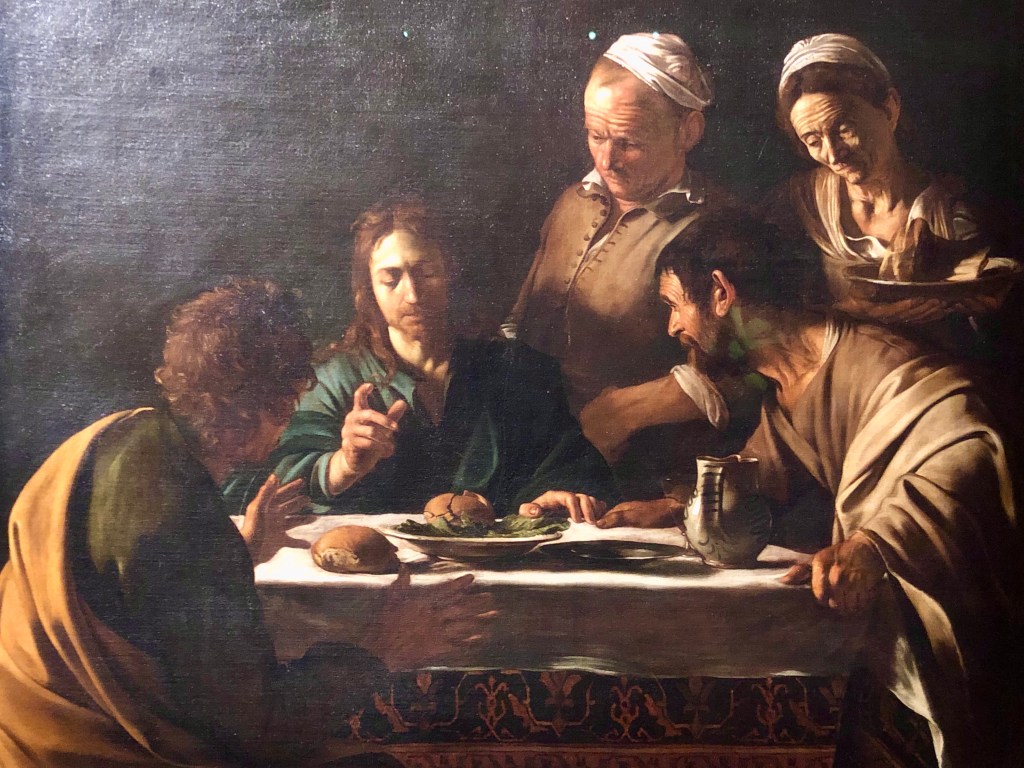
Caravaggio, Supper at Emmaus, 1606

While you’re at it, check out some reflections from a few months back on the artist’s spectacular St. Matthew cycle and a different conversion of St. Paul. And there’s plenty of other great work at The Catholic Thing, including, if you missed it, an explanation of why I think my book on baptism of desire is so important at this time when renewing the Church’s missionary spirit is such a vital challenge: Getting Back into the Baptizing Business. The price on Amazon seems to have dropped a bit recently.

What to do when you don’t have a pope? Preach Jesus Christ

Homily for Wednesday of the Third Week of Easter.

Brothers and sisters, papam non habemus. We do not have a pope. Not yet.

We live in uncertain and, often, disturbing times. I’m not talking only about the sede vacante in the Church of Rome. The last few years–the last few decades, really–have been a difficult time for the Catholic Church. The Church sometimes seems confused and divided from within, and opposed by powerful forces from without. And today we also live with all the uncertainty of a papal election.

In this uncertain moment, today’s first reading reminds us of a simple but profound lesson: things have been worse. Much worse. Here we see the Church at its very beginning, tiny and persecuted. Stephen, one of the first deacons, has just been killed. The faithful are scattered. Those who persecute the Church are full of zeal, backed by the age’s political powers in all their strength. It seems like a catastrophic moment for the nascent Church, but it becomes a moment of triumph, a moment of growth. The dispersion of the faithful–even if caused by persecution–becomes the condition for the spread of the Word. Soon, we know, even the great persecutor, Saul, will convert and become the greatest missionary in the history of the Church.

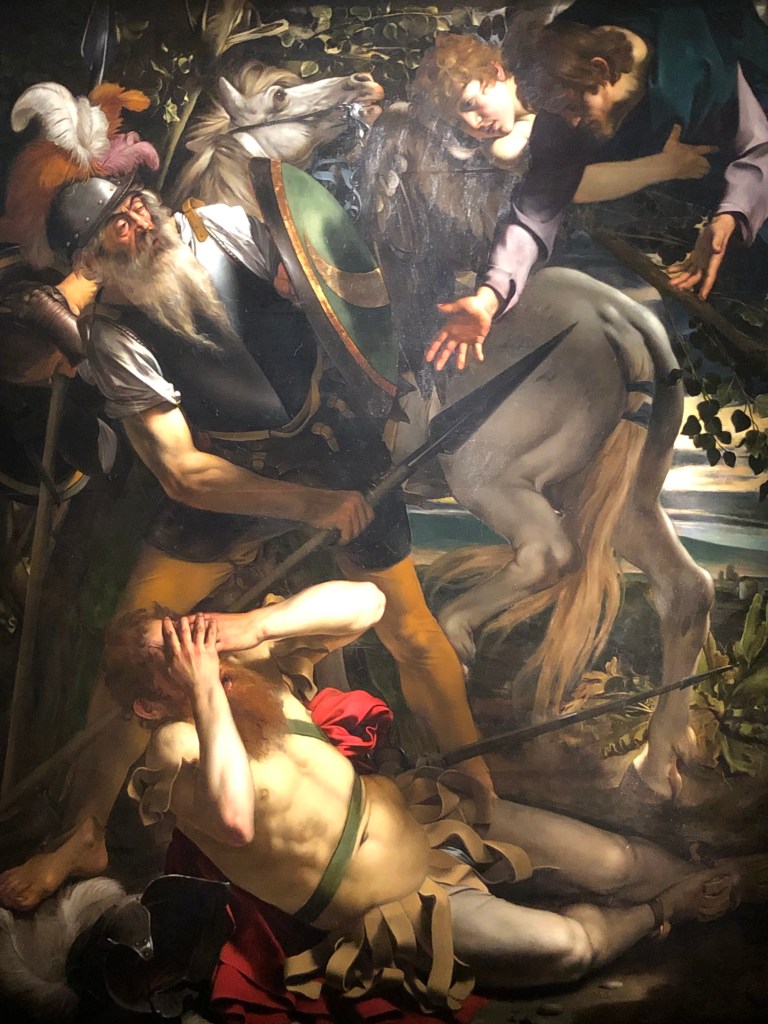
Caravaggio, The Conversion of St. Paul, 1600-1

What I most want to emphasize today is the response of the disciples, who transformed this apparent catastrophe into a moment of growth: They continued to preach Jesus. Without panic, without discouragement. They returned and remained steadfast in the most fundamental mission of the Christian: to bear witness to the life, death and resurrection of Jesus Christ.

Today’s Gospel reading also calls us back to the heart of our Catholic faith: “I am the bread of life,” says Jesus. There is no action more important for the Catholic than to encounter the Lord in the Eucharist, in his true body and in his true blood.

Brothers and sisters, despite our anxieties and our doubts, despite the moments of uncertainty that alternate with moments of glory in the life of the Church, this message remains our rock. If we continue to proclaim it, we cannot go wrong. In a few days we will have a new pope, but our mission will not change. Times change. Popes change. Jesus Christ does not change.

Jesus Christ is the bread of life. Jesus Christ is Lord.

Readings: Acts 8:1b-8; John 6:35-40

(Original: Italian)

May 7, 2025

Gregorian University Chapel, Rome


Those interested can see my interview on the CBS Evening News with Maurice Dubois here.