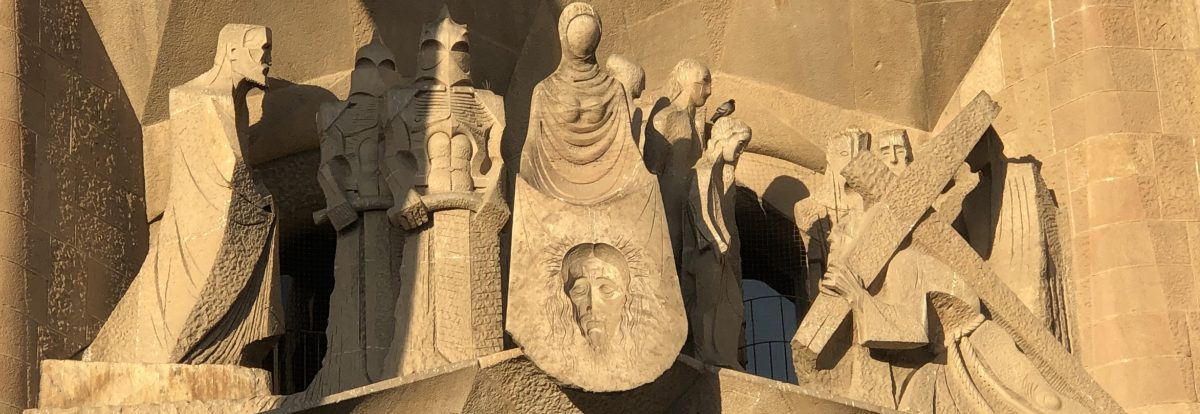

This week’s liturgical calendar includes two prominent–and very different– Roman martyrs. The first, St. Sebastian, a third century soldier originally from Milan, was sentenced to death after converting to Christianity. Tied to a column, he was shot through with arrows but miraculously survived and was nursed back to health by a Roman matron named Irene. He went right back to preaching and, after warning the Emperor Diocletian to repent–a gutsy move if there ever was one–was beaten to death and thrown into Rome’s sewers.


No less courageous, St. Agnes sought to dedicate her life entirely to God while very young. This meant refusing the advances of several powerful suitors, who were enraged by the rejection. Agnes’s pagan father sided with the suitors. She was humiliated, even dragged naked through the streets of Rome, burnt at the stake and when that failed–as with the first attempt to kill St. Sebastian–eventually beheaded.
The courage of such martyrs–one a solider, the other a mere girl, barely a teenager–is fundamental, I think, to appreciating the full significance of Christian faith in eternal life. At least some of the ennui that one can perceive in the Church over the past several decades perhaps comes from deemphasizing the witness of the martyrs just when we need it most.
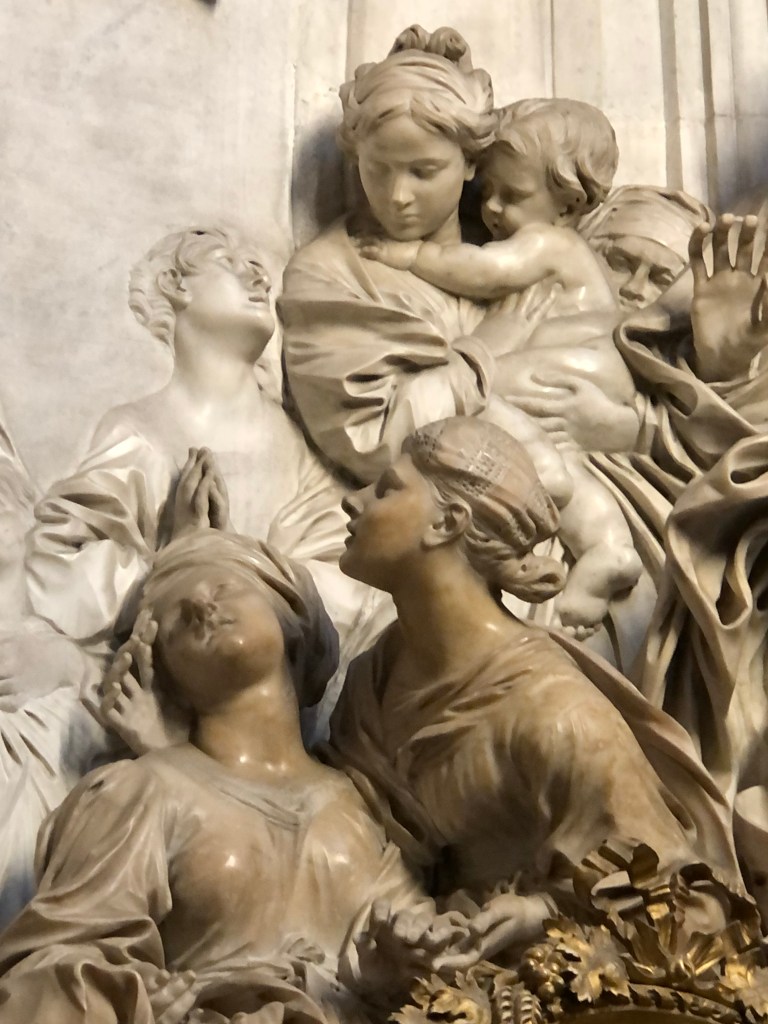
The feasts of Saints Sebastian and Agnes put me in mind of one of Rome’s most iconic churches, Sant’Agnese in Agone. Its Borromini facade is the architectural centerpiece of Piazza Navona, one of my favorite spots in the city.
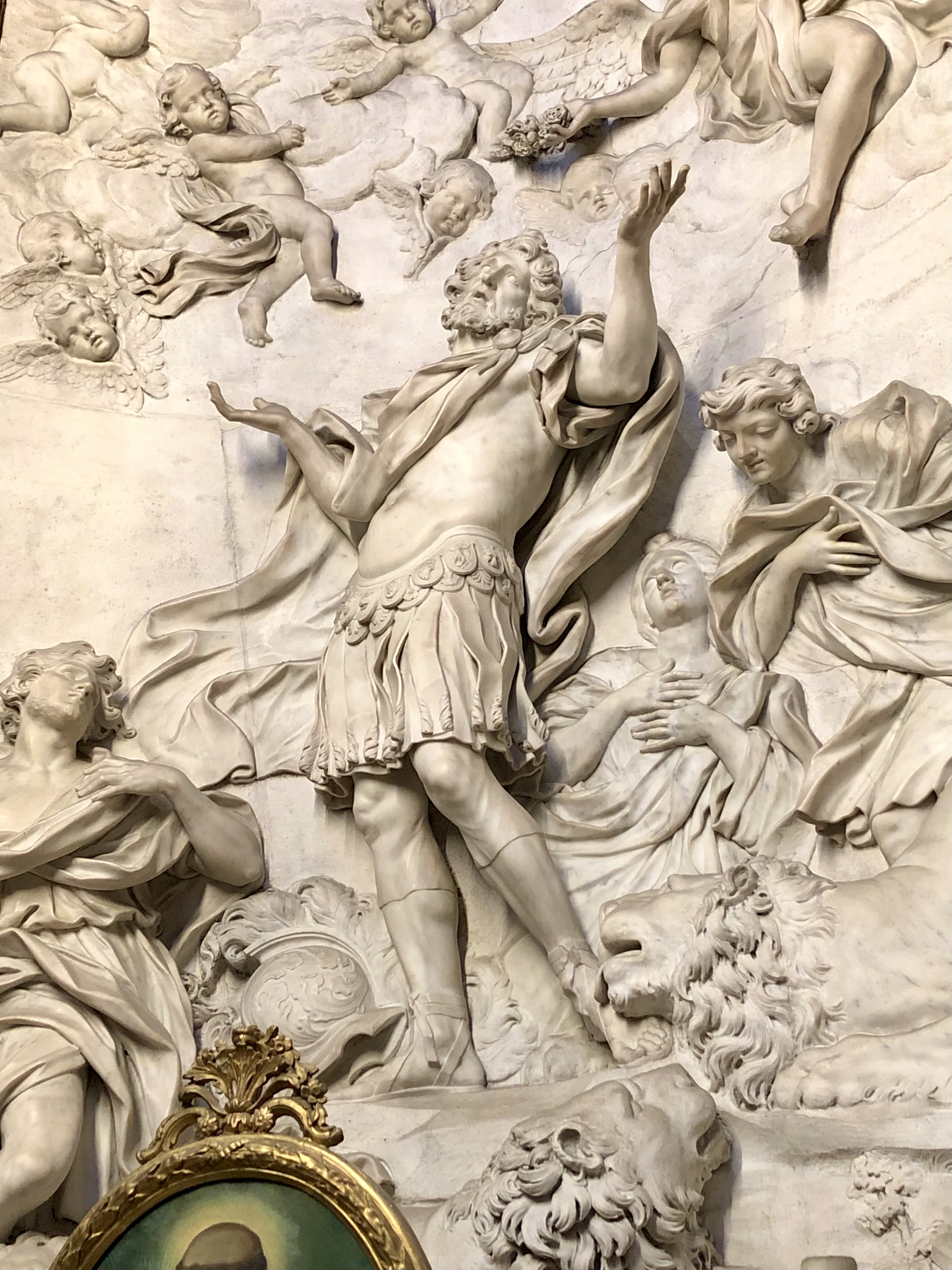

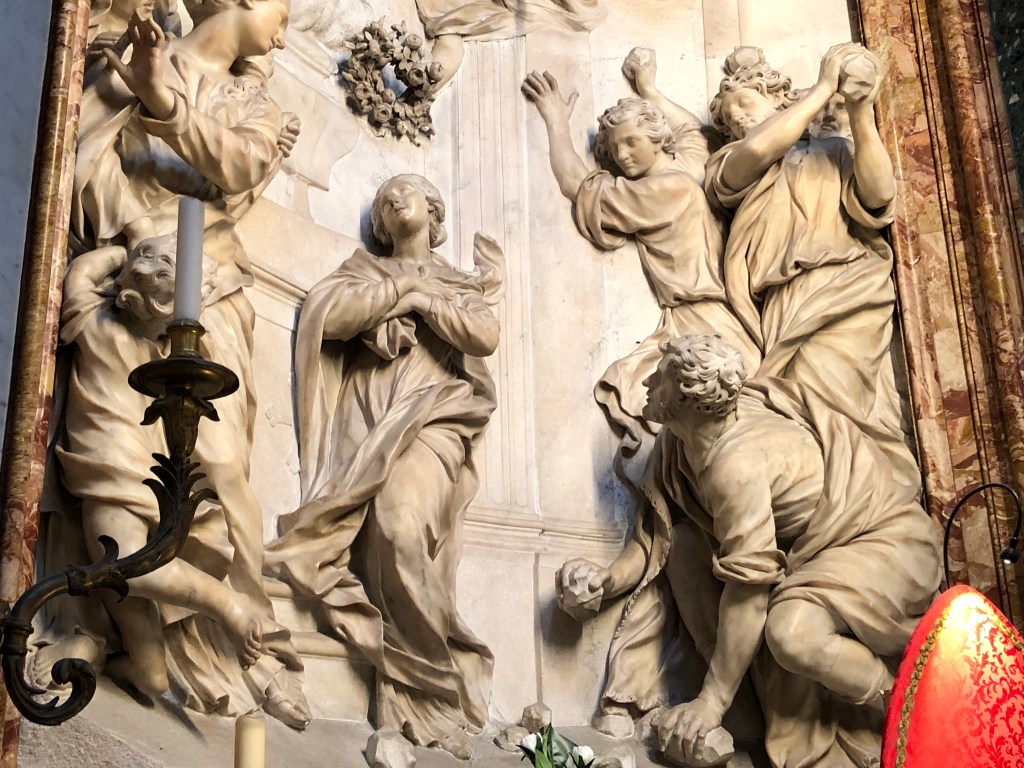
Architecture aside, Sant’Agnese is noteworthy for its interior dedicated to the martyrs of Rome. Sebastian and Agnes face each other across the center of the church, and altars dedicated to St. Eustace (another Roman soldier), St. Alexis (a Roman patrician who chose to live as a beggar), St. Emerenziana (the sister of St. Agnes, stoned for visiting her grave), and St. Cecilia (a Roman noblewoman martyred for her faith–and the patron saint of music) surround them.
The reliefs depicting these saints are full of baroque drama–and give us Christians living in a far more comfortable age a lot to think about.

 Tony Lusvardi, S.J.
2 thoughts on “The Church of Sant’Agnese in Agone”