“Icons of Hope” in Rome

Last week I mentioned the Church of Sant’ Agnese in Agone, one of Rome’s architectural gems and a monument to the city’s martyrs.

The last time I visited Sant’Agnese, I found that the Church was hosting a special display for the Jubilee (until February 16) dedicated to the theme “Icons of Hope.” The display brings together a number of icons from the Vatican Museum.

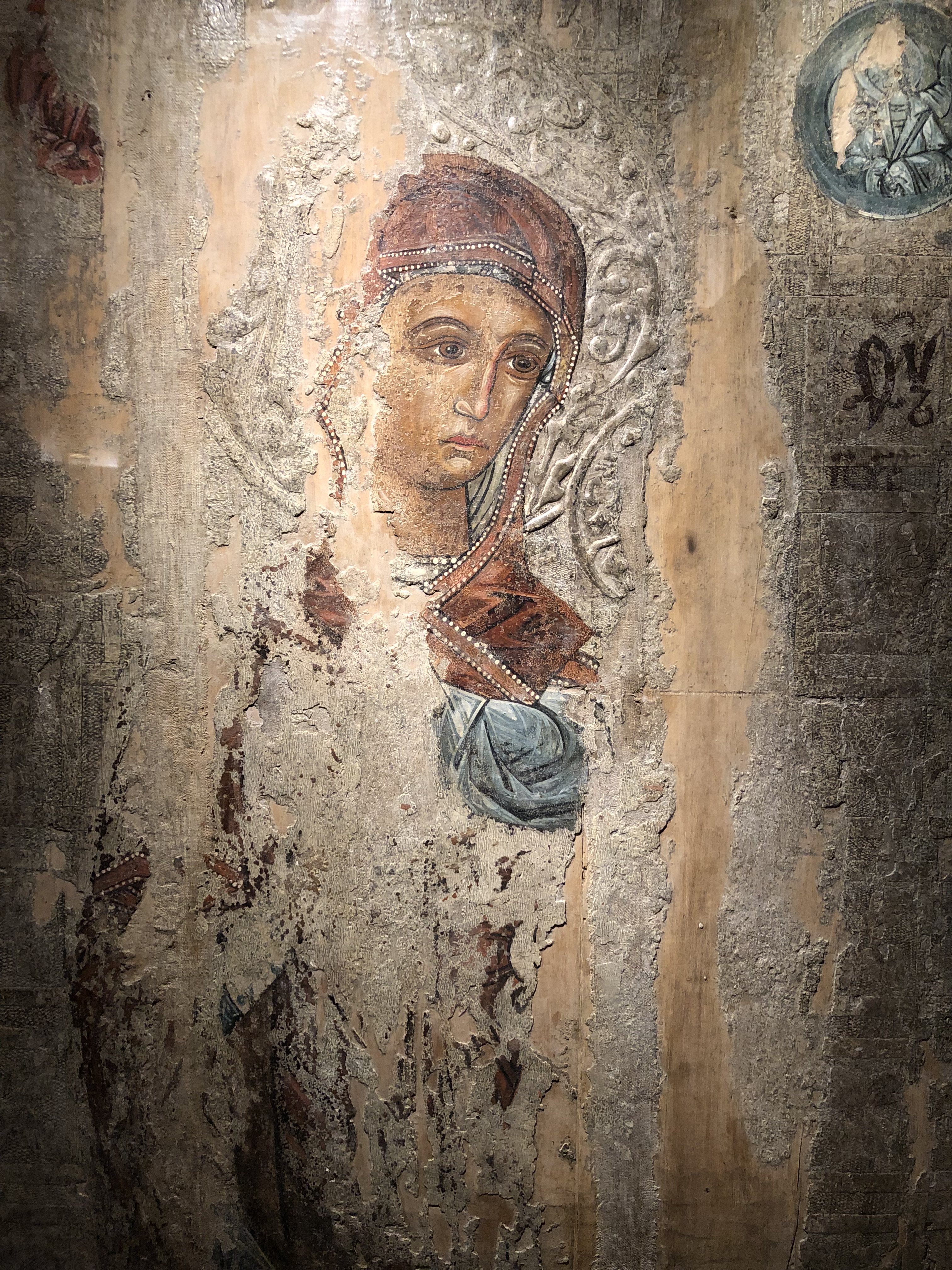
Virgin Hodegetria, Ukrainian, 17th-18th century

The most moving piece in the exhibition had to be the Ukrainian Virgin Hodegetria (17th/18th century). The engraved silver on a wood panel has been damaged over time, but the icon is all the more hauntingly beautiful. The Virgin’s face is still clearly visible, her eyes clear and sad, the expression that of someone who has known suffering but lost none of her dignity.

It is, of course, impossible to view the icon and not see in it the image of the suffering of the Ukrainian people as the Russian assault on their country every day grows more cruel and barbaric. Last week I wrote about the courage of the martyrs. Ukraine’s defense of its freedom and right to exist as a country has perhaps stung the conscience of the world because, in a self-indulgent age, the country’s display of genuine courage is bracing. And as George Weigel has pointed out, “Ukraine is fighting for all of us.”

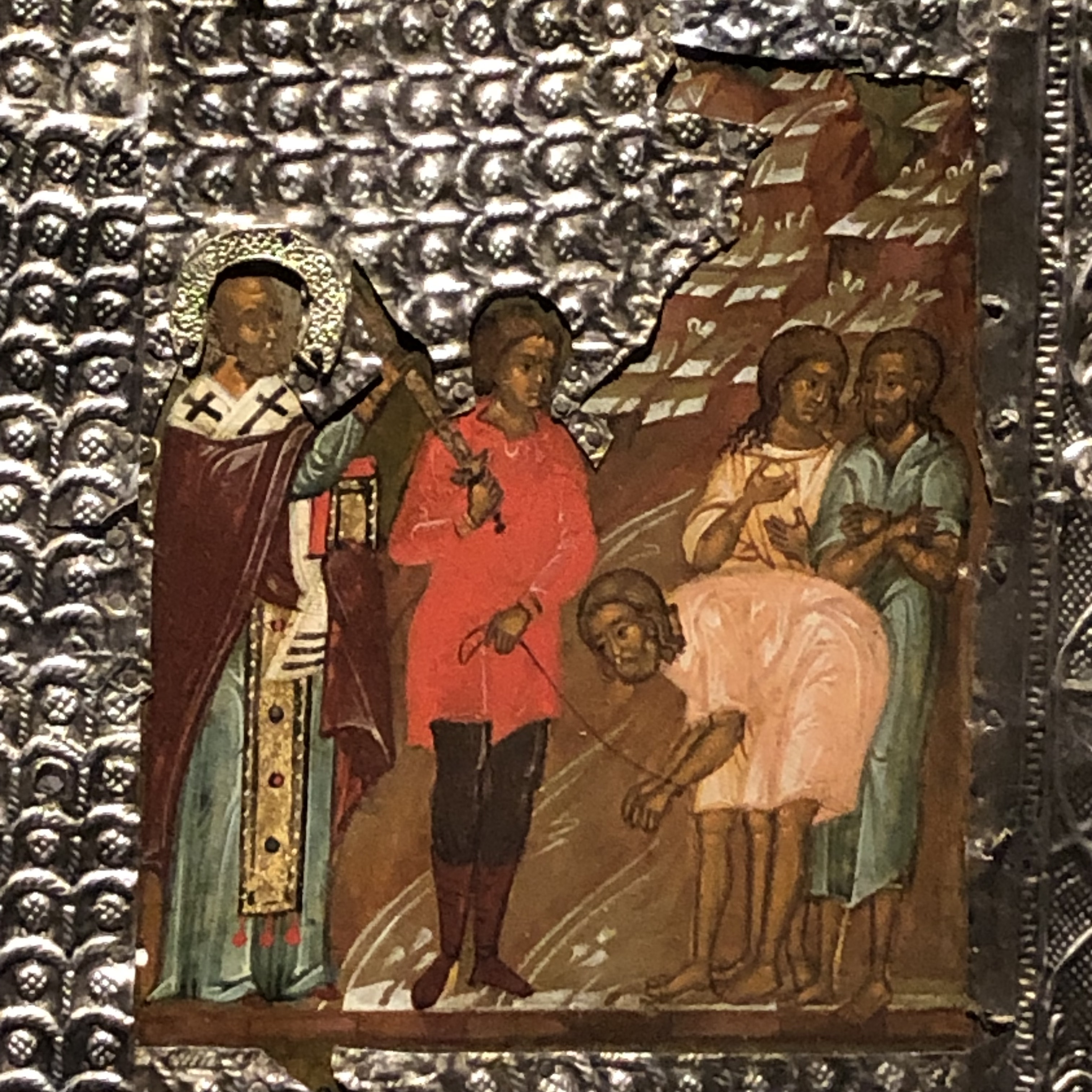
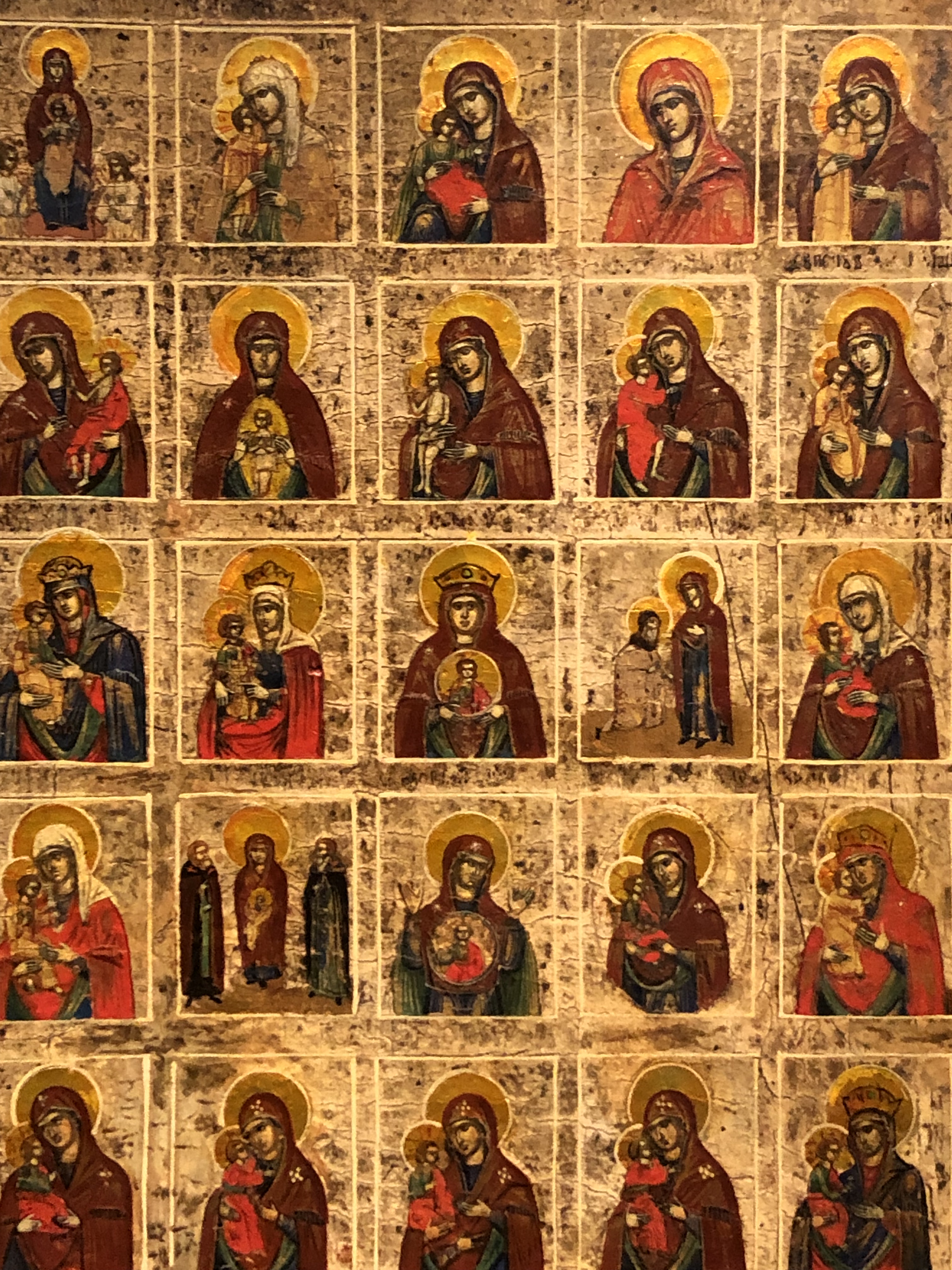
The display also contains icons from other eastern European countries–a sampling below.

The Church of Sant’Agnese in Agone

Sant’Agnese in Agone, Rome

This week’s liturgical calendar includes two prominent–and very different– Roman martyrs. The first, St. Sebastian, a third century soldier originally from Milan, was sentenced to death after converting to Christianity. Tied to a column, he was shot through with arrows but miraculously survived and was nursed back to health by a Roman matron named Irene. He went right back to preaching and, after warning the Emperor Diocletian to repent–a gutsy move if there ever was one–was beaten to death and thrown into Rome’s sewers.

No less courageous, St. Agnes sought to dedicate her life entirely to God while very young. This meant refusing the advances of several powerful suitors, who were enraged by the rejection. Agnes’s pagan father sided with the suitors. She was humiliated, even dragged naked through the streets of Rome, burnt at the stake and when that failed–as with the first attempt to kill St. Sebastian–eventually beheaded.

The courage of such martyrs–one a solider, the other a mere girl, barely a teenager–is fundamental, I think, to appreciating the full significance of Christian faith in eternal life. At least some of the ennui that one can perceive in the Church over the past several decades perhaps comes from deemphasizing the witness of the martyrs just when we need it most.

Continue reading “The Church of Sant’Agnese in Agone”

The uniqueness of Christian Baptism: homily for the Baptism of the Lord

Homily for the Baptism of the Lord (C)

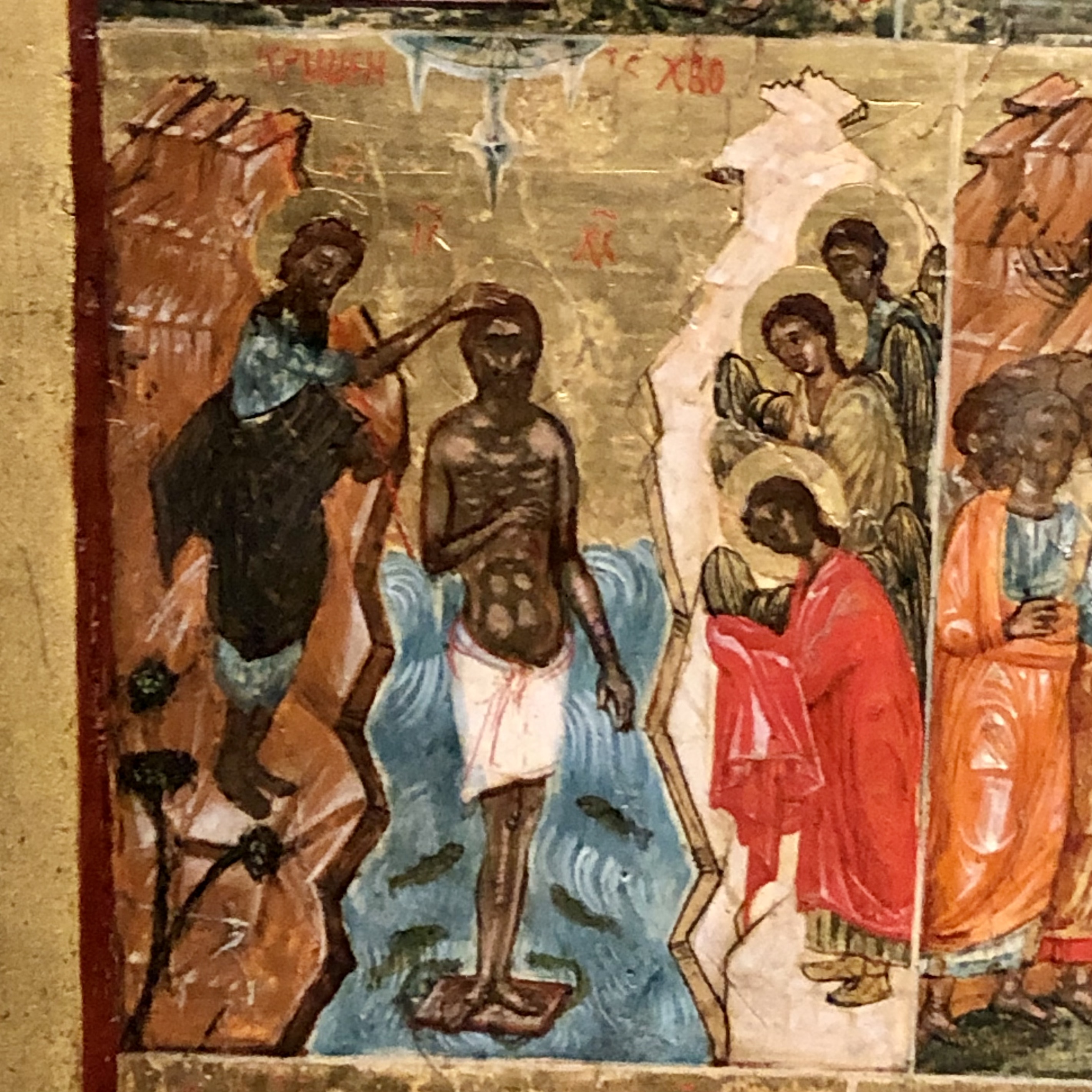
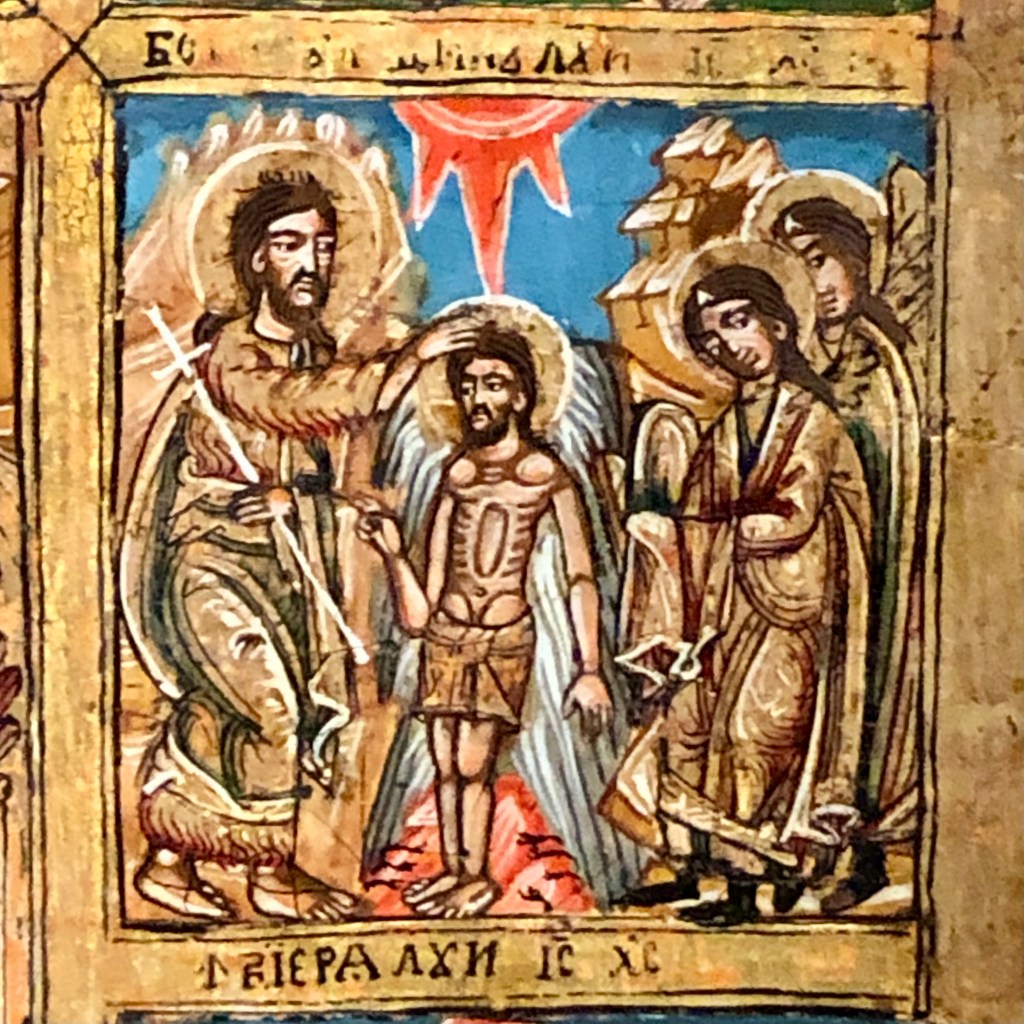
Baptism of the Lord from “Praznicar,” Romanian, 19th century

Today’s readings use some artful cinematography.  Today we celebrate the Baptism of the Lord.  Our readings give us scenes before baptism and immediately after baptism, but they cut away so that we don’t see the baptisms.  This montage of before and after shots nonetheless serves to highlight the uniqueness of Christian baptism.  Luke cuts from John the Baptist’s preaching to Jesus praying after his baptism.  The Holy Spirit descends like a dove and a voice from heaven speaks to the Lord.  The scene is obviously meant to show approval for Jesus’ baptism at the hands of John.

The scene chosen today from Acts of the Apostles is also meant to put the stamp of divine approval on baptism.  To understand Peter’s words in the house of Cornelius, we need to remember the whole context of the chapter in which they occur, Acts 10.  The scene unfolds in the earliest days of the Church when there was still doubt about who could belong to the Church: was the message of Jesus directed only to Jews or were all people called to Christianity?  In Acts 10, the centurion Cornelius—a Roman, not a Jew—receives a vision that prompts him to call Peter to his house.  At the same time, Peter receives a vision in which he’s told to eat all of the animals that Jewish dietary laws consider forbidden.  The vision was not a marketing ploy for the pork and shellfish industry, but instead it ensured that Peter didn’t hesitate to go to a Gentile’s house when Cornelius’s servants came to find him.  At Cornelius’s house Peter preached the message that we hear today.  The word was sent to the Israelites, he says, but it was intended, as Isaiah prophesied in the first reading, “to bring forth justice to the nations,” in other words, to extend beyond Israel itself. 

What we unfortunately don’t read today is what happens next.  As if anyone missed the first several hints, the Holy Spirit descends on the people in Cornelius’s house, who begin to speak in tongues, and Peter says, “Can anyone forbid water for baptizing these people?” (Acts 10:47).  God’s will is that baptism should be conferred on Gentiles as well as Jews and that all nations should enter the Church, even Roman centurions.

Now if you were a medieval theologian, who spent your days raising difficulties about sacramental theology, the story of Cornelius’s baptism might provoke another question: if the Holy Spirit had already descended on everyone in Cornelius’s household, why did they even need to be baptized?  Isn’t getting the Holy Spirit the whole point of baptism?  And once you’ve got the Holy Spirit, doesn’t the ceremony become redundant?  If you remember from Matthew’s account of the baptism of Jesus, John the Baptist himself poses a similar question about the baptism of Jesus.  “I need to be baptized by you,” he says.  “Why do you come to me?” (Matt 3:4).

Continue reading “The uniqueness of Christian Baptism: homily for the Baptism of the Lord”

The Holy Name of Jesus – and the Society that bears it

In the liturgical calendar of the Society of Jesus, January 3 is the Solemnity of the Holy Name of Jesus, our titular feast. Toward the end of his life, the great American Jesuit theologian Avery Dulles gave a lecture entitled “The Ignatian Charism at the Dawn of the Twenty-First Century,” which I think is as relevant today as it was nearly two decades ago. Dulles’s gift as a theologian was to clarify complex issues and get at the heart of the matter. The talk can be found in the collection of Dulles’s McGinley Lectures given at Fordham, Church and Society. Here are the final three paragraphs in which Dulles reflects on the Jesuit charism today:

“The Society can be abreast of the times if it adheres to its original purpose and ideals. The term Jesuit is often misunderstood. Not to mention enemies for whom Jesuit is a term of opprobrium, friends of the Society sometimes identify the term with independence of thought and corporate pride, both of which Saint Ignatius deplored. Others reduce the Jesuit trademark to a matter of educational techniques, such as the personal care of students, concern for the whole person, rigor in thought, and eloquence of expression. These qualities are estimable and have a basis in the teaching of Saint Ignatius. But they omit any consideration of the fact that the Society of Jesus is an order of vowed religious in the Catholic Church. They are bound by special allegiance to the pope, the bishop of Rome. And above all, it needs to be mentioned that the Society of Jesus is primarily about a person: Jesus, the Redeemer of the world. If the Society were to lose its special devotion to the Lord (which, I firmly trust, will never happen) it would indeed be obsolete. It would be like salt that had lost its savor.

“The greatest need of the Society of Jesus, I believe, is to be able to project a clearer vision of its purpose. Its members are engaged in such diverse activities that its unity is obscured. In this respect the recent popes have rendered great assistance. Paul VI helpfully reminded Jesuits that they are are religious order, not a secular institute; that they are a priestly order, not a lay association; that they are apostolic, not monastic, and that they are bound to obedience to the pope, not wholly self-directed.

“Pope John Paul II, in directing the Jesuits to engage in the new evangelization, identified a focus that perfectly matches the founding idea of the Society. Ignatius was adamant in insisting that it be named for Jesus, its true head. The Spiritual Exercises are centered on the Gospels. Evangelization is exactly what the first Jesuits did as they conducted missions in the towns of Italy. They lived lives of evangelical poverty. Evangelization was the sum and substance of what Saint Francis Xavier accomplished in his arduous missionary journeys. And evangelization is at the heart of all Jesuit apostolates in teaching, in research, in spirituality, and in the social apostolate. Evangelization, moreover, is what the world most sorely needs today. The figure of Jesus Christ in the Gospels has not lost its attraction. Who should be better qualified to present that figure today than members of the Society that bears his name?”

Avery Cardinal Dulles, S.J.

November 29, 2006