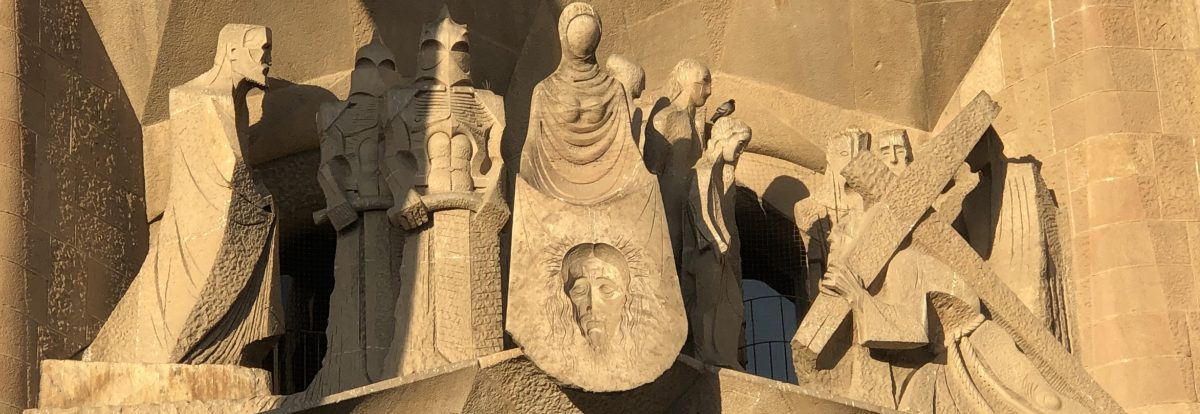
The Vatican Nativity Scene, 2024

Merry Christmas to all! I am spending Christmas at the church of the Santa Vergine degli Angeli in Maracalagonis, Sardinia, where I was fortunate to spend Holy Week earlier this year.

Before I left Rome, I was able to check out this year’s Nativity scene in St. Peter’s Square, always a source of discussion (and sometimes critique) among Romans. (For comparison, here are pictures of the Vatican Nativity scenes from the past two years: 2022 and 2023.) Last year was the 800th anniversary of this tradition, attributed to St. Francis–more about its origins in the town of Greccio here and here.
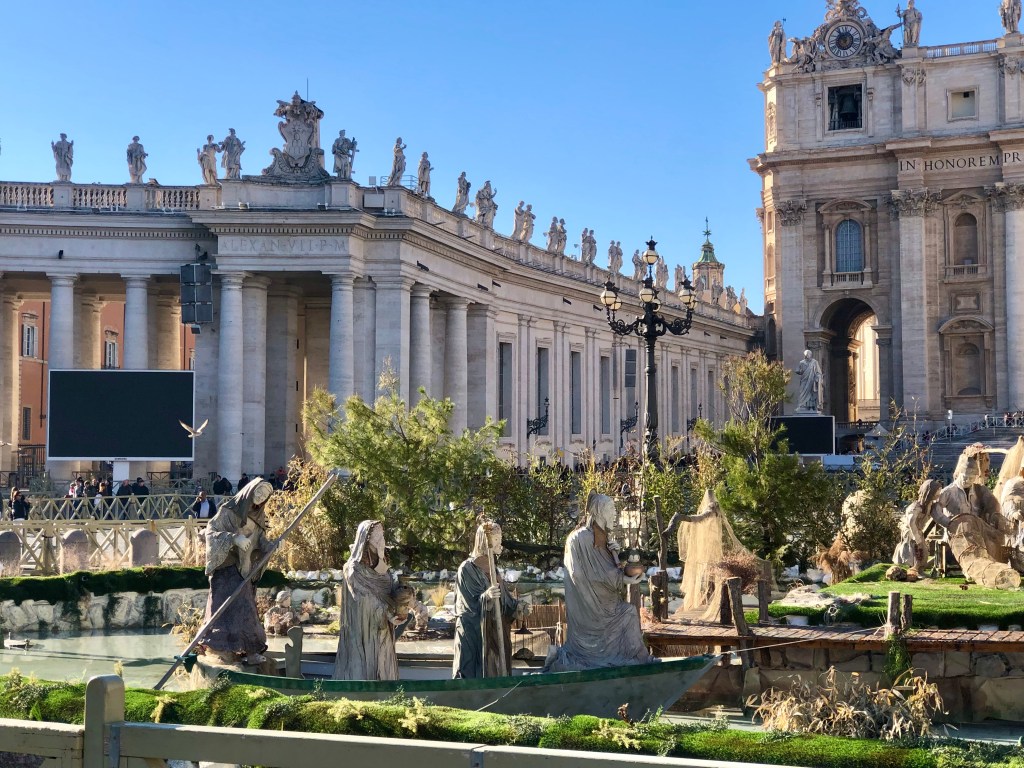
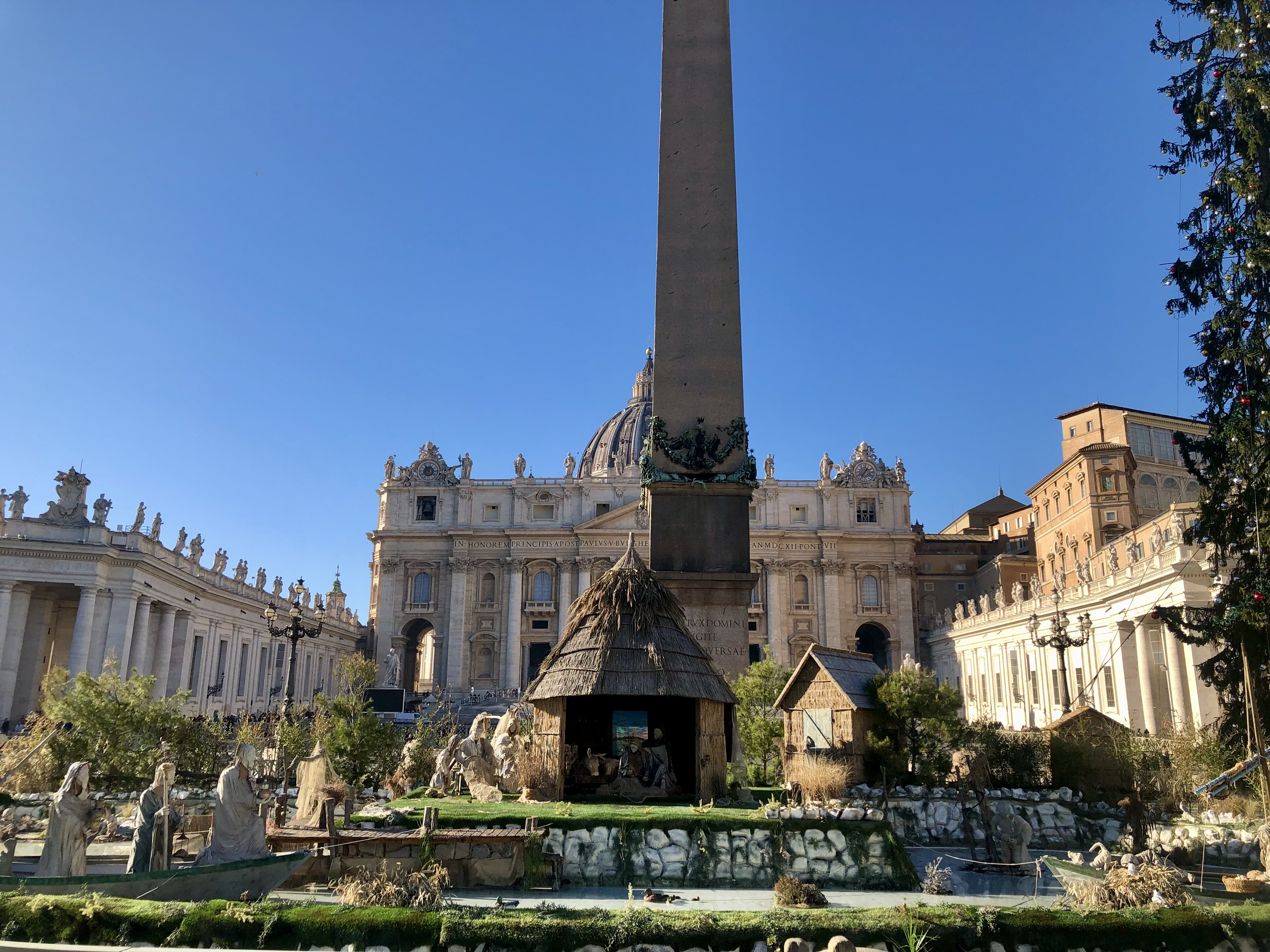
This year’s Vatican scene has a river theme, with the three kings making an aquatic landing in Bethlehem. As I noted last year, the point of such popular devotions, like Ignatian contemplation, is not to recreate history–or geography–but to help us find ourselves in the story. To that end, I found this year’s Nativity attractive and I especially liked the ducks in the foreground!

Wishing everyone many blessings and much happiness this Christmas!
The urnas of Bohol

Among 2024’s highlights was my first trip to the Philippines, where I attended a meeting of Jesuit liturgists, caught up with some Jesuit friends, did my annual 8-day retreat, and had a chance to explore a bit of that wonderful country, without doubt one of the most devout in the world.

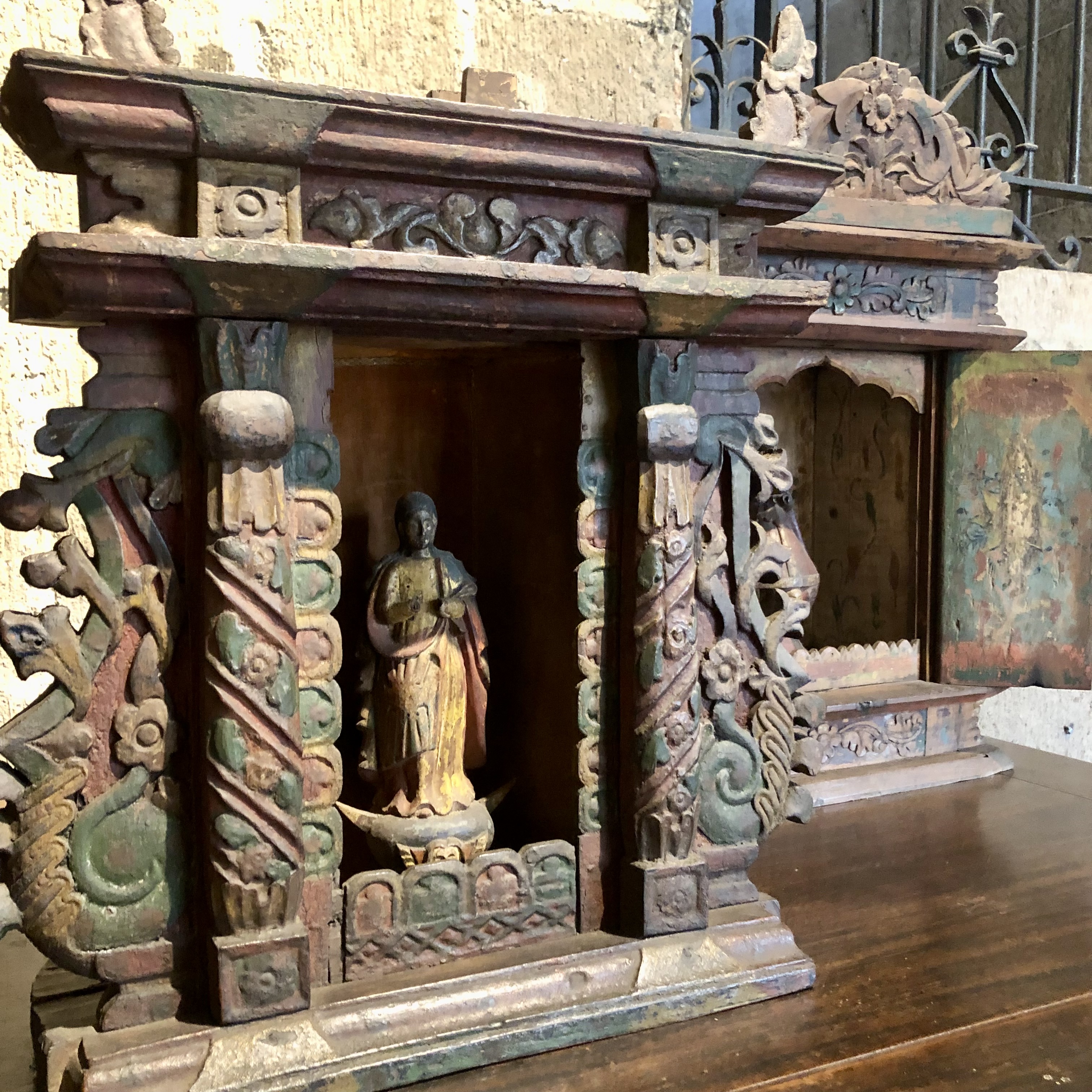
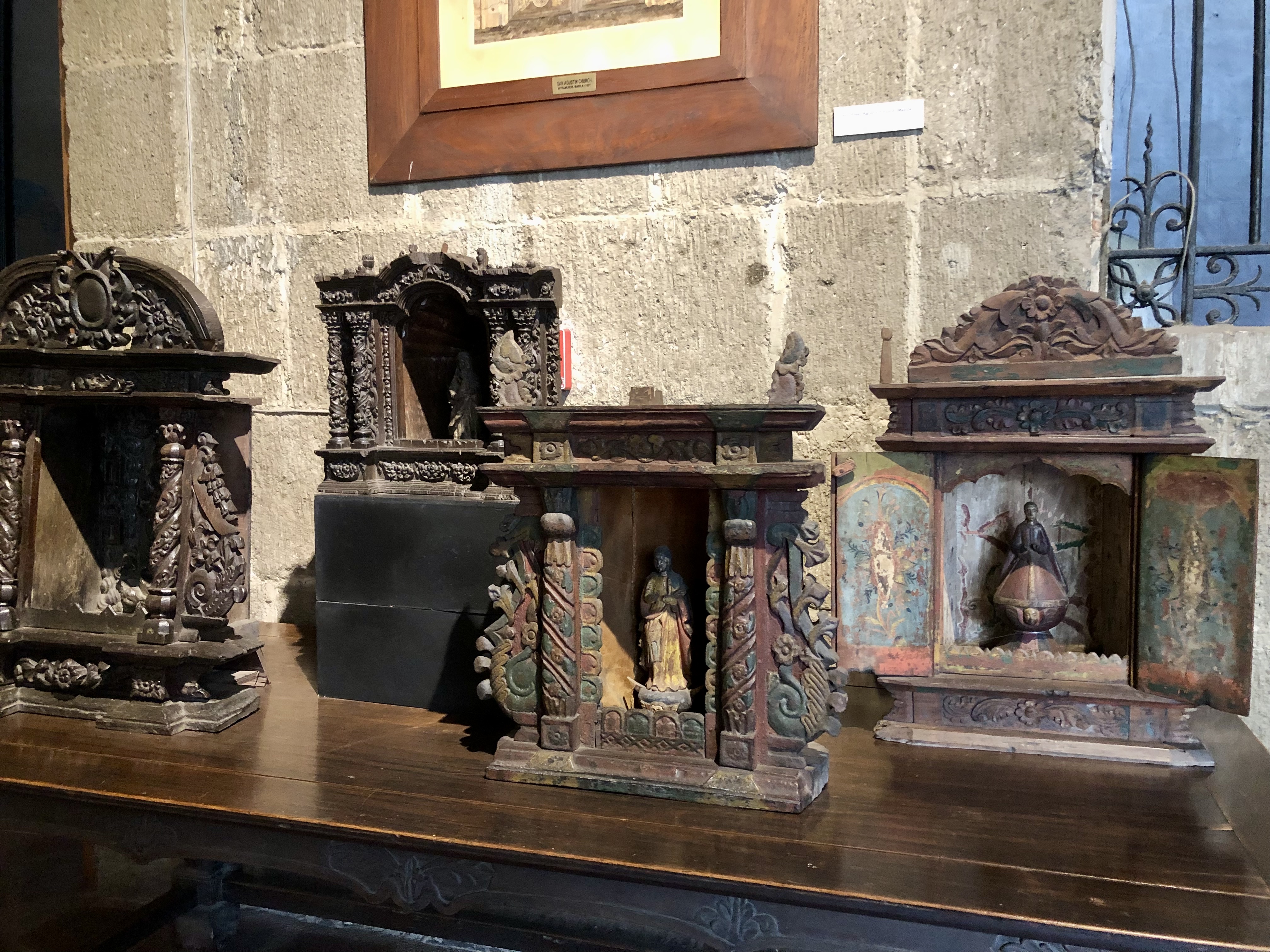
One of my discoveries when visiting the island of Bohol, home to the iconic Chocolate Hills, was a particular local devotional tradition, the “urnas,” which are small shrines made for homes during the colonial period. The urnas first caught my attention in the museum of the Church of St. Augustine in Manila (below), but it was only when I arrived in Bohol that someone explained the tradition. The urnas typically contain a saint and are beautifully carved and painted.

Some of the saints depicted reflect the missionary orders that evangelized the areas, and others give a window into the local piety of the time. Note for example, the statue of St. Roch (with his dog), a saint often invoked against plague. St. Vincent Ferrer also seems to have been particularly popular. This depiction of the Holy Family seems appropriate as Christmas approaches:

Continue reading “The urnas of Bohol”

Look East! Homily for the Second Sunday of Advent

Homily for the Second Sunday of Advent (C)

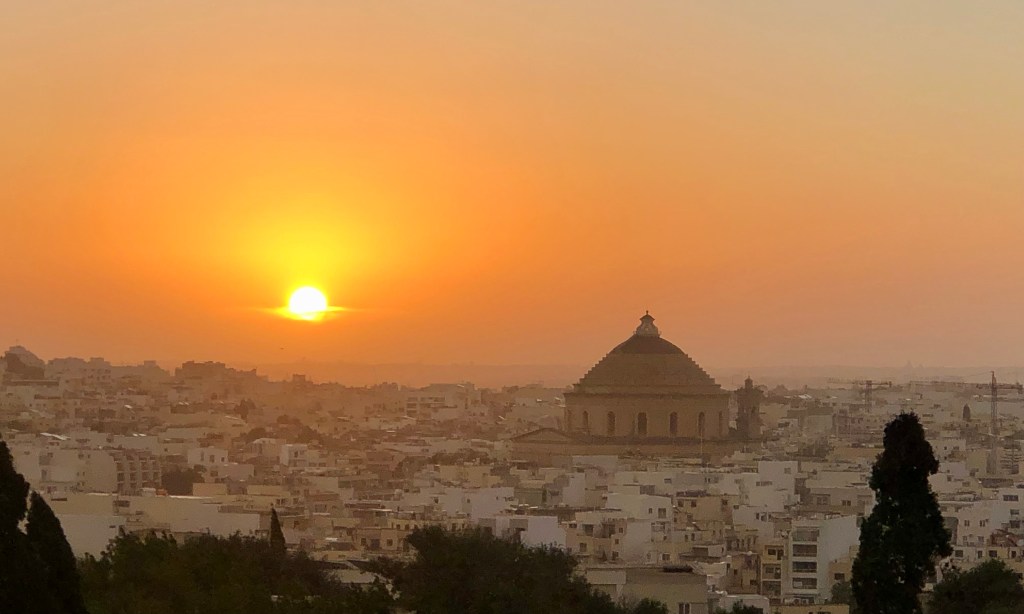
Dawn, Mosta, Malta

“Look to my coming,” Gandolf tells Aragorn in the second installment of the Lord of the Ringstrilogy, The Two Towers.  “At dawn on the fifth day, look east.”  Those familiar with the story, know that Gandolf’s words come at a particularly dramatic moment in the epic, when the last holdouts of Rohan—one of the two remaining kingdoms of men not to succumb to the forces of evil—have retreated to their mountain stronghold, Helms Deep, and the walls of the fortress have begun to crumble, its gates to give way, and its doors to crack under the onslaught of a massive army sent by the turncoat wizard Saruman, who, seduced by power, has joined the forces of darkness.  And as Aragorn, the king in exile, prepares for one final charge with what knights remain, he remembers the words of the faithful wizard Gandolf, who had left five days before to seek aid.  “At dawn on the fifth day, look east.”

We read a similar instruction in the Book of Baruch, directed to the holy city, “Up, Jerusalem! Stand upon the heights; look to the east.”  These words are echoed in the Advent hymn familiar to many of us, “People, Look East.”  There is something primordial in this call, in the instinct to look in hope to the east.  When I worked among the Lakota Sioux in South Dakota, I learned that in their traditional religion, east was the direction of prayer.  I found some Lakota Christians very insistent on a Christian tradition—which I did not know about—of burying the dead facing east.  The Christian tradition of prayer facing east goes back to the first centuries.  St. Ambrose talks about catechumens, after their baptism, turning from the west to the east as a sign of the new orientation of their lives.

Continue reading “Look East! Homily for the Second Sunday of Advent”

The Art of Waiting: Homily for the First Sunday of Advent

Basilica di Santa Maria Assunta, Torcello, Venice

Homily for the First Sunday of Advent (C)

One of the casualties of the smartphone revolution has been losing our ability to wait.  Instead of waiting, we scroll.  Losing the ability to wait may not seem a real loss, but I think it is.  Scrolling and checking messages and adding new apps has not made me more productive.  Instead, I’m more easily distracted and impatient.  Inside our electronic cocoons, we miss the things that used to happen while we waited—people watching, striking up conversations, noticing the landscape from the window, wondering at it.

Today’s readings are about the art of waiting.  But they warn us not to romanticize it.  Times of waiting can be dangerous.  Today’s Gospel identifies two dangers of waiting: anxiety and drowsiness.

The anxieties mentioned in the Gospel come from genuinely terrifying world events—“people will die of fright,” the Gospel warns—but also everyday anxieties that seem related to drowsiness.  The context of today’s readings, of course, is the Lord’s second coming, when Jesus will return in awesome and awful judgment, remaking all reality.  It may be that some of us are anxious about meeting Jesus because we’re afraid of that judgment.  Paul warns the Thessalonians to conduct themselves to please God, as they have been taught.  Advent is a time when the Church reminds us to examine our consciences, to make use of the sacrament of penance, to align our lives with Jesus’ teaching.  

Continue reading “The Art of Waiting: Homily for the First Sunday of Advent”