Homily for the 19th Sunday in Ordinary Time (B).

In today’s first reading a sleepy Elijah does not seem to want to deliver the prophetic message the Lord gives him but requires an angelic wakeup call. It’s no mystery why; his mission requires him to speak the truth to power, and he faces opposition. But he must speak anyway. Meanwhile, the reactions to Jesus’ claim—“I am the bread of life”—in John 6 are among the most contentious in the Gospel.
I too will fess up to the temptation to burrow under my covers this morning to avoid delivering a contentious message. As many of you know, an initiative known as Amendment G has been placed on South Dakota’s ballot this November to insert a “right” to abortion without substantial limits in the state constitution. Our bishop-elect has asked priests to address the issue in their homilies this week and next. To be clear, however, it was the pro-abortion forces who placed this divisive issue on the ballot.
And, to be equally clear, this amendment is not “pro-choice” but pro-abortion. Sadly, abortion is already legal and available in the United States. In Minnesota, there are no restrictions on abortion at all. Amendment G, then, will not make abortion available—because it already is—but it will make it more easily available and common. It would remove even moderate restrictions and safety standards for abortion. We have seen in recent months, corporations and politicians rush to provide free abortions, through insurance or government funding, and it’s important to let what this implies sink in. Having a baby—even giving her up for adoption—is never free. So these moves make abortion not just a choice but in practical terms the preferential choice. They create social structures that systematically favor abortion.
You might question talking about a political issue, such as abortion, in a homily, so I thought today might be an opportunity to address this question and also clear up a few misunderstandings about Catholic social teaching. In general, when it comes to particular questions of public policy, there is ample room for Catholics to agree or disagree with each other and still be faithful Christians. I signed a petition last week to limit logging in national forests, but another Catholic might weigh the question of how to balance economic development with environmental protections in a different way. These types of issues fall into a category Catholic teaching labels “prudential judgments.” People can be faithful to the principles of Catholic teaching but make different judgments about how these principles play out in different circumstances. In matters of prudential judgment Church leaders sometimes express their preferences, but these positions are more or less well-informed opinions, not doctrine.
Relatively rarely, some law or policy will directly violate a Church teaching in principle. When we’re talking about creating a right to abortion, we are dealing with a law that cannot in principle be reconciled with Christian ethics. Sometimes, people will confuse these issues—what the internet calls “gaslighting”—by speaking as if, say, immigration and abortion are the same kind of issue. They are not. The question of how to regulate immigration is made up of many complicated factors. The US Conference of Catholic Bishops has put forth some very thoughtful policy proposals in this regard, but it’s possible that a good Catholic would, say, weigh the economic data differently and arrive at different conclusions. If someone were to propose a right to kill immigrants—for example, adding the right to kill immigrants to the South Dakota constitution if they interfered with my future economic prospects—then that proposal would be in principle impossible to reconcile with Catholic teaching.
Amendment G is one of those proposals that categorically contradicts core Christian principles. There will be millions of dollars spent by pro-abortion groups trying to convince you otherwise or just confuse you, so pastors—like Elijah—have a responsibility to state clearly that supporting Amendment G means cooperating with evil.
I might also add, to clear up another misunderstanding, that Catholic teaching on abortion is not based on any uniquely Catholic article of faith—it’s not like our belief in the real presence of Christ in the Eucharist, which is a supernatural belief. It’s true that the Bible presupposes that life begins at conception—think about the infant John the Baptist leaping in Elizabeth’s womb or God’s words to Jeremiah, “Before I formed you in the womb, I knew you.” This is not unique to the Bible. If you find out that a woman is pregnant, you ask, “When’s the baby due?”—not “When will the clump of cells become a baby?” Unless someone intends to kill the child, we presuppose that human life begins at conception because it self-evidently does.
The pro-abortion side relies on rhetorical manipulation to claim otherwise. Think of the phrase “terminating a pregnancy.” It is meant to disguise what really happens because, of course, birth terminates a pregnancy. Abortion involves killing the child before a pregnancy is terminated. Even more Orwellian is the phrase “reproductive rights” because, of course, one reproduces only if one’s child survives.
Because the fact that life begins at conception is a truth of reason and not a religious opinion, the best expression I have read of the fact comes from a progressive atheist named Nat Hentoff. Explaining why he, an atheist, was prolife, Hentoff wrote:
Once the sperm and the egg meet, and they find a sort of nesting place in the uterus, you now have a developing human being. It’s not a kangaroo. It’s not a giraffe. It’s a human being. And that development in the womb until the person comes out is a continuing process. Therefore, if you kill it at any stage—first three weeks, first three months—you’re killing a developing human being.
If the child weren’t human, she wouldn’t have human DNA. If she weren’t alive, you wouldn’t have to poison or dismember her in order to “terminate the pregnancy.”
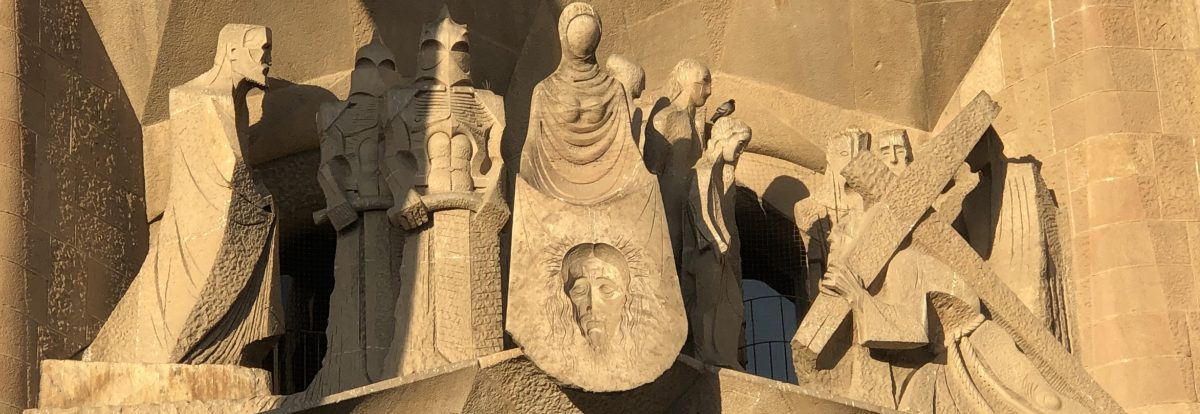
But even though even an atheist can see that abortion is wrong because it kills an innocent human being, we Catholic Christians do have a religious motive to defend our unborn brothers and sisters. Jesus tells us that he is particularly present in those who are most vulnerable and helpless, that we will be judged by how we treat the least among us. Pope Francis has left no uncertainty about the obligations this places on us as followers of Jesus, and I’ll close with his words: “Every child who, rather than being born, is condemned unjustly to being aborted, bears the face of Jesus Christ.”*
Readings: 1 Kgs 19:4-8; Eph 4:30-5:2; Jn 6:41-51
St. Isaac Jogues Catholic Church
Rapid City, South Dakota
August 11, 2024
*Address to the International Federation of Catholic Medical Associations, No. 2. September 20, 2013.
For the second of this pair of homilies on this issue, click Choose life, South Dakota.
Just a reminder, if you haven’t done so already, to consider subscribing to this blog:

 Tony Lusvardi, S.J.
One thought on “Every child bears the face of Christ: homily for the nineteenth Sunday in Ordinary Time”