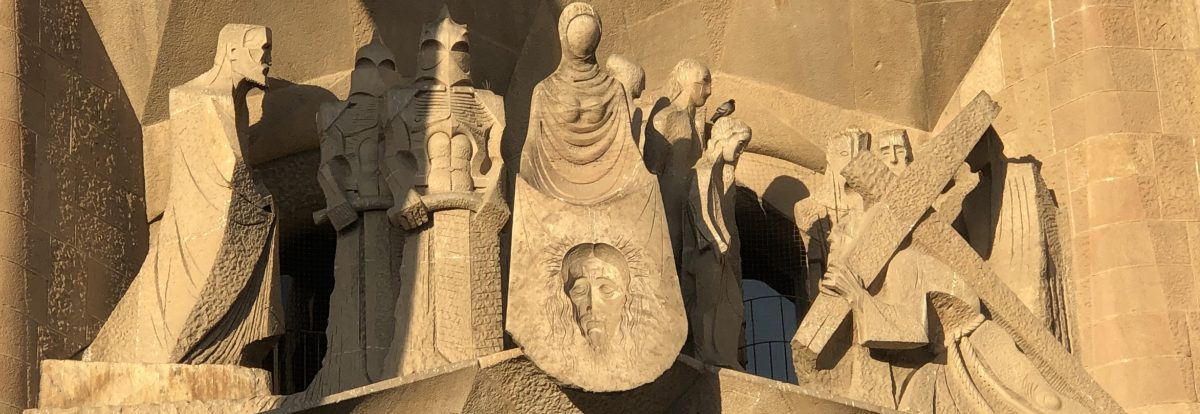
Last month the Gregorian Jesuits took our spring community outing to L’Aquila, capital of the Abruzzo region. L’Aquila was most recently in the news for a 2009 earthquake that tragically killed over 300 people. Most buildings in the city have been restored, though construction still abounds.
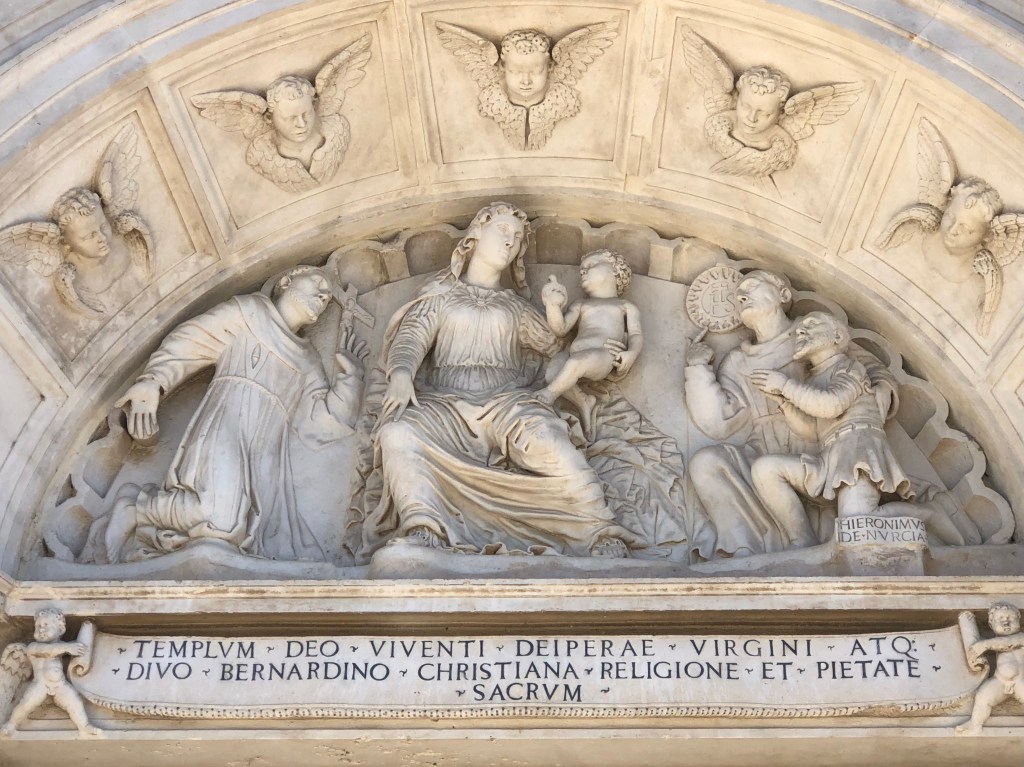
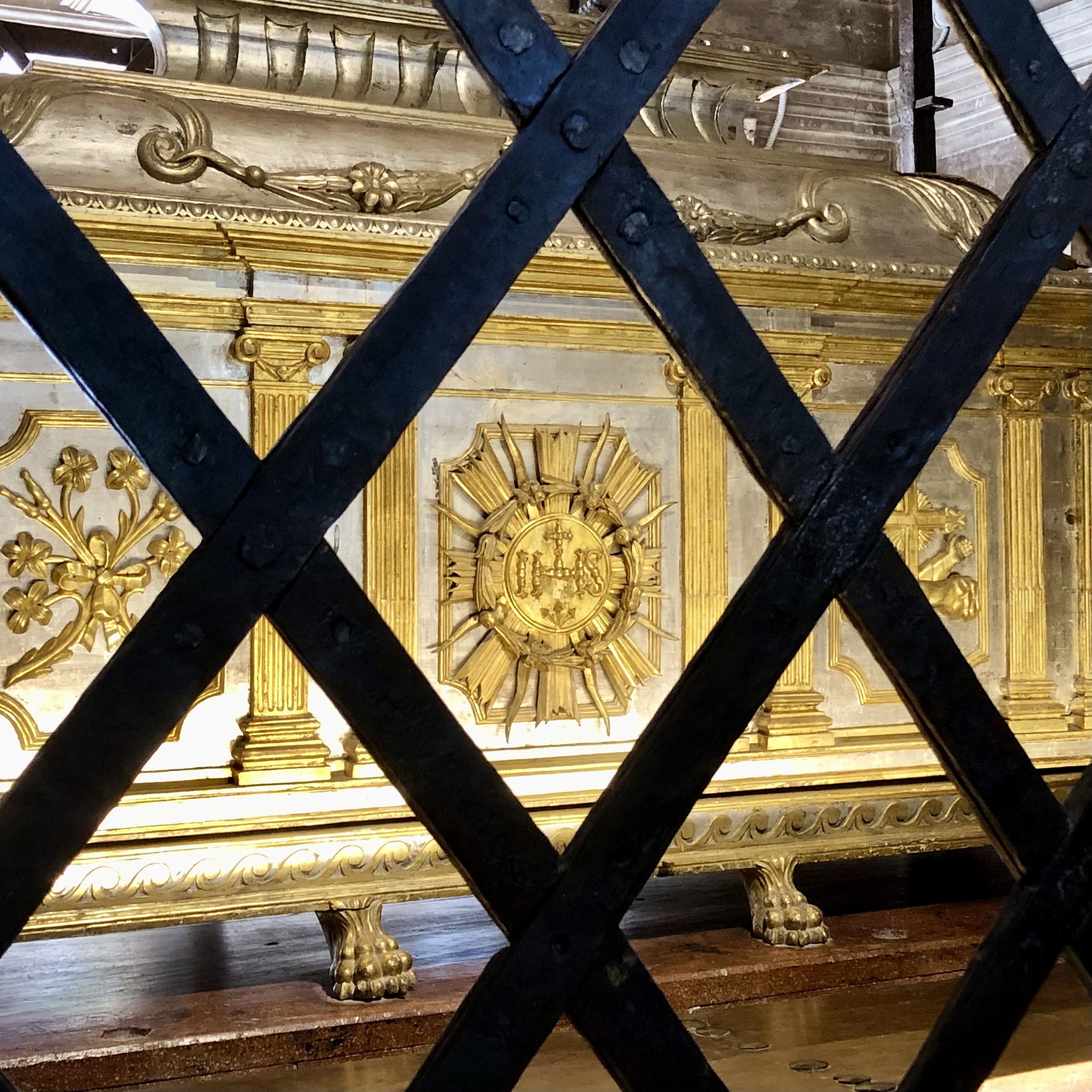
Highlights of the trip were two churches. The first, the Basilica of St. Bernardino of Siena, is dedicated to the Franciscan preacher (1380-1444) with a great devotion to the name of Jesus. In fact, in images of St. Bernardino one frequently sees the IHS Christogram–using the Greek letters for the name of Jesus. The “IHS” was later taken up, of course, by the Society of Jesus. The IHS sunburst with the three nails of Christ’s passion is prominently displayed all over the Basilica of San Bernardino. The saint died in L’Aquila and is buried in the basilica.
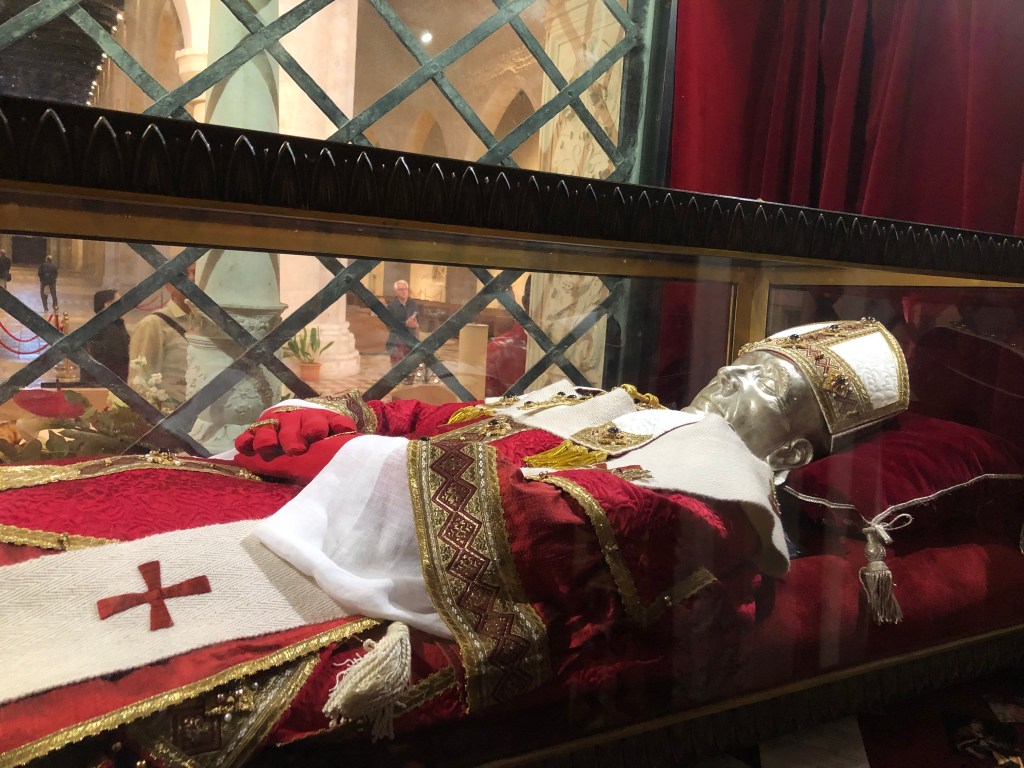
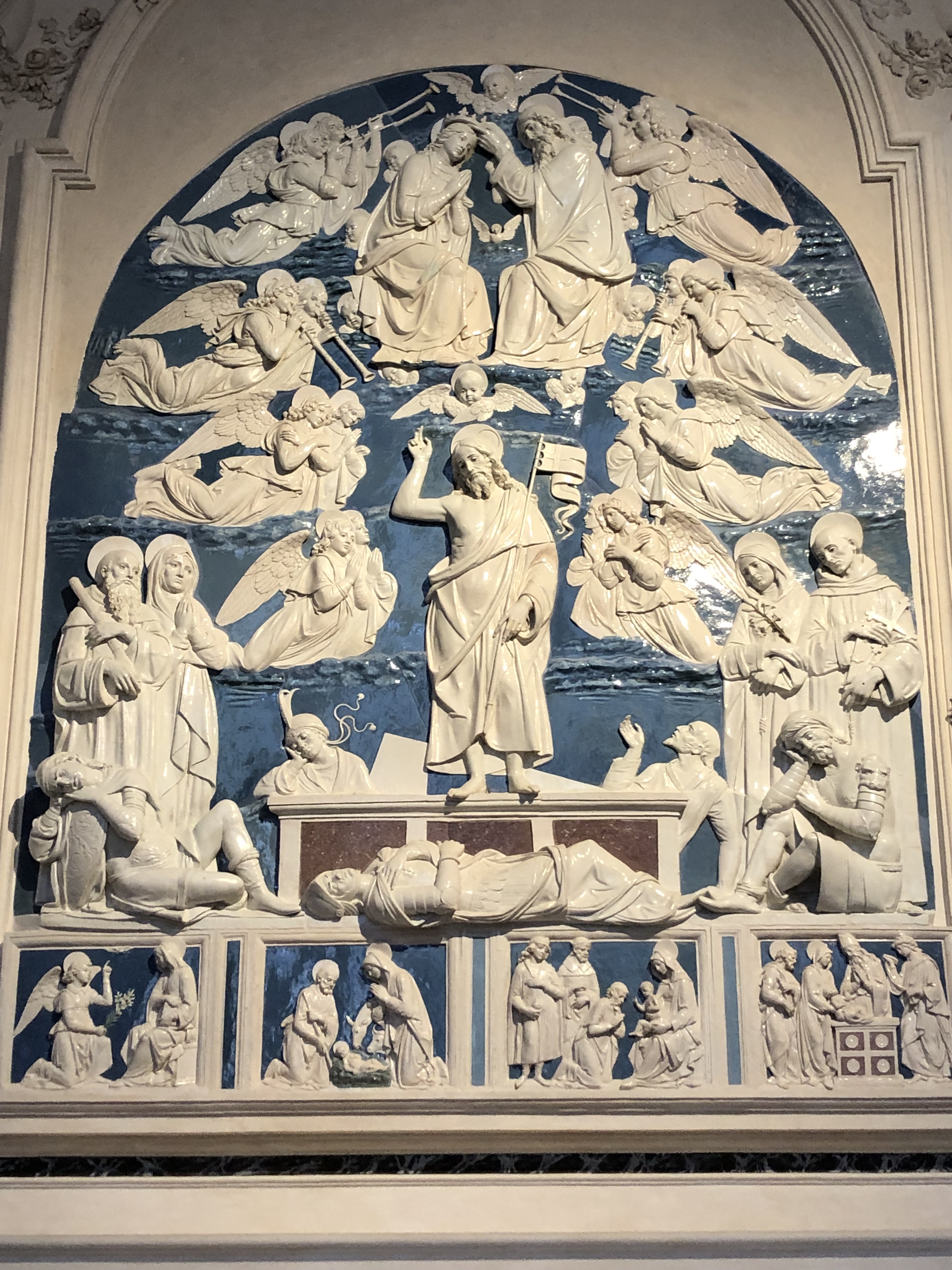
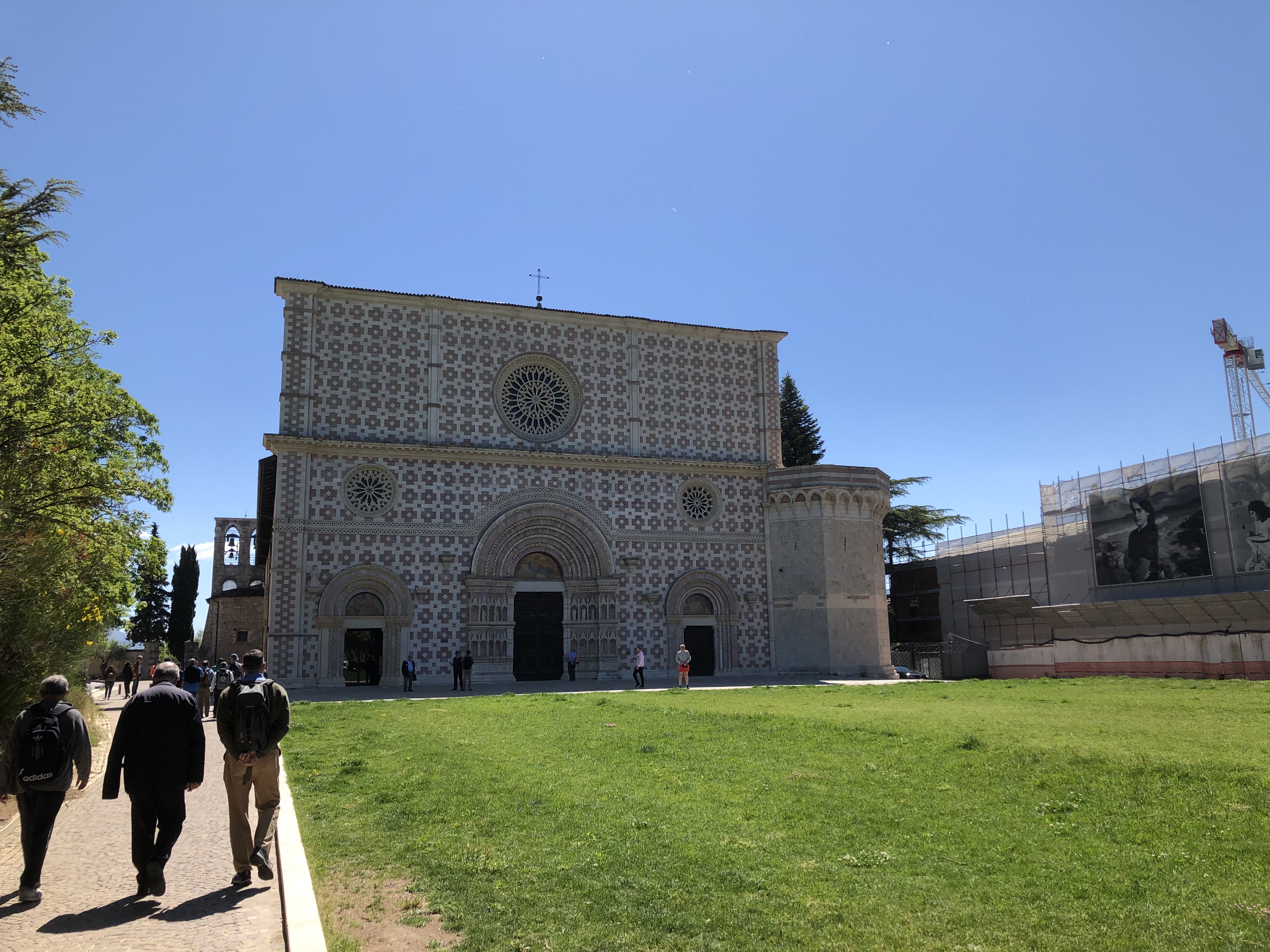
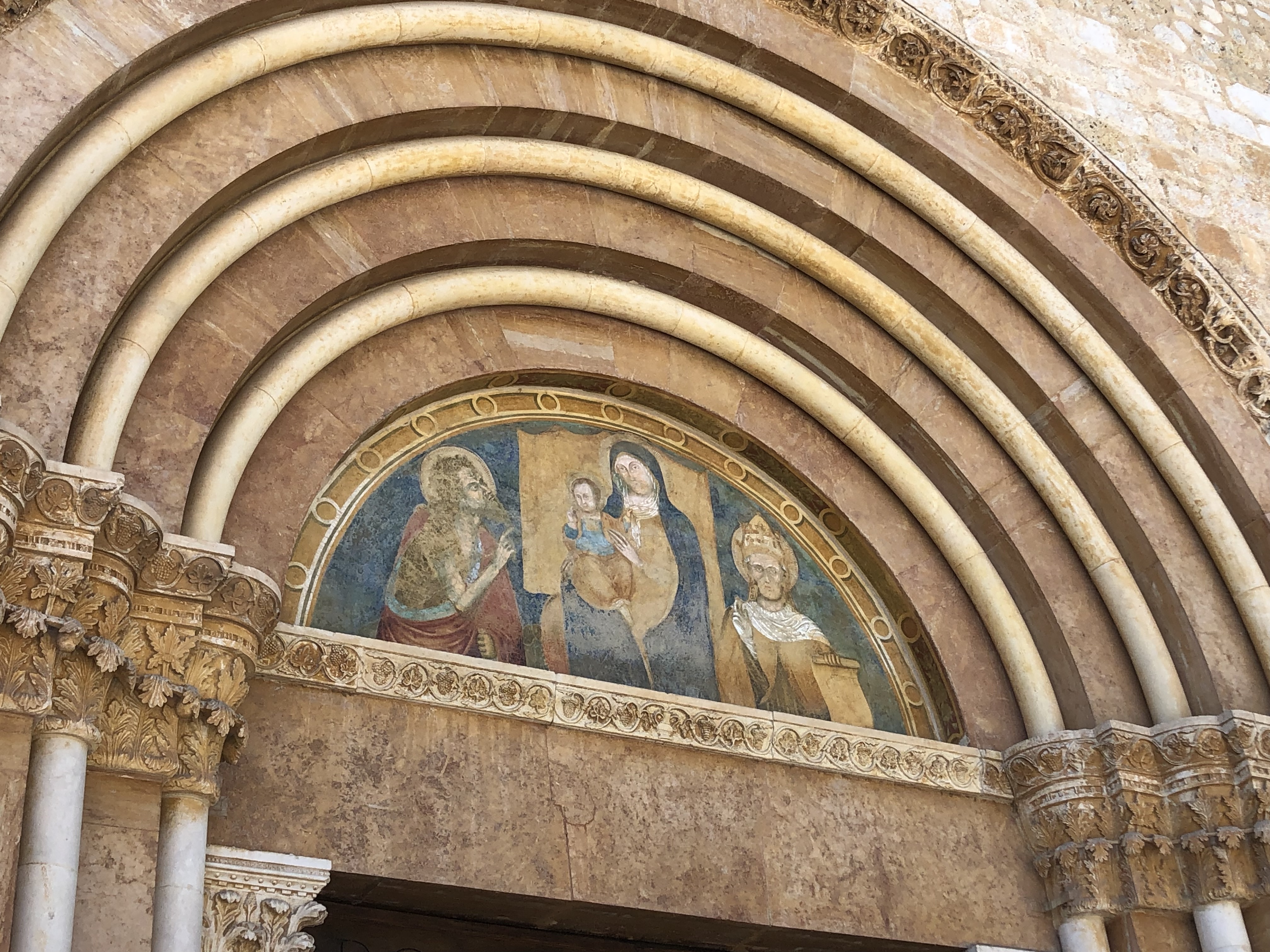
L’Aquila’s other iconic church is Santa Maria di Collemaggio, burial place of Pope Celestine V (1215-1296). It is known as the Church of Pardon because of the plenary indulgence Celestine attached to the church–what locals refer to as an annual Jubilee. Celestine’s papacy, however, could hardly be considered a success, and he resigned after only a few months in office. He was a holy hermit, perhaps never really cut out to be pope.
Readers of the Divine Comedy might recall that Dante considered Celestine’s resignation to be a dereliction of duty and (probably) numbered him among the souls stuck forever just outside the doors of hell for having “through cowardice, made the great refusal” (Inferno III, 60). His successor (Boniface VIII, also in hell) also takes a shot at poor Celestine a several cantos later for having no care for the keys of Peter (XXVII, 105).
Celestine was, however, later declared a saint and Benedict XVI left his pallium at his tomb in L’Aquila — a foreshadowing, perhaps, of his own resignation. Of course, one can recognize the sanctity of both men and still not think papal resignations are a good idea. My own sense is that Benedict’s resignation may have contributed to the increased politicization of the papacy, making it seem more like a secular office and less like a sacred calling. But those are debates for another day…





 Tony Lusvardi, S.J.