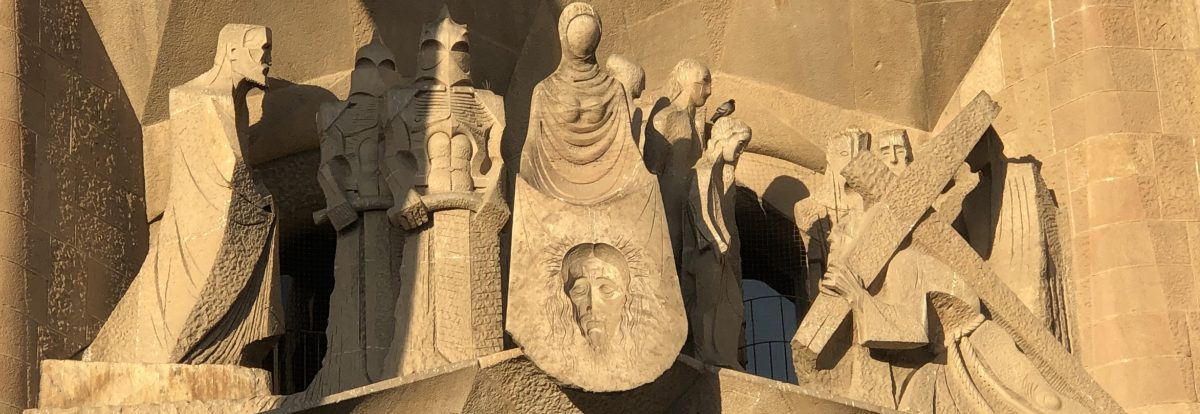
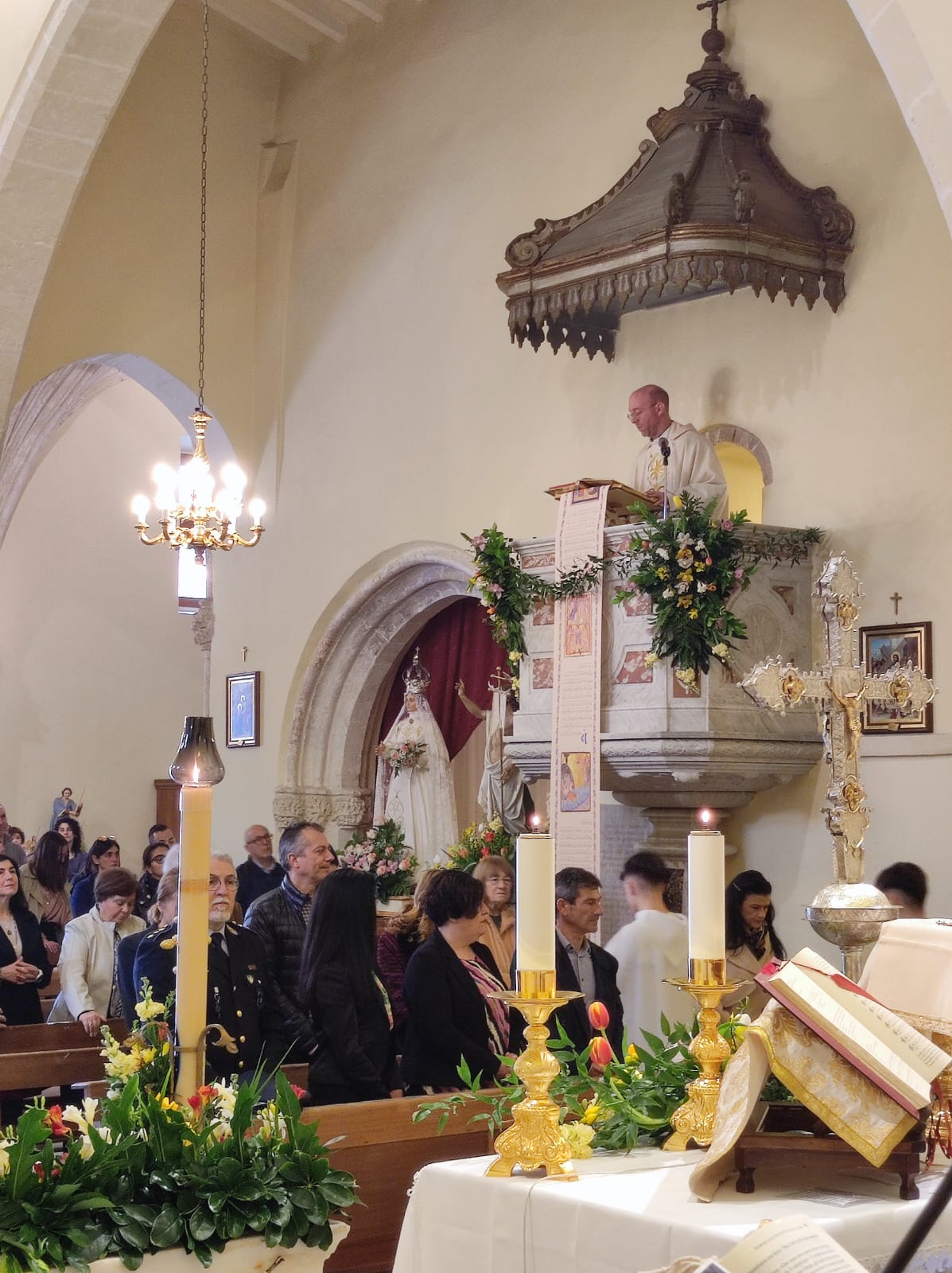
I was fortunate this year to have spent Holy Week and Easter in Maracalagonis, Sardinia, a small town about a 20 minute drive from the center of Cagliari. It was a good break from the classroom and a wonderful taste of parish life.

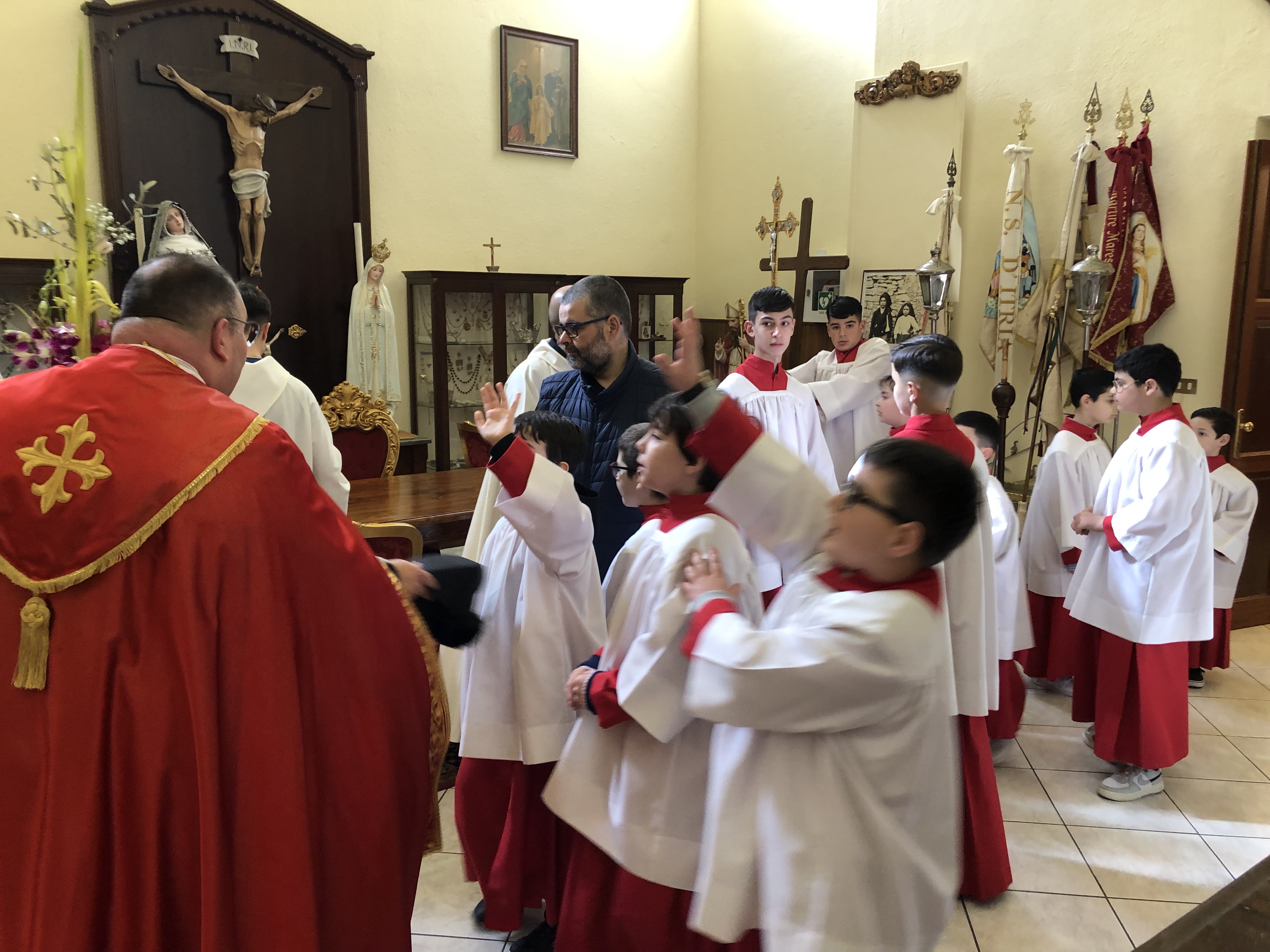
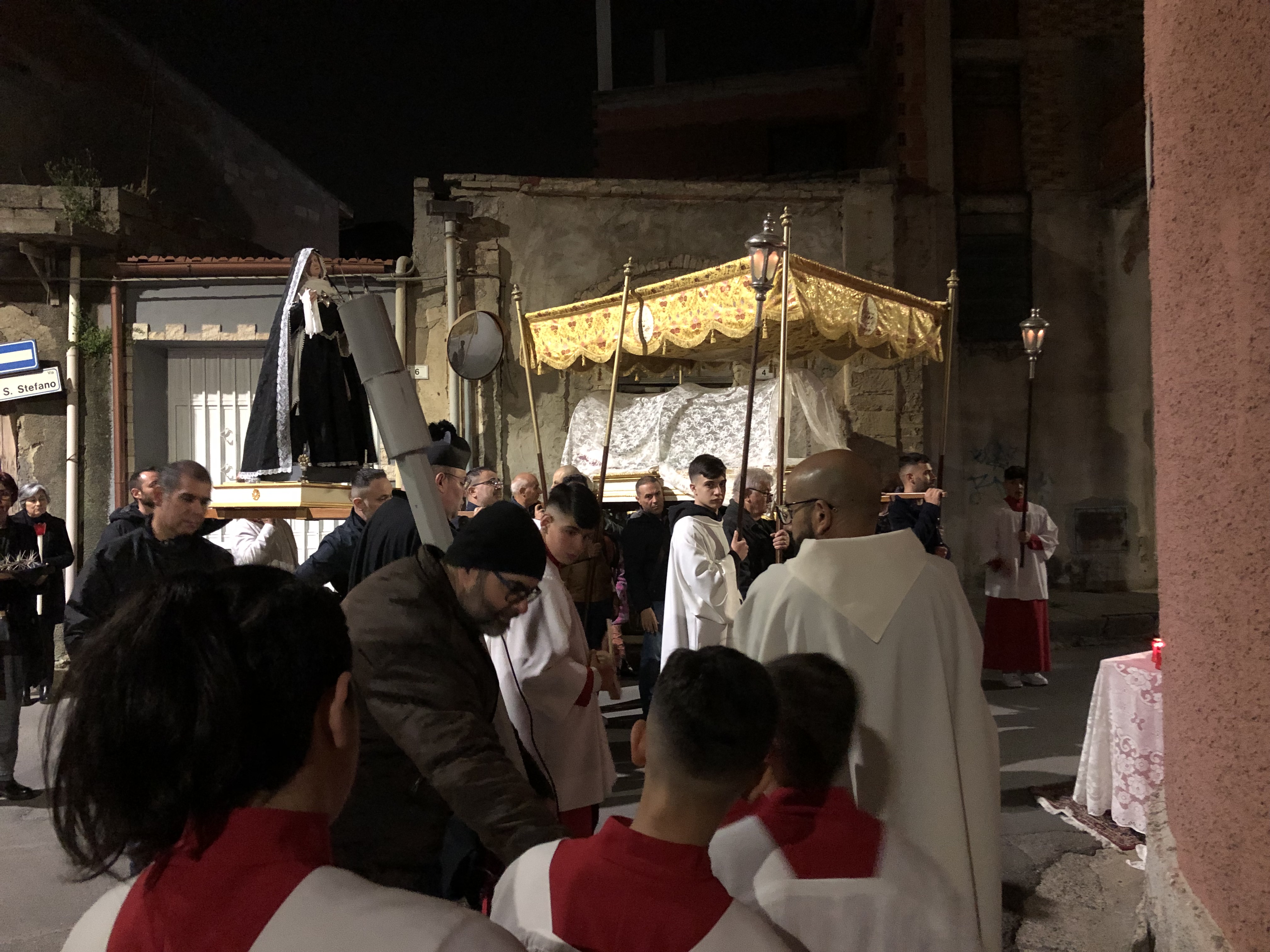
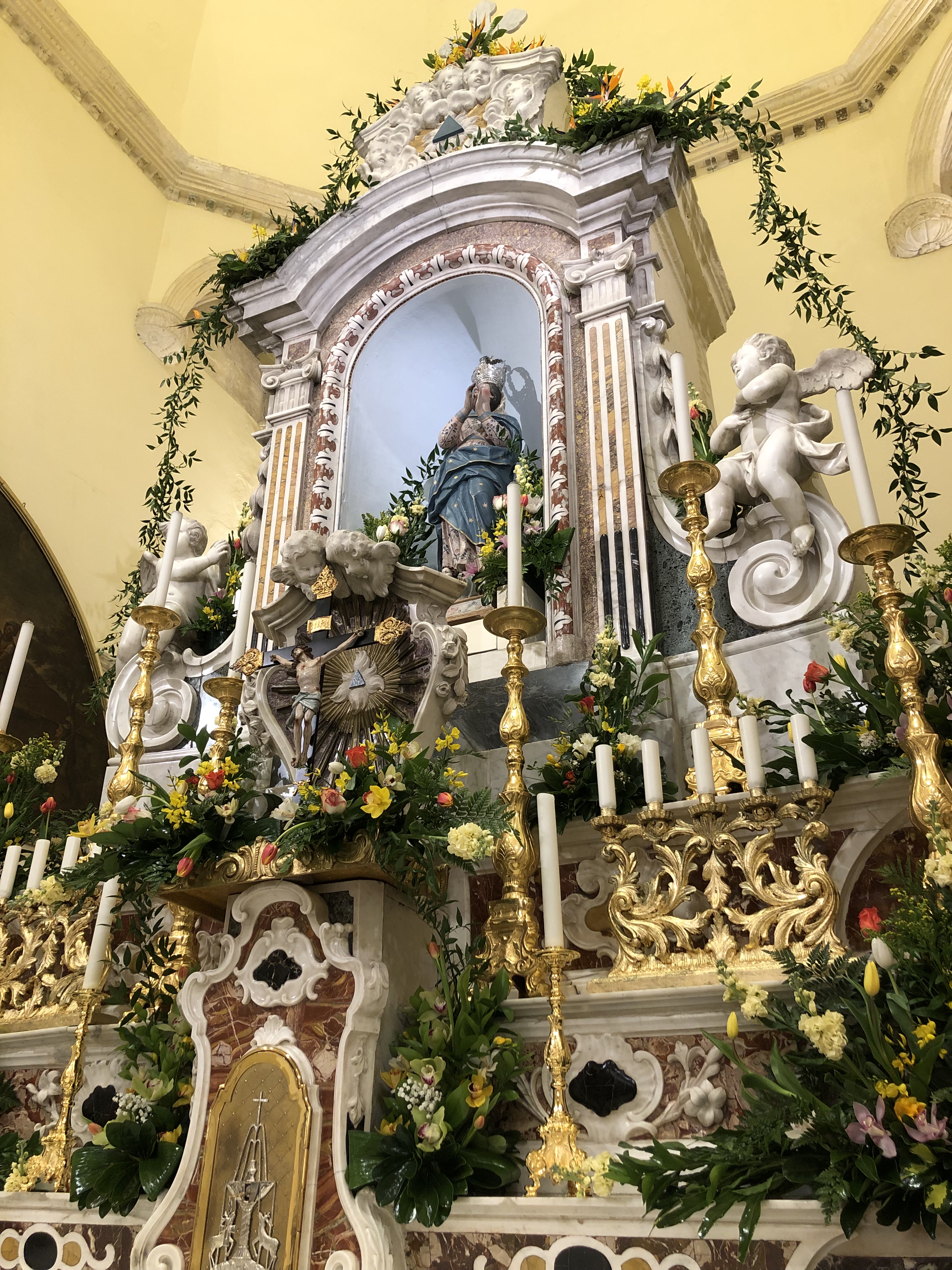
The religious atmosphere I experienced was both warm and traditional. Masses were full; I heard confessions all week long; I met deeply committed Catholic families. I was especially impressed by the enthusiasm for traditional popular devotions. Teams of parishioners take responsibility for organizing different devotions throughout the year. Of particular note during Holy Week were the su Scravamentu, in which the nails are removed from the Lord’s hands and feet and he is taken down from the Cross after the Good Friday liturgy, and the many processions through the town streets–Stations of the Cross, Palm Sunday, Holy Thursday, the Sorrows of Mary on Good Friday, and then the S’Incontru on Easter morning.
This last devotion was of particular interest to me because it is related to the Spanish traditions that shaped the Spiritual Exercises of St. Ignatius. The tradition recalls the moment–not mentioned in Scripture–in which Jesus meets his Mother Mary after rising from the dead. In the S’Incontru a statue of the Risen Lord decked with white flowers is carried through town in one direction, and a statue of Mary, still in the black veil from Good Friday, takes another route. They meet in front of the church, and the statues “bow” to each other three times before Mary’s black veil is replaced with white.
I heard from folks in Sardinia that interest and participation in traditional forms of popular piety has grown in recent years. This seems to be a phenomenon in other parts of Italy as well. It does not surprise me. We live in a time of cultural dissolution and rootlessness, dominated by a profit-driven “anti-culture,” to use Patrick Deneen’s phrase. Western culture seems to be going through a self-destructive, ideologically-driven identity crisis. But people are increasingly realizing–if only as an uneasy feeling–that a part of our humanity is lost when we forget where we come from.
Modern Catholicism has sometime fallen into the same trap, opting for slogans over tradition-rich symbols. I think many people, on some level, are coming to realize that this is not right and it is not working. A renewed interest in reclaiming our spiritual patrimony, manifested in a renewed appreciation for popular piety, is an encouraging sign.
I’d be remiss to praise popular piety without mentioning my friend Fr. Daniel Cuesta Gómez, a Spanish Jesuit who has just published a new book on the subject La religiosidad popular: Lugar teológico para la nueva evangelización (Sal Terrae, 2024). He tells me nothing can compete with the processions in Spain.





 Tony Lusvardi, S.J.
2 thoughts on “Popular piety and tradition in Sardinia”