Homily for the 4th Sunday of Lent (B)
Today’s readings are a workout. The serpent in the desert, God’s love and the refusal of many to accept it, faith and works, the prophets, Israel’s exile in Babylon, and King Cyrus, a Gentile who saves the day. Getting through today’s readings means not just getting in your spiritual steps for the day—it’s more like earning a medal for the decathlon.
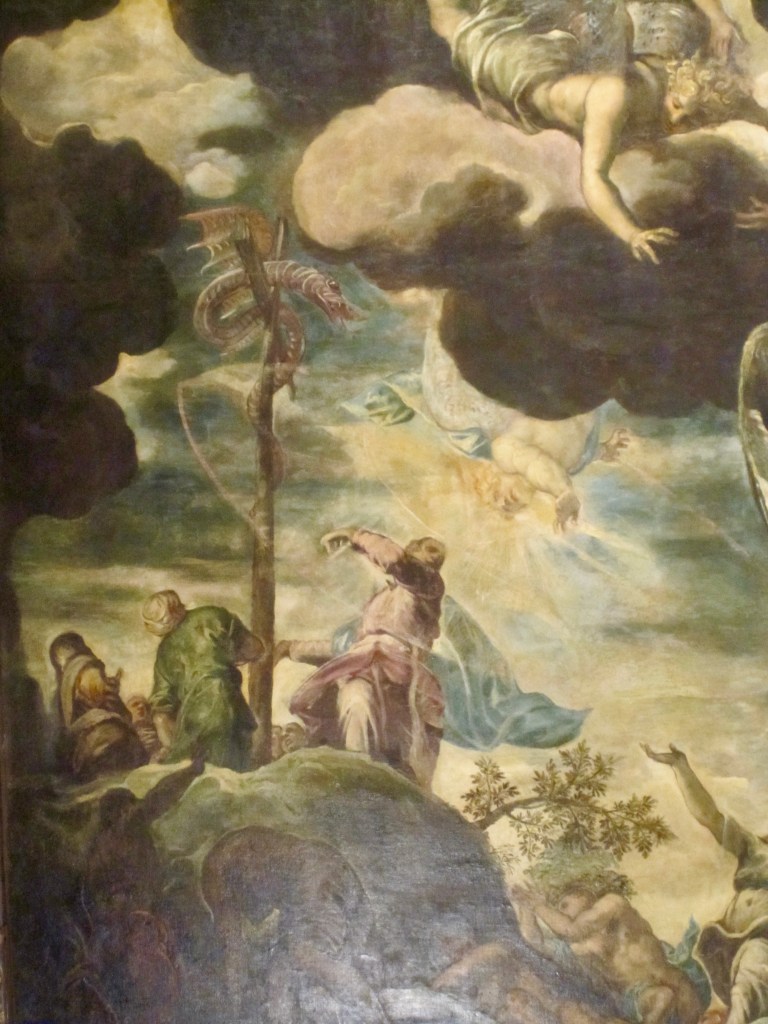
For a bit of mid-Lent spiritual exercise, the first image from today’s Gospel is a good place to start. At first glance, it might seem a bit obscure. What was Moses doing lifting up a serpent in the desert? Jesus is referring to an incident during Israel’s wandering in the desert found in the Book of Numbers. The Israelites, as seems to be their habit, complain against God and against Moses, saying “There is no food” and “We loathe this worthless food.” The complaint does raise the question, which is it? Is there no food or just food the Israelites don’t like? There seems to be a bit of manipulative use of language in the Israelites’ rebelliousness, perhaps even a bit of self-delusion. The phenomenon is not unique to the ancient world. Today our political and social divisions are often made worse because we use exaggerated terms to describe our opponents and their intentions—or to mask uncomfortable facts we do not want to hear—and then we start to believe our own rhetoric. The result is poisonous. And, in fact, in the Book of Numbers, God punishes the people of Israel for their rebellion by sending fiery serpents to bite them.
Even though the people brought this punishment upon themselves, the Lord gives Moses a remedy. He is told to make a bronze serpent and set it up as a sign. Those snake-bite victims who look at the bronze serpent will be cured. The spiritual lesson here is quite important. In order to overcome any evil, we need to face it. Hiding, disguising, using euphemisms or excuses, blaming others—anything less than facing the truth makes our spiritual problems harder to overcome. Facing the snake we fear is the first step of the solution.
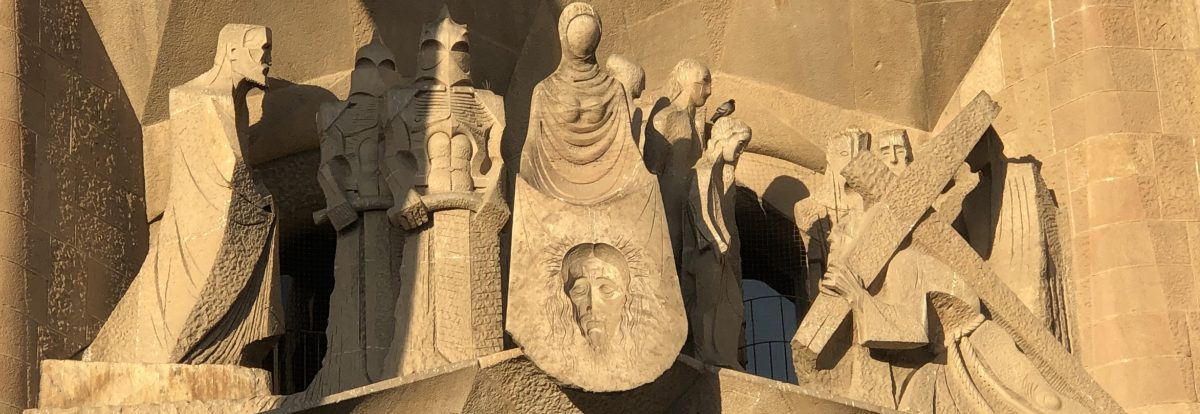
When Jesus refers to the story, however, he adds a new layer. “Just as Moses lifted up the serpent in the desert, so must the Son of Man be lifted up, so that everyone who believes in him may have eternal life.” Here, as elsewhere, Jesus is talking about his crucifixion. We know that in the Gospels when Jesus predicted that he would be crucified his disciples didn’t want to face his words. They ignored him or even openly contradicted him. The cross is hard to face. People do prefer the darkness to facing the cross head on, to embracing and accepting the most challenging aspects of our faith, the call of Jesus to share his self-sacrifice.
The first reading talks about Israel’s disobedience to the Lord’s commandments and the repeated messages and warnings of the prophets. Jeremiah was one of those prophets of doom that nobody wants to listen to, but he spoke the truth. Israel’s failure to listen to Jeremiah resulted in the destruction of Jerusalem, the sad story we read in Chronicles. Following the destruction of Jerusalem, its survivors were carried into exile in Babylon where they and their descendants remained, just as Jeremiah had predicted, for seventy years. Just as with the snakes in Numbers, the Israelites brought destruction upon themselves by refusing to face reality fully, for settling for illusion instead of truth. But, just as with the bronze serpent, salvation appeared in an unexpected form. A pagan king, Cyrus, the King of Persia, defeated Babylon in battle and allowed the Jewish exiles to return home.
Salvation is without a doubt the most important theme in all of today’s complicated and very different readings. St. Paul writes to the Ephesians, “even when we were dead in our transgressions, [God] brought us to life with Christ.” This is the most important event of today’s decathlon. There is, however, a little obstacle course in this reading from Ephesians; some of its language raises the question of faith and works. Before the Reformation this language was never a problem, and it need not be a problem today. We simply have to remember not to put these two aspects of the Christian message into conflict with each other. Salvation is not something that can be earned. It is the gift of God, pure grace. And, as Paul says, that gift means that we are created in Christ Jesus for good works. The gift itself empowers us to share in the saving work of the Trinity.
So, the last event in today’s workout is to reflect on what this salvation means. When we say that salvation is a gift or a grace that doesn’t mean that it is something external to us, like a new coat or a car or even a new house. When Paul says we are “created in Christ Jesus” he’s indicating a change in our being, not an external gift. Salvation means being in a new way, a new way of existing. It means, in fact, being like God, sharing in his love, sharing in his saving action. God offers us salvation in Jesus— “God so loved the world that he gave his only Son.” He makes himself present in the world, and he gives us the means to share his life. Baptism allows us to participate in his death and resurrection, and the Eucharist allows us to participate in his self-sacrifice. And his commandments tell us how to bring our actions into union with his. You can see, then, how salvation by its very nature can’t be forced, why, as John says, “whoever does not believe has already been condemned.” Condemnation does not mean that God withholds his gift; it means we choose not to participate in it.
And, conversely, we can glimpse the depths of what Paul is talking about when he says “We are [God’s] handiwork, created in Christ Jesus for the good works that God has prepared in advance, that we should live in them.” Today’s readings are a bit of a workout, but this Christian life—especially this time of Lent—is a workout too. But a good workout can make you feel more alive even as you’re running, and that is what today’s readings are about. Seeing the truth, living the truth, becoming more truly alive.
Readings: 2 Chr 36:14-16, 19-23; Eph 2:4-10; Jn 3:14-21
Oratorio San Francesco Saverio del Caravita (Rome)
March 10, 2024

 Tony Lusvardi, S.J.