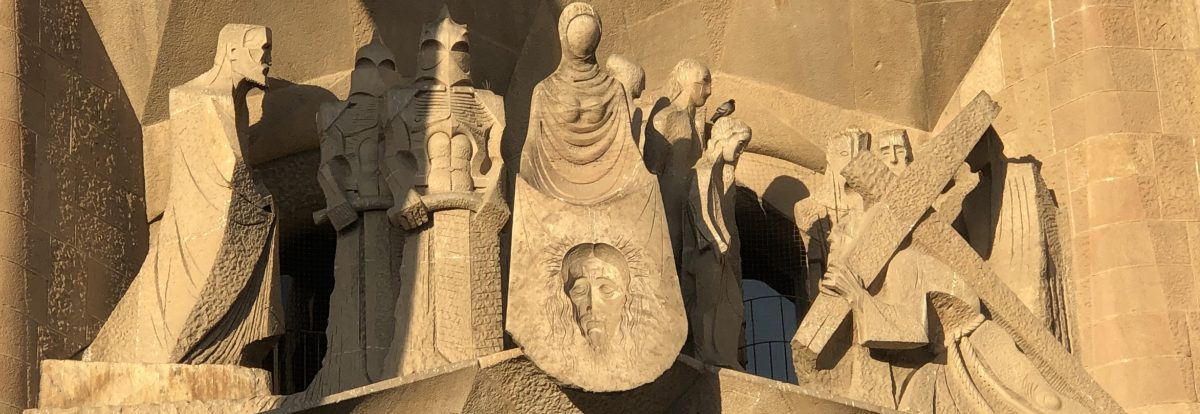
November 2 is All Souls Day on which we remember and pray for the dead. For Catholics, November is traditionally a month dedicated to praying for the dead, a practice that goes back to the earliest days of the Church and, indeed, even to pre-Christian times. This pair of days, All Saints and All Souls, is a reminder of the profound solidarity that exists between all Christ’s faithful, on whichever side of the grave we currently find ourselves. Our lives and our journeys continue to intertwine with those who have come and gone before us.

The first reason we pray for the dead, of course, is to help those in the final process of purification we call purgatory. Since heaven means existing in a state of perfection and most of us still aren’t perfect when we die, purgatory is the time we need to reach that perfect way of being we long for.
This doesn’t mean that purgatory is a second chance, as if this earthly life were a video game in which you get five or six lives to move up levels. No, the choices we make in this life are decisive. Our free will really matters. Purgatory is the completion of what we start on earth.
Purgatory does not, however, involve the uncertainty of our life here below. Because the afterlife is the ratification of our choices on earth, all of the souls in purgatory are destined for heaven. Dante imagines souls on their way to purgatory singing as they go, knowing that eventually they will reach the state of blessedness.
Of course, anyone who has made it through the second book of the Divine Comedy (the book that most closely reflects our earthly life, I think), knows that those souls still have an arduous climb ahead. Purification certainly involves a kind of suffering, a letting go–but it is letting go of those things that hold us back from where we truly want to go. I imagine purgatory being something like putting in time on the elliptical at the gym; you have to sweat for a while, but it’s all to end up healthier.
The image most traditionally associated with purgatory, however, is of cleansing fire. The Bible repeatedly uses the image of gold tested in fire. The smelting process–the innovation that allowed humanity to step out of the Stone Age and into the Bronze–involves heating ore to temperatures high enough to burn off impurities and acquire a pure metal.
A few years ago I had an up-close experience of this process when I visited the Grassmayr Bell Foundry in Innsbruck. The superior of the Jesuit community I was living in had been invited to bless a new set of church bells about to be cast. Observing the giant furnaces and tremendous temperatures necessary to produce just the right metal alloy was mesmerizing. The heating and the cooling was a long, delicate, and precise process. I suppose the same could be said of both progress in the moral life here on earth and purgatory. Purgatory is among the most hopeful of all Christian doctrines because of what results–souls brought to perfection, like the elegantly shaped bells of Innsbruck.
In both cases, music.


 Tony Lusvardi, S.J.
One thought on “All Souls Day”