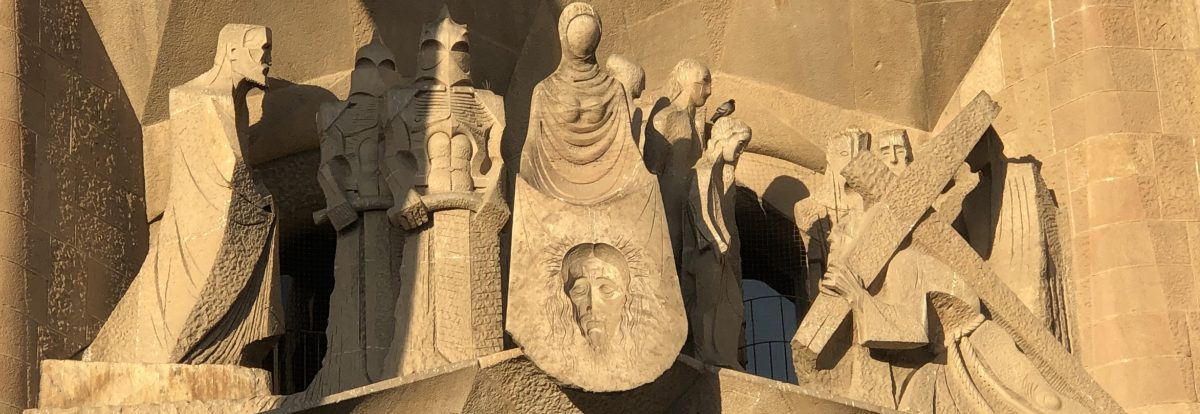
Homily for the 11th Sunday in Ordinary Time (A)
A couple of weeks ago I visited the Art Gallery of Western Australia, not very far from here, and I was moved by an exhibition of works by young artists, Year 12 Visual Arts graduates, from here in WA. In addition to the talent of these young people, I was moved—even disturbed—by the pain that I saw expressed in their work. Not youthful idealism, but pain.
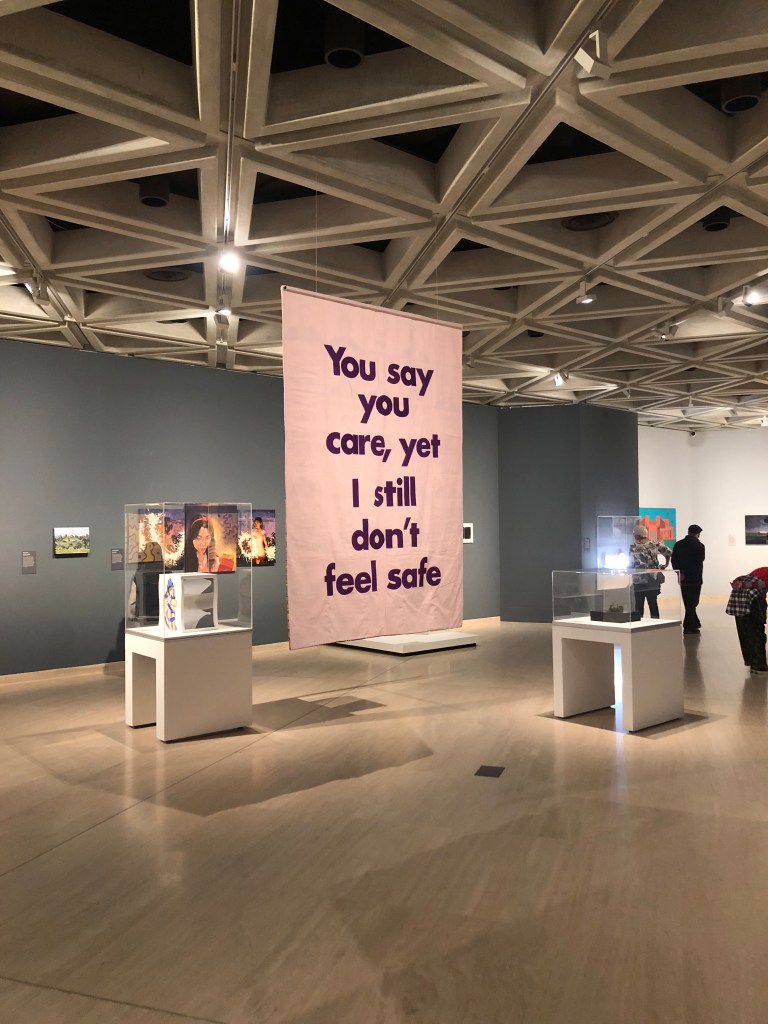
The pain that I saw expressed so honestly in art was not from material deprivation. These young artists enjoyed all the advantages and opportunities of a state-of-the-art education system. No generation has ever had the material advantages we enjoy today in the West. Yet as I have traveled in America, in Australia, in Europe I have felt what I think many people today perceive, an ache, an emptiness—sometimes a sense of rootlessness, sometimes a vague, unspecified guilt, often a lack of purpose and meaning. We claim to be free, yet fear of giving offense suffocates us. We are hyperconnected through media and gadgets, yet no generation has ever been so lonely. We boast of the diversity of our societies, yet we barely speak to those with whom we disagree. Something is wrong, something is missing—something at the root of the hurt expressed in those young artists’ work.
In the popular culture of the West, the spiritual void is inescapable. We have uncountable comforts. In fact, I don’t think that our most characteristic compulsion is to acquire more stuff. Instead, today, we are addicted to being entertained. But our entertainment does not lift the soul—it is not like the art of Michelangelo. It just keeps us occupied and keeps us paying. How could we, beings created in the image of God, find this satisfying?
We don’t, and we can’t. The result is hunger, not material, but spiritual. When people are hungry, they will eat almost anything. The book of Jeremiah describes the residents of Jerusalem under siege resorting to cannibalism, so perhaps an increase in rancor and division is not unexpected in an age of spiritual hunger. When I was in Melbourne, I was amused to see flyers advertising a “Marxism conference.” Never has any philosophy in the history of mankind caused so much misery to so many people as Marxism. Many immigrants to Australia today came here as victims of Marxist regimes. But when people are hungry, they will eat almost anything. Our increasingly aggressive and intolerant racial and sexual ideologies, which in many ways resemble religions, are also attempts to satisfy this hunger. In the end, though, they are what drinking saltwater is to a thirsty man—illusions that only deepen our thirst.
Yet everywhere I have traveled in the secularized West I have found, again and again, quietly, even shyly, lives transformed, hunger satisfied, by faith in Jesus Christ. As the Gospel promises, there is a harvest to be reaped. I have seen people’s lives turned around in the sacrament of reconciliation, addictions overcome through prayer and the power of grace, eyes opened by the message that St. Paul announces to the Romans in today’s second reading: “Christ, while we were still helpless, yet died at the appointed time for the ungodly… while we were still sinners Christ died for us.” How much better than the flashy and superficial spiritual junk food we are so often fed or the saltwater of fashionable and noisy ideologies—how much better is this message, ever-ancient, ever-new. The message that this world of ours, our bodies, our freedom, our yearnings, our spiritual hunger, and our thirst for meaning, are all created to find fulfillment in the God who reaches out across every divide to bring us reconciliation, to bring us into communion with himself.
This God offers us his life; today, in this Mass, at this altar, he offers us the food that will satisfy. I can imagine Jesus stepping out from this cathedral into the square outside, out onto the city streets, and looking at the people shuffling past or scrolling through their phones, just as he looked at the crowds in today’s Gospel passage, and having pity on them because “they were troubled and abandoned, like sheep without a shepherd.”
Today, as then, the harvest is abundant but the laborers are few. Our hungry contemporaries need the word of God, and they need the sacraments. In the Gospel, Jesus calls the twelve apostles to the mission of proclaiming the kingdom of God and imitating his own works. And he instructs his disciples to pray for more laborers for the harvest. For ourselves today, I think this means two things. The first is that we need to need to pray for, promote, nurture, and support vocations to the priesthood and religious life. Today more than ever, we need men and women willing to consecrate their lives to God publicly and permanently and to live visibly in a way that is different than the crowd.
And, it means, second, that for those not called to official consecration as priests, brothers, or sisters but signed with the cross of Jesus in their baptism and confirmation, that they also will live out their vocation, their calling as laborers in the harvest. This means remembering that marriage, too, is a sacrament, and living it as a sacrament, instead of just a lifestyle choice. It means making decisions and sacrifices that are different than the cultural majority. For some, this might mean a larger family. For all, it certainly means dedicating time and energy—which others give to entertainment—to daily prayer, to weekly worship, to the study of our faith, and to bearing witness to all that the Lord has taught.
Once perhaps it seemed possible that if we relaxed the demands of Jesus just a little bit, the harvest might be more abundant or, at least, easier. Perhaps we might mix a little saltwater into our drink to make it go farther. The result of such thinking, however, has only been a deeper thirst. The spiritual void in the modern world yawns wider. Planting, harvesting, milling is hard work. But without such work of human hands, there is no bread to nourish. Our world is hungry, and the harvest is immense. We disciples of Jesus must be generous, and we must be courageous. We must ask the master of the harvest to send more laborers, and we ourselves must seek out the lost sheep and proclaim to them, “The kingdom of heaven is at hand.”
Readings: Ex 19:2-6; Rm 5:6-11; Mt 9:36-10:8
June 18, 2023
St. Mary’s Cathedral
Perth, Australia

 Tony Lusvardi, S.J.