St. Aloysius Gonzaga and giving God your all: homily for St. Aloysius

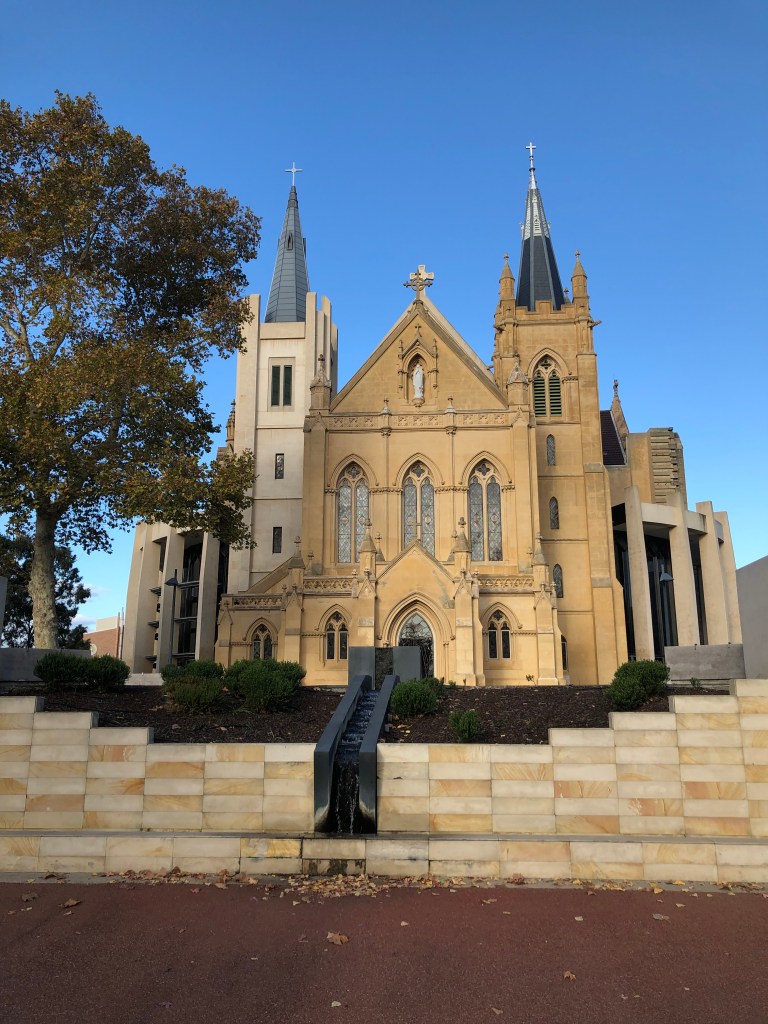
St. Mary’s Cathedral, Perth

The readings for our celebration of the life of St. Aloysius Gonzaga tell us to show our love for God by keeping his commandments.  Sometimes people talk about love and the commandments as if there were a contradiction between the two, but Jesus teaches us otherwise.  

For Jesus, love isn’t a feeling.  Don’t confuse love with romance, which can be produced with mood lighting and champagne.  For Jesus, love is life-giving.  God, the creator, first shows his love for us by giving us life.  And Jesus, the Son of God, shows the power and depth of his love by giving up his own life so that we might have eternal life.

But life is a delicate thing.  If you plant a garden, you have to know the right amount of water to give the seeds—too much and they’ll rot, too little and they’ll dry up.  I’ve killed a few houseplants learning this lesson.  If you just leave your garden alone to do whatever it wants, it will soon choke with weeds and die.  Keeping plants alive sometimes requires trimming them.  Nurturing life requires rules.

Continue reading “St. Aloysius Gonzaga and giving God your all: homily for St. Aloysius”
The hunger and the harvest are abundant: homily for the eleventh Sunday of Ordinary Time

Homily for the 11th Sunday in Ordinary Time (A)

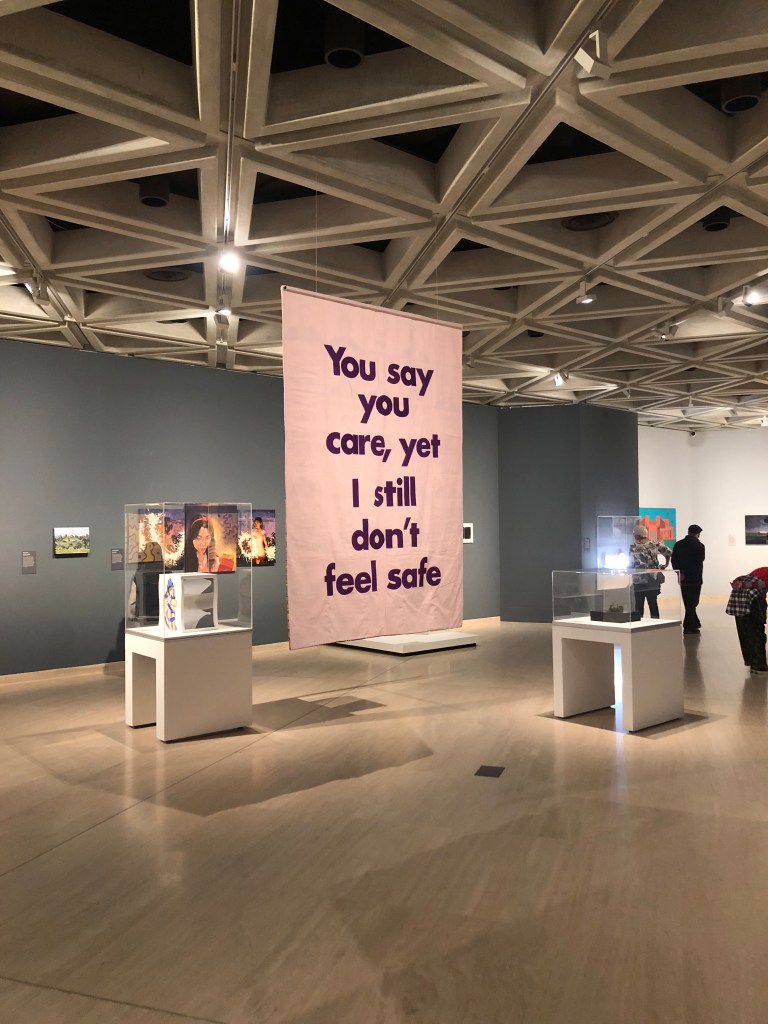
A couple of weeks ago I visited the Art Gallery of Western Australia, not very far from here, and I was moved by an exhibition of works by young artists, Year 12 Visual Arts graduates, from here in WA.  In addition to the talent of these young people, I was moved—even disturbed—by the pain that I saw expressed in their work.  Not youthful idealism, but pain.

Western Australia Pulse 2023 Exhibition, Perth

The pain that I saw expressed so honestly in art was not from material deprivation.  These young artists enjoyed all the advantages and opportunities of a state-of-the-art education system.  No generation has ever had the material advantages we enjoy today in the West.  Yet as I have traveled in America, in Australia, in Europe I have felt what I think many people today perceive, an ache, an emptiness—sometimes a sense of rootlessness, sometimes a vague, unspecified guilt, often a lack of purpose and meaning.  We claim to be free, yet fear of giving offense suffocates us.  We are hyperconnected through media and gadgets, yet no generation has ever been so lonely.  We boast of the diversity of our societies, yet we barely speak to those with whom we disagree.  Something is wrong, something is missing—something at the root of the hurt expressed in those young artists’ work.

In the popular culture of the West, the spiritual void is inescapable.  We have uncountable comforts.  In fact, I don’t think that our most characteristic compulsion is to acquire more stuff.  Instead, today, we are addicted to being entertained.  But our entertainment does not lift the soul—it is not like the art of Michelangelo.  It just keeps us occupied and keeps us paying.  How could we, beings created in the image of God, find this satisfying?  

Continue reading “The hunger and the harvest are abundant: homily for the eleventh Sunday of Ordinary Time”

Sacred Heart of Jesus homily

Sometimes certain people get on my nerves, and it’s hard to love them.  Sometimes people behave badly toward others, and it’s hard to love them, too.  Sometimes people have hurt me; it’s hard enough to forgive them and even harder to love them.  

The first letter of John tells us that God is love, and remaining in his love means loving others as he does.  In the Sermon on the Mount, Jesus commands us to love our enemies, just as our heavenly Father loves them.  From the cross, he even prays for the forgiveness of those who crucified him.  

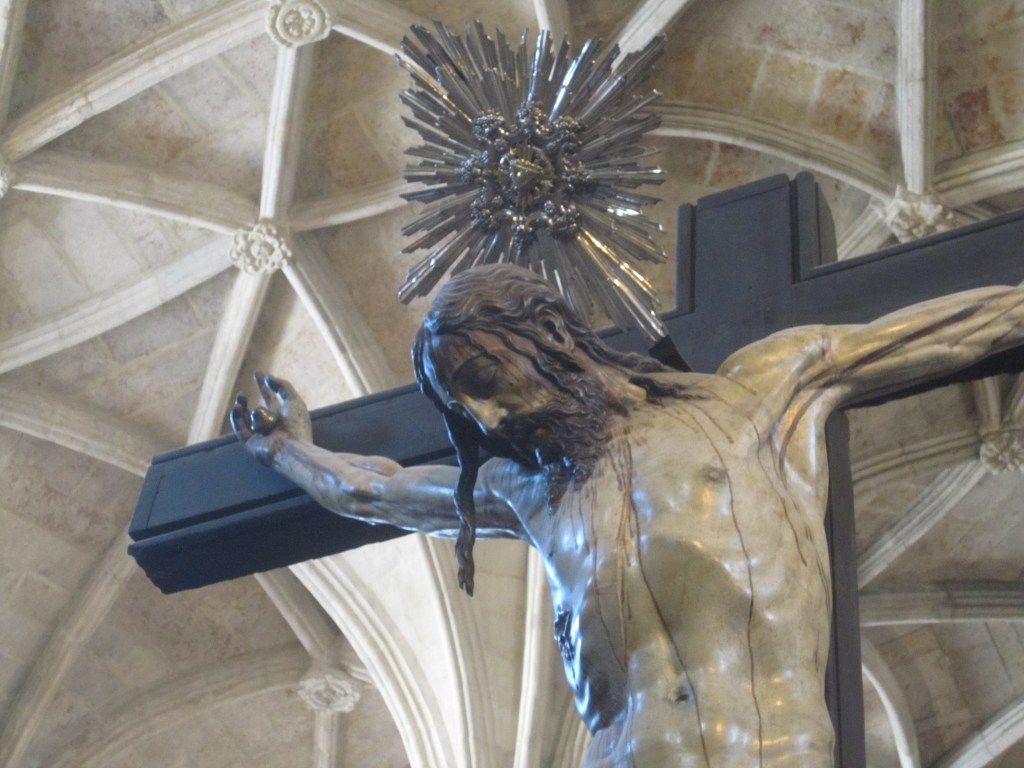
Jerónimos Monastery, Belén, Portugal

But it’s hard to love those who irritate me or who’ve hurt me or who behave obnoxiously or cruelly.  With effort, I succeed in being kind and fair to them maybe 75% of the time, though that percentage falls quickly if I’m tired or hungry or disappointed.  Sometimes I want to say to Jesus, “This yoke doesn’t seem easy to me.” 

Continue reading “Sacred Heart of Jesus homily”

Corpus Christi homily

Chapel of the Corporal, Orvieto Cathedral

“Unless you eat the flesh of the Son of Man and drink his blood, you do not have life within you.”  A few years ago, in Boston, I was talking to a group of kids preparing for their first communion, and one of them asked me, “If we eat the body of Jesus, does that mean we’re cannibals?”  

I thought it was a good question.  What Jesus teaches us about the Eucharist is not easy to understand.  In the Gospel, Jesus’ teaching provokes arguments and even causes some of his disciples to leave him.  But he doesn’t back down.  The Catholic Church, I’m happy to say, has also never backed down from the faith that the Eucharist is the Body and Blood of Jesus.  It’s not a prop in a play. It is not a mere symbolic reminder.  It’s not a visual aid from before the days of PowerPoint.  It may not look or taste like flesh and blood, but Jesus forces us to make a choice—do we believe our own senses or do we believe him?  It’s the same choice required to believe in eternal life, which we have never seen.  Do we trust his words?  And if we do, does that make us cannibals?

Continue reading “Corpus Christi homily”

Trinity Sunday homily

If you go to Mass on Trinity Sunday, there’s a very good chance that you will hear the word “mystery.”  What does that word “mystery” mean?  When we’re talking about a mystery of faith, it doesn’t mean a detective story.  A mystery of faith is something we can always understand more deeply, something we can never reach the end of, something that never gets old.  No matter how many times you see the sunset across the ocean, the beauty of it is always new, the colors always a little different each time.

Sunset, Malta

Trinity Sunday is a celebration of the mystery of God.  To be more precise, it’s a celebration of the fact that God has given us a starting point to discover him, to know him, and to be united with him.  God is so different than anything we know that without his help we could say almost nothing about him.  God is not a very big thing.  He’s not like a gas that gets into the nooks and crannies of everything.  He’s not nature and the universe.  We know he’s the Creator of the universe because the universe exists, but nothing in the universe is capable of creating the universe.  And it’s true that he exists and we exist, but even his way of existing is different than ours.  You know who Harry Potter is, so in a way he exists.  But he doesn’t exist in the same way that J.K. Rowlings exists.  They have different ways of being.  And it’s the same with us and God.

Continue reading “Trinity Sunday homily”