Italy’s largest monastery and a few surprises in the Cilento

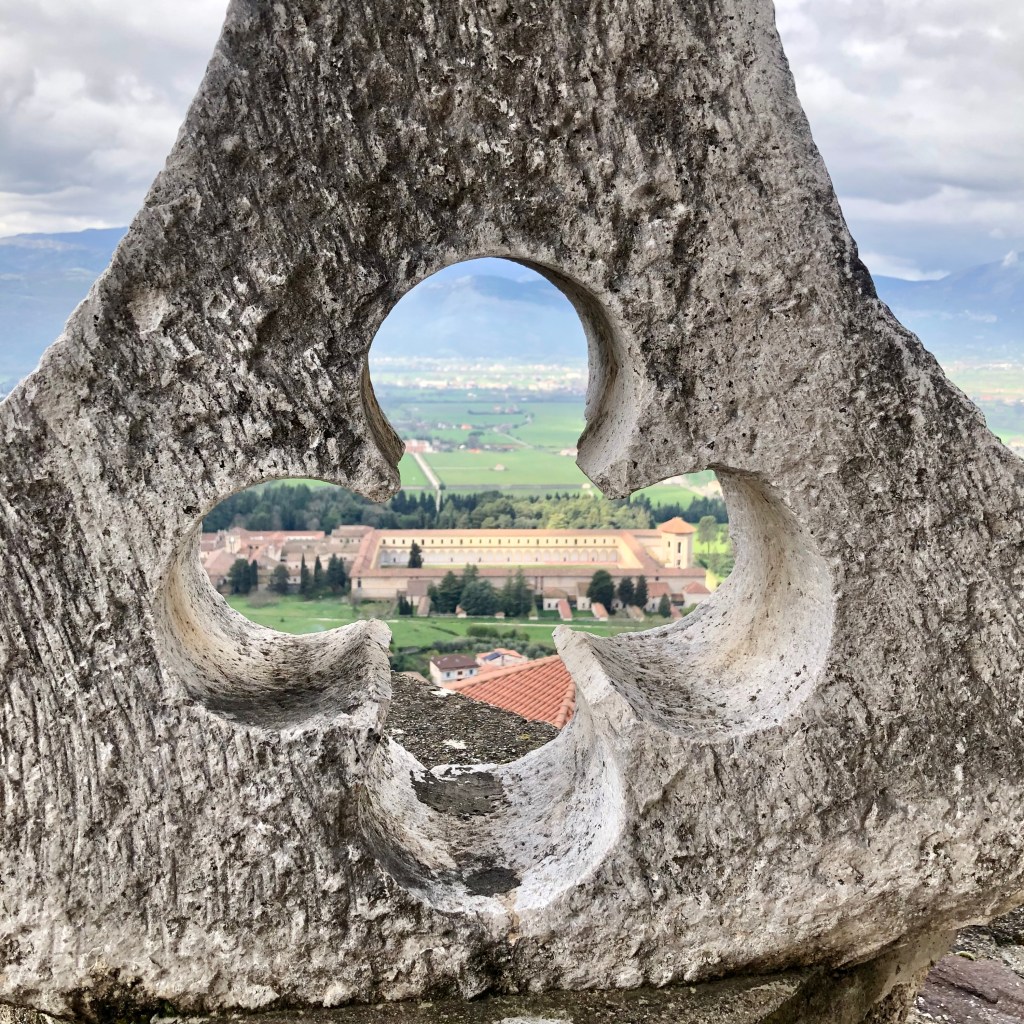
Certosa di San Lorenzo, seen from Padula

A few weeks ago, I mentioned stumbling across the Certosa of San Martino while visiting Naples with my parents earlier this spring. I was fortunate enough to catch up with them for a few more days in southern Italy, this time in the Cilento region. Like all of Italy’s regions, the Cilento overflows with layers of history to discover. We found this paleo-Christian baptistry almost by coincidence and yet another — even more monumental — “Certosa” or Charterhouse, a Carthusian monastery.

The Certosa di San Lorenzo, just outside of Padula, in fact, is the largest monastery in Italy. Founded in 1306, like the Certosa of San Martino, it was redone in the 18th century in baroque style. Carthusian monasteries are divided into a public-facing outer courtyard, around which the lay brothers lived, engaging in the practical work of the place, and an inner cloister in which the Carthusian priests lived in hermetic seclusion.
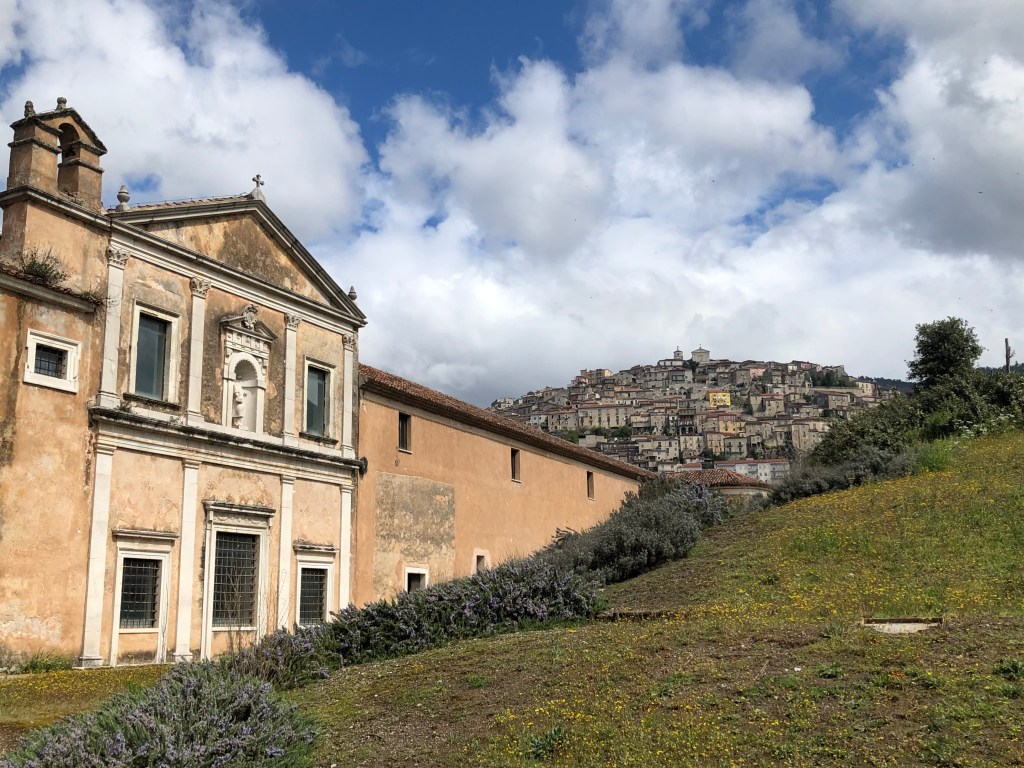
Certosa di San Lorenzo, Padula in the background

The Carthusian way of life is quite distinct, with the monks spending most of their time in near total isolation in their cells. These cells, in fact, are fairly spacious to accommodate all of the monks’ activities — each one is like a mini-monastery — including a garden, where they grow their own food, a small chapel, a study, and a place set aside for engaging in small industry, such as book-repair. While quite austere, the Carthusian life is nonetheless not inhuman. St. Bruno’s rule designates a certain time each week for conversation, which takes place as the monks walk together around their cloister. At San Lorenzo, a covered second story was added over the monks’ cells so that this time of conversation could occur even in inclement weather.

Continue reading “Italy’s largest monastery and a few surprises in the Cilento”
Build back baptistries! A trip to the Baptistry of San Giovanni in Fonte

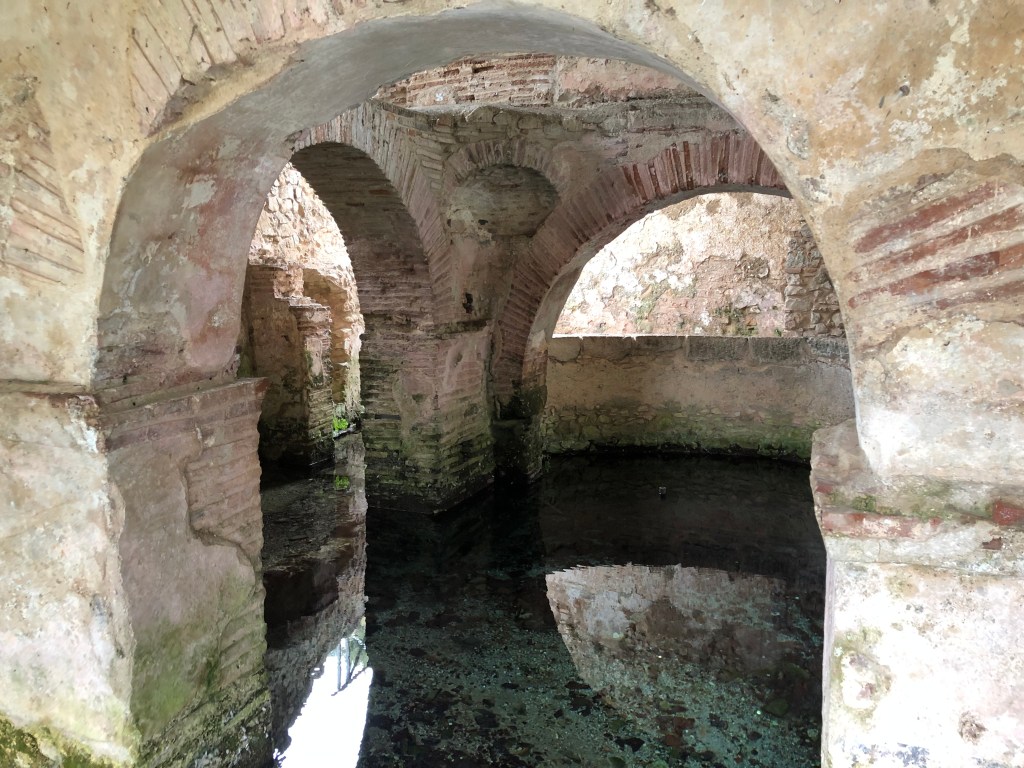
An unexpected discovery on my recent trip to Italy’s Cilento was the Baptistry of San Giovanni in Fonte, just outside of Padula. Also known as the Battistero Marcelliano, after Pope Marcellus, it dates from the fourth century, putting it among the oldest Christian structures in the world. A letter from Cassiodorus in AD 527 mentions a miracle occurring at the baptistry, its water level rising unexpectedly while a priest was pronouncing the prayer over the baptismal waters on the vigil of the feast of St. Cyprian.

Battistero di San Giovanni in Fonte, Paula, Italy

The structure itself sits on the site of a natural spring, so the baptismal font was a pool of “living” water. The baptistry was built on the ruins of an earlier pagan structure and underwent several renovations and expansions throughout history. Hints of a fresco, dating from the 11th century when the structure was converted into a chapel, remain on the wall. The remains of still earlier frescoes from the 6th and 7th centuries were removed and taken to a local museum.

Rising water levels caused the chapel to be abandoned in the 19th century, though the site of the remains and spring, down a winding country road, are quite a pleasant spot today.

This reminder of baptism from Christianity’s earliest days is worth reflecting on during the Easter season. I discuss some of the theological and practical consequences of the shift away from the patristic catechumenate and toward near-universal infant baptism in the Christian cultures of the Middle Ages in Baptism of Desire and Christian Salvation, but the subject is worth more reflection than what I’m able to give it there.

Reflecting on early Christian baptismal practices is important because we are moving into a new phase in Christian history that in some ways will more closely resemble the Church of the Fathers — in which Christianity was a minority — than medieval Christendom. Some of our sacramental practices, I am convinced, will have to shift to respond to this new reality. This may not be entirely a bad thing. When it comes to baptism, for example, too often the sacrament, celebrated in a minimalistic way, has become a mere formality with little connection new life in Christ.

Continue reading “Build back baptistries! A trip to the Baptistry of San Giovanni in Fonte”