A poem and a prayer for Australia (and Jesuits!)

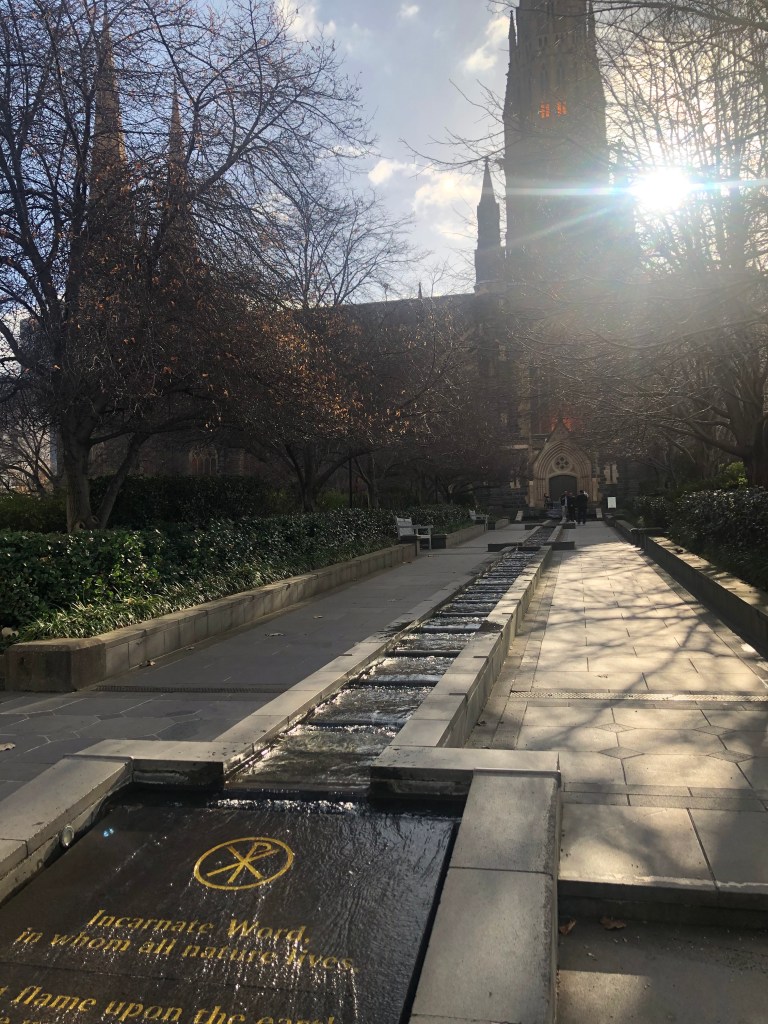
St. Patrick’s Cathedral, Melbourne, Australia

After a very blessed time of tertianship–the final formal part of Jesuit formation–and travel afterwards, I arrived back in Rome this week to begin preparing for the semester ahead. For me, this new beginning is also a time to look back with gratitude at my time in Australia’s tertianship program. I thought I’d share this poem from Australian poet James McAuley (1917-1976), a prayer for his remarkable country that could just as easily be a prayer for us Jesuits.

The poem is a part of a fountain outside of Melbourne’s cathedral that runs from the doors of the church out toward the city–evoking Ezekiel’s image of the waters of life flowing from the temple. The sculpture includes quotations from both the Old and New Testaments (John 4:14, Ps 23:2-3). It is inspired by the words of Revelation: “Then [the angel] showed me the river of the water of life, bright as crystal, flowing from the throne of God and of the Lamb through the middle of the street of the city; also, on either side of the river, the tree of life […] and the leaves of the tree were for the healing of the nations” (Rv 22:1-2).

St. Patrick’s Cathedral, Melbourne, Australia

Here’s McAuley’s poem:

Incarnate Word,

in whom all nature lives,

cast flame upon the earth:

raise up contemplatives

among us, men who walk within the fire

of ceaseless prayer,

impetuous desire.

Set pools of silence in this thirsty land.

James McAuley (1917-1976), Australian poet
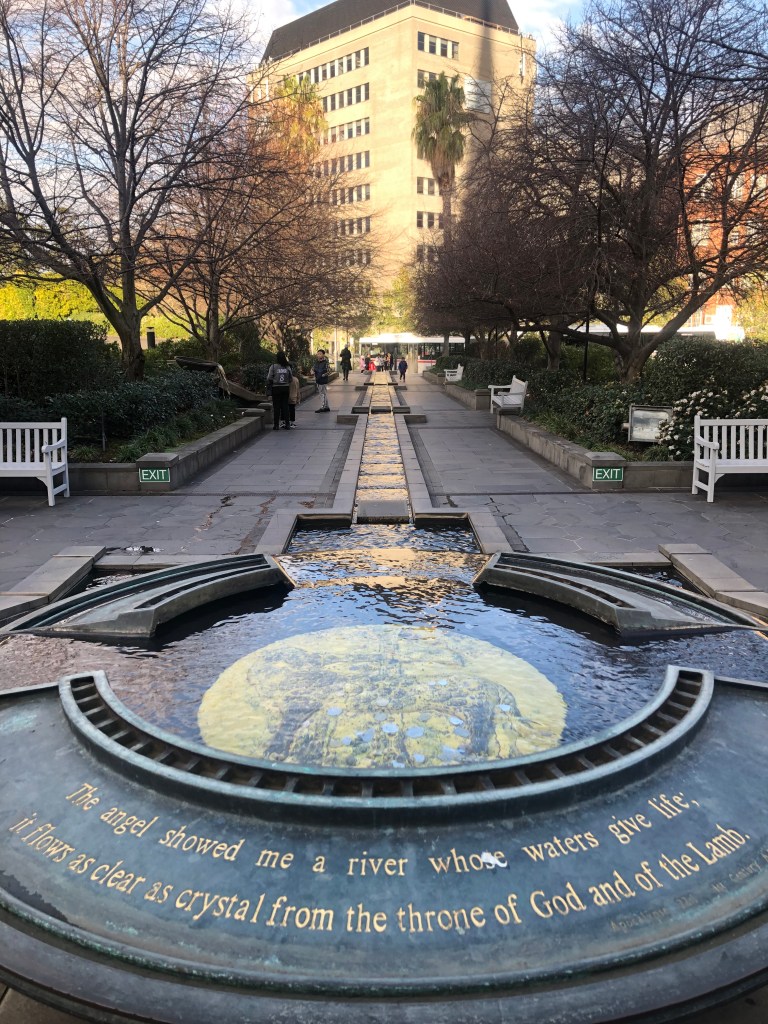
St. Patrick’s Cathedral, Melbourne, Australia

Thomas Aquinas on eternal life

The end of the liturgical year coincides with a number of gems from the Office of Readings, including this conference from St. Thomas Aquinas, which I’d never taken note of before. It reinforces a number of things that I’ve noticed over the past several years researching the theme of baptism of desire. The first–that eternal life means union with God–is perhaps the most important and, today, the most neglected. Heaven, in others words, does not mean having more treats, but communion with God. It’s maybe uncomfortable to say in our age of “moralistic therapeutic Deism”, but those who don’t desire communion with God don’t really want what we mean by heaven. In the end, heaven has more to do with how we love than with where we are.

Here’s how Thomas puts it:

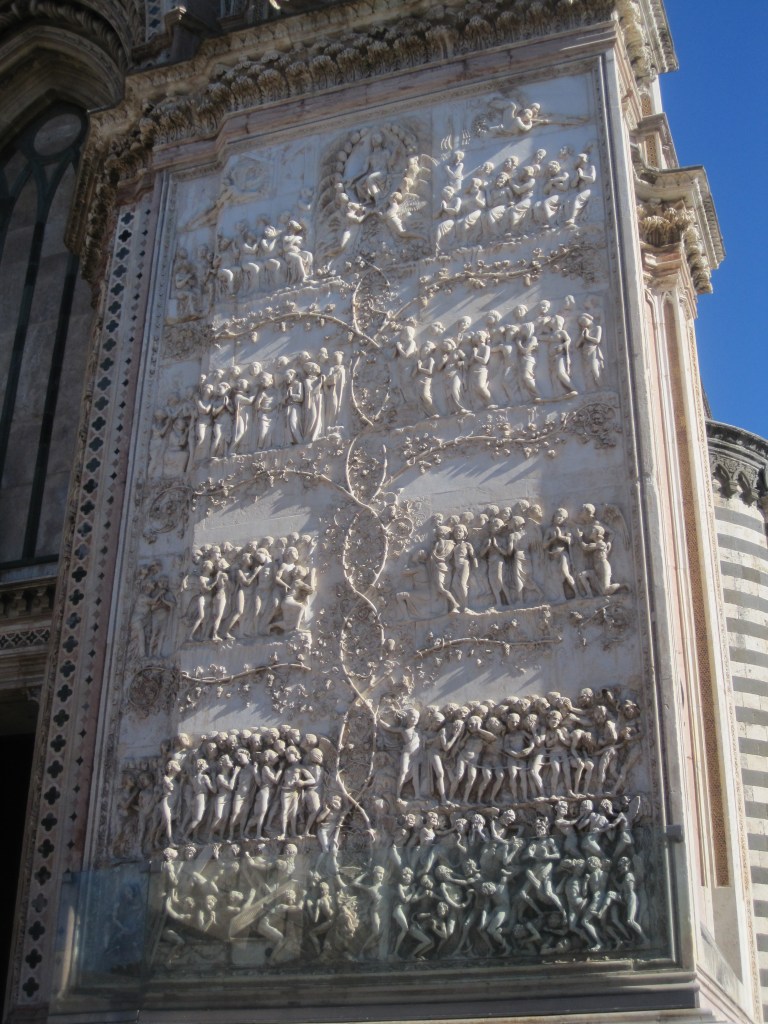
Final Judgment, Orvieto Cathedral

“The first point about eternal life is that man is united with God. For God himself is the reward and end of all our labors…

“Next it consists in perfect praise…

“It also consists in the complete satisfaction of desire, for there the blessed will be given more than they wanted or hoped for. The reason is that in this life no one can fulfill his longing, nor can any creature satisfy man’s desire. Only God satisfies, he infinitely exceeds all other pleasures. That is why man can rest in nothing but God. As Augustine says: You have made us for yourself, Lord, and our heart can find no rest until it rests in you

“…eternal life consists of the joyous community of all the blessed, a community of supreme delight, since everyone will share all that is good with all the blessed. Everyone will love everyone else as himself…”

St. Thomas Aquinas, Credo in Deum

Office of Readings

Saturday of the Thirty-third week in Ordinary Time

Augustine on desire…

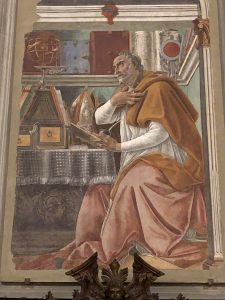
St. Augustine, Sandro Botticelli, Ognissanti, Florence

“The entire life of a good Christian is in fact an exercise in holy desire. You do not yet see what you long for, but the very act of desiring prepares you, so that when he comes you may see and be utterly satisfied.

“Suppose you are going to fill some holder or container, and you know you will be given a large amount. Then you set about stretching your sack or wineskin or whatever it is. Why? Because you know the quantity you will have to put in it and your eyes tell you there is not enough room. By stretching it, therefore, you increase the capacity of the sack, and this is how God deals with us. Simply by making us wait he increases our desire, which in turn enlarges the capacity of our soul, making it able to receive what is to be given to us.

“So, my brethren, let us continue to desire, for we shall be filled…”

St. Augustine, Tractates on the first letter of John 4

from today’s Office of Readings, Friday of the 6th Week in Ordinary Time


For more on the doctrine of baptism of desire see my new book Baptism of Desire and Christian Salvation.