Lessons from Slovakia

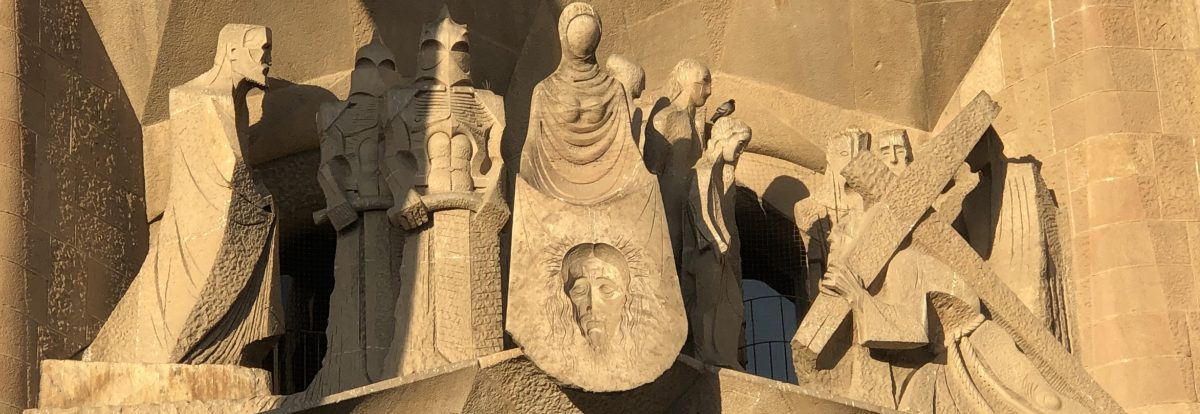
Spiš Castle, Slovakia

With classes starting up again this week at the Greg, I’ve been looking back with gratitude on a full summer. Among the highlights was a unexpected trip to Slovakia to accompany the Free Society Seminar organized by the Faith & Reason Institute and the Kolégium Antona Neuwirtha. It was a delight to meet a diverse group of curious and insightful young people from Slovakia, Poland, and the States, all of them committed in one way or another to serving their societies and the common good. The faculty was equally a joy to be with.

In addition to chaplain duties, I was able to lead a seminar on the theme of “civil religion,” taking an article I wrote for The Catholic Thing last year “Rites (and Wrongs) of Democracy” and Robert Bellah’s 1967 article “Civil Religion in America” as jumping off points. Another article I wrote about public apologies and how we deal with historical wrongs, “Confessing Other People’s Sins,” produced an even livelier discussion, enriched by the diverse eastern European perspectives.
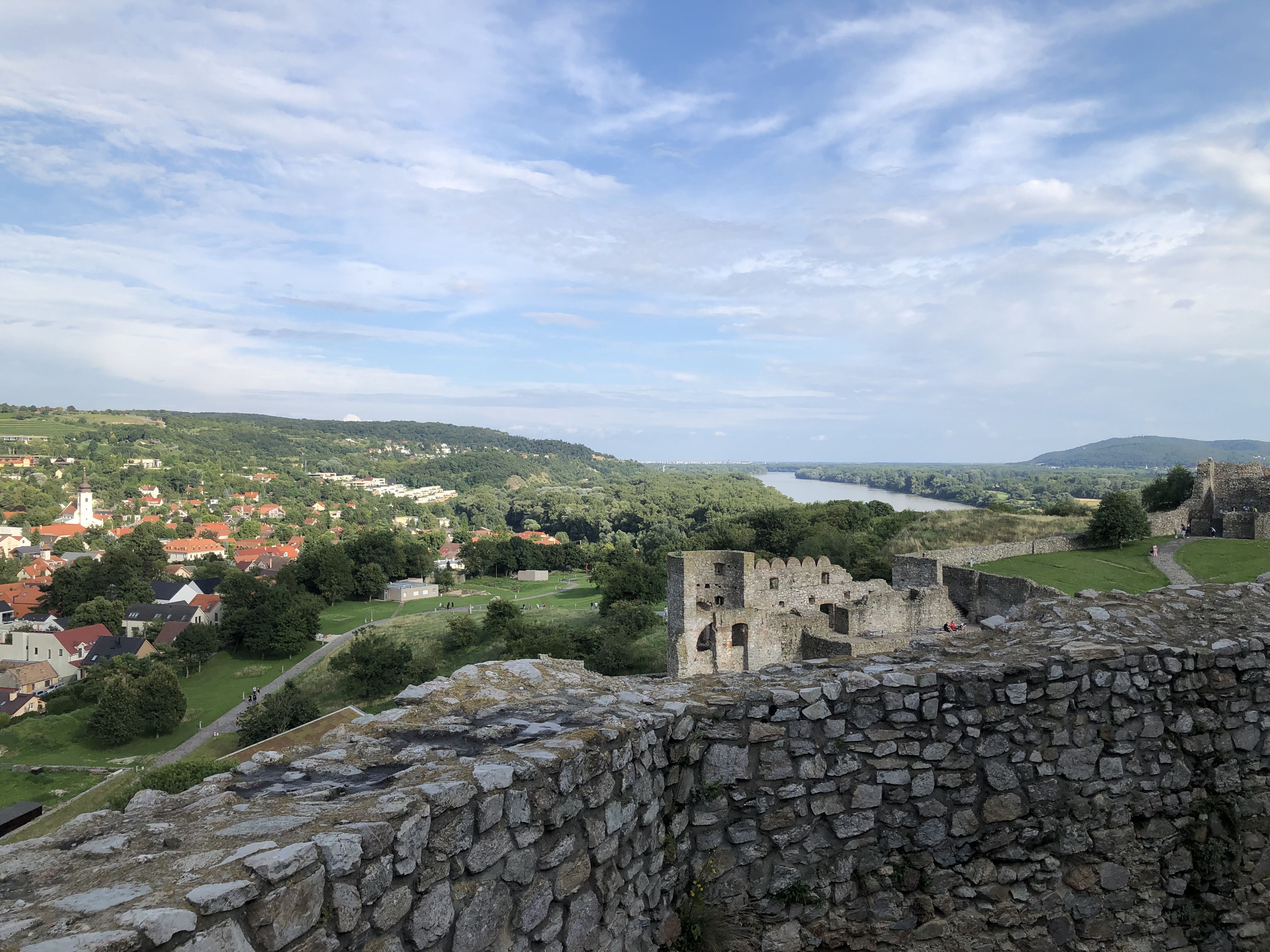
Slovakia is a country of castles, idyllic landscapes, and beautiful churches, but one of the trips’s most haunting memories has to do with the legacy of communism. We visited the Victims of Communism Museum in Košice, which seeks to keep the history of that dark time alive. The geography of Slovakia also provided a vivid reminder of the desperation that system produced. The ancient and strategically placed Devín Castle overlooks the Danube, with Austria–and during the Cold War, freedom–just on the other side. Displays detail the brutal lengths to which the border guards went to prevent Czechoslovak citizens from escaping. Some tried to swim the Danube at the narrow point by Devín. Thousands were imprisoned for illegally trying to cross the Czechoslovak-Austria frontier, and 42 people lost their lives.

Continue reading “Lessons from Slovakia”
Post-election thoughts from Rome

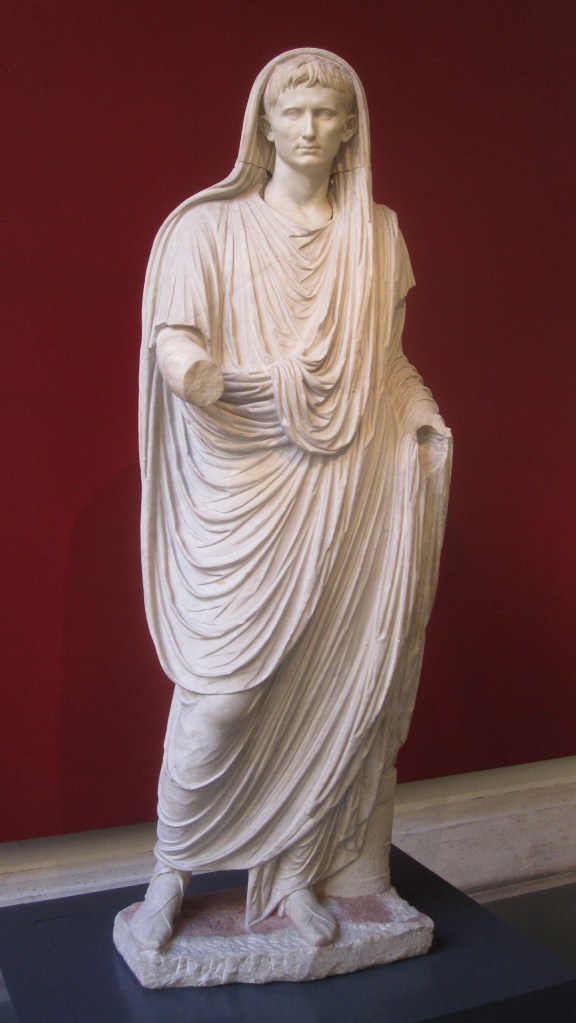
Augustus Caesar in the robes of supreme pontiff, Palazzo Massimo, Rome

As a follow up to my piece at The Catholic Thing on elections as civic rituals, America magazine asked me to reflect on how the US Presidential election looked from Rome. So here are my thoughts from an election morning walk to the Mausoleum of Caesar Augustus: Caesars, presidents and apostles: Viewing the presidential election from Rome. I was happy to see some pieces of our election rituals restored this time around; President Biden’s invitation of President-elect Trump to the White House was a gracious moment, more important as a symbol than because of anything said between the two men.

With the election now behind us, I also thought it worth sharing what for me was one of the more interesting–even edifying–reflections to come out of campaign. When he converted to Catholicism, Vice-President-elect JD Vance penned a thoughtful account of what led him to the faith in The Lamp (where yours truly has also published). Regardless of what you think of his politics, it is refreshing to read about a public figure’s faith journey, both personal and intellectual. I was particularly interested to read about the role René Girard’s work played in Vance’s conversion. From 2020, “How I joined the resistance” is worth a read.


Those who weren’t able to be at the book launch of Baptism of Desire and Christian Salvation last month might be interested to read Jonathan Liedl’s account of the event–with a tie-in to one of Rome’s most unique Jesuit relics–in The Catholic Spirit: What a severed arm can tell us about evangelization. A reminder that the discount code CT10 gives 20% off on new releases when purchasing directly from the CUA Press website. The book is also available on Amazon and seems to be in stock again. In Italy, it might be faster to order through IBS or La Feltrinelli. The Libreria Sole across from the Gregorian University was also supposed to order copies. I hope to have a video of the talks from the book launch up on the Baptism of Desire page soon.

Launched: book, articles, interview

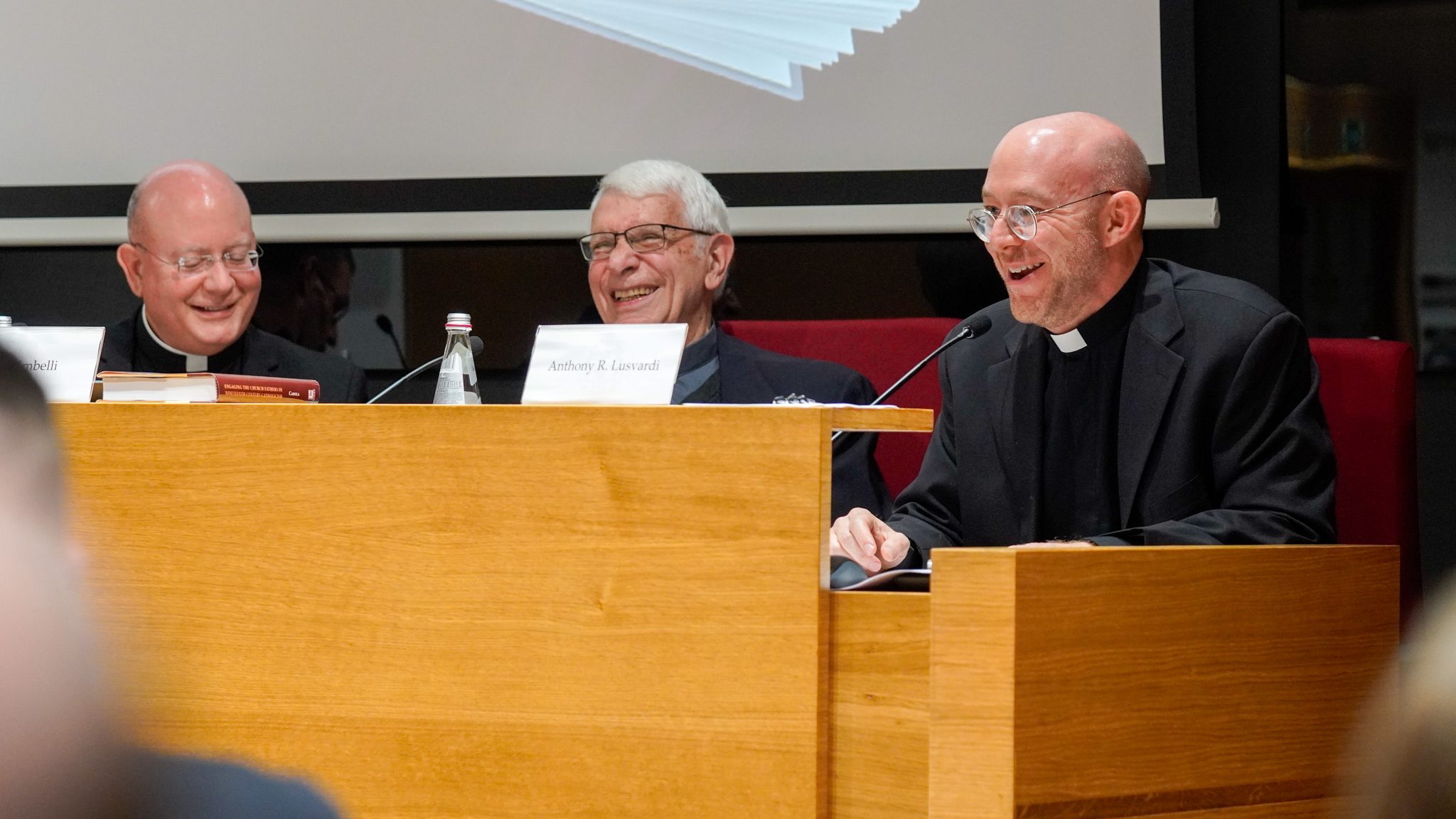
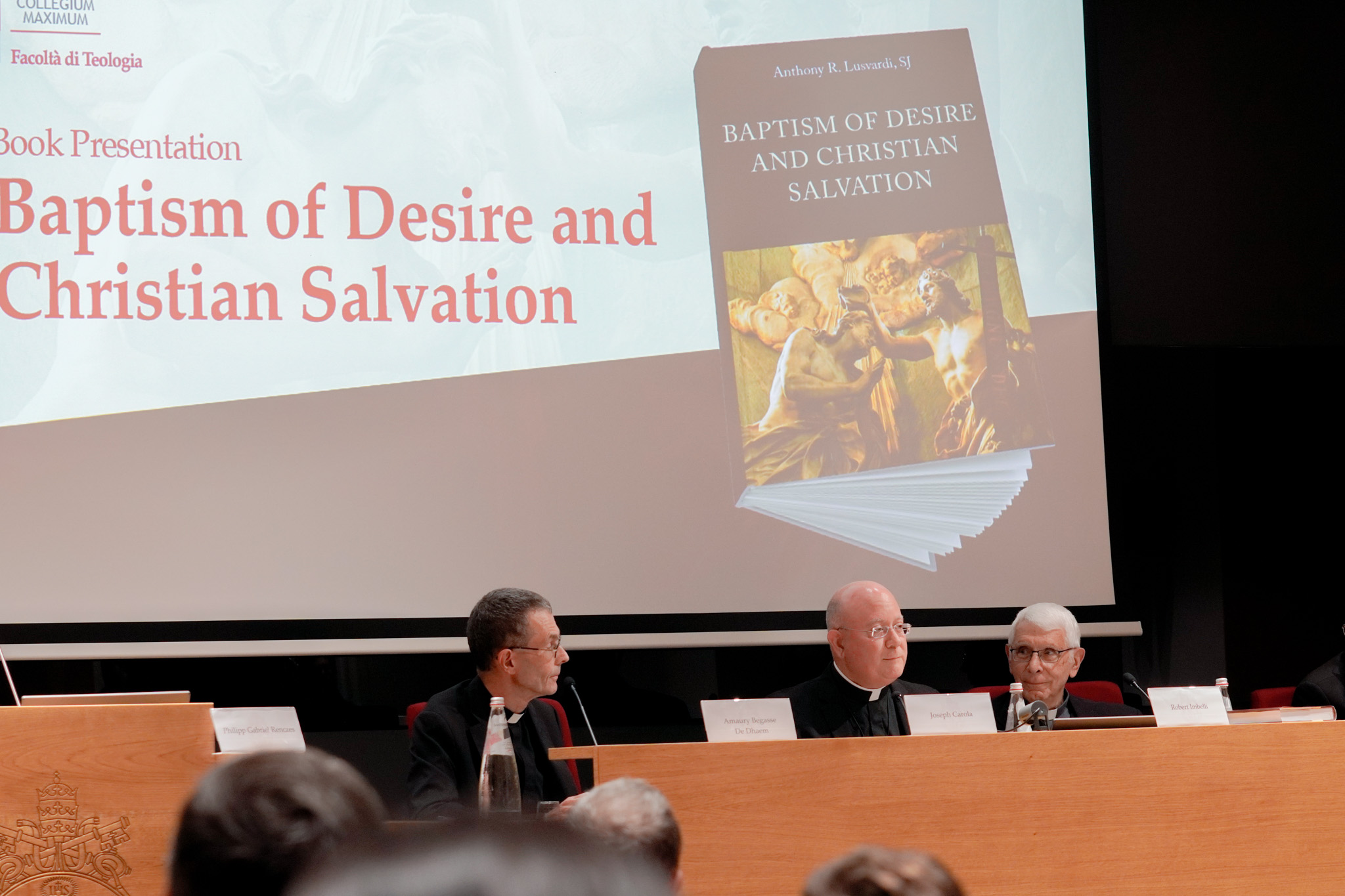
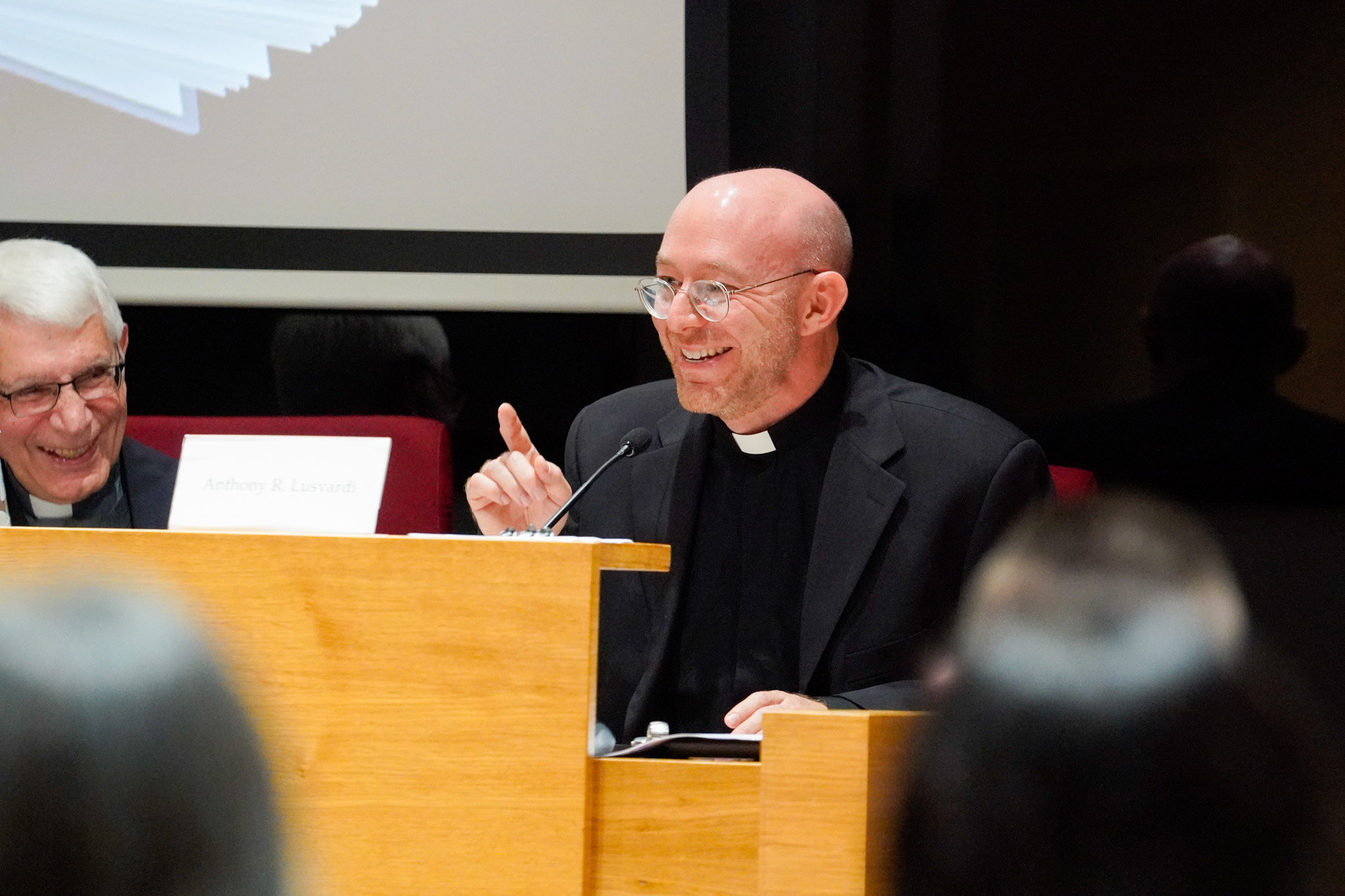
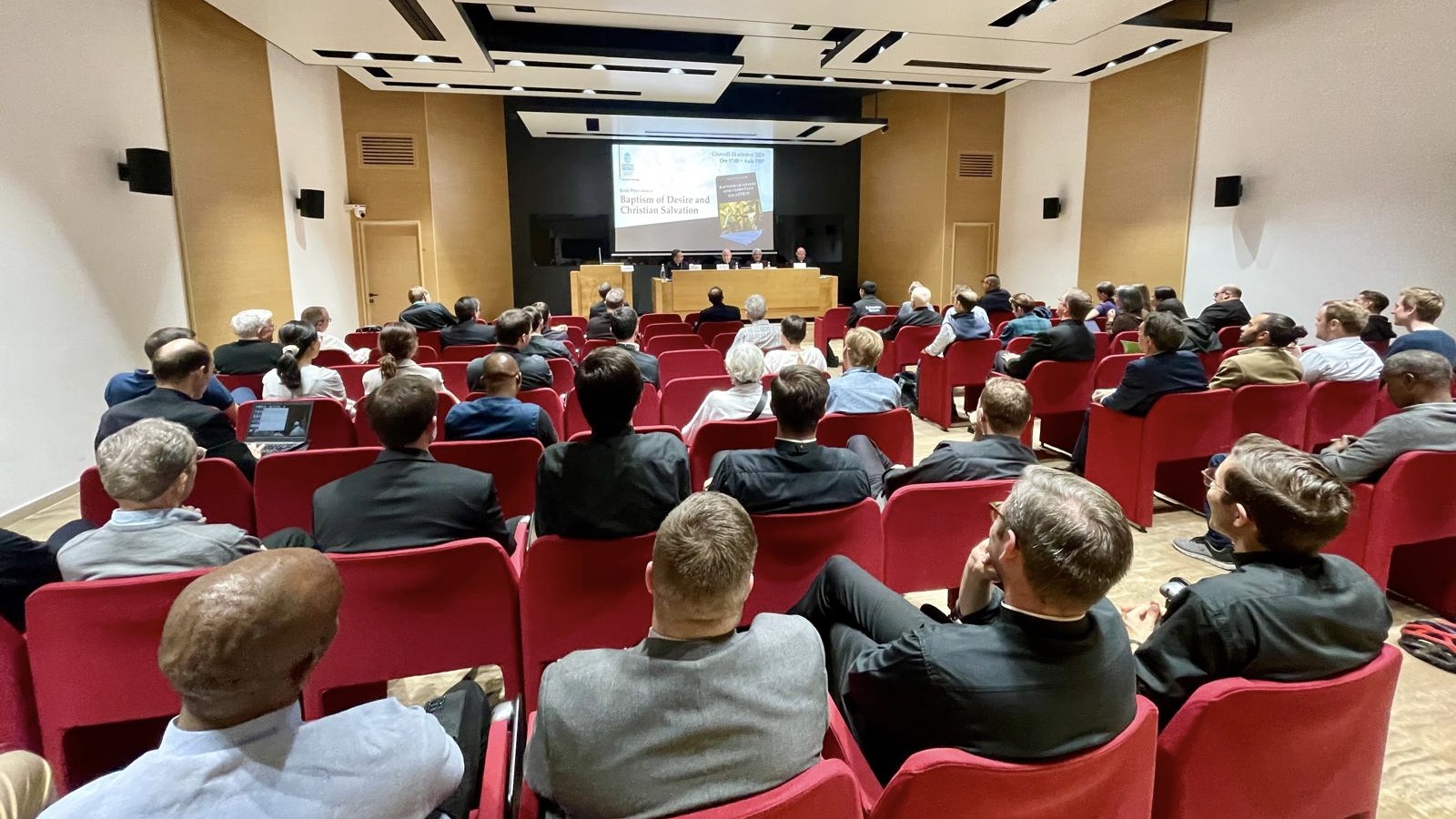
Baptism of Desire and Christian Salvation is now in orbit after an excellent turnout at the official book launch at the Gregorian last Thursday. More good news: the code CT10 still gives you a 20% discount if ordering the book directly from Catholic University of America Press. At the presentation of the book, Fr. Joseph Carola gave an overview of its content and shared some stories from personal experience to illustrate its pastoral relevance. Fr. Bob Imbelli drew on other contemporary thinkers, such as Khaled Anatolios, Charles Taylor, and William Cavanaugh to demonstrate its relevance. I hope to have video of the presentations up on the Baptism of Desire page soon.

Fr. Joseph Carola, S.J., Fr. Robert Imbelli, Fr. Anthony Lusvardi, S.J.

Just a week before, I was also pleased to talk about the book with my old friend Sean Salai at Catholic World Report. Read the interview here: Defending the necessity of baptism: An interview with Fr. Anthony Lusvardi, S.J.

On another note, in this month’s First Things I return to an issue I raised a few years ago in an article in America magazine, the effects of technology on the liturgy. Here’s the new article: “Screens and Sacraments.” The original from 2020 is here.

And, finally, if you’re looking for some pre-election reading that isn’t about either Donald or Kamala, but instead about the way voting functions as a civic ritual, check out my latest at The Catholic Thing: “Rites (and Wrongs) of Democracy.

Authority and truth in the Church: homily for the twenty-first Sunday of Ordinary Time

Homily for the 21st Sunday in Ordinary Time (A)

St. Peter’s Basilica, Rome

How do you feel about authority?  I wish I had a little more?  I wish those with it would loosen up a bit?  I wish they’d clamp down?  When you hear the word authority do you feel defensive or safe?

Even if you don’t like the word, even if you like to think of yourself as a freethinker, you still rely on authority.  Almost everything we believe, we’ve come to believe on the authority of others.  Many of today’s political and social controversies come down to authority—can we trust the media?  The experts?  Universities?  Business?  Government?  The Church?

Yes, authority is important for the Church because the Church is a human institution.  Instituted by God, guided by God, but made up of men and women like you and me.  And each of us depends upon authority.  Any complex human undertaking—even rowing a boat in unison—requires some degree of authority if the boat is to go anywhere.  Learning requires trusting authority as well.  If you saw the eclipse last Monday, you probably relied on the authority of the news media, who relied on the calculations of scientists, relying on the observations of centuries of scientists and mathematicians before them.  Or maybe you really are a freethinker, and figured it all out yourself with binoculars and a calculator.  

Today’s readings put the spotlight on religious authority.  In the first reading, one official in the palace of the king of Israel, Shebna, is condemned and replaced by another, Eliakim.  Just before the part we read this morning, Isaiah explains that Shebna is being fired for looking after his own personal interests instead of the people’s.  Specifically, he seems to have used public funds to construct an elaborate tomb for himself.  Eliakim, on the other hand, cares for the people of Jerusalem like a father.  

We can observe a few of things from this story of petty corruption.  First, authority is different than power.  Power can be seized, but authority is given from above and those with authority are answerable to their higher-ups.  In this case, Shebna answers to God when he misuses his authority.  Second, the religious authority spoken of in this reading is given for the good of others.  The type of authority that comes from God is service; Eliakim is given the symbols of authority, robe and sash, because he will serve.  And finally, office-holders come and office-holders go.  Some are better than others.  God remains the same.

Continue reading “Authority and truth in the Church: homily for the twenty-first Sunday of Ordinary Time”